

Giant grasshoppers are among the most fascinating insects in the natural world, admired for their impressive size, vivid coloration, and slow, lumbering movements. Found in tropical and subtropical regions across the globe, these large grasshoppers often attract attention for their intimidating appearance, yet they play vital roles in maintaining healthy ecosystems. From Florida’s colorful lubber grasshoppers to Australia’s giant species, their diversity is truly remarkable.
What Is a Giant Grasshopper?
A giant grasshopper is a large species of grasshopper that stands out for its size, often exceeding 3 inches in length. Unlike common grasshoppers that are agile and swift, giant grasshoppers are slower and rely on their bright colors or toxic secretions for defense. Their thick exoskeleton, powerful legs, and sometimes short wings give them a distinctive appearance. They are herbivorous insects, feeding on a variety of green plants, and thrive in warm, humid environments.
These grasshoppers can be found in regions like Florida, Texas, Mexico, and Australia, where the climate and vegetation provide ideal living conditions. Though their looks may seem intimidating, they are not generally dangerous to humans.
Physical Characteristics of Giant Grasshoppers

Size and Appearance
- Typically grow 3 to 4 inches long.
- Possess thick bodies and strong hind legs for jumping.
- Wing size varies by species — some short, others fully developed.
- Display bright colors like yellow, red, orange, black, or green.
- Males smaller than females in most species.
Unique Adaptations
- Use bright colors as warning signals (aposematism).
- Excrete foul-smelling fluid for protection against predators.
- Have a tough exoskeleton that shields them from harm.
- Powerful mandibles to chew tough plant material.
- Antennae help in sensing movement and locating food.
- Strong legs allow high jumps and sturdy landings.
Common Types of Giant Grasshoppers

Eastern Lubber Grasshopper (Florida)
The eastern lubber grasshopper (Romalea microptera) is perhaps the most recognizable giant grasshopper in the United States. It thrives in Florida and other southeastern states, where it is often seen in gardens, fields, and wetlands. Measuring up to 3 inches, the lubber has a striking appearance — usually bright yellow, orange, or even black with red markings.
Though it cannot fly well, it is an expert walker and climber. When threatened, it releases a foul chemical from its thorax, deterring birds and reptiles. Despite their harmlessness to humans, large populations can damage crops and ornamental plants.
Mexican and Costa Rican Giant Grasshoppers
In Mexico and Costa Rica, tropical forests are home to several giant grasshopper species, some exceeding 4 inches in length. These species are often dark green or brown, blending perfectly with dense vegetation. They are known for their strong legs and impressive jumps.
Unlike the Florida lubber, these tropical species are agile and capable of short bursts of flight. They primarily feed on leaves and flowers, contributing to the natural cycle of plant growth and decay.
Australian and New Zealand Giants
Australia and New Zealand host several unique species of large grasshoppers, including the Valanga irregularis, often called the Australian giant grasshopper. These insects can grow up to 3.5 inches long and are adapted to dry grasslands and bush environments.
They have powerful mandibles capable of chewing through thick leaves and are vital in maintaining ecological balance. Their coloration — usually shades of green, brown, or grey — helps them camouflage against the dry landscape, protecting them from birds and reptiles.
African and Asian Species
Across Africa and parts of Asia, numerous giant grasshopper varieties exist, ranging from bright yellow to earthy brown tones. Some African species are used in traditional diets as edible insects due to their high protein content. In Asia, giant grasshoppers often inhabit rice fields and forested regions, playing both beneficial and pest roles depending on population size.
Habitat and Geographic Range
United States
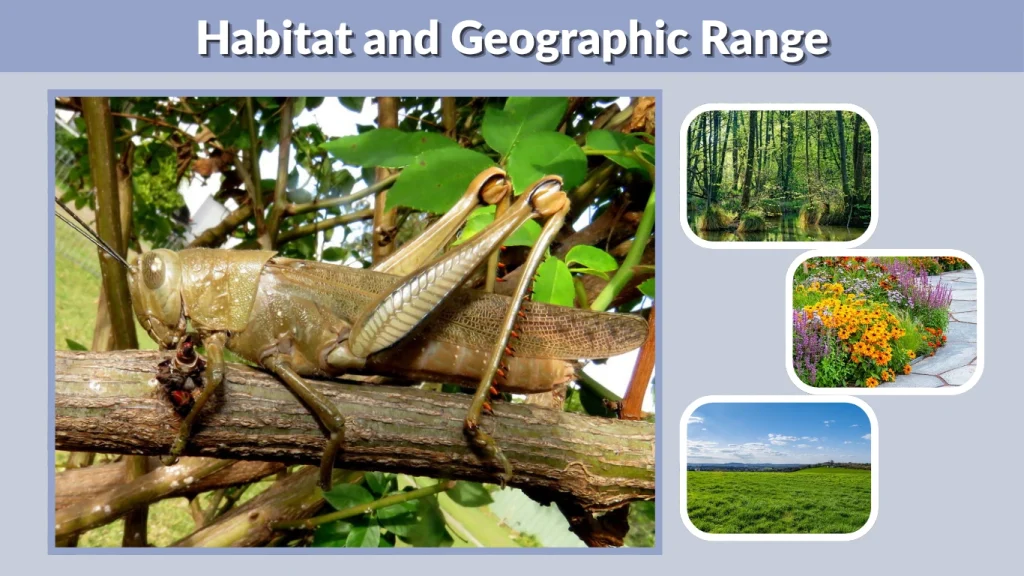
In the U.S., giant grasshoppers are most commonly found in the southern states, including Florida, Texas, Louisiana, Alabama, and Georgia. Florida’s warm, humid climate and abundant vegetation make it a perfect environment for the eastern lubber grasshopper. These insects prefer swamps, gardens, and grassy fields where they can feed and reproduce.
During summer, they are most active, often seen in clusters feeding on plants. While fascinating to observe, they can cause damage to crops like corn and citrus when their numbers grow too high.
Global Distribution
Outside the United States, giant grasshoppers thrive in many tropical regions, such as Central America, South America, Australia, and parts of Africa. They typically inhabit areas with tall grasses, shrubs, and abundant sunlight. In Costa Rica and Mexico, they are frequently found in rainforests, while Australian species prefer dry, open lands.
Their global distribution highlights their adaptability to different environments, provided that temperatures remain warm and food sources are plentiful.
Behavior and Diet
Feeding Habits
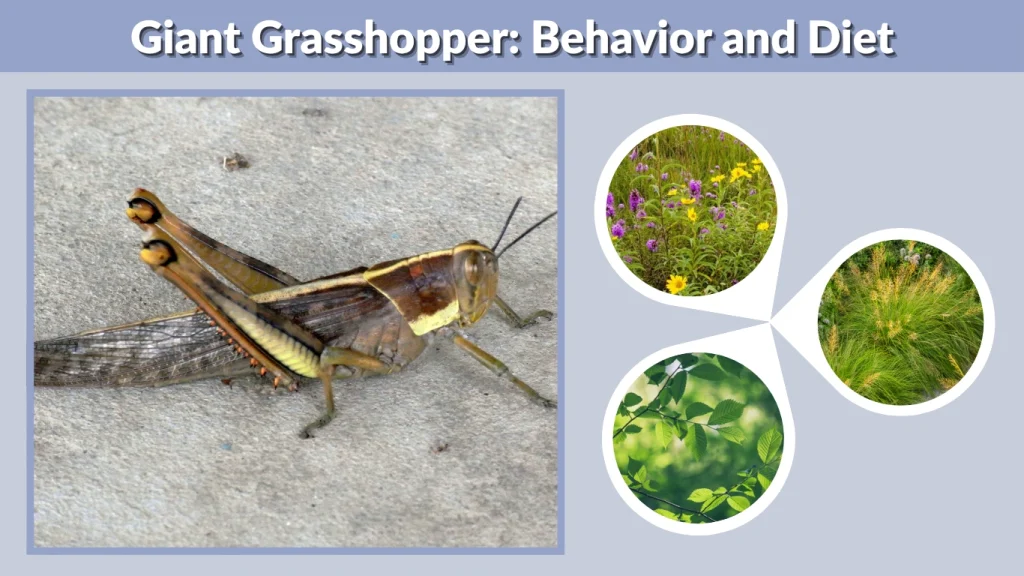
Giant grasshoppers are primarily herbivores, feeding on a wide range of plants, including grasses, leaves, and flowers. Their powerful mandibles can easily cut through tough plant material, allowing them to consume large quantities each day. In agricultural regions, this makes them a potential pest, as they may damage crops such as corn, citrus, and ornamental plants.
In natural habitats, they play an important ecological role by recycling nutrients through plant consumption and decomposition. Their feeding activity also provides food for predators like birds, reptiles, and small mammals, contributing to the balance of the ecosystem.
Mating and Life Cycle
The life cycle of a giant grasshopper consists of three main stages: egg, nymph, and adult. Females lay eggs in the soil, often during the warm months of late summer. The eggs remain dormant through winter and hatch in spring when temperatures rise.
Young nymphs resemble miniature adults but lack fully developed wings. Over several weeks, they molt multiple times, gradually growing larger and developing wings. Once mature, adults live for several months, reproducing before the cycle repeats. This predictable life cycle makes their populations boom seasonally, especially in warm, humid regions.
Are Giant Grasshoppers Dangerous?

Interaction with Humans
Despite their intimidating size and bright warning colors, giant grasshoppers are not dangerous to humans. They do not bite, sting, or carry venom. However, some species—like the eastern lubber—can release a foul-smelling or irritating secretion when threatened. This fluid is meant to deter predators but is harmless to people unless it comes into contact with the eyes or mouth.
Their slow movement and bold coloring make them easy to observe up close, making them a favorite subject for nature enthusiasts and photographers.
Impact on Crops and Gardens
While giant grasshoppers pose little direct threat to humans, they can be problematic for farmers. In large numbers, they can devastate crops, chewing through leaves, stems, and fruits. Florida’s eastern lubber, for example, is notorious for damaging ornamental plants and citrus trees.
To manage populations, natural predators like birds and frogs play a crucial role. Farmers also use environmentally safe pest control measures, such as removing egg clusters or introducing biological control agents. Balancing their population is important to prevent agricultural losses without harming the local ecosystem.
Interesting Facts About Giant Grasshoppers
Giant grasshoppers are not just large insects; they are creatures with fascinating traits and history. Fossil evidence shows that ancient relatives of grasshoppers existed millions of years ago, some much larger than those alive today.
In folklore and art, they often symbolize luck, freedom, and transformation. Many cultures consider them messengers of change because of their ability to leap great distances. In dreams, grasshoppers are said to represent boldness and creativity.
Pop culture has also embraced these insects. The 1937 film The Giant Grasshopper and other science-fiction movies in the 1950s portrayed them as giant mutants, a reflection of humanity’s fascination and fear of nature’s power. In literature, Mr. Grasshopper from James and the Giant Peach remains a beloved character—cultured, musical, and wise—introducing a positive image of these misunderstood creatures.
Giant Grasshoppers in Popular Culture
Movies and Literature
One of the most famous representations of a grasshopper in popular culture is Mr. Grasshopper from Roald Dahl’s James and the Giant Peach. His sophisticated demeanor and violin-playing character brought charm and personality to the species.
In contrast, 1950s sci-fi movies like Attack of the Giant Grasshoppers depicted them as destructive monsters. These portrayals reflected the atomic-age anxieties of the time, blending fear and fascination with the natural world. Despite their fictional exaggerations, they helped spark public interest in entomology and nature documentaries.
Modern References
Today, giant grasshoppers appear in animations, art installations, and even as sculptures in botanical gardens. Their striking appearance makes them a popular subject for photography and educational exhibits. Artists often use their imagery to symbolize resilience, adaptability, and the beauty of biodiversity.
In some regions, such as Mexico and Africa, grasshoppers are even celebrated as edible delicacies rich in protein—a sustainable food source for future generations.
Conservation and Ecological Role
Giant grasshoppers play an important ecological role in maintaining balance within their ecosystems. They serve as both herbivores and prey, keeping plant growth in check while feeding predators. Their droppings enrich the soil, supporting new vegetation growth.
However, habitat loss, pesticide use, and climate change threaten many grasshopper populations worldwide. In agricultural areas, indiscriminate pesticide spraying can reduce beneficial insect numbers, including pollinators and natural predators. Sustainable farming practices, habitat restoration, and public awareness can help protect these vital insects.
By maintaining biodiversity, we also preserve the natural checks and balances that prevent any one species, including grasshoppers, from becoming overly dominant.
FAQs
What is the largest grasshopper species in the world?
The largest known species is the Tropidacris cristata, found in South America. It can grow over 4 inches (10 cm) in length, with wings spanning up to 7 inches. These giants are powerful jumpers and fliers, known for their vibrant green or brown coloration and impressive size among grasshoppers.
Are Florida giant grasshoppers poisonous to humans or pets?
No, Florida’s eastern lubber grasshoppers are not poisonous in the lethal sense, but they secrete a foul, toxic fluid that can irritate skin or mucous membranes. While unpleasant, this defense mechanism is harmless to humans and pets, serving only to deter predators.
What do giant grasshoppers eat in the wild?
They primarily feed on leaves, grass, flowers, and various plants. Some species prefer soft vegetation, while others chew through tougher leaves and stems. In gardens, they may consume ornamental plants, vegetables, and even fruit tree leaves if food is abundant.
Why are giant grasshoppers brightly colored?
Bright colors act as a warning sign to predators. Species like the eastern lubber display vivid yellows, reds, and oranges to indicate that they may be toxic or taste unpleasant. This phenomenon, known as aposematism, helps protect them from being eaten by birds and reptiles.
Where can you commonly find giant grasshoppers in the U.S.?
Giant grasshoppers are most commonly found in the southern states, especially Florida, Texas, Louisiana, and Georgia. They thrive in warm, humid environments like fields, gardens, and swamps. During summer, they are most active and can often be seen feeding in open grassy areas.
