
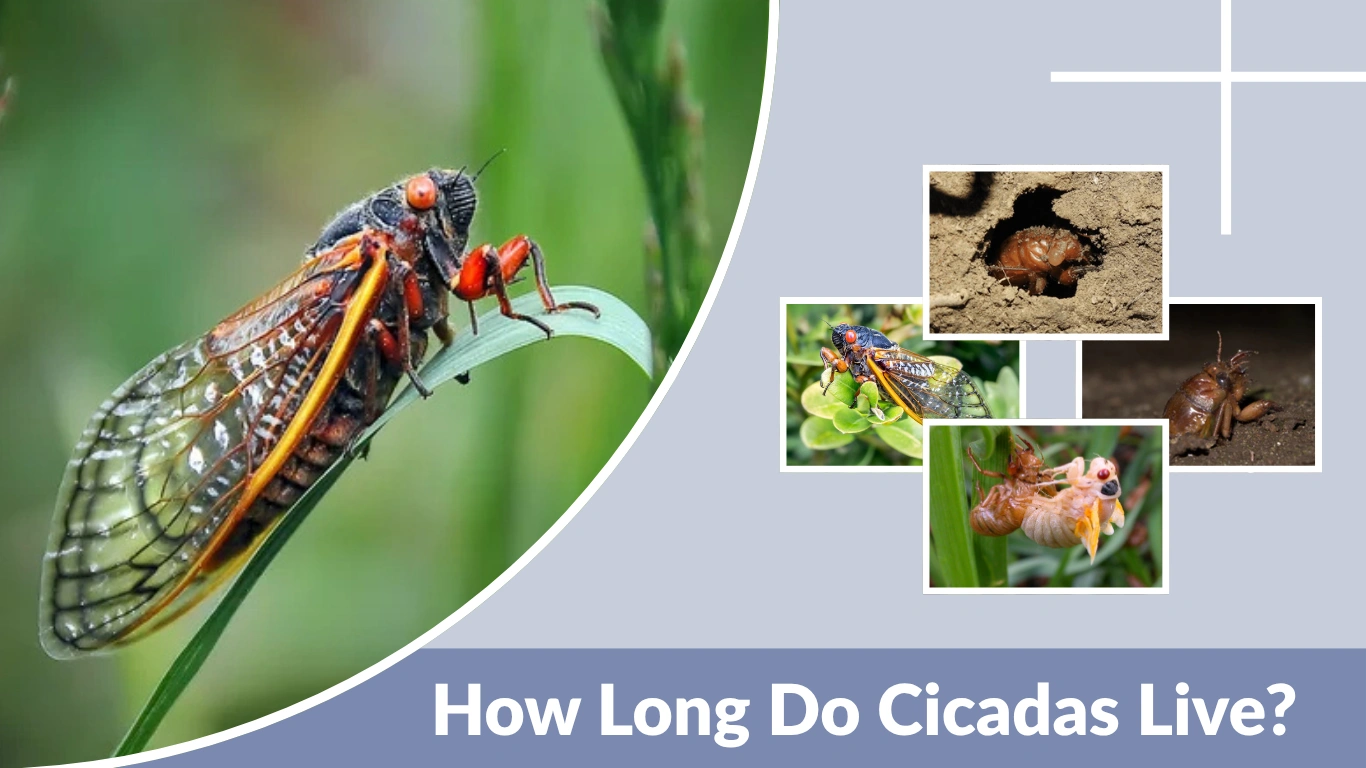
Every summer, the buzzing chorus of cicadas fills the air — a sound that signals heat, sunshine, and one of nature’s most fascinating life stories. These noisy insects seem to appear out of nowhere, crowding trees and lawns, only to vanish again within weeks. But while their adult stage is brief, cicadas actually live far longer than most people realize. Depending on the species, a cicada’s life can last anywhere from two years to an astonishing 17 years, with most of that time spent quietly underground.
This article explores how long cicadas live at each stage of their life — from hidden nymphs beneath the soil to the loud, winged adults that fill our summer skies. We’ll also look at how climate, geography, and species type affect their lifespan, and why these insects are designed to live so long beneath our feet.
Overview of the Cicada Life Cycle
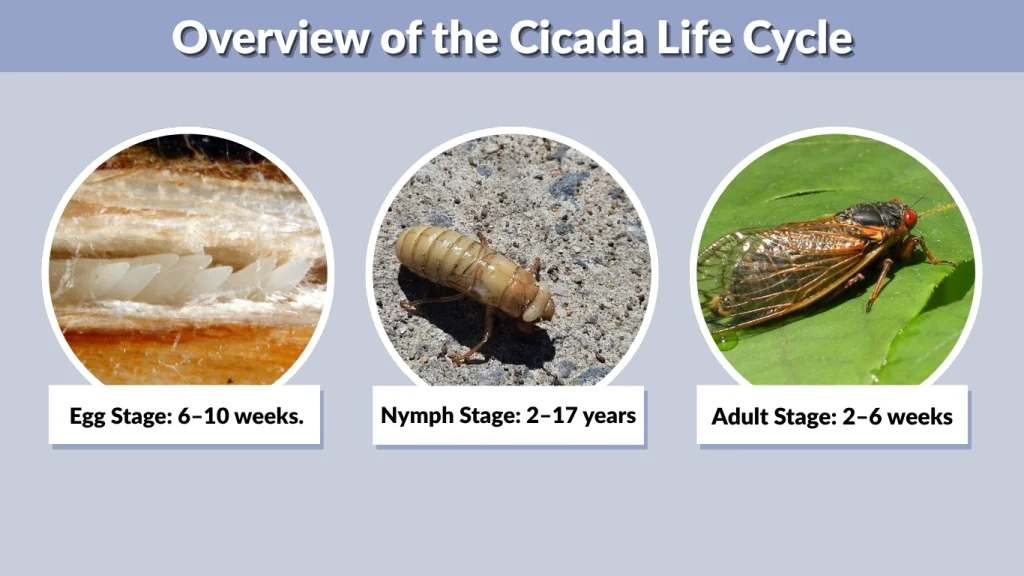
A Quick Summary of How Long Cicadas Live
Cicadas live between 2 and 17 years, depending on the species. Despite their fame as loud, short-lived adults, the vast majority of their lives are spent underground. Cicadas go through three main life stages — egg, nymph, and adult — each playing an essential role in their survival.
- Egg stage: Lasts around 6–10 weeks. Eggs are laid in small tree branches by the female.
- Nymph stage: The longest part of the cycle. Nymphs drop from trees, burrow into the soil, and feed on sap from roots for years.
- Adult stage: The shortest and loudest period, lasting 2–6 weeks, during which they mate and die.
There are two main kinds of cicadas: annual cicadas, which appear every summer, and periodical cicadas, which emerge in synchronized broods every 13 or 17 years.
Why Cicadas Live So Long Underground
The reason cicadas spend so many years below the surface is part of their survival strategy. By developing slowly underground, they avoid many predators and harsh environmental changes. Their metabolism is extremely slow, and they feed gently on the sap of tree roots.
For periodical cicadas, this long, synchronized cycle ensures that when they finally emerge, their sheer numbers overwhelm predators — a strategy known as predator satiation. Instead of relying on defense or speed, cicadas rely on safety in numbers.
The Hidden Years — Cicadas Underground
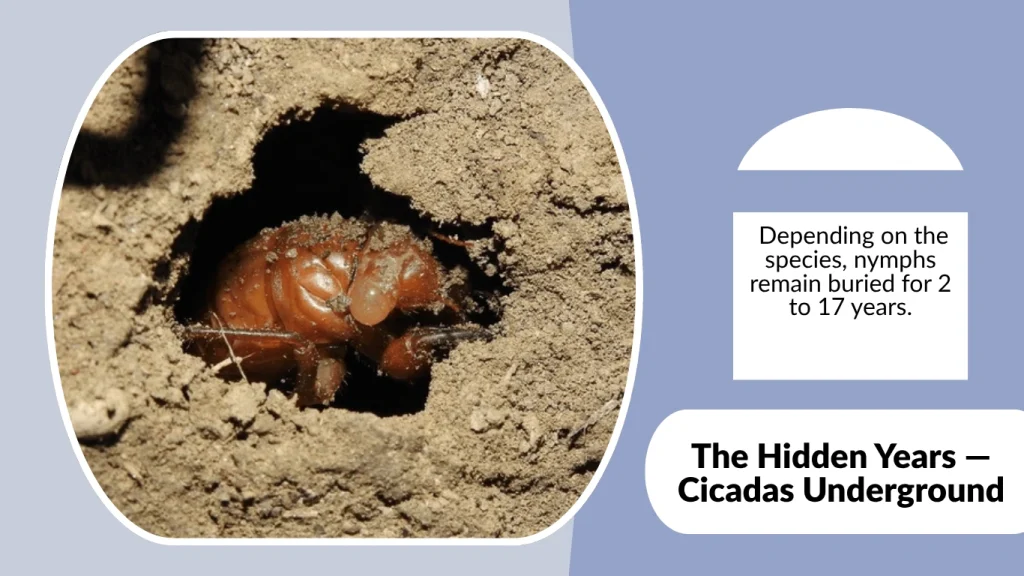
How Long Do Cicadas Live Underground?
A cicada’s underground stage is the longest and most mysterious part of its life. Depending on the species, nymphs remain buried for 2 to 17 years. During this time, they feed slowly on tree root sap using a straw-like mouthpart called a proboscis.
In North America, the famous periodical cicadas — like Brood X and Brood XIII — are known for their 13- and 17-year underground lifespans. Meanwhile, annual cicadas typically stay buried for 2 to 5 years before emerging, though their generations overlap, which is why we see them every summer.
How Do Cicadas Live So Long Underground?
Cicadas are built for patience. They grow slowly in cool, dark soil, protected from predators and extreme weather. Their long development is tied to soil temperature and moisture. Once the soil warms to about 64°F (18°C) in late spring, it signals that it’s time to emerge.
Their remarkable endurance underground also comes from a low metabolic rate — they use energy sparingly, living off small amounts of plant sap. This slow, steady lifestyle allows them to survive for years without much movement or danger.
Global Variations in Underground Life
Not all cicadas follow the same schedule. Their underground lifespan changes depending on climate and geography:
- United States (Brood X, Brood XIII): 13–17 years underground.
- Australia: Many species stay buried for 6–10 years, especially in tropical or semi-arid regions.
- New Zealand & Asia: Species typically live 3–5 years underground, where milder temperatures shorten their development.
Environmental factors like soil moisture, temperature, and the availability of host trees all influence how long a cicada spends hidden before surfacing.
The Great Emergence — Life Above Ground

How Long Do Cicadas Live After Emerging?
Once the soil temperature is right, cicadas tunnel upward and begin one of nature’s most impressive spectacles: the mass emergence. Nymphs crawl out of the ground, climb nearby trees, and shed their brown outer shells (exoskeletons) in a process called molting.
After molting, they emerge as fully winged adults. From this point, their time above ground is short — typically 2 to 6 weeks. During this period, their main goals are to find a mate, reproduce, and complete their life cycle.
What Happens Once They Emerge?
Once adults, male cicadas begin their famous songs — loud, rhythmic calls produced by special vibrating organs called tymbals. These calls attract females, leading to intense mating activity over several weeks.
After mating, females lay hundreds of eggs inside the tips of tree branches using a sharp egg-laying structure called an ovipositor. When the eggs hatch, the tiny nymphs fall to the ground, burrow in, and the process begins again.
How Long Do Cicadas Live Without Food or Water?
Interestingly, adult cicadas don’t eat solid food. They sip small amounts of plant sap to stay hydrated but rely mainly on energy stored during their long underground stage. Without access to plants, an adult cicada would survive only a few days.
Because their sole purpose is reproduction, their digestive systems are simple, and their short adult life is dedicated to singing, mating, and laying eggs before dying naturally.
Lifespan Differences by Type of Cicada
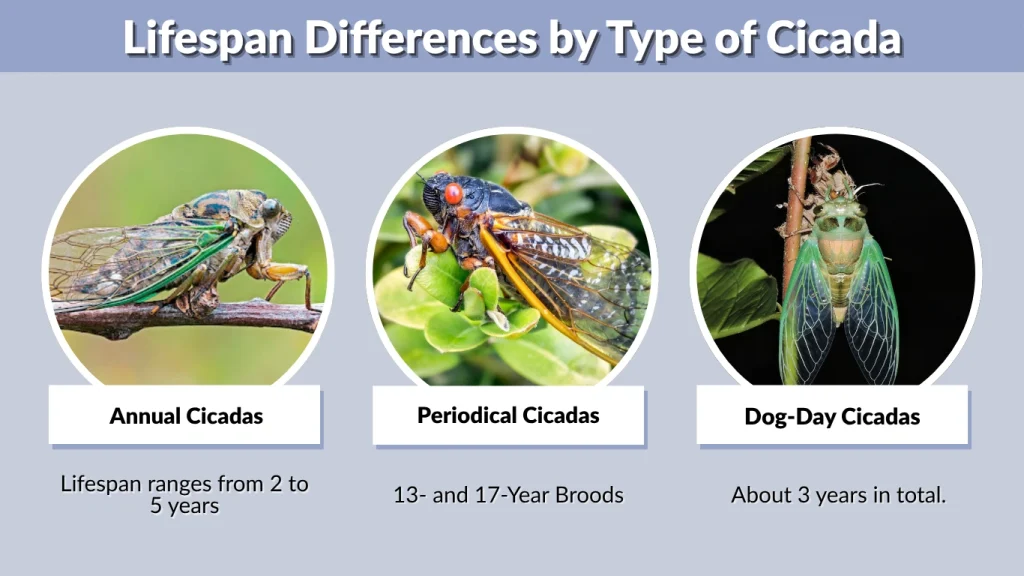
Annual Cicadas
Not all cicadas follow the same schedule. Annual cicadas, sometimes called dog-day cicadas, emerge every summer but spend several years growing underground. Their total lifespan ranges from 2 to 5 years, but because generations overlap, we see them every year. Once they reach adulthood, they live above ground for 3–5 weeks, spending that time calling for mates and reproducing before dying naturally.
Periodical Cicadas (13- and 17-Year Broods)
The periodical cicadas of North America are famous for their synchronized, mass emergencies. These include 13-year cicadas found mostly in the southern U.S. and 17-year cicadas common in the Midwest and East Coast.
They spend nearly their entire lives underground feeding on tree roots and only surface after 13 or 17 years to mate. Their above-ground lifespan, like all cicadas, is brief — typically four to six weeks. The rest of their long life is spent waiting underground, growing slowly in rhythm with nature’s cycles.
Dog-Day Cicadas
These large green cicadas appear later in the summer, usually in July or August. Unlike the synchronized broods, dog-day cicadas emerge annually but are part of a multi-year generational cycle that lasts about 3 years in total. Their adult phase, again, lasts only a few weeks.
After the Buzz — Death and Renewal
What Happens After Cicadas Die
After mating, female cicadas cut small slits in tree branches where they deposit 200 to 400 eggs. Once laid, the adult cicadas soon die, often falling to the ground beneath the trees they emerged from. Within 6 to 10 weeks, the eggs hatch, and tiny nymphs drop from the branches to burrow into the soil. There, they begin their long underground development once again.
Even in death, cicadas play an important ecological role. Their decomposing bodies return nitrogen to the soil, providing valuable nutrients for trees and plants. In this way, cicadas help fertilize the same trees that supported them during their underground years.
Why Cicadas Die So Soon After Mating
Cicadas are built for reproduction, not longevity. Their adult bodies are lightweight and optimized for flight and singing, not survival. The intense energy males spend producing their loud mating calls, combined with the effort of flying and breeding, quickly exhausts them. Once reproduction is complete, their natural cycle comes to an end.
Related Lifespans — Cicada Killers and Cicada Mites
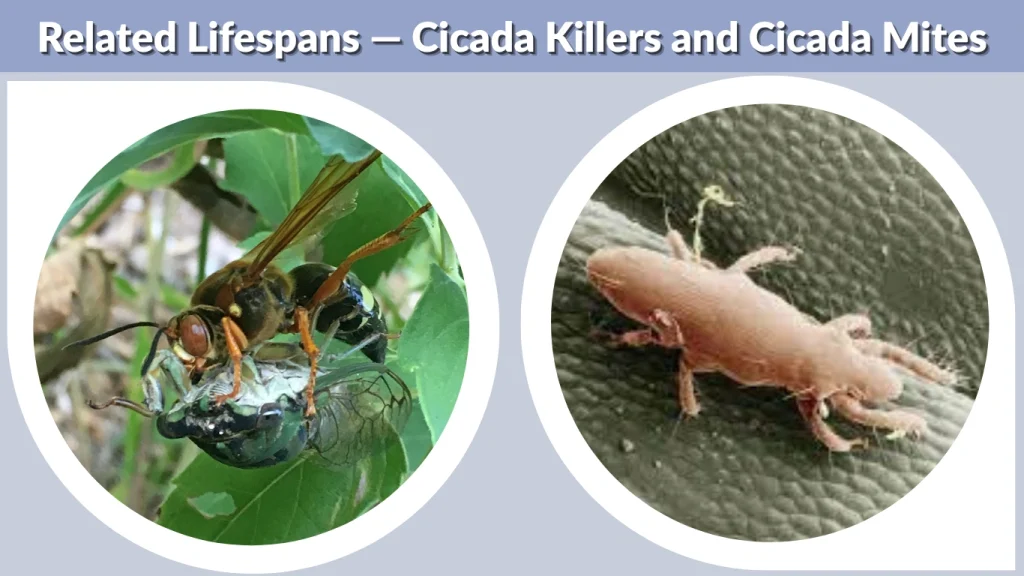
How Long Do Cicada Killer Wasps Live?
Cicada killer wasps (Sphecius speciosus) are often mistaken for giant cicadas, but they are actually the cicadas’ main predator. These wasps use their stingers to paralyze cicadas, then bury them underground as food for their larvae.
Adult cicada killers live for about 30 to 45 days, just long enough to mate and build their nests. Their larvae overwinter in burrows, emerging the following summer to continue the cycle. Though their size and buzzing flight can be intimidating, cicada killers rarely sting humans and play an important role in controlling cicada populations.
How Long Do Cicada Mites Live?
Cicada mites, small red or orange parasites often seen on emerging cicadas, have much shorter lifespans. They live only a few weeks, depending on the life of their host. Mites use cicadas to travel between trees and to feed on fluids from their bodies. On humans or pets, they rarely survive more than a few days.
Factors That Influence Cicada Lifespan
Environmental Conditions
Cicada lifespans are deeply connected to their surroundings. Soil temperature, moisture, and tree density determine how long nymphs stay underground. In warmer climates, cicadas develop faster; in cooler regions, their growth slows down, leading to longer life cycles.
Predators and Disease
Birds, mammals, and spiders feed on adult cicadas, while underground nymphs may fall prey to moles or fungi. A particular fungus called Massospora cicadina infects adult cicadas, replacing their abdomen with fungal spores — effectively ending their lives early while spreading the infection to others.
Human Impacts
Urban development and pesticide use can shorten cicada lifespans by reducing suitable habitats. Removing trees or sealing soil with pavement destroys the underground environments nymphs depend on. Conservation efforts, such as protecting wooded areas and limiting chemical use, are crucial for maintaining healthy cicada populations.
Regional Lifespan Comparison Table
| Cicada Type / Region | Underground Duration | Above-Ground Duration | Total Lifespan |
| 17-Year Cicadas (U.S.) | 17 years | 4–6 weeks | ~17 years |
| 13-Year Cicadas | 13 years | 3–5 weeks | ~13 years |
| Annual Cicadas | 2–5 years | 3–5 weeks | 2–5 years |
| Dog-Day Cicadas | 3 years | 2–4 weeks | ~3 years |
| Australian Cicadas | 6–10 years | 2–5 weeks | 6–10 years |
| Cicada Killer Wasps | 1 year (larva) | 1–1.5 months (adult) | ~1 year |
| Cicada Mites | — | Few weeks | Few weeks |
FAQs
How long do cicadas live after emerging?
Adult cicadas live about 2–6 weeks above ground before dying naturally after mating.
Why do cicadas stay underground for so long?
Their extended underground phase allows them to grow safely while avoiding predators and harsh seasonal changes.
Do cicadas die after mating?
Yes. Males die shortly after reproducing, while females survive just long enough to lay eggs.
How long can cicadas live without food?
Adults can survive for a few days without sap, but they need access to plants for hydration.
How long do cicada killers and mites live?
Cicada killers live 30–45 days as adults, while cicada mites live only a few weeks, depending on their hosts.
