

Every few years, the air fills with a loud, buzzing chorus — the sound of cicadas emerging from the ground after years spent underground. Their sudden appearance, strange look, and sheer numbers often leave people asking one question:
Are cicadas harmful?
Despite their intimidating size and noisy presence, cicadas are harmless to humans, pets, and most of the environment. They don’t bite, sting, or spread disease. In fact, these insects play a surprisingly important role in the ecosystem. However, they can cause some minor inconveniences — especially if your pets decide to snack on them or if you’re caring for young trees in your yard.
Are Cicadas Harmful to Humans?

Do Cicadas Bite or Sting?
Cicadas cannot bite or sting. They don’t have teeth, stingers, or venom. Their mouths are built for one purpose — drinking sap from plant roots while they’re underground.
When they emerge as adults, they stop feeding altogether and live only to mate. If a cicada lands on you, it’s not trying to attack — it probably just mistook you for a tree or was attracted to movement or bright colors.
So while they might startle you by flying close, cicadas are completely harmless to touch. You can gently brush them away or pick them up and move them outdoors without worry.
Can Cicadas Make You Sick?
Cicadas do not carry or transmit diseases. They aren’t like mosquitoes or ticks, which can spread pathogens. There’s no evidence linking cicadas to any form of illness in humans.
The biggest concern from a health perspective is noise exposure. A large group of cicadas can reach sound levels up to 90–100 decibels, which is about as loud as a lawnmower or motorcycle. If you live near trees full of them, it can get overwhelming — though it’s temporary and only lasts a few weeks.
For people with severe insect allergies, contact with cicada wings or dried shells might cause mild irritation or sneezing, but such reactions are extremely rare.
Are Cicada Shells or Bodies Harmful?
As cicadas mature, they shed their brown outer skin (exoskeleton) and leave it behind on trees, walls, and fences. These empty shells are harmless — made of chitin, the same natural material found in shrimp shells. They don’t carry bacteria or toxins.
You can safely remove or compost them. In fact, when cicada bodies decompose, they enrich the soil with nitrogen, helping plants grow.
So, far from being harmful, cicadas actually contribute to the health of your backyard ecosystem.
Are Cicadas Harmful to Pets?
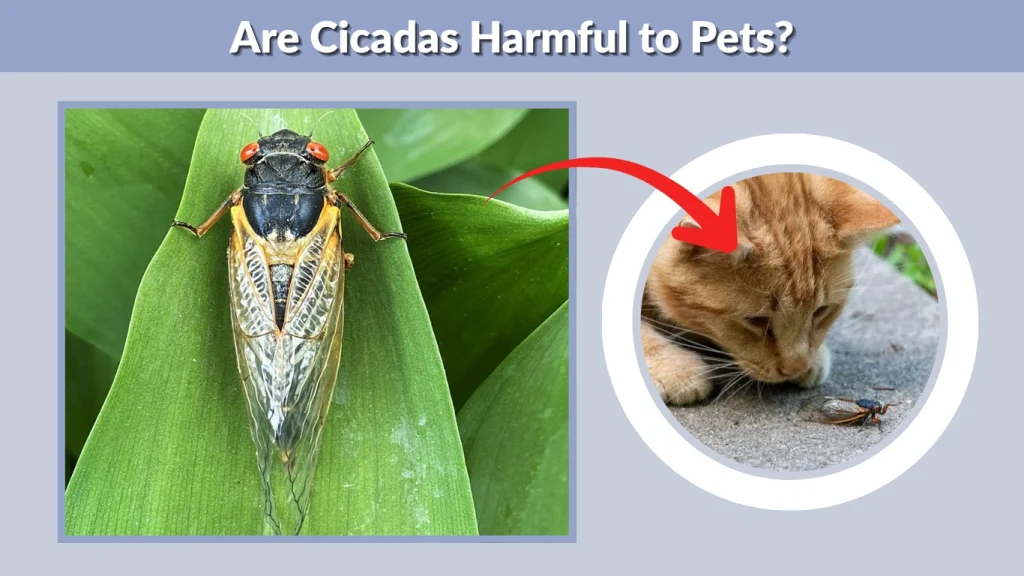
When cicadas appear in large numbers, pets — especially dogs — may see them as crunchy toys or treats. While cicadas aren’t poisonous, eating too many can cause problems.
Are Cicadas Harmful to Dogs?
A few cicadas won’t hurt your dog, but large quantities can lead to stomach upset. The outer shell of a cicada is tough and indigestible. Dogs that gulp down several may experience:
- Vomiting or diarrhea
- Lethargy or loss of appetite
- Possible intestinal blockage in small breeds
If your dog eats a few, there’s no need to panic — just monitor them. But if they start showing signs of distress, contact your vet. You can also supervise your pet outdoors during heavy cicada seasons to reduce temptation.
Cicada shells can also cause mild choking hazards if swallowed whole, so removing old shells from play areas is a good precaution.
Are Cicadas Harmful to Cats or Other Pets?
Cats are naturally curious, and some may chase or paw at cicadas. However, cats rarely eat them — and even if they do, cicadas are not toxic.
The most likely result is mild stomach irritation or a temporary loss of appetite.
Other pets such as birds, chickens, and reptiles can safely eat cicadas in moderation. In fact, many wild animals thrive during cicada season — it’s a natural food source high in protein.
Are Cicada Shells a Risk to Pets?
Yes — but only slightly. The tough exoskeleton is made of chitin, which doesn’t digest easily. For most dogs and cats, eating a single shell is harmless.
Problems occur when pets eat large numbers of them or scavenge for days during a major emergence. Overeating can cause constipation, bloating, or intestinal discomfort.
To keep pets safe:
- Limit outdoor time during peak cicada activity.
- Clean up cicada shells from yards or porches.
- Provide water to help digestion if your pet eats a few.
Are Cicadas Harmful to Trees and Plants?
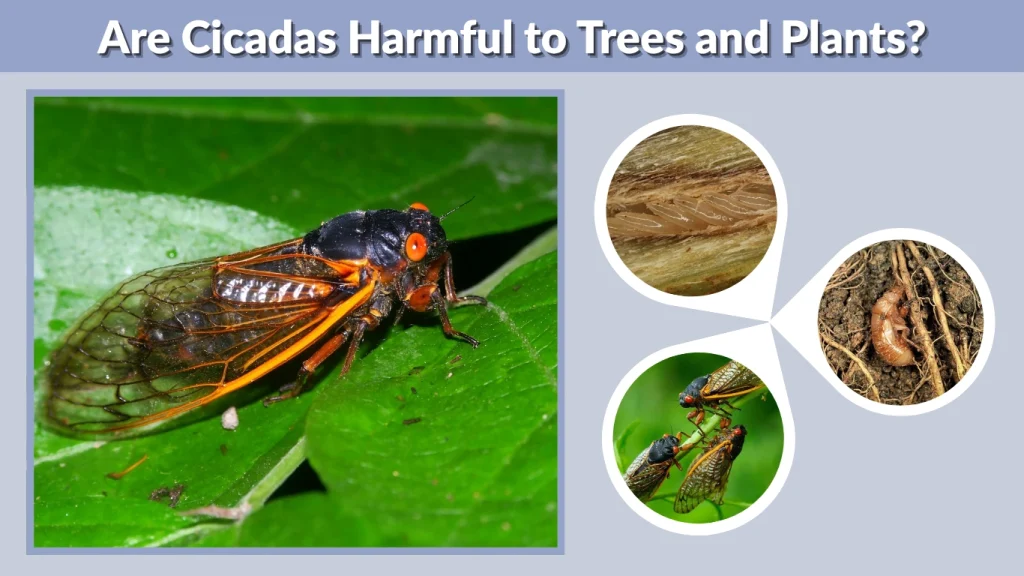
Cicadas don’t chew leaves, eat fruit, or destroy crops like locusts do — but they can cause minor damage to young trees when laying eggs.
Cicadas and Tree Damage (Preview)
Female cicadas use a sharp egg-laying tool called an ovipositor to slit small twigs and deposit their eggs inside. This can cause the ends of young branches to wilt or die, a process known as flagging. Mature trees, however, usually recover quickly.
We’ll explore this in more detail — along with cicadas’ environmental benefits and their predators — in the next half of the article.
Are Cicadas Harmful to Trees and Plants?
While cicadas are harmless to people and animals, they can cause minor damage to certain trees, especially when females lay eggs. However, their effects are usually temporary and part of a healthy ecosystem.
Cicadas and Tree Damage
When female cicadas emerge, their main mission is to mate and lay eggs. They use a sharp appendage called an ovipositor to slice into small tree branches, where they deposit dozens of eggs.
This process can cause thin branches to split or droop — a condition known as flagging.
You may notice:
- Brown or wilted tips on branches.
- Small scars or slits along new twigs.
While this looks alarming, it rarely causes long-term harm. Mature trees easily recover once the cicada season ends. The main concern is with young saplings and fruit trees, whose tender branches are more vulnerable.
Protective tips:
- Cover small trees or shrubs with fine mesh netting during heavy emergence years.
- Delay new plantings until after cicada season.
- Trim damaged twigs after the insects disappear to encourage regrowth.
In short: cicadas may leave your trees looking messy, but they won’t destroy them.
Are Cicadas Harmful to Crops or Gardens?
Unlike grasshoppers or locusts, cicadas do not feed on leaves, crops, or flowers. They don’t chew or bite — their mouths are specialized for drinking sap while underground.
Above ground, they do almost no eating at all.
Garden plants, vegetables, and lawns are safe from cicadas. The most you’ll notice are discarded shells or the occasional adult resting on leaves.
If you see slight damage to young plants, it’s more likely from heat or other insects, not cicadas.
So, if you’re gardening during a cicada year, relax — your tomatoes, roses, and corn are in no danger.
Are Cicadas Harmful to the Environment?

Despite their noisy arrival, cicadas are actually a sign of a healthy environment. Their role in nature is both unique and beneficial.
Ecological Benefits of Cicadas
When cicadas die, their bodies decompose and release nutrients such as nitrogen, phosphorus, and potassium into the soil. This natural fertilizer enriches plant life for months afterward.
Their emergence also:
- Aerates soil: As they tunnel up, they create air pockets that improve root health and water flow.
- Feeds wildlife: Birds, fish, squirrels, raccoons, and even pets feast on cicadas, giving other prey species a break and balancing food chains.
- Supports biodiversity: Periodical emergencies create population “booms” that help sustain predators and scavengers.
In short, cicadas are not a threat — they are ecosystem engineers that rejuvenate the soil and support countless species.
Are Cicadas Beneficial or Harmful Overall?
Cicadas might seem like a nuisance because of their noise and numbers, but they’re overwhelmingly beneficial. They cause mild, short-term disturbances but provide long-term ecological value.
Think of them as nature’s recyclers — loud, temporary, but essential.
Are Cicada Killers Harmful?
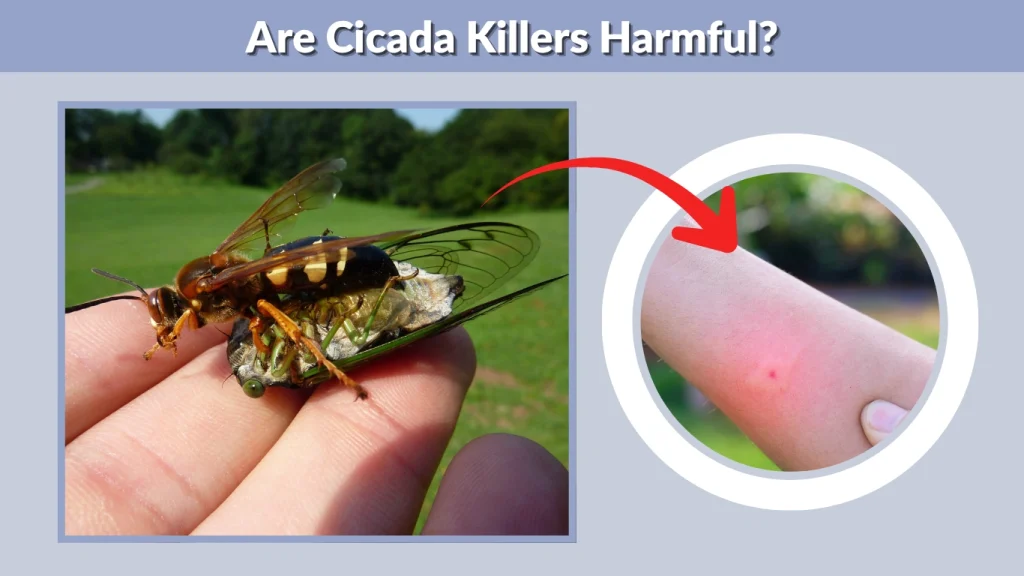
During cicada season, another insect often appears — the cicada killer wasp. These large wasps look frightening, but appearances can be deceiving.
Cicada Killer Wasps and Humans
Cicada killers (Sphecius speciosus) are large, solitary wasps that prey on cicadas. Females sting and paralyze cicadas to feed their larvae underground. Despite their size — up to two inches long — they are not aggressive toward people.
- Males cannot sting at all.
- Females will sting only if handled roughly or stepped on.
- Their venom is mild and far less painful than that of a honeybee.
So while cicada killers may buzz near the ground or around flower beds, they pose virtually no threat to humans.
Cicada Killers and Pets
Dogs or cats may dig around cicada killer burrows, but the wasps typically flee rather than fight. A sting is possible but rare, and reactions are mild.
To discourage burrowing in your yard, avoid overwatering soil or leaving sandy patches exposed — these areas attract nesting wasps.
Overall, cicada killers are beneficial predators that help control cicada populations naturally.
Are Cicadas Harmful to Eat?
For humans, cicadas are completely safe to eat when prepared correctly. They’re high in protein, low in fat, and often compared to shrimp in texture.
However, a few precautions apply:
- Always cook them — raw insects may carry surface bacteria.
- Avoid if allergic to shellfish, since cicadas contain similar proteins (chitin).
- Collect only from clean, pesticide-free areas.
Cicadas have been eaten in many cultures worldwide, including by Native Americans and in parts of Asia. While not everyone’s first choice, they’re a safe and sustainable food source.
Are Cicadas Harmful or Helpful Overall?
The verdict: Cicadas are not harmful — they’re helpful.
They don’t sting, bite, or destroy crops. The only risks come from:
- Pets overeating them
- Minor damage to young trees
- Temporary noise pollution
On the positive side, they improve soil, feed wildlife, and help maintain ecological balance.
So, if you see cicadas in your backyard, don’t panic — you’re witnessing a natural event that’s been happening for millions of years.
FAQs
Are cicadas harmful to humans or pets?
No. They don’t bite, sting, or carry diseases. Pets can safely eat one or two but may get stomach upset from eating too many.
Can cicadas damage my trees or garden?
Only slightly. They may cause small branches on young trees to wilt, but mature trees recover quickly.
Are cicada killer wasps dangerous?
No. They look scary but are solitary and non-aggressive. Males can’t sting, and females rarely do.
Are cicadas toxic or poisonous?
No. They’re harmless and even edible when cooked.
Are cicadas bad for the environment?
Quite the opposite — they’re beneficial, enriching the soil, feeding wildlife, and supporting biodiversity.
