

The monarch butterfly is one of North America’s most beloved insects, recognized by its striking orange and black wings and incredible migration from Canada to Mexico. Yet many people wonder — what do monarch butterflies eat throughout their lives? Their diet changes dramatically from the time they hatch as caterpillars to when they take flight as adults. Understanding what they eat reveals how vital milkweed and native flowers are to their survival.
Diet Overview

Monarch Caterpillars vs. Adult Butterflies
Monarchs go through four life stages — egg, caterpillar, chrysalis, and adult — and each stage has its own dietary needs.
- Caterpillars (larvae) feed exclusively on milkweed plants, which provide essential nutrients and toxins that make them distasteful to predators.
- Adult butterflies drink nectar from flowers, which gives them the sugar energy needed for flying, mating, and migrating.
This difference in diet helps monarchs adapt to their changing biological roles as they grow.
Why Diet Is Important
A monarch’s diet isn’t just about food — it’s about survival. The toxins absorbed from milkweed protect them from birds and other predators. Nectar, on the other hand, fuels adult butterflies during long migrations and breeding. Without both milkweed and nectar-rich flowers, monarch populations would rapidly decline.
What Monarch Caterpillars Eat
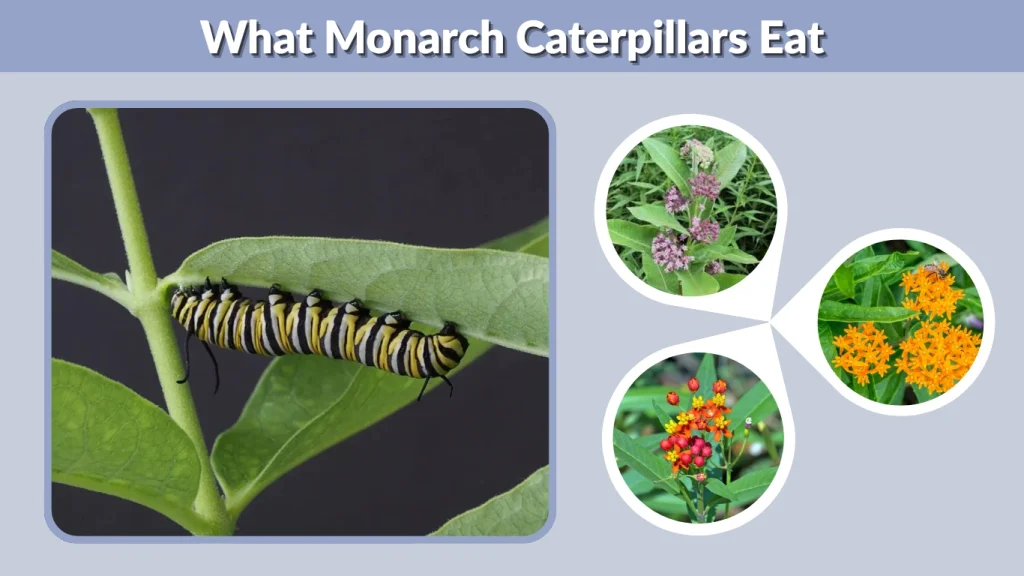
Milkweed: The Only Food Source
Monarch caterpillars eat only milkweed leaves — no exceptions. Milkweed plants contain cardenolides, a type of chemical toxin. These toxins don’t harm the caterpillars but instead make them poisonous and bitter-tasting to birds and small mammals. This chemical defense continues into adulthood, helping protect them even after they transform into butterflies.
Caterpillars start eating almost immediately after hatching from their eggs, consuming the shell first for protein and then chewing on the tender leaves. They eat continuously for nearly two weeks, growing rapidly and shedding their skin five times before pupating.
Common Milkweed Species Monarchs Prefer
| Milkweed Type | Scientific Name | Region | Notes |
| Common Milkweed | Asclepias syriaca | Eastern U.S. | Most common host plant for caterpillars |
| Butterfly Weed | Asclepias tuberosa | South & Midwest | Bright orange flowers; supports both larvae and adults |
| Tropical Milkweed | Asclepias curassavica | Florida & Hawaii | Year-round growth, easy to find in gardens |
| Swamp Milkweed | Asclepias incarnata | Wetlands | Grows in moist areas near ponds or ditches |
| Showy Milkweed | Asclepias speciosa | Western U.S. | Preferred host for western monarchs |
All of these plants provide the same toxic protection, but the availability of milkweed is what truly determines where monarchs can thrive and reproduce.
Do Caterpillars Eat Anything Else?
No — monarch caterpillars are specialist feeders. They don’t eat other plants, fruits, or each other. Even if other food sources are nearby, they instinctively choose milkweed. Occasionally, in overcrowded environments, caterpillars may appear to nibble on each other’s bodies, but this is usually accidental while competing for leaf space.
Do Caterpillars Eat Butterfly Weed?
Yes. Butterfly weed (Asclepias tuberosa) is actually a species of milkweed and a suitable food source for monarch caterpillars. Its bright orange flowers attract adult monarchs as well, providing both nectar for butterflies and leaves for caterpillars — making it an ideal dual-purpose plant for butterfly gardens.
What Adult Monarch Butterflies Eat

Nectar Sources
Once they emerge as adults, monarch butterflies switch from chewing to sipping. Using a long, straw-like tube called a proboscis, they drink nectar from flowers. Nectar provides sugars and trace minerals that give them the energy needed for flying, mating, and migrating thousands of miles.
Their feeding behavior is constant during warm daylight hours. You can often see them fluttering from bloom to bloom, pausing only briefly to drink before moving on to the next flower.
Favorite Flowers for Adult Monarchs
Monarchs are particularly attracted to brightly colored, nectar-rich flowers, including:
- Milkweed (both a nectar and larval plant)
- Lantana
- Zinnias
- Coneflowers
- Butterfly bush
- Joe-Pye weed
- Goldenrod
These flowers not only provide food but also help guide monarchs during migration, forming nectar corridors that sustain them on their long journey.
Other Foods Monarchs May Eat
While nectar is their primary diet, adult monarchs sometimes sip from:
- Overripe fruit like bananas, oranges, and watermelon
- Tree sap from damaged branches
- Mud puddles and damp soil, a behavior known as puddling, which supplies minerals and salts
These alternative food sources become especially important during migration or drought when flowers are scarce.
Feeding Behavior During Migration
Energy for Long Journeys
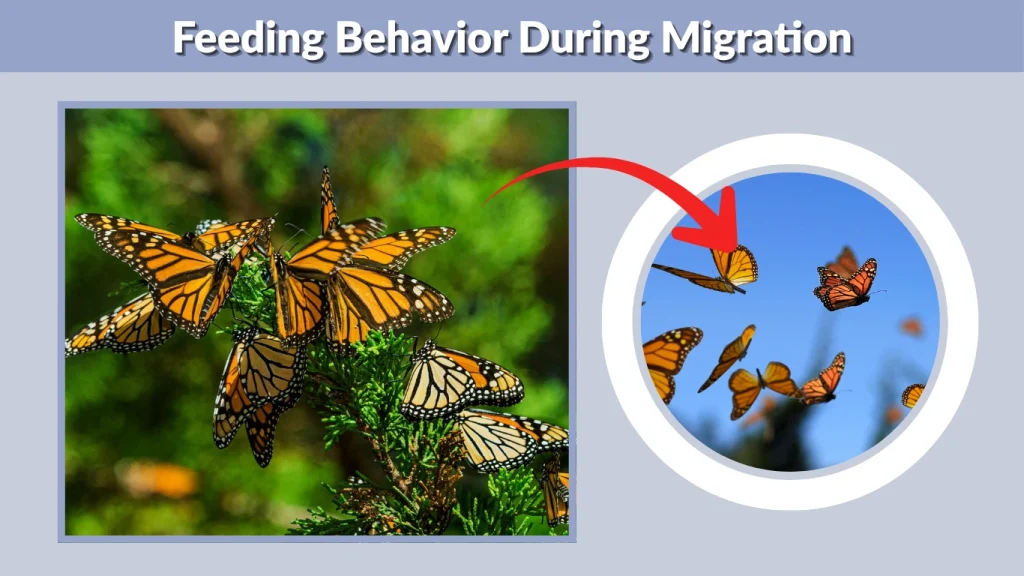
Each year, millions of monarch butterflies migrate thousands of miles from Canada and the northern United States to Mexico. This remarkable journey requires enormous amounts of energy, which comes from nectar-rich flowers. The carbohydrates in nectar are converted into fuel, allowing monarchs to sustain their long-distance flight.
Before migration, monarchs feed heavily on fall-blooming plants like goldenrod and asters. These late-season flowers are rich in nectar and help the butterflies build fat reserves. During migration, monarchs stop frequently to feed and rest, particularly in sunny meadows and roadside fields filled with wildflowers.
Feeding in Different Regions
- In the U.S. and Canada: Monarchs depend on native wildflowers such as coneflowers, sunflowers, and milkweed.
- In Mexico: While overwintering in mountain forests, monarchs feed very little, conserving their stored energy instead.
- In Hawaii and Florida: Populations that don’t migrate can feed year-round on tropical flowers like lantana, hibiscus, and bougainvillea.
Do Monarch Butterflies Drink Water?
Not directly. Monarchs absorb moisture and minerals from mud puddles, damp soil, or dew on leaves. This behavior, known as puddling, helps replenish electrolytes lost during flight and supports healthy reproduction.
Predators and What Eats Monarch Butterflies

Natural Predators
Despite their poisonous defense, monarchs do have predators that can tolerate the toxins from milkweed.
- Birds like black-headed grosbeaks, orioles, and blue jays are among the few species that eat adult monarchs.
- Insects such as praying mantises and assassin bugs may attack adults or caterpillars.
- Spiders, ants, and wasps often prey on monarch eggs and larvae before they mature.
What Eats Monarch Eggs and Caterpillars
- Ants and wasps: They consume the soft eggs or small caterpillars.
- Spiders: May catch caterpillars in webs.
- Lady beetle larvae: Occasionally feed on monarch eggs.
Even with these threats, monarchs reproduce in large numbers, ensuring the survival of the species despite high mortality rates among the young.
Why Most Animals Avoid Eating Monarchs
Monarchs’ bright orange and black coloring serves as a warning signal known as aposematism. It tells potential predators that they’re toxic or foul-tasting. The toxins (cardenolides) remain in their bodies from their milkweed diet, making most birds and small animals avoid eating them altogether.
Monarch Diet Myths
Do Monarchs Eat Meat or Each Other?
No. Monarchs are strictly herbivores. Both caterpillars and adults feed on plant-based materials — milkweed leaves or nectar. They do not eat meat, insects, or other monarchs.
Do Monarchs Eat Dill or Parsley?
No. Those plants are food for swallowtail caterpillars, not monarchs. Monarchs eat only milkweed as larvae, though adults may sip nectar from various flowers.
Do Monarchs Eat Their Chrysalis?
No. Once they form the chrysalis, monarchs stop eating entirely until they emerge as butterflies.
Do Monarch Butterflies Eat Bananas or Oranges?
Yes, occasionally. Adult monarchs may feed on overripe fruits like bananas, oranges, or watermelon, especially when nectar sources are limited. The sugary juices provide extra energy.
Interesting Facts About Monarch Feeding
- Monarch caterpillars eat constantly for about two weeks before forming their chrysalis.
- Adult monarchs use their proboscis like a straw to sip nectar.
- Monarchs gain their toxic defense entirely from eating milkweed as caterpillars.
- During migration, they can travel over 3,000 miles, feeding along “nectar corridors.”
- Monarchs prefer bright, open flowers with flat tops that make landing and feeding easier.
Their specialized feeding habits make them delicate yet powerful creatures, perfectly adapted to their remarkable migratory lifestyle.
FAQs
What do monarch butterfly caterpillars eat?
Monarch caterpillars eat only milkweed leaves. This is their sole food source and provides them with protective toxins that make them unpalatable to most predators. Without milkweed, monarch caterpillars cannot survive or develop into adult butterflies.
What do adult monarch butterflies eat?
Adult monarchs feed primarily on nectar from flowers like milkweed, zinnias, lantana, and goldenrod. They may also drink from overripe fruits or damp soil to gain extra sugars and minerals. Nectar gives them the energy they need for flight and migration.
What animals eat monarch butterflies?
Although monarchs are toxic, some predators have adapted. Blue jays, grosbeaks, orioles, praying mantises, and spiders are known to eat monarch butterflies, caterpillars, or eggs. Still, most animals avoid them due to their bitter taste.
Do monarch butterflies eat anything other than milkweed?
Yes and no. Caterpillars eat only milkweed, but adult monarchs drink nectar from many kinds of flowers. They sometimes sip fruit juice or tree sap if nectar is unavailable, especially during migration seasons.
Why do monarch butterflies eat milkweed?
Monarchs depend on milkweed for survival. It provides the nutrients and toxins that protect them from predators. The caterpillars’ bodies store these toxins, making both larvae and adults poisonous and ensuring their safety throughout their lifecycle.
