

Each year, millions of monarch butterflies make a spectacular migration journey from Canada and the United States to the forests of central Mexico. Traveling thousands of miles, these delicate creatures find refuge in the high mountain fir forests, where the climate provides ideal wintering conditions. The Monarch Butterfly Biosphere Reserve, a UNESCO World Heritage Site, preserves these habitats and offers visitors a once-in-a-lifetime chance to witness this breathtaking natural phenomenon.
Monarch Butterfly Migration Overview

Annual Journey and Route
The migration of monarch butterflies is one of the most remarkable events in the animal kingdom. Every fall, as temperatures drop in the north, monarchs begin a southward journey spanning nearly 3,000 miles. They travel across the central and eastern United States, through Texas, and finally arrive in central Mexico. This migration is guided by instinct and environmental cues, even though no single butterfly completes the entire round trip.
The route typically follows warm air currents and wind patterns that help the butterflies conserve energy. Their destination lies in the mountains of Michoacán and the State of Mexico, where they find the perfect microclimate for survival. Along the way, they rest on wildflowers and milkweed patches, feeding on nectar to maintain their strength.
Why Monarchs Migrate to Mexico
Monarch butterflies migrate to Mexico primarily to escape the freezing winters of North America. The oyamel fir forests of central Mexico provide cool, moist, and stable temperatures—conditions that are crucial for their survival. These forests offer shelter from wind, rain, and predators, allowing the butterflies to conserve energy during their hibernation period.
Another reason monarchs choose this region is altitude. The sanctuaries are located at elevations between 2,400 and 3,600 meters above sea level, providing the perfect balance between humidity and temperature. Without this migration, monarch populations in the northern hemisphere would not survive the harsh winter season.
Migration Timing and Season
When Monarchs Arrive in Mexico
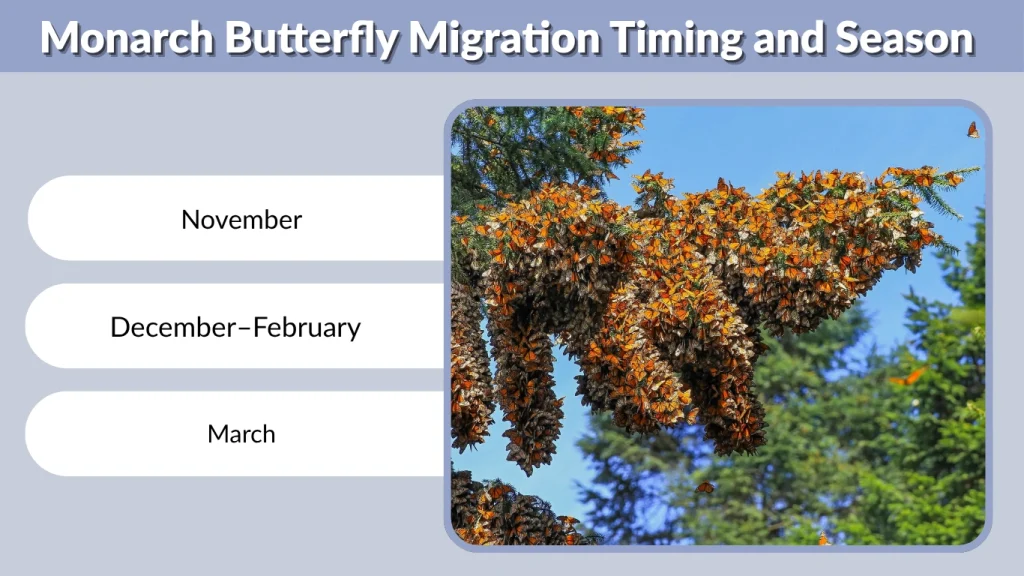
Monarch butterflies begin to arrive in Mexico from late October through early November, coinciding with Día de los Muertos (Day of the Dead). Locals often believe these butterflies represent the returning souls of loved ones, adding deep cultural meaning to their arrival. By December, vast colonies fill the forests, creating orange-and-black clouds that shimmer in the sunlight.
The overwintering season lasts until early March. During this period, butterflies remain mostly dormant, conserving energy until temperatures begin to rise. As spring approaches, they mate and prepare for the long journey northward, beginning the next generation’s migration cycle.
Best Time to Visit the Sanctuaries
The best months to observe monarch butterflies in Mexico are December through February when the colonies are most active and dense. During this time, millions of butterflies can be seen clustering on tree branches, covering entire trunks, and fluttering through the forest air.
| Month | Activity | Visitor Experience |
| November | Arrival | First clusters forming, cooler temperatures |
| December–February | Peak | Forests blanketed with butterflies, ideal for photography |
| March | Departure | Mating and northward migration begins |
If you plan a trip, visiting early in the morning or on sunny days enhances the experience—this is when the butterflies become more active, warming their wings in the sunlight.
Where to See Monarch Butterflies in Mexico
Monarch Butterfly Biosphere Reserve
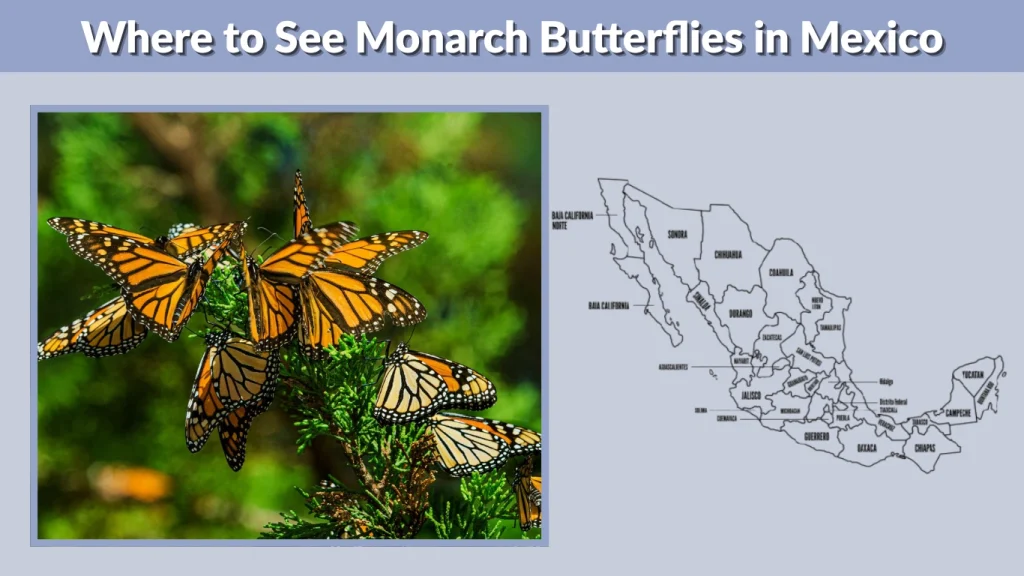
The Monarch Butterfly Biosphere Reserve covers over 56,000 hectares across the states of Michoacán and the State of Mexico. It protects several sanctuaries where millions of butterflies overwinter each year. This reserve not only supports conservation but also sustains local ecotourism communities that rely on butterfly season for income.
El Rosario Sanctuary (Michoacán)
El Rosario is the most famous and accessible sanctuary within the reserve. Located near the town of Angangueo, it offers well-maintained trails, viewing areas, and guided tours. Visitors often describe walking through the sanctuary as stepping into a living dream—trees blanketed in orange and the air filled with fluttering wings. Because of its easy access and impressive butterfly density, El Rosario is a must-visit for travelers.
Sierra Chincua Sanctuary
Situated near El Rosario, Sierra Chincua provides a quieter experience for nature enthusiasts. Its scenic trails wind through fir and pine forests, offering stunning views of the butterfly colonies and surrounding mountains. The sanctuary’s more remote location makes it ideal for photography, birdwatching, and peaceful hikes among millions of resting monarchs.
Monarch Butterfly Behavior in Mexico

Clustering and Resting
During their stay in Mexico, monarch butterflies display fascinating behavior known as clustering. To maintain warmth and conserve energy, thousands of butterflies cling together on tree branches and trunks, forming dense, living blankets of orange and black. This behavior helps regulate temperature and humidity within the colony. When the morning sun touches the forest, these clusters awaken and fill the sky with vibrant motion, creating one of nature’s most awe-inspiring sights.
Mating and Lifespan
The generation that migrates to Mexico, often called the Methuselah generation, lives far longer than any other—up to eight months. Most monarchs live just four to six weeks, but this special generation is biologically adapted to survive the entire winter season. As temperatures rise in February and March, they begin to mate. The females then start the long northward migration, laying eggs along the way, ensuring that new generations continue the cycle each year.
Ecological Importance
Role in Pollination
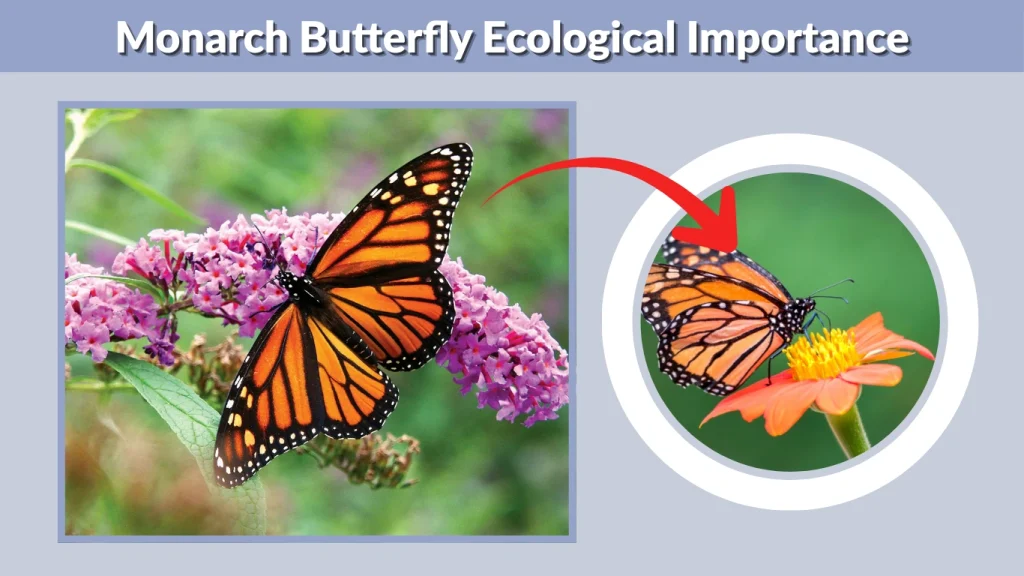
Monarch butterflies play an important role in maintaining healthy ecosystems. As they feed on nectar from various flowers, they aid in pollination, helping plants reproduce and sustain biodiversity. Although they are not as efficient as bees, their vast numbers make them significant contributors to pollination, especially during migration when they visit multiple habitats across North America.
Conservation Challenges
Despite their resilience, monarch butterflies face serious threats. Deforestation and illegal logging in the Mexican highlands reduce the availability of their winter habitat. In the north, pesticide use and loss of milkweed—the only plant their larvae can feed on—have led to population declines. Climate change also disrupts migration timing and alters the delicate balance of temperature and humidity monarchs depend on. Fortunately, both local and international conservation groups are working tirelessly to restore habitats and promote sustainable ecotourism.
Monarch Butterflies and Mexican Culture
Symbolism
In Mexican culture, monarch butterflies hold deep spiritual meaning. Their annual arrival coincides with Día de los Muertos, the Day of the Dead, a celebration that honors deceased loved ones. Many Mexicans believe that the butterflies represent the returning souls of ancestors, visiting the living world once again. This connection has made monarchs symbols of hope, transformation, and eternal life.
Monarch Butterfly Festival
Communities in Michoacán and nearby regions celebrate the butterflies’ arrival with colorful festivals featuring parades, music, traditional dances, and artisan markets. The Festival de la Mariposa Monarca in Angangueo is among the most popular. These events not only honor the monarchs’ return but also raise awareness about their conservation and the importance of protecting their forest sanctuaries.
Tourism and Visiting Tips
How to See Monarchs in Mexico
To witness the migration, plan your trip between November and March. Sanctuaries like El Rosario and Sierra Chincua are open to visitors during this period, with trained local guides leading tours through marked trails. Visitors should wear layered clothing, as temperatures in the mountains can be cool, and bring comfortable shoes suitable for hiking.
Tours from Mexico City
From Mexico City, several eco-tours offer one- or two-day trips to the monarch sanctuaries. The most popular destinations—El Rosario and Piedra Herrada—are about two to three hours away by car. Many tours include transportation, local guides, and horseback riding options for those who prefer a less strenuous journey. The experience is immersive, combining nature, culture, and conservation education.
Map and Migration Route
The monarch migration route stretches across North America—from southern Canada, through the central United States, and into the mountains of central Mexico. A map of this journey reveals the magnitude of their voyage: a delicate insect weighing less than a gram traveling thousands of miles to the same forests their ancestors visited. This remarkable instinctual navigation continues to intrigue scientists and inspire nature lovers worldwide.
FAQs
When do monarch butterflies migrate to Mexico?
Monarch butterflies begin their migration in late summer, with most arriving in Mexico between late October and early November. The timing perfectly aligns with the Day of the Dead, enhancing the mystical symbolism surrounding their arrival in the region.
Where in Mexico do monarch butterflies go?
The butterflies migrate to the high-altitude oyamel fir forests of Michoacán and the State of Mexico. The most famous viewing sites include El Rosario, Sierra Chincua, and Piedra Herrada within the Monarch Butterfly Biosphere Reserve.
Why do monarch butterflies migrate to Mexico?
They migrate to avoid the freezing temperatures of northern winters. Mexico’s mountain forests provide a stable climate—cool, moist, and protected from wind—which helps them conserve energy and survive until spring.
How long do monarch butterflies stay in Mexico?
Monarchs remain in Mexico for about four months, typically from November to March. During this period, they rest, mate, and prepare for their northward journey to the United States and Canada, where new generations will continue the migration cycle.
What does the monarch butterfly symbolize in Mexican culture?
In Mexican tradition, monarch butterflies symbolize transformation, renewal, and the souls of ancestors returning to visit during Día de los Muertos. Their migration embodies hope, endurance, and the deep connection between life, death, and nature.
