
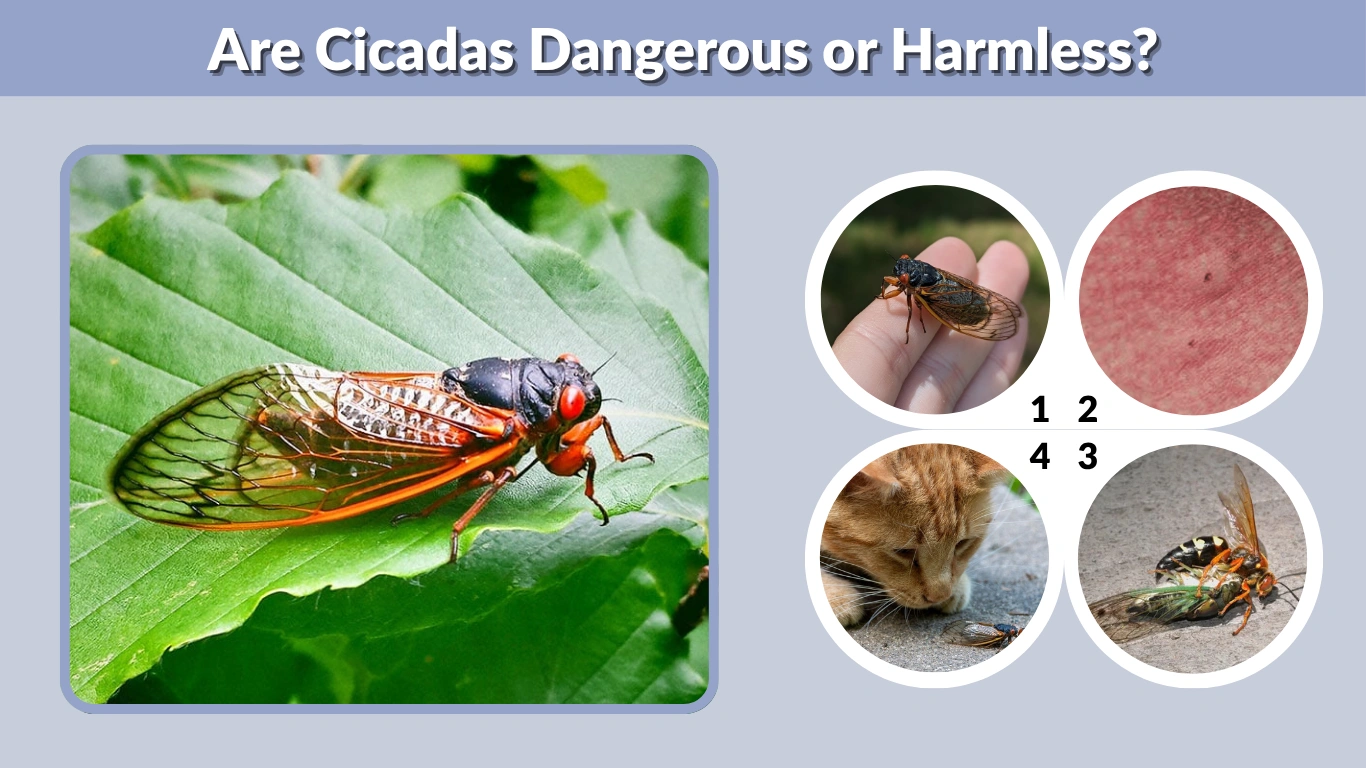
Every few years, the familiar hum of cicadas fills the summer air as millions emerge from underground. Their red eyes, large wings, and loud buzzing can make them seem alarming, but are cicadas dangerous? The short answer is no — cicadas are harmless creatures that pose no threat to people, pets, or plants. Despite their dramatic appearance, these insects play an important ecological role, signaling healthy soil and seasonal change.
Understanding Cicadas
What Are Cicadas?
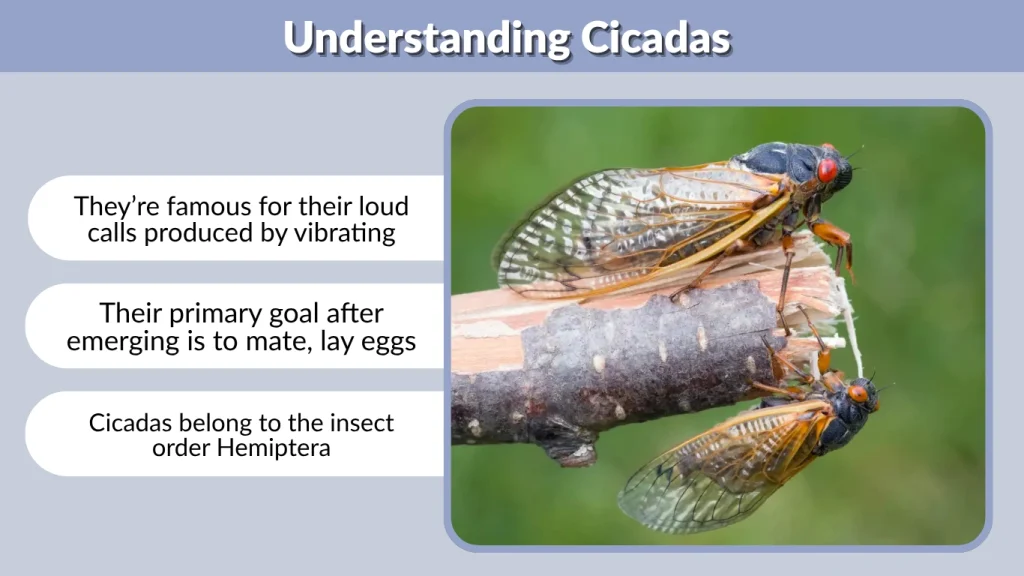
Cicadas belong to the insect order Hemiptera and are close relatives of leafhoppers and aphids. They’re famous for their loud calls produced by vibrating membranes on their abdomens. Over 3,000 species exist worldwide, and they thrive in warm climates across Asia, Africa, and North America.
Their primary goal after emerging is to mate, lay eggs, and complete a fascinating life cycle that has evolved over millions of years.
Types of Cicadas
There are two main categories of cicadas:
- Annual Cicadas – Appear every summer and live one to two years underground.
- Periodical Cicadas – Surface only every 13 or 17 years in huge synchronized broods such as Brood X.
Both are harmless, though their sudden emergence in large numbers often causes unnecessary alarm among people unfamiliar with them.
Are Cicadas Dangerous to Humans?
Do Cicadas Bite or Sting?
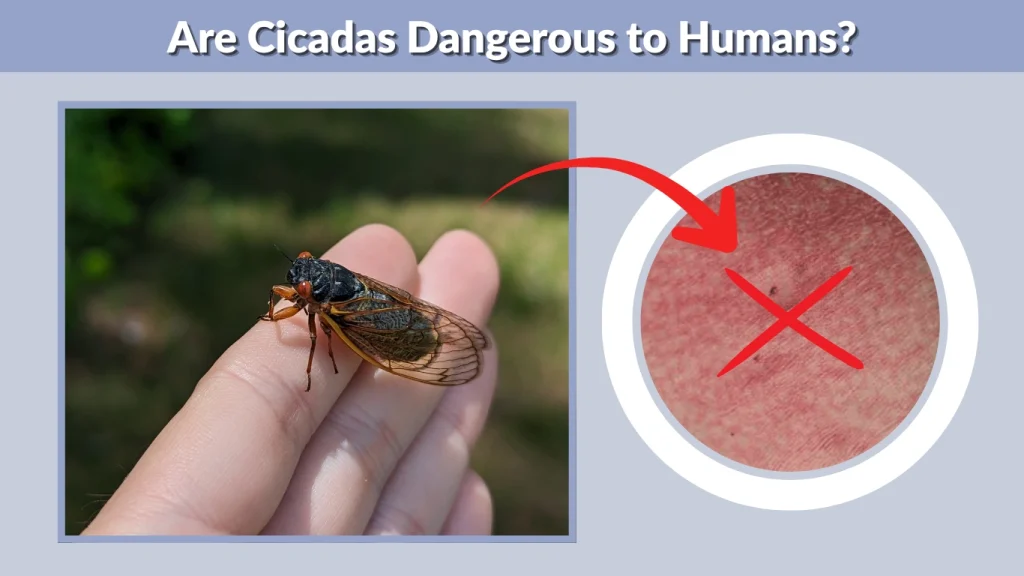
Cicadas do not bite or sting humans. Unlike wasps or mosquitoes, they lack venom glands or stingers. Their mouthparts are designed only for sucking sap from tree roots, not for piercing skin.
If one lands on you, it’s likely mistaking you for a tree branch. They may cling tightly with their claws, but they cause no pain or injury. Simply brush them off gently, and they’ll fly away.
Are Cicada Bites or Shells Dangerous?
Cicadas don’t bite at all, and their shed exoskeletons — the thin, brown shells often found on trees or walls — are completely safe. These shells are non-toxic, lightweight, and biodegradable. They may cause mild skin irritation for people with insect allergies, but otherwise, they pose zero danger.
Zombie Cicadas and Mites
A recent curiosity involves “zombie cicadas,” which are infected by the fungus Massospora. This parasite affects the cicada’s behavior but does not infect humans or animals. Similarly, small cicada mites sometimes attach to adult cicadas to hitch a ride. They neither bite nor spread disease and are harmless to people and pets.
Cicada Killer Wasps: The Misunderstood Giant
What Are Cicada Killer Wasps?
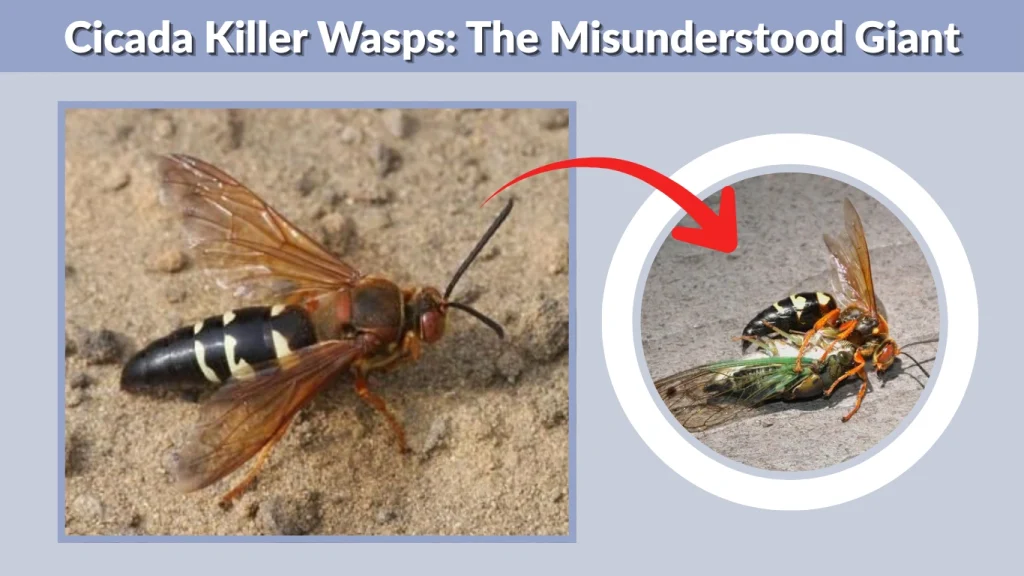
Large, hornet-like insects seen buzzing around lawns in midsummer are usually cicada killer wasps (Sphecius speciosus). Despite their intimidating size, these solitary wasps are gentle pollinators that hunt cicadas for food. Females capture cicadas, paralyze them with a mild sting, and carry them to underground burrows as nourishment for their larvae.
Are Cicada Killers Dangerous to Humans?
Although their name sounds threatening, cicada killer wasps are not dangerous.
- Males cannot sting at all — they lack stingers and rely on bluffing behavior to defend territory.
- Females sting only when handled or stepped on; they are not aggressive and avoid confrontation.
Their sting is mild compared to a honeybee’s and extremely rare. Most people live alongside these wasps without any negative encounters.
Eastern Cicada Killers and Behavior
The Eastern Cicada Killer is common throughout the U.S. and Canada. It burrows in sandy soil, preferring sunny areas like gardens and playground edges. While the sight of them hovering near the ground can be alarming, these wasps are simply searching for cicadas — not people.
They’re beneficial insects that help regulate cicada populations and pollinate flowers during their short summer lifespan.
Are Cicadas Dangerous to Pets?
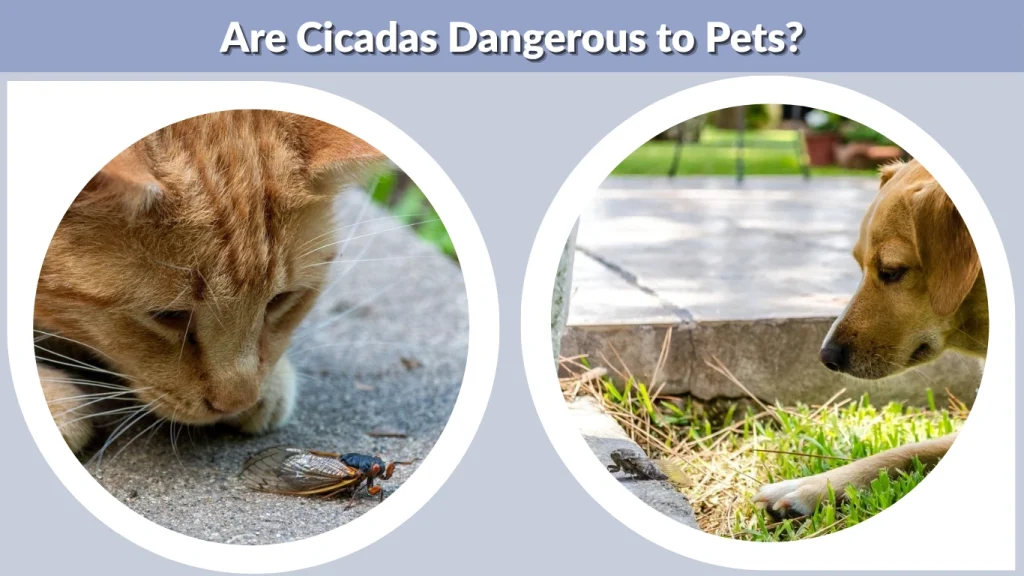
Cicadas and Dogs
Cicadas are not poisonous to dogs, but eating too many can cause digestive upset. Their exoskeletons are tough and indigestible, which may lead to vomiting or constipation.
If your dog snacks on a few, there’s no cause for panic, but discourage excessive consumption. Puppies and small breeds are at greater risk of choking on cicada shells, so supervision is key during cicada season.
Cicadas and Cats
Cats are naturally curious and may chase or paw at flying cicadas. Like dogs, they’re safe as long as they don’t eat large numbers. A single cicada won’t harm your cat, though the crunchy texture might upset its stomach. It’s best to clear empty shells and dead insects from patios or decks to reduce temptation.
Cicada Killer Wasps and Pets
Cicada killer wasps are gentle toward pets. Dogs might dig near their burrows or bark at their buzzing, but stings are exceedingly rare. Even if a pet is stung, the reaction is typically mild and temporary. Avoid using insecticides — these wasps will naturally leave once cicada numbers decline.
Cicadas and the Environment
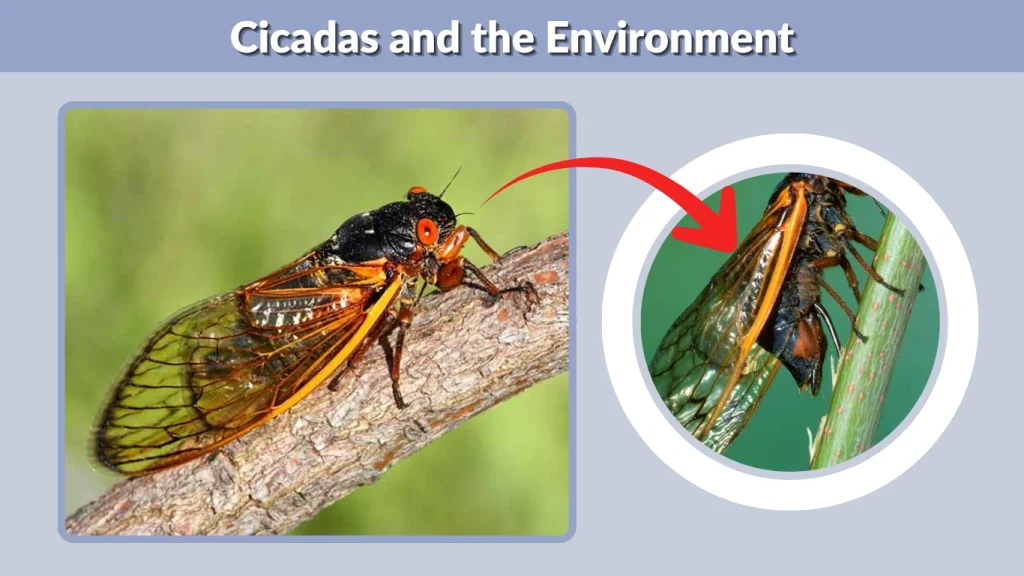
Are Cicadas Dangerous to Trees or Plants?
Cicadas do not eat leaves, flowers, or fruits, and they pose little threat to gardens. Their only interaction with trees happens during egg-laying season, when females make tiny slits in young branches to deposit eggs. This may cause slight “flagging” — the browning and wilting of small twigs.
Mature trees recover quickly, but young saplings can experience stress if infested heavily. Gardeners can protect delicate plants with light mesh coverings until the emergence passes. Once cicadas die off, they actually help nourish plants by returning nutrients to the soil.
Impact on Crops and Gardens
Farmers and gardeners have little to fear from cicadas. They do not chew leaves or stems like locusts. Instead, they feed on underground sap from tree roots, which rarely causes visible damage. After mating, adult cicadas die within weeks, leaving behind shells that decompose naturally and enrich the soil.
Cicadas also aerate the ground through their exit holes, improving water flow and root oxygenation — an unexpected gift for your garden.
Cicadas and Oak Trees
Species such as live oaks or white oaks may show minor twig dieback following heavy cicada activity. This is temporary and often prunes weak growth naturally. Cicadas, in essence, act as nature’s gardeners, thinning out less-healthy branches while providing food for birds and other wildlife.
Cicada Myths and Misconceptions
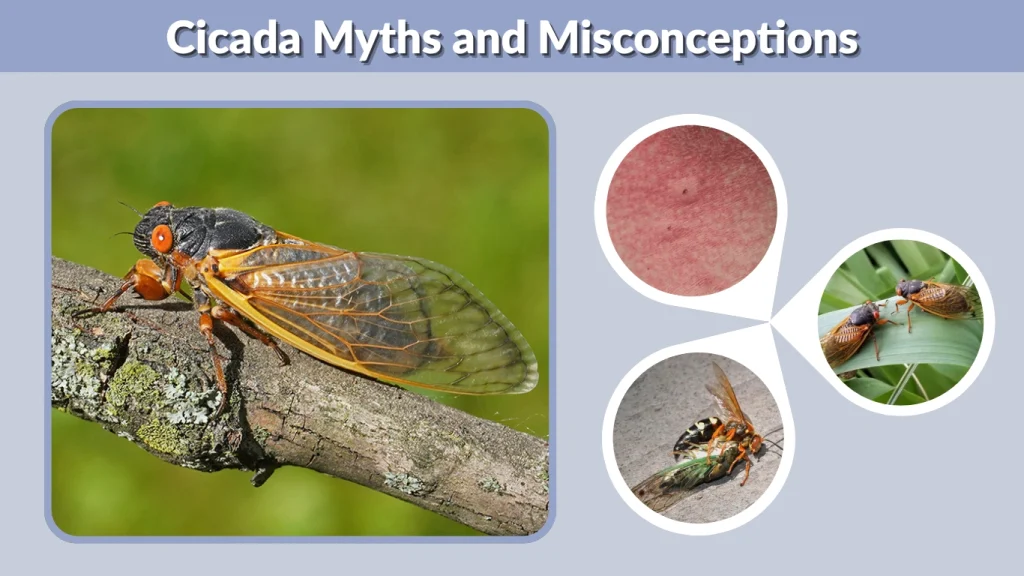
Myth 1: Cicadas Are Dangerous to People
Completely false. Cicadas don’t bite, sting, or carry disease. The only “attack” they make is unintentional — sometimes bumping into humans while flying awkwardly. Their clumsy flight and loud buzz can startle people, but they are entirely harmless.
Myth 2: Cicadas Are a Plague
Though they appear in overwhelming numbers, cicadas are signs of a balanced ecosystem, not destruction. Their mass emergences feed countless animals and enrich the soil with nitrogen after they die. Within weeks, they disappear quietly until the next cycle.
Myth 3: Cicada Killer Wasps Are Aggressive
Despite their intimidating size, cicada killers are solitary and non-aggressive. They won’t swarm or defend a nest the way hornets do. Females sting only cicadas, and males simply buzz around to protect territory. They’re useful pollinators that help keep the environment in check.
Myth 4: Cicada Shells Spread Disease
Those crunchy shells you find on trees are just molted exoskeletons — clean, harmless, and even used in educational displays. They can be handled safely or composted to recycle minerals back into the soil.
Safety Tips During Cicada Season
For People
- Avoid panicking when cicadas emerge; they don’t harm or chase humans.
- Wear sunglasses or a hat when walking under trees — flying cicadas sometimes collide mid-air.
- Sweep or hose away shells from patios and sidewalks to reduce clutter.
- Reduce outdoor noise sensitivity by keeping windows closed during peak buzzing hours.
For Pets
- Keep an eye on dogs and cats during walks; discourage eating multiple cicadas.
- Provide plenty of water — the crunchy exoskeleton can cause mild dehydration if eaten.
- If vomiting or lethargy occurs after heavy ingestion, contact a vet for guidance.
- Avoid pesticide use; chemical sprays are more dangerous to pets than the cicadas themselves.
For Plants
- Use fine mesh netting to protect young fruit trees and ornamentals.
- Avoid pruning until the cicada season ends, since open wounds attract egg-laying females.
- Leave dead cicadas on the soil if possible — their bodies enrich the ground naturally.
Regional and Seasonal Notes
Eastern and Southern States
In the eastern U.S., especially in states like Georgia, Tennessee, and Virginia, periodical cicadas emerge every 13 or 17 years. These events, known as broods (like Brood X), bring billions of insects above ground at once. They’re loud but short-lived, lasting only four to six weeks.
At the same time, Eastern Cicada Killer Wasps appear to hunt them. Despite their name, they rarely sting humans and will vanish by the end of summer once cicadas are gone.
Western and Northern Regions
In the Midwest and western U.S., annual cicadas appear every year in smaller numbers. Their buzzing is noticeable but not overwhelming, and their effect on local vegetation is minimal. These species thrive in warmer months, often signaling the peak of summer heat.
Ecological Importance of Cicadas
Nature’s Soil Builders
Cicadas are key players in soil health. When they emerge, they create thousands of small tunnels that aerate the ground, allowing air and water to reach plant roots. After dying, their bodies act as natural compost, returning nitrogen to the soil and supporting plant growth.
A Feast for Wildlife
Birds, raccoons, squirrels, foxes, and even fish rely on cicadas as a seasonal food source. This abundance helps reduce predation pressure on other species. Once the cicadas vanish, ecosystems return to normal, refreshed by the sudden pulse of nutrients.
A Sign of Environmental Balance
Scientists view cicada emergence as indicators of healthy forests. Their survival requires long-term soil stability, meaning that areas supporting cicada broods often have intact ecosystems and minimal pollution.
FAQs
Are cicadas dangerous to humans?
No. Cicadas are harmless insects that neither bite nor sting. Their loud calls can be annoying, but they pose no physical threat or health risk.
Are cicada killer wasps dangerous?
No. These wasps are docile and sting only when handled. Males can’t sting at all. They play an important role in pollination and natural pest control.
Are cicadas dangerous to dogs or cats?
Not toxic, but eating too many can upset a pet’s stomach or cause choking. Keep an eye on pets during cicada season to prevent overeating.
Can cicadas harm trees or crops?
Only young trees may experience minor twig damage from egg-laying. Mature plants and crops remain unharmed, and the soil benefits once cicadas decompose.
Are zombie cicadas dangerous?
No. The fungus that alters their behavior affects only cicadas. It cannot spread to humans, pets, or other animals.
