
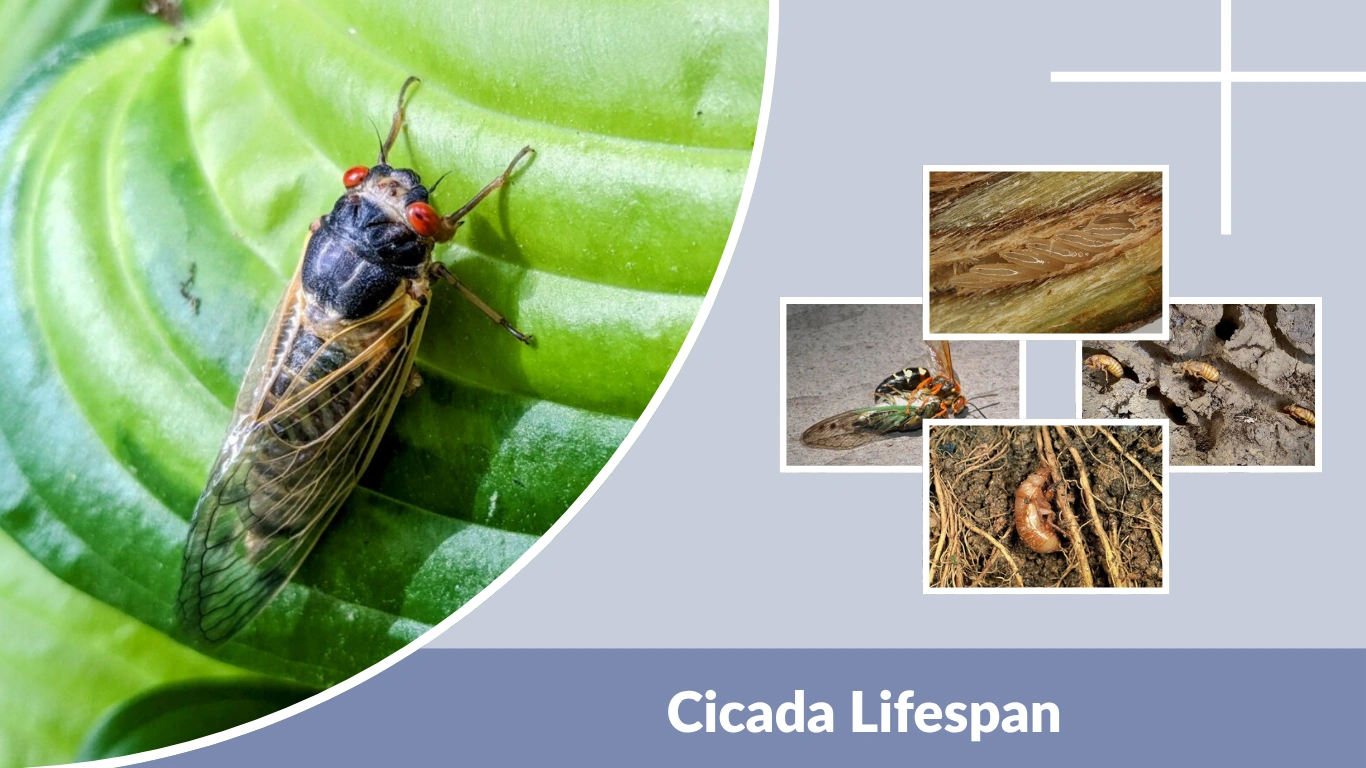
Cicadas are fascinating insects that have captivated scientists and nature lovers for centuries. Known for their loud, buzzing calls and synchronized mass emergencies, cicadas live much longer than most insects — but only spend a few weeks above ground. Depending on the species, their lifespan can last from 2 years to 17 years, most of it hidden beneath the soil. Let’s explore the full journey of a cicada’s life, from its underground youth to its brief but noisy adulthood.
Understanding the Cicada Life Cycle
What Is the Lifespan of a Cicada?
A cicada’s lifespan can vary greatly depending on the species. Annual cicadas live around 2 to 5 years, while periodical cicadas, such as the famous 13-year and 17-year varieties, spend over a decade underground before emerging.
Most of their life is spent as nymphs, feeding on plant root sap beneath the soil. When conditions are right — typically when the soil reaches about 64°F (18°C) — mature nymphs dig their way to the surface, molt, and become winged adults. Once above ground, their remaining time is short, lasting just a few weeks before they die after mating.
Stages of a Cicada’s Life
Cicadas undergo three main stages in their life cycle:
- Egg: Female cicadas lay eggs inside slender tree branches.
- Nymph: After hatching, young cicadas drop to the ground, burrow underground, and feed on tree roots for years.
- Adult: They emerge, molt, sing to attract mates, reproduce, and die soon afterward.
This remarkable transformation from underground dweller to aerial singer is one of nature’s most extraordinary life stories.
Underground Life: The Longest Phase
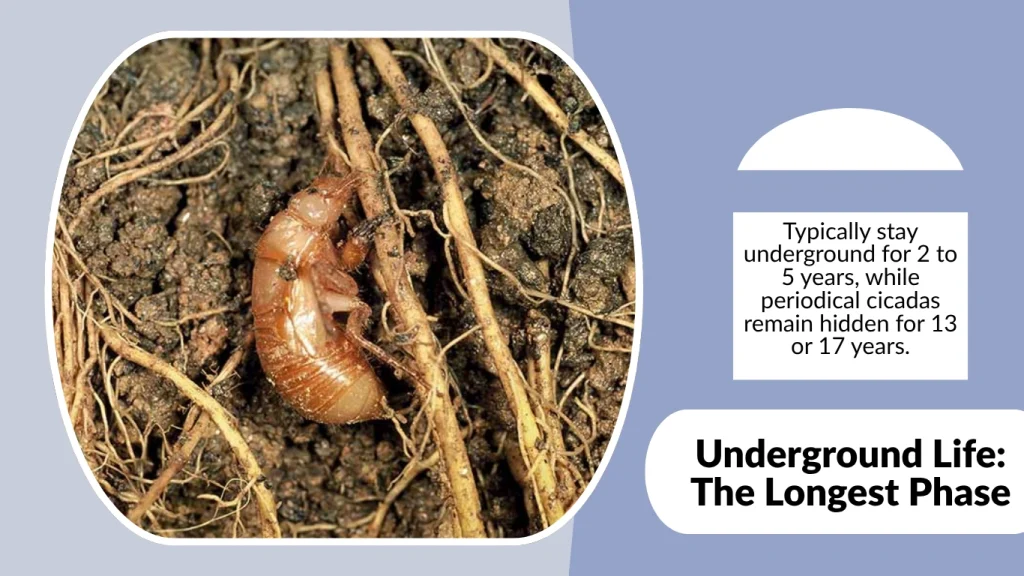
Nymph Stage Duration
For cicadas, the nymph stage represents the majority of their lifespan. Underground, nymphs survive by sucking sap from the roots of trees and plants. Annual cicadas typically stay underground for 2 to 5 years, while periodical cicadas remain hidden for 13 or 17 years.
These long cycles are not wasted time. During this stage, the nymphs grow slowly and molt several times, preparing for their brief life above the soil. Their tunnels also help aerate the ground, allowing oxygen and nutrients to reach plant roots — a subtle but beneficial ecological role.
Why 13 and 17 Years?
The numbers 13 and 17 are prime numbers, and scientists believe this unique timing evolved as a survival strategy. Because these numbers are indivisible by smaller cycles, it reduces the chances that predators’ population cycles align with the cicadas’. When billions emerge simultaneously, predators such as birds and small mammals are overwhelmed, ensuring that most cicadas survive to reproduce.
This synchronized survival strategy has helped cicadas thrive for millions of years, creating one of the most efficient population systems in the natural world.
Brood X and Periodical Cicadas
One of the most famous examples of this phenomenon is Brood X, a massive group of 17-year cicadas that last emerged in 2021 across eastern North America. These insects spent nearly two decades underground, feeding silently on root sap before surfacing in incredible numbers.
When they emerge, forests and towns are filled with their buzzing chorus, signaling a rare and spectacular event. Within weeks, they mate, lay eggs, and die — but their offspring begin the cycle anew, returning to the soil for another 17 years.
Above-Ground Life: The Shortest but Loudest Stage
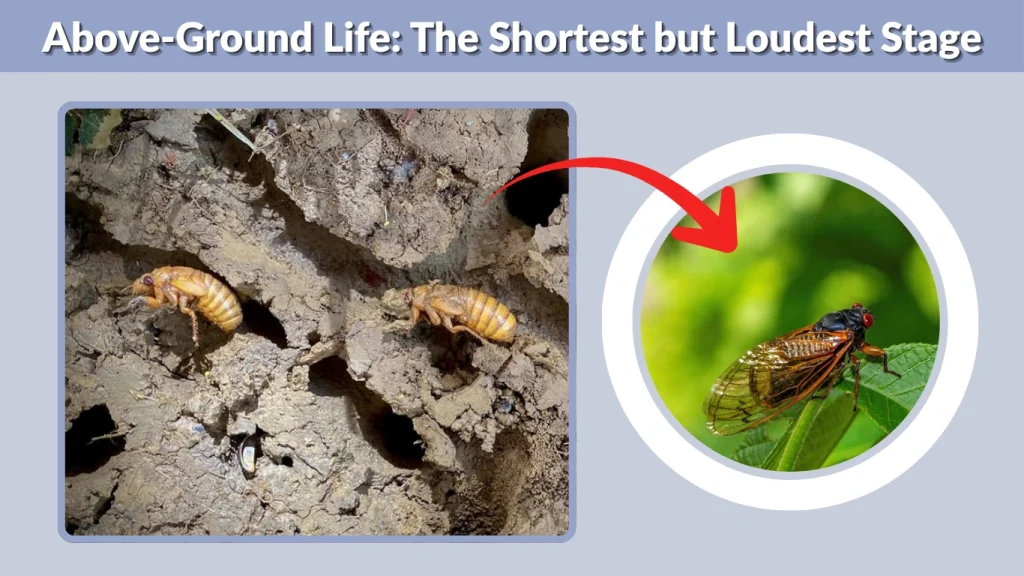
Adult Cicada Lifespan
After spending years underground, cicadas live only 2 to 6 weeks once they reach adulthood. Upon emerging, they molt one final time, shedding their hard shell — the exoskeletons you often find clinging to trees or fences.
Adult cicadas have two main goals: to mate and lay eggs. Males use special vibrating organs, called tymbals, to produce their loud buzzing calls that attract females. After mating, females deposit eggs into tree branches, continuing the cycle.
During this short above-ground phase, cicadas don’t feed much — they rely on stored energy from their years underground. They soon die naturally, leaving their eggs to hatch and drop to the soil, where the next generation begins.
Cicada Lifespan After Emerging
The above-ground life of a cicada is brief and fragile. Weather, predators, and human interference can shorten it even further. Males typically die first after mating, while females live a little longer to complete egg-laying.
Once they’ve fulfilled their purpose, cicadas fall to the ground, and their bodies decompose, enriching the soil with nutrients like nitrogen. In this way, even in death, cicadas contribute to the health of their environment.
Annual vs. Periodical Cicadas
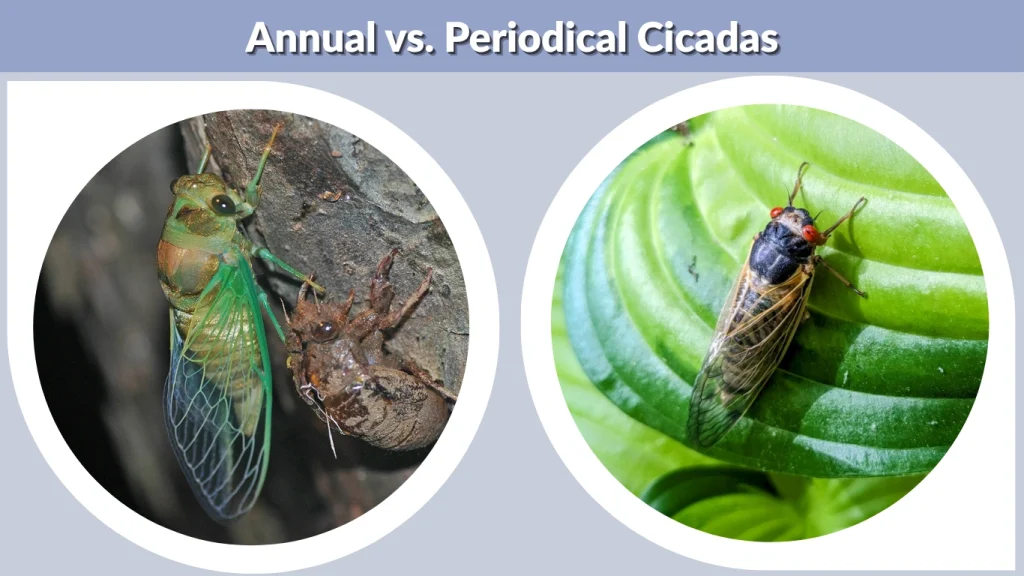
Annual Cicadas
Annual cicadas, also known as dog-day cicadas, appear every summer and are found throughout North America. Their overlapping generations make them seem “annual,” though each individual still lives several years underground.
They’re greenish or brown with black markings and are less noisy than their 17-year relatives. Their entire lifespan — from egg to death — lasts around 2 to 5 years.
Periodical Cicadas
Periodical cicadas, from the genus Magicicada, are unique to the eastern United States. They emerge only after 13 or 17 years, depending on the brood. During these rare events, millions of cicadas fill the air with sound, turning forests into living concert halls.
Despite their intimidating numbers, periodical cicadas are completely harmless to humans and animals. Their synchronized life cycles ensure population survival, creating one of nature’s most breathtaking spectacles.
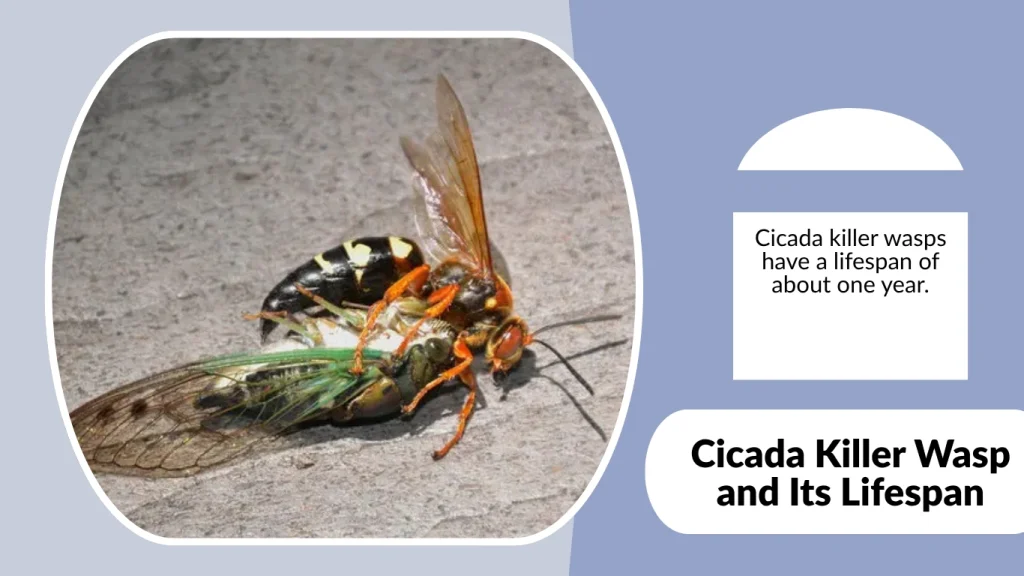
Cicada Killer Wasp and Its Lifespan
Predator and Prey Relationship
Where cicadas thrive, their natural predators are never far behind — especially the cicada killer wasp (Sphecius speciosus). Despite its fearsome name and large size, this wasp is not a threat to humans. Instead, it preys almost exclusively on cicadas, playing an important ecological role.
Cicada killers are solitary insects, meaning they don’t form colonies like hornets or yellowjackets. They emerge in midsummer, coinciding perfectly with cicada activity. Females capture and paralyze cicadas using a mild sting, then carry them to underground burrows to feed their developing larvae.
Cicada Killer Wasp Lifespan
Cicada killer wasps have a lifespan of about one year. Most of that time is spent underground as larvae, feeding on cicadas provided by the adult female. When mature, they emerge as adults, mate, and repeat the cycle.
Adults live only a few weeks, similar to cicadas themselves. Males cannot sting at all, while females sting only in defense, making them harmless to people and pets.
This predator-prey cycle keeps both populations balanced — a natural system that has existed for thousands of years.
Cicada Lifespan by Region
North American Cicadas
North America is home to both annual and periodical cicadas.
- Annual cicadas (genera Neotibicen and Diceroprocta) appear every summer.
- Periodical cicadas (Magicicada species) emerge on a strict 13- or 17-year schedule.
In the U.S., large broods such as Brood X, Brood XIX, and Brood XIII follow exact cycles that have been tracked for decades. These mass emergences are concentrated mostly in the Midwest, Southeast, and Mid-Atlantic regions.
Other Global Cicada Species
Cicadas exist on every continent except Antarctica.
- In Asia and Australia, some species emerge annually or even multiple times per year.
- In tropical regions, their underground phase is often shorter because warm temperatures allow for faster development.
- In Canada and Northern Europe, fewer cicada species exist due to cooler climates, but they share similar lifespans — several years below ground and just weeks as adults.
Though lifespans vary, their biology and life purpose remain the same everywhere: to grow underground, sing briefly above ground, and restart the cycle.
Environmental Factors Affecting Cicada Lifespan

Predators
Cicadas face numerous natural predators including birds, bats, wasps, ants, spiders, and small mammals. However, when billions emerge at once, their sheer numbers overwhelm predators, ensuring enough survive to reproduce.
Fungal infections, particularly from the Massospora fungus, can shorten adult lifespans by infecting the reproductive organs — creating the so-called “zombie cicadas.” Despite their name, these fungi pose no risk to humans or pets.
Weather and Habitat Conditions
Cicada populations rely heavily on stable environmental conditions.
- Droughts, flooding, or soil compaction can kill developing nymphs.
- Cold or prolonged wet seasons delay emergence by a year or more.
- Pesticides and urban construction reduce survival rates by poisoning soil or removing host trees.
Healthy forests, parks, and suburban green spaces are essential for sustaining cicada broods. Once their natural habitats disappear, cicada lifespans — and entire broods — can be lost forever.
Why Cicadas Live So Long Underground
Evolutionary Advantages
The long underground stage of cicadas may seem excessive, but it’s a brilliant evolutionary strategy. By living undetected for over a decade, cicadas minimize exposure to predators and harsh weather. Their emergence timing — often in prime-numbered years (13 or 17) — reduces overlap with predator population cycles, enhancing survival odds.
This mathematical pattern, known as prime-number synchronization, is one of nature’s most intriguing mysteries. It ensures that predators depending on cicadas cannot easily adapt to their schedule.
Ecological Benefits
Even in death, cicadas enrich the environment. After their brief adult stage, their bodies decompose, adding nutrients like nitrogen to the soil. Their underground tunnels aerate the earth, improving root oxygen flow and water absorption for plants.
When billions die after a mass emergence, their decomposition boosts soil fertility, resulting in lush vegetation the following year — a natural cycle of renewal.
Cicada Lifespan in Captivity
While some enthusiasts attempt to raise cicadas, they are nearly impossible to keep as pets. Their survival depends on access to live tree roots underground, which can’t be replicated in captivity. Adult cicadas live only a few weeks, even in controlled conditions.
Sometimes, people confuse cicadas with “pet cicada turtles,” but that term refers to an entirely different animal. True cicadas are wild insects best observed in their natural habitats during emergence seasons.
Fun Facts About Cicada Lifespans
- The 17-year cicada has one of the longest life cycles of any insect on Earth.
- Cicadas were once mistaken for locusts in early American history due to their mass appearances.
- After dying, cicadas’ remains enrich forests more effectively than some commercial fertilizers.
- A single tree may host hundreds of cicada exoskeletons after an emergence event.
- Some periodical cicadas spend nearly two-thirds of a human childhood underground before surfacing.
FAQs
What Is the Average Lifespan of a Cicada?
The average cicada lives 2–5 years for annual species and 13 or 17 years for periodical species. Most of this time is spent underground as a nymph.
How Long Do Adult Cicadas Live After Emerging?
Adult cicadas live only 2–6 weeks above ground. Their short lifespan is dedicated entirely to reproduction.
How Long Do 17-Year Cicadas Stay Above Ground?
About four to six weeks, just long enough to mate and lay eggs before dying naturally.
What Is the Lifespan of a Cicada Killer Wasp?
Cicada killer wasps live roughly one year, spending most of their lives underground as larvae feeding on cicadas.
Why Do Cicadas Spend So Many Years Underground?
Their long cycles help them avoid predator synchronization and harsh environmental changes. The timing ensures that when they do emerge, their population size overwhelms predators, guaranteeing species survival.
