

Before a dragonfly becomes the graceful flier we admire, it spends most of its life underwater as a nymph — a fierce, efficient predator that dominates ponds, lakes, and streams. This hidden stage of its life is both fascinating and vital to the ecosystem. Dragonfly nymphs play an essential role in controlling mosquito populations and serve as indicators of clean, healthy water. Let’s dive deeper into their appearance, habitat, and extraordinary adaptations.
Scientific Classification and Identification

Taxonomy
Dragonfly nymphs belong to the order Odonata and the suborder Anisoptera, which they share with adult dragonflies.
- Kingdom: Animalia
- Phylum: Arthropoda
- Class: Insecta
- Order: Odonata
- Suborder: Anisoptera
- Common Name: Dragonfly Nymph or Larva
They are closely related to damselflies (suborder Zygoptera), though damselfly nymphs differ in structure and swimming style.
Identification Features
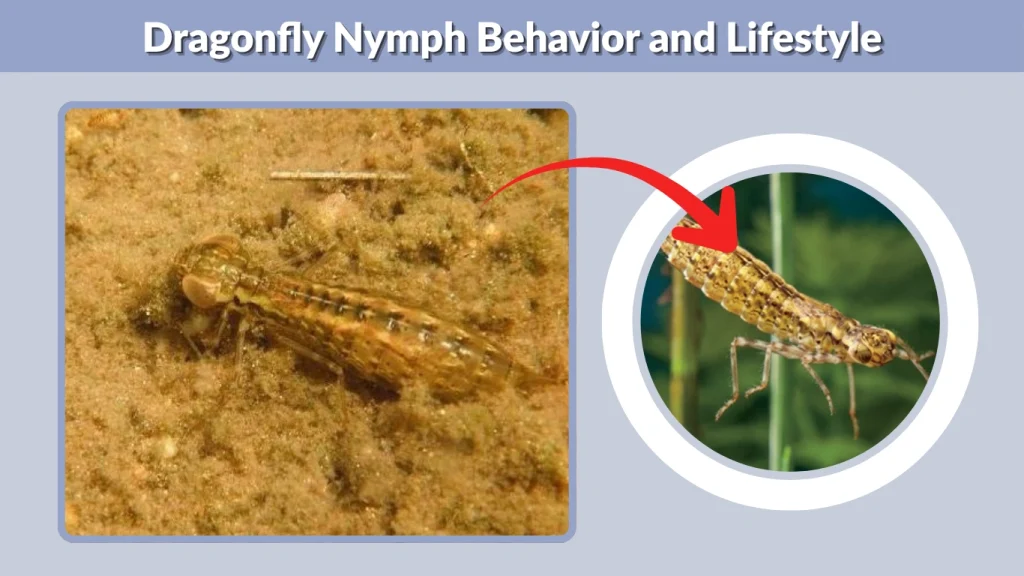
- Body Shape: Short, thick, and compact for easy movement underwater.
- Eyes: Large and prominent, providing nearly 360° vision.
- Antennae: Short and bristle-like, unlike many other insects.
- Legs: Strong, spiny, and positioned near the head for grabbing prey.
- Mouthparts: Extendable lower jaw (labium) that shoots forward to catch prey.
- Coloration: Brown, olive, or green for camouflage in mud and plants.
- Gills: Internal rectal gills used for both breathing and jet propulsion.
- Size: Typically ranges from 1 to 5 centimeters, depending on species.
Life Cycle and Development

Stages of Growth
A dragonfly’s life cycle consists of three main stages:
- Egg – Laid in or near water by the female dragonfly.
- Nymph (Larva) – The aquatic phase, lasting from several months to a few years.
- Adult – The flying, reproductive stage.
After hatching, the nymph spends most of its life underwater, hunting and growing. During this time, it undergoes 8 to 15 molts, shedding its exoskeleton each time to grow larger. This molting process allows the nymph to regenerate damaged limbs and adapt to its expanding body size.
Transformation into Adult
When fully grown, the nymph crawls out of the water onto a plant stem or rock. Its skin splits open, and the adult dragonfly emerges in a remarkable transformation called emergence. The wings expand and harden as the new dragonfly adjusts to life in the air. The empty shell, known as the exuvia, remains clinging to the plant as a reminder of this metamorphosis.
Unlike butterflies, dragonflies undergo incomplete metamorphosis — meaning they don’t have a pupal stage. The transition from aquatic predator to airborne hunter happens directly from nymph to adult.
Difference Between Nymph and Adult
Dragonfly nymphs are aquatic, wingless, and gilled, while adults are aerial and winged. The nymph’s world is underwater, hunting mosquito larvae and tadpoles, whereas adults soar above the surface, feeding on flying insects. The two forms look so different that it’s hard to believe they’re the same creature in different stages of life.
Habitat and Environment

Preferred Aquatic Habitats
Dragonfly nymphs inhabit freshwater environments such as ponds, lakes, marshes, and slow-moving streams. They prefer shallow water with abundant vegetation, where they can hide and hunt effectively. Vegetation provides both cover from predators and perches for ambushes.
Different species favor different habitats:
- Clubtail Dragonfly Nymphs thrive in sandy-bottomed rivers.
- Darner Nymphs prefer still or slow-moving water with dense plant life.
- Emperor Dragonfly Nymphs are common in large ponds and lakes.
Environmental Conditions
Healthy dragonfly nymph populations indicate clean, oxygen-rich water. They rely on high oxygen levels for respiration through their rectal gills. Polluted or stagnant waters can suffocate them or reduce their food sources.
Environmental changes, such as pesticide runoff or mosquito-control chemicals (like BTI dunks), can unintentionally harm nymphs. Because they are so sensitive to water quality, scientists often use them as bioindicators to assess ecosystem health.
Adaptations for Aquatic Life
Dragonfly nymphs are masterfully adapted to underwater living. Their rectal gills double as propulsion engines — they draw in water and shoot it out rapidly, propelling themselves forward in bursts. This form of jet propulsion allows both quick escape and stealthy hunting.
Their coloration provides camouflage, blending them into muddy or leafy surroundings. When threatened, they can burrow into the sediment or remain perfectly still until the danger passes. Their combination of speed, stealth, and camouflage makes them one of the top aquatic predators in their habitat.
Anatomy and Adaptations

Respiration and Movement
Dragonfly nymphs breathe through gills located inside the rectum, a unique adaptation among insects. By contracting their abdomen, they can draw water in and out, extracting oxygen as it passes over the gill surfaces. This same mechanism allows them to shoot forward like tiny underwater rockets.
Their six jointed legs are used primarily for gripping prey and crawling rather than swimming. When necessary, a powerful expulsion of water provides a rapid getaway from predators such as fish or frogs.
Defense Mechanisms
To survive, nymphs rely on both camouflage and armor-like skin. Their muted tones help them disappear into the environment, while their tough exoskeleton protects them from small predators. If attacked, they can quickly eject a jet of water to retreat into safety.
Another remarkable ability is limb regeneration. If a leg is lost, it can regrow during the next molting stage — a rare advantage that helps them recover from injuries in their rough underwater world.
Feeding and Diet

What Dragonfly Nymphs Eat
Dragonfly nymphs are among the most effective predators in freshwater ecosystems. Their diet mainly includes mosquito larvae, worms, small crustaceans, tadpoles, and even tiny fish. Using stealth and patience, they wait until their prey comes close before striking with lightning speed. This makes them not only essential to natural mosquito control but also vital in maintaining ecological balance in ponds and streams.
Hunting Behavior
The nymph’s secret weapon is its extendable lower jaw, or labium. When a target comes within range, the jaw shoots forward faster than the blink of an eye, seizing prey with hooked tips. The captured animal is pulled back toward the mouth and consumed whole.
Dragonfly nymphs are ambush hunters, lying still among submerged plants or mud. Some species are nocturnal hunters, using darkness for stealth. In aquariums, they can be observed stalking prey with surprising intelligence and accuracy.
Role in the Food Chain
Dragonfly nymphs occupy a crucial mid-level position in aquatic food webs. They act as predators to smaller creatures like mosquito larvae and worms while serving as prey for fish, frogs, and birds. By feeding on mosquito larvae, they naturally reduce pest populations — one nymph can devour hundreds of mosquitoes per day. Their predatory efficiency makes them vital allies in controlling disease-carrying insects.
Behavior and Lifestyle
Locomotion and Movement
Dragonfly nymphs move with an impressive combination of stealth and speed. Most of the time, they crawl slowly along the pond floor using their legs. When quick movement is needed, they use jet propulsion, ejecting water from their rectum to propel themselves forward. This rapid burst helps them chase prey or evade predators.
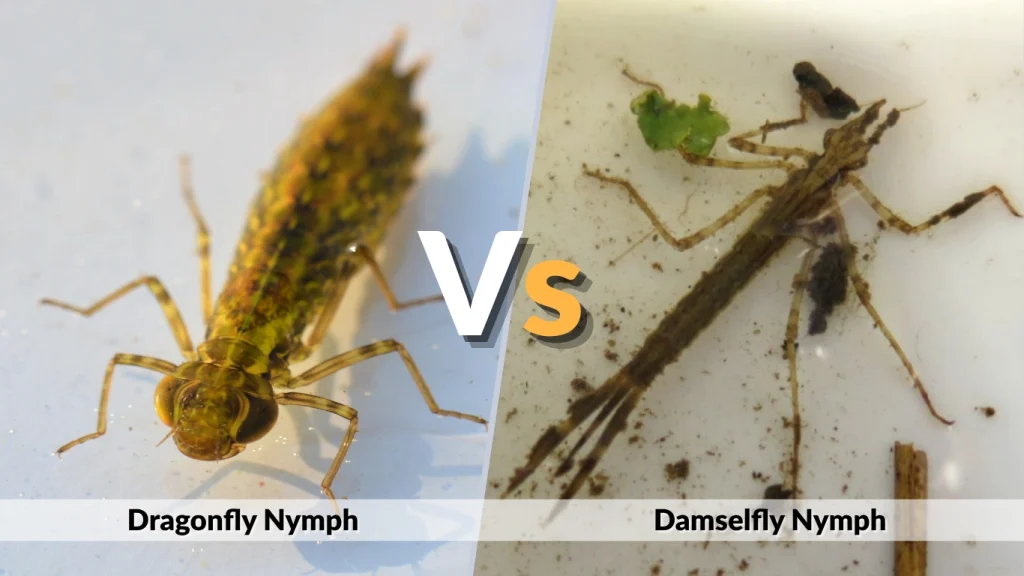
Their movement style differs from damselfly nymphs, which rely on tail undulations. This is a defining difference between the two groups and reflects their distinct adaptations to their environments.
Growth and Molting
As the nymph grows, it sheds its exoskeleton multiple times in a process known as molting. Each molt, or instar, reveals a larger, more mature body. The nymph is vulnerable during this stage, as its new exoskeleton is soft and takes time to harden.
Before the final molt, the nymph climbs a plant stem above water. Its skin splits open, and an adult dragonfly emerges — leaving the empty shell, or exuvia, behind. This transformation marks the transition from an aquatic to an aerial predator.
Predators and Defense
Despite being skilled hunters, dragonfly nymphs have many enemies. Fish, frogs, turtles, and water birds all feed on them. To survive, nymphs rely on camouflage, burrowing, and quick escapes. Their dull colors help them disappear into mud or vegetation, while their ability to remain still for long periods makes them difficult to detect.
Some species even play dead to avoid being eaten. Combined with their regenerative abilities, these traits make them some of the most resilient insects in freshwater ecosystems.
Buying and Keeping Dragonfly Nymphs
Where to Buy Dragonfly Nymphs
Dragonfly nymphs can be purchased from pond suppliers, biological control companies, or online aquatic stores. They are often sold for mosquito control or educational use. When searching, use terms like:
- “Buy dragonfly nymphs”
- “Live dragonfly nymphs for sale”
- “Where can I buy dragonfly nymphs”
Always buy from reputable, eco-friendly suppliers that harvest sustainably and sell native species to prevent disrupting local ecosystems.
Why People Purchase Them
People buy dragonfly nymphs for various beneficial purposes:
- Mosquito Control: Each larva consumes hundreds of mosquito larvae daily.
- Education and Research: Useful for studying insect metamorphosis and aquatic ecology.
- Aquarium Display: Adds natural pest control and interest to freshwater tanks.
They are also used ethically as fishing bait, though this practice is less common due to ecological concerns.
Care and Observation
To keep dragonfly nymphs healthy:
- Provide oxygen-rich water between 18°C–25°C.
- Add live plants for hiding and climbing.
- Feed them live prey like mosquito larvae or daphnia.
Avoid overcrowding, as nymphs are cannibalistic when confined.
Once they’re ready to emerge, release them near ponds or natural wetlands so they can complete their life cycle safely.
Dragonfly Nymph vs. Damselfly Nymph
Comparison Table
| Feature | Dragonfly Nymph | Damselfly Nymph |
| Body Shape | Short and thick | Long and slender |
| Gills | Internal (rectal) | External (three leaf-like tails) |
| Movement | Jet propulsion | Tail undulation |
| Behavior | Ambush predator | Active stalker |
| Habitat | Pond bottoms, muddy areas | Vegetation near water |
Key Difference
Dragonfly nymphs are stockier and use internal gills, while damselfly nymphs are slender with external tail-like gills. If you see three visible “feathery tails,” you’re looking at a damselfly, not a dragonfly.
Importance to the Ecosystem
Dragonfly nymphs are natural pest controllers and bioindicators of water quality. Their presence shows that a pond or wetland is clean and oxygenated. As predators, they maintain balance among aquatic insect populations, while as prey, they support birds and fish.
In essence, dragonfly nymphs are keystone species — small creatures with a huge impact on ecosystem health.
Interesting Facts
- Dragonfly nymphs spend 90% of their life underwater.
- They can breathe and swim using their rectum.
- Their jaw movement is among the fastest reflexes in the animal kingdom.
- A nymph can live underwater for up to five years before emerging.
- They are ancient insects, with ancestors dating back over 300 million years.
FAQs
What do dragonfly nymphs eat?
They eat mosquito larvae, worms, tadpoles, and small fish. Their powerful jaws allow them to ambush prey quickly and efficiently.
Can dragonfly nymphs bite humans?
They may pinch if handled roughly, but they cannot harm humans. Their jaws are meant for small aquatic prey, not for breaking skin.
Can dragonfly nymphs live outside of water?
Only temporarily during their final molt. They need water to breathe and feed throughout most of their lives.
Are dragonfly nymphs dangerous?
No, they’re harmless and highly beneficial to ponds. They help reduce mosquito populations naturally.
Where can I buy dragonfly nymphs?
They can be purchased from certified pond and aquatic suppliers that sell native species for ecological or educational use.
