
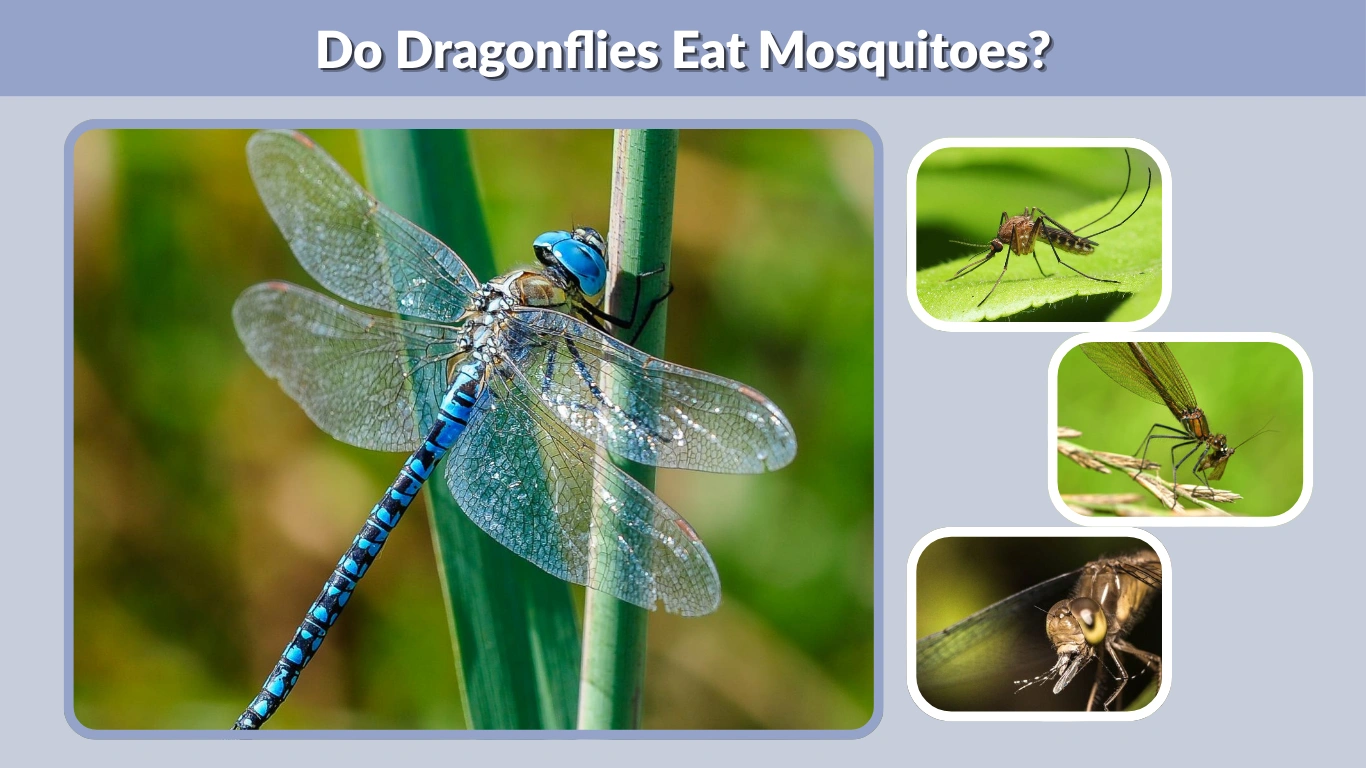
Dragonflies are often celebrated as natural mosquito hunters, earning the nickname “mosquito hawks” for their speed and accuracy in the air. Their impressive flight abilities allow them to capture tiny insects with remarkable precision. While mosquitoes are indeed part of their diet, the reality is more nuanced. Understanding how dragonflies hunt, how many mosquitoes they eat, and how their life stages influence their feeding habits provides a clearer picture of their role in natural pest control.
Do Dragonflies Really Eat Mosquitoes?

Dragonflies frequently prey on mosquitoes, especially when these small insects are abundant in their environment. However, mosquitoes are just one of many prey items dragonflies consume. Their ability to intercept tiny insects mid-air makes them effective hunters, whether they target mosquitoes, gnats, or small flies.
Confirming the Myth
Dragonflies do eat mosquitoes, and they are skilled at catching them during flight. Their large eyes help detect movement, while their swift wingbeats allow them to change direction rapidly. Mosquitoes are easy prey due to their slow flight speed, making them ideal targets for dragonflies patrolling near water or vegetation.
Do All Dragonflies Eat Mosquitoes?
Most dragonflies will eat mosquitoes when available, but they do not rely on them exclusively. Some species prefer larger insects, while others consume whatever they can catch. Mosquitoes often make up only a portion of their overall diet, especially in areas with diverse insect populations.
How Dragonflies Hunt and Eat Mosquitoes

Dragonflies use a combination of exceptional vision, fast reactions, and coordinated wing movement to target and capture mosquitoes. Their hunting strategy is a blend of precision timing and rapid aerial maneuvers.
Aerial Hunting Skills
Dragonflies catch mosquitoes directly in the air, often at high speed. They can hover in place to track prey, then launch forward with a sudden burst of movement. Their legs form a basket-like shape during flight, allowing them to scoop up mosquitoes without losing momentum. This method makes them efficient predators in open spaces and near water surfaces.
Feeding Process
Once a dragonfly catches a mosquito, it typically consumes it mid-flight. Its sharp mandibles tear into the insect quickly, allowing the dragonfly to maintain its patrol without landing. This fast feeding style ensures they can continue pursuing additional prey with minimal interruption. Dragonflies often hunt continuously during warm daylight hours.
Indoor Behavior
Although dragonflies occasionally enter homes, they do not usually hunt mosquitoes indoors. Indoor spaces limit their maneuverability and do not provide the open air or sunlight they rely on for effective hunting. If a dragonfly is found inside, it is typically seeking an exit rather than searching for prey.
How Many Mosquitoes Do Dragonflies Eat?
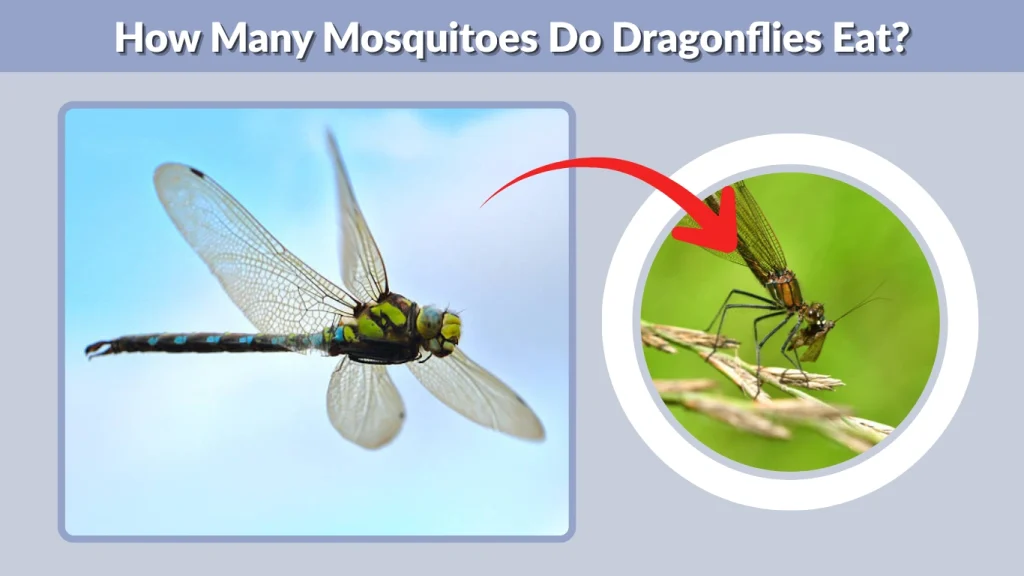
Dragonflies are often said to eat hundreds of mosquitoes per day, but these claims are exaggerated. While they do eat mosquitoes regularly, actual numbers depend on species, environment, and seasonal conditions.
Daily Estimates
Under favorable conditions, a single dragonfly may eat dozens of mosquitoes per day, particularly if mosquito populations are high. Dragonflies are opportunistic feeders, meaning they consume whatever insects are easiest to catch at a given time, which may include gnats, midges, and small flies in addition to mosquitoes.
Hourly Estimates
During periods of active feeding, a dragonfly might consume several mosquitoes within an hour. Their efficiency depends on insect density and weather, as cooler temperatures reduce mosquito activity. When mosquitoes swarm in large numbers, dragonflies can capture them rapidly, often moving from one target to the next with little pause.
Reality vs Exaggeration
The common claim that dragonflies eat hundreds of mosquitoes daily is a myth. Scientific observations show that while dragonflies help reduce mosquito populations, they are not a complete solution for mosquito control. Their impact varies significantly depending on habitat, temperature, and prey availability.
Dragonfly Life Stages and Mosquito Consumption
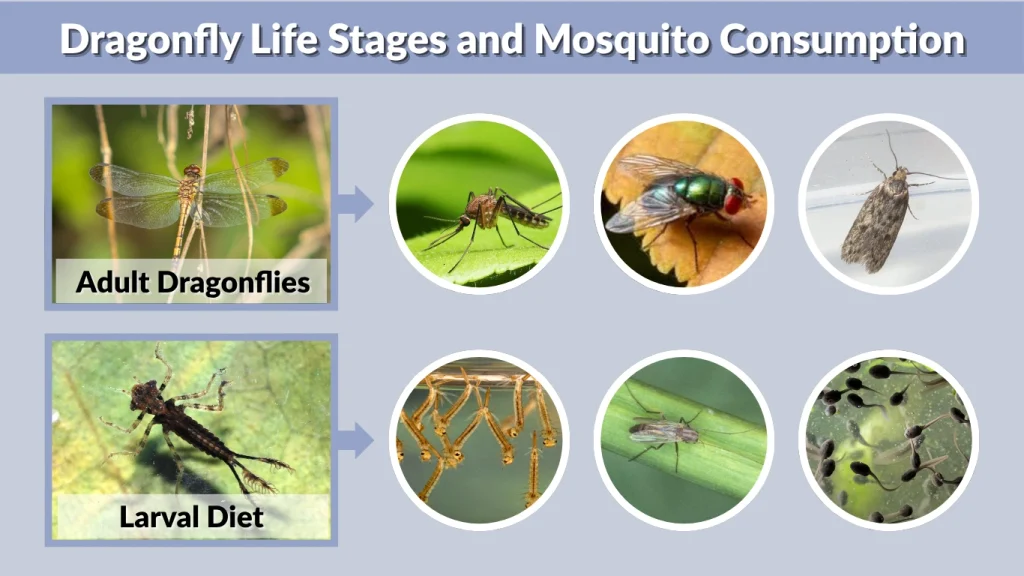
Dragonflies change dramatically throughout their lives, and each stage influences what they eat and how they hunt. Both adults and larvae contribute to mosquito population control, but in different environments.
Adult Dragonflies
Adult dragonflies hunt primarily in the air, capturing mosquitoes, flies, small moths, and other flying insects. Their large compound eyes provide nearly 360-degree vision, enabling them to detect prey from multiple angles. While mosquitoes are part of their diet, adults also target larger insects to meet their high energy needs.
Dragonfly Larvae (Nymphs) and Mosquito Consumption
Dragonfly larvae, also called nymphs, spend most of their lives underwater. This stage is far longer than the adult stage and plays a major role in mosquito control. Since mosquito larvae also develop in water, nymphs encounter them frequently and consume them as part of their diet.
Larval Diet
Nymphs hunt using extendable jaw structures that shoot forward to grab prey. They eat mosquito larvae, aquatic midges, small tadpoles, worms, and other aquatic insects. Because nymphs remain in ponds, marshes, and slow streams for months or even years, they provide consistent pressure on mosquito populations.
Do Nymphs Eat Mosquito Larvae?
Yes. Dragonfly nymphs are among the most effective natural predators of mosquito larvae. Their ambush strategy allows them to catch mosquito wigglers easily. They sit motionless on vegetation or sediment before lunging forward to seize prey with lightning-fast precision.
Predators of Dragonflies
In aquatic environments, mosquito fish may prey on dragonfly larvae. This creates competition between the two, as both hunt mosquito larvae. Frogs, larger insects, and aquatic birds may also feed on dragonfly nymphs, affecting their survival in certain habitats.
Why Dragonflies Eat Mosquitoes

Dragonflies require a high-protein diet to fuel their rapid flight and high-energy movements. Mosquitoes, though small, are abundant and easy for dragonflies to capture in mid-air.
Dietary Needs
Adult dragonflies burn enormous amounts of energy during flight. Consuming small insects like mosquitoes helps them replenish calories quickly. When mosquito populations peak, dragonflies naturally target them due to their availability and slow flight speed.
Ecological Benefits
Dragonflies help limit mosquito numbers in many ecosystems. While they are not a total solution for mosquito outbreaks, they provide valuable natural control. Their feeding helps reduce mosquito larvae in freshwater habitats and decreases adult mosquito numbers along shorelines and wetlands.
Attracting Dragonflies to Reduce Mosquitoes
Creating an environment that supports dragonflies can help naturally lower mosquito activity in your area. Attracting dragonflies does not guarantee mosquito elimination, but it increases the presence of natural predators.
Creating a Dragonfly-Friendly Habitat
A small pond or water feature is the most effective way to attract dragonflies. Shallow edges, native aquatic plants, and calm water allow dragonfly nymphs to hunt and develop. Adult dragonflies also need perching spots like tall grasses or reeds around the water.
Environmental Requirements
Dragonflies require warmth, sunlight, and clean water. Avoiding pesticides is vital because chemicals can harm both nymphs and adults. A sunny yard with open flyways, flowering plants, and water access encourages dragonflies to remain nearby.
What Doesn’t Work
Dragonflies cannot be trained, controlled, or reliably released into new environments. Artificial releases are ineffective because dragonflies prefer to breed in natural settings. Attracting them is far more successful than attempting to capture or relocate them.
Dragonflies vs Other Mosquito Predators
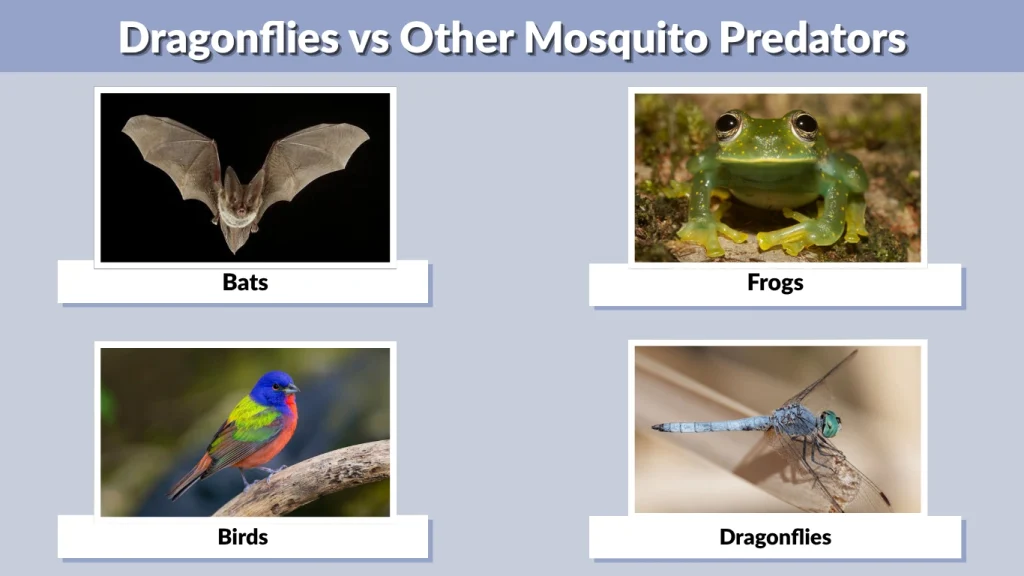
Many creatures eat mosquitoes, but dragonflies are among the most efficient aerial hunters. Comparing them to other species highlights their unique advantages.
Bats
Bats often consume larger insects and may not focus on mosquitoes as much as commonly believed. While bats eat some mosquitoes, dragonflies show higher precision in catching small airborne insects. Dragonflies also hunt during the day when mosquitoes may be active in shaded areas.
Fish, Frogs, and Birds
Mosquito fish, certain birds, and amphibians consume mosquito larvae or adults. Each plays a different role: fish target larvae, birds catch flying adults, and frogs may eat insects near water surfaces. Dragonflies overlap with several of these predators but excel in aerial hunting.
Insect Competitors
Spiders, beetles, and predatory flies also help reduce mosquito numbers, but few match the hunting accuracy of dragonflies. Their agility allows them to catch insects smaller and faster than those many other predators can manage.
What Dragonflies Eat Besides Mosquitoes
Common Prey Items
While mosquitoes are part of their diet, dragonflies also eat gnats, flies, moths, ants, midges, small butterflies, and tiny beetles. Their diet varies by species and habitat. Larger dragonflies sometimes pursue bigger insects to meet high energy demands during flight.
Hunting Strategy for Larger Insects
Dragonflies use their strong wings and rapid movements to pursue moths, bees, and even other dragonflies. Their aerial skills give them an advantage when chasing prey that requires speed and maneuvering. These larger meals help sustain them during peak activity hours.
Interesting Facts About Dragonfly Feeding
- Dragonflies catch prey with a 90–95% success rate.
- They can see in nearly every direction at once.
- Dragonflies often eat while flying, rarely stopping.
- Some species migrate and hunt along the way.
- Their larvae spend far more time feeding than adults.
FAQs
How many mosquitoes can a dragonfly eat in a day?
Dragonflies may eat dozens of mosquitoes per day, but not hundreds as commonly claimed. Their diet depends on local insect populations and weather conditions. When mosquitoes swarm, dragonflies take advantage, but they also eat flies, gnats, and other small insects to meet their energy needs.
Do dragonfly larvae really eat mosquito larvae?
Yes. Dragonfly nymphs are highly effective predators of mosquito larvae. Living underwater, they use a fast, extendable jaw to grab mosquito wigglers with ease. Because nymphs remain in aquatic habitats for long periods, they help keep mosquito larvae populations naturally lower.
Can dragonflies help control mosquitoes in my yard?
Dragonflies can help reduce mosquito activity, especially near ponds or wetlands. While they will not eliminate mosquitoes entirely, they play an important role in natural population control. Attracting them with water features and native plants increases their presence in your area.
Why do dragonflies eat mosquitoes?
Mosquitoes are abundant, easy to catch, and provide a quick protein source. Dragonflies burn high amounts of energy during flight, so they seek small, fast meals that require minimal effort. Mosquitoes fit this need perfectly when they are available in the habitat.
Do dragonflies only eat mosquitoes?
No. Dragonflies eat a wide variety of insects, including flies, midges, moths, ants, and even smaller dragonflies. While mosquitoes are a convenient food source, they make up only part of the dragonfly’s diverse diet. Their hunting adaptability allows them to survive in many environments.
