
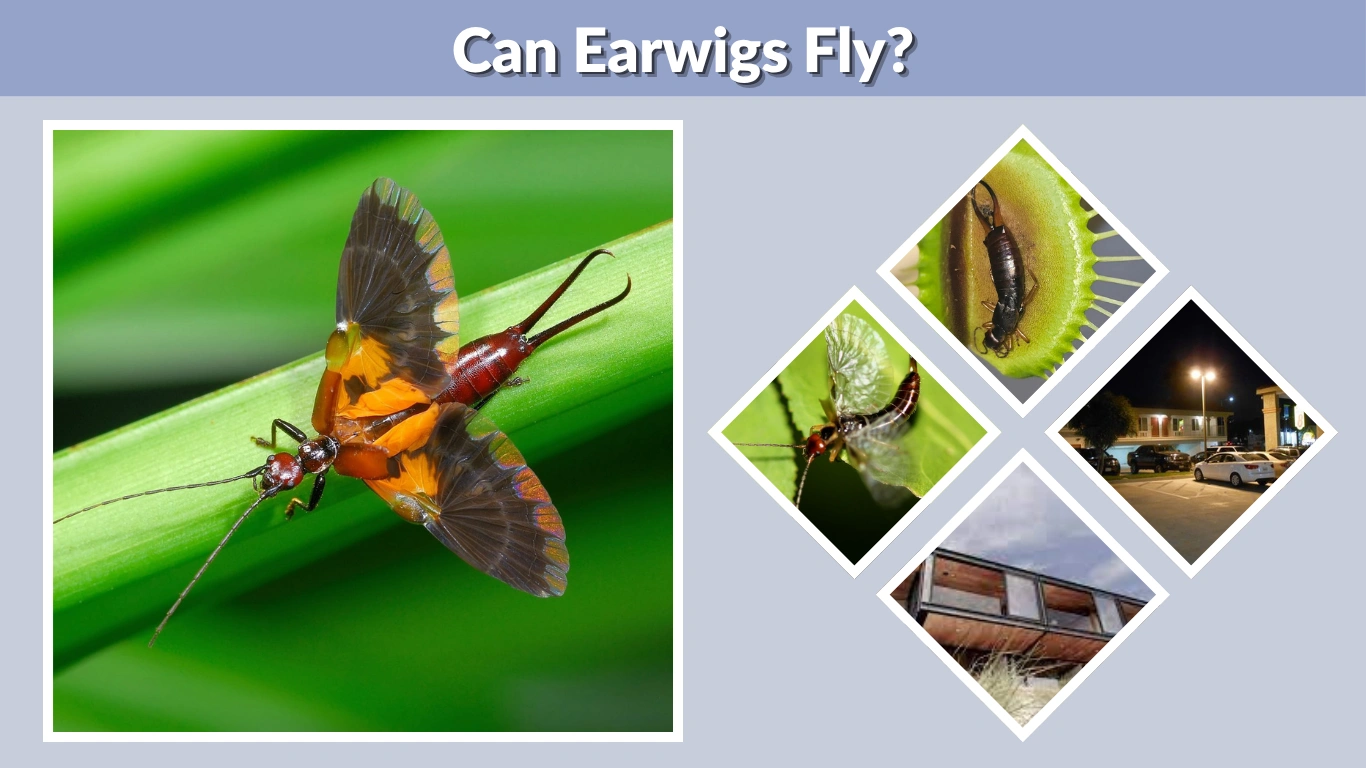
Earwigs are small insects best known for their intimidating pincers, fast movements, and habit of hiding in dark, damp spaces. While many people recognize their distinctive shape, far fewer know whether earwigs can actually fly. Their wings, if they have any, are rarely visible—and even more rarely used—leading to confusion about their true abilities. Some people swear they’ve seen earwigs glide or flutter, while others insist earwigs are entirely wingless.
The truth lies somewhere in between. Earwigs do have wings, most species can fly, but they almost never choose to do so. Their wings are cleverly hidden and are used only under specific conditions. This article explains how earwig wings work, why flight is uncommon, and what situations might cause an earwig to take to the air.
Do Earwigs Have Wings?

Anatomy of Earwig Wings
Earwigs have one of the most fascinating wing structures in the insect world. Though they appear wingless at first glance, most adult earwigs possess two sets of wings:
- Forewings (elytra):
These are short, hard, leathery covers that lie flat against the insect’s back. Unlike beetle elytra, earwig forewings do not fully protect the hindwings but act more like shields. - Hindwings:
The hindwings are the real flight wings. They are thin, delicate, and intricately folded like a fan or origami. When extended, they spread into a circular or semicircular shape, giving earwigs a surprisingly broad wing span.
Because the hindwings fold into an extremely compact shape, they remain hidden beneath the short forewings, making it easy to assume earwigs don’t have wings at all.
Wing Development in Earwigs
Not all earwigs have functional wings throughout their lives. Development depends on their stage:
- Nymphs (juveniles) have no wings.
- Only adults develop wings after their final molt.
- Some species develop reduced wings and cannot fly at all.
Even winged species may have smaller or weaker hindwings depending on genetics, habitat, or environmental pressures. This is one reason sightings of flying earwigs are so rare.
Can Earwigs Fly?

General Flight Ability
Most earwigs have wings capable of flight, but their ability is limited. They are not strong fliers and are not built for long-distance journeys like moths or beetles. Their wings function more like gliders or emergency tools rather than primary movement mechanisms.
When earwigs do fly, the motion is usually:
- Short
- Low to the ground
- Awkward-looking
- More of a flutter or glide than sustained flight
Their bodies are relatively heavy compared to their wings, which makes flying energy-intensive and inefficient.
Can All Earwig Species Fly?
Flight ability varies by species:
- European earwigs (common in many countries) can fly, but rarely do.
- British earwigs can also fly but seldom attempt it.
- Some tropical or forest species fly more often.
- A few species are almost entirely wingless or have wings too small for flight.
Even in regions like the UK or North America, where winged species are common, their behavior makes it unlikely for people to witness earwigs in flight.
How Far Can Earwigs Fly?
Earwigs do not travel far, even when they take off. On average:
- They only fly a few feet to a few yards.
- They prefer to crawl to new hiding spots.
- Flight is reserved for quick escapes, mating searches, or moving from overcrowded areas.
Long journeys are not part of their natural behavior, unlike migratory insects.
Do Earwigs Fly Indoors?

Earwig Behavior Inside Houses
Indoors, earwigs almost never fly. They enter homes by crawling under doors, squeezing through cracks, or riding along on damp objects like firewood or potted plants. Once inside, they continue to move the way they do outdoors—quickly, quietly, and close to the ground.
Indoor flight is extremely rare because:
- Houses lack strong air currents they’d use outdoors.
- Earwigs feel vulnerable in open, well-lit areas.
- Their goal indoors is to find moisture, not flight opportunities.
Most homeowners will never witness an earwig flying inside.
Can Earwigs Fly Around Lights?
Unlike moths, earwigs are not drawn to light sources. They are nocturnal and prefer darkness. Even outdoors, they avoid bright lights and will not fly toward lamps or porch lights.
If an earwig ever does become airborne indoors, it’s usually due to:
- A sudden fright
- An accidental fall that triggers wing extension
- Attempting to escape a predator (rare inside homes)
Why Don’t Earwigs Usually Fly?

Physical Limitations
Even though earwigs have wings, their bodies are not designed for efficient flight. There are several biological reasons flight is uncommon:
- Heavy Body Structure:
Earwigs have elongated, dense bodies that make lift difficult. Their wings are delicate and beautifully designed, but they simply lack the power needed for sustained flight. - Weak Flight Muscles:
Earwigs do not have strong thoracic muscles like bees, wasps, or dragonflies. Their musculature supports crawling, gripping, and using their pincers—not soaring through the air. - Wing Shape:
Their hindwings are thin and circular. While intricate, these wings are better suited for momentary gliding rather than long distances.
Because of these anatomical factors, flying is not a reliable method of travel for earwigs.
Behavioral Preferences
Even more than physical limitations, behavior is the main reason earwigs rarely fly.
Earwigs prefer to:
- Walk or run quickly
- Stay close to the ground
- Hide in narrow, dark spaces
- Avoid open, exposed environments
Flying exposes them to predators such as birds, bats, and larger insects. Crawling keeps them safe and allows them to move quietly and unnoticed. Their nocturnal nature also makes flying unnecessary—they can navigate safely under cover of darkness without taking to the air.
When Earwigs Do Fly
Despite their reluctance, earwigs may fly under certain conditions:
- Escaping Predators
When threatened by a bird, spider, or lizard, an earwig might use its wings to glide away quickly. - Searching for Mates
During mating seasons, male earwigs may occasionally fly short distances to locate females or new territory. - Environmental Pressures
When their habitat becomes overcrowded, dry, or destroyed, they may take short flights to find safer shelter.
Even in these scenarios, flying is always a last resort, not a preferred behavior.
Earwigs and Venus Fly Traps

Can Venus Fly Traps Eat Earwigs?
Yes. Venus fly traps can eat earwigs if they are small enough to fit comfortably inside a trap. The insect must be able to trigger the hairs inside the trap for it to close. Many earwigs, especially larger species, may be too big for smaller traps.
A Venus fly trap can digest:
- Young earwigs
- Small to medium adult earwigs
- Weak or slow-moving individuals
However, a large earwig may struggle against the trap, potentially damaging the plant or escaping before digestion begins.
Should You Feed Earwigs to a Venus Fly Trap?
Feeding a Venus fly trap live insects is generally safe, but a few guidelines should be followed:
- Avoid overfeeding:
One insect every 2–6 weeks is enough. - Choose appropriate sizes:
Insects should be no larger than 1/3 of the trap’s size. Large earwigs may be too strong or may cause the trap to rot before digestion completes. - Don’t feed the plant too often:
Overfeeding can stress the trap and reduce its lifespan.
Where possible, allow the plant to catch its own food. Venus fly traps thrive on a natural diet, and forcing it to eat large insects like earwigs regularly can harm the plant.
Myths About Earwigs and Flying
Do Earwigs Fly Into Beds or Ears?
This is a common myth—and completely untrue.
Earwigs do not:
- Fly into beds
- Fly into ears
- Seek out humans
- Hover around sleeping people
These fears come from old folklore and misunderstandings about their name. Earwigs avoid humans and prefer hidden, moist places like soil, mulch, or garden debris.
Why the Myth Persists
The myth continues for several reasons:
- Earwigs hide in dark places, which people associate with sneaky behavior
- Their pincers look threatening
- Many people rarely see them in daylight
- Stories passed down over generations spread fear
Their hidden wings add to the mystery, making people think they might suddenly “hover” or “fly” unexpectedly. In reality, earwigs are shy, ground-dwelling insects that rarely use their wings at all.
How to Tell if an Earwig Can Fly

Signs of Winged Adults
Only adult earwigs have wings. You can identify winged adults by checking:
- The presence of short, leathery forewings covering the abdomen
- A slight ridge down the back where wings are folded
- A rounder appearance near the lower thorax
If you gently nudge the insect (without harming it), you may notice the faint outline of folded wings beneath the forewing covers.
Are Baby Earwigs Winged?
Baby earwigs, or nymphs, do not have wings. They molt several times as they grow and only develop wings in their final stage. Until then, they resemble miniature adults without wing structures.
Nymphs will never fly and rely solely on crawling.
FAQs
Do earwigs actually have wings?
Yes. Most adult earwigs have two sets of wings—a pair of short forewings and a pair of delicate, fan-shaped hindwings. These wings are hidden under the forewings and are rarely seen unless the earwig decides to take flight.
If earwigs have wings, why don’t they fly?
Earwigs rarely fly because their wings are not designed for long-distance travel. Their bodies are heavy, their flight muscles are weak, and they prefer crawling. Flight is typically a last resort used to escape danger or move to new shelter.
Can earwigs fly inside the house?
While they can fly indoors, they almost never do. Indoors, earwigs rely on crawling to find moisture or hiding spots. They are not attracted to lights and do not fly around rooms like moths or flies.
How far can earwigs fly?
Earwigs can only fly short distances—usually just a few feet or yards. Their flight is awkward and more like a quick glide than sustained flight. They do not travel long distances or migrate.
Do earwigs fly into ears or beds?
No. This is a myth. Earwigs do not fly into ears, do not seek out humans, and do not fly into beds. They prefer dark, damp hiding places outdoors and only enter homes by crawling through small openings.
