

Fleas are one of the most stubborn household pests because they reproduce quickly and hide in every corner of your home—carpets, bedding, furniture, and pet sleeping areas. Even after killing adult fleas, their eggs, larvae, and pupae keep the infestation alive for weeks. This guide explains how to get rid of fleas in the house fast, using both natural and chemical methods, along with a long-term prevention plan to keep them from returning.
Understanding How Fleas Spread in Homes
Why Fleas Multiply So Quickly Indoors
Fleas reproduce at an astonishing rate. After one blood meal, a female flea can lay 20–50 eggs per day, dropping them into carpets, rugs, bedding, and upholstery. Eggs hatch into larvae, develop into pupae, and eventually emerge as adult fleas ready to bite again. The pupae stage is especially tough—pupae can remain dormant for weeks or even months, surviving vacuuming, sprays, and temperature changes until they sense vibrations or body heat.
Common Sources of Fleas in Homes
While pets are the most common source, fleas can enter homes in many ways. Wildlife such as raccoons, squirrels, possums, and stray cats can drop flea eggs into your yard, where they later latch onto pets or shoes. In apartments or rentals, fleas can linger long after previous tenants have left. Even a single flea brought in on clothing can start an infestation if it lays eggs indoors.
Signs You Have Fleas in Your House

Visible Signs
If you have fleas, you may notice adult fleas jumping on furniture, carpets, or your legs when you walk by. Fleas prefer warm areas, so they often appear near pet beds, cracks in floors, or fabric surfaces. Flea dirt—tiny black pepper-like specks—is another clear indicator. When placed on a damp tissue, flea dirt turns reddish-brown because it’s dried blood.
Invisible Signs
Flea infestations often hide more than they show. Tiny white flea eggs may be buried deep in carpets or stuck along bedding seams. Flea larvae hide in dark places and feed on flea dirt, making them hard to spot. Pets may scratch, chew, or lick constantly even when you don’t see any fleas. Humans may notice itchy bites around ankles, legs, or the waistline, which often appear in clusters of two or three.
How to Get Rid of Fleas in the House Fast
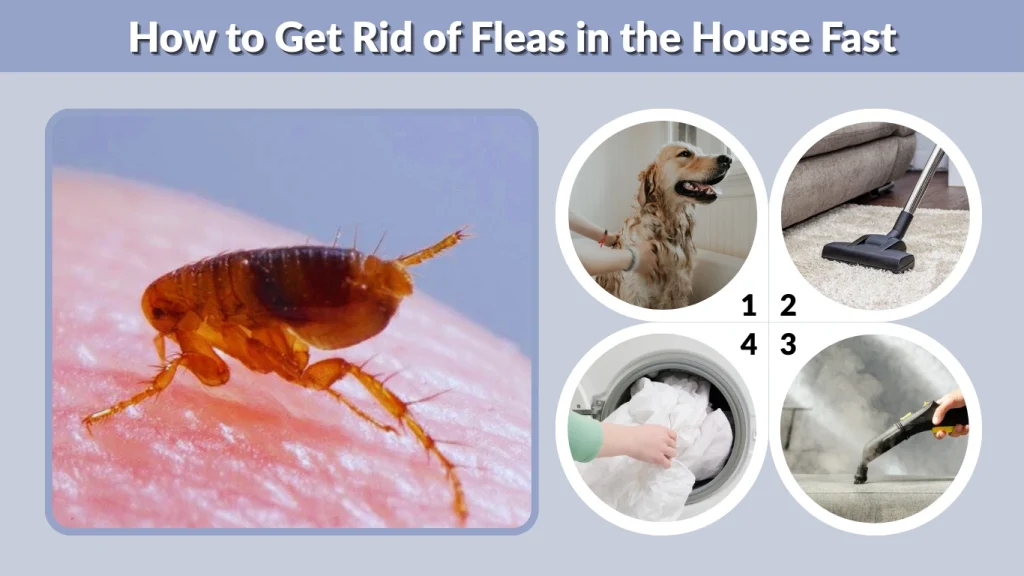
Step 1: Treat Pets Immediately
Before treating the house, you must treat your pets—otherwise new fleas will simply re-infest the environment. For dogs, options include flea shampoos, oral medications, and monthly spot-on treatments. For cats, only use cat-safe products, as many essential oils and dog flea treatments can be toxic. Comb pets daily and wash their bedding to prevent eggs from spreading further.
Step 2: Vacuum the Entire House Thoroughly
Vacuuming is one of the fastest and most effective ways to remove flea eggs, larvae, and adult fleas. Use a multi-directional method, vacuuming each area in several passes. Pay extra attention to carpets, rugs, baseboards, pet beds, and furniture cushions. Empty the vacuum outside immediately so fleas can’t crawl back out. Vacuuming daily for 7–10 days dramatically cuts down the infestation.
Step 3: Wash Bedding, Blankets & Soft Items
Anything soft—your bedding, pet blankets, throw pillows, couch covers—must be washed in hot water and dried on high heat. Heat kills adult fleas, larvae, and eggs instantly. For severe infestations, repeat washing every 2–3 days until fleas disappear completely.
Step 4: Use Heat or Steam to Kill Eggs & Larvae
Steam cleaning is one of the fastest ways to kill fleas at all stages. Steam reaches temperatures high enough to destroy eggs hidden deep in carpet fibers and soft furniture. Move slowly over carpets, mattresses, sofas, and pet beds. For homes with thick carpets or heavy infestations, steam cleaning can produce results within 24 hours.
Step 5: Apply Home Treatments (Sprays or Powders)
Once carpets and surfaces are clean, apply a flea-control product. IGR (Insect Growth Regulator) sprays prevent flea eggs from hatching and stop larvae from developing. These are essential for breaking the life cycle. If you prefer natural methods, sprinkle food-grade diatomaceous earth (DE) on carpets and leave it for 8–12 hours before vacuuming. DE dries out fleas, larvae, and eggs effectively.
Natural Ways to Get Rid of Fleas in the House
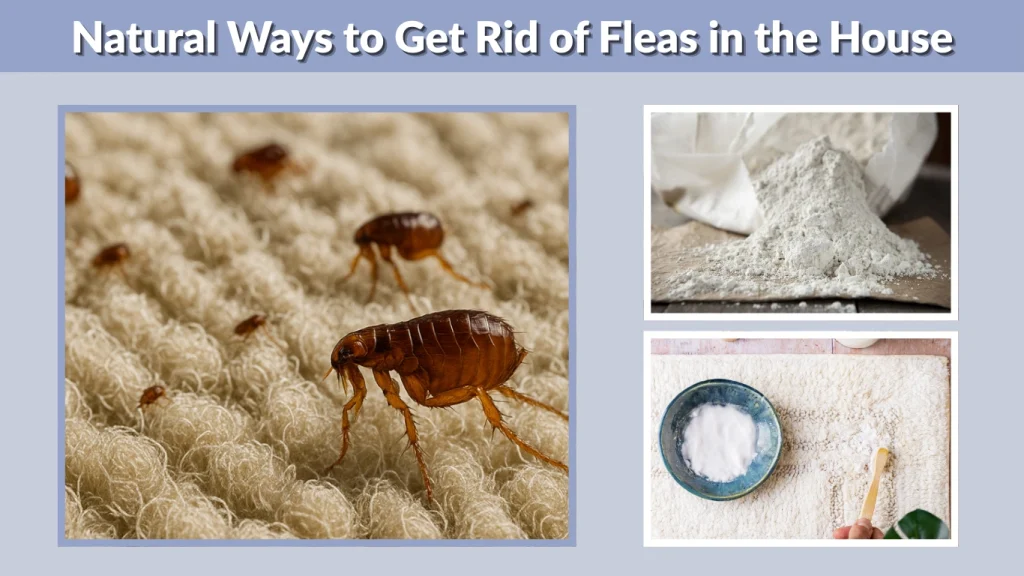
Diatomaceous Earth (Food Grade)
DE is one of the most powerful natural flea killers. It’s a fine powder made from fossilized algae that dehydrates flea eggs and larvae. Sprinkle DE lightly on carpets, pet areas, cracks, and under furniture. Leave it for several hours or overnight, then vacuum thoroughly. Avoid breathing in the dust and keep pets away until you vacuum.
Salt & Baking Soda Carpet Treatment
Salt and baking soda create a drying effect that kills flea eggs and larvae. Mix equal parts and sprinkle onto carpets, brushing the mixture into the fibers. Leave for at least 8 hours, then vacuum. This is an excellent low-cost option for treating large carpeted areas.
Natural Ways to Get Rid of Fleas in the House (Continued)
Vinegar & Water Spray
Vinegar is not a standalone flea killer, but it works well as a repellent and as a surface cleaner to remove flea dirt and disrupt flea activity. Mix equal parts white vinegar and water in a spray bottle and apply it to non-fabric surfaces, baseboards, and areas where pets sleep. While it won’t kill eggs, it helps prevent adult fleas from landing in treated areas and makes cleaning easier.
Essential Oils (Pet-Safe Options)
Some essential oils can help repel fleas, but it’s very important to use only pet-safe oils and avoid all oils around cats unless veterinarian-approved.
Safe options include:
- Lavender oil (dogs only)
- Cedarwood oil (dogs)
- Lemongrass oil (dogs)
- Rosemary oil (dogs)
Always dilute essential oils heavily and never apply them directly to cats, as many oils are toxic to them. Instead, use a pet-safe spray designed specifically for felines.
Homemade Flea Traps
Dish soap traps are a classic DIY flea method. Fill shallow bowls with warm water and dish soap, then place them under a lamp or near areas of flea activity. Fleas jump toward the light and fall into the soapy water, which breaks the surface tension and drowns them. These traps help reduce adult flea numbers but are not a complete solution because they do not target eggs or larvae.
How to Get Rid of Fleas in Homes With Pets
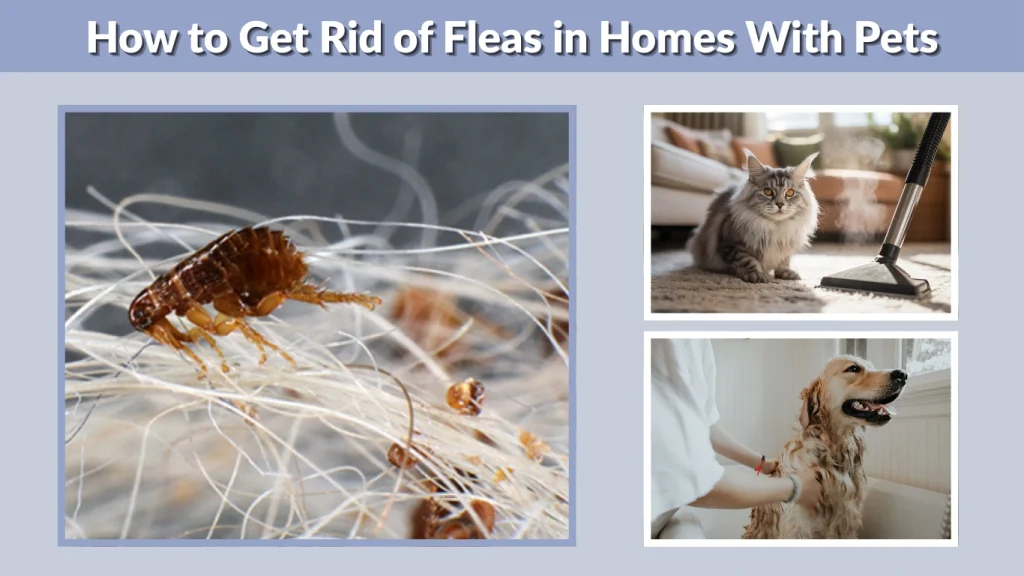
Cats in the Home
Cats can be more sensitive to flea treatments, so use only vet-approved products. Wash their bedding frequently, vacuum around scratching posts and hiding spots, and use a flea comb daily during outbreaks. Because cats groom themselves often, many flea eggs fall off into their favorite sleeping areas, making those spots the highest priority for cleaning.
Dogs in the Home
Dogs typically carry more visible flea dirt and eggs because their grooming is less thorough than cats. Use a combination of dog-safe treatments such as flea shampoo, oral medications, and spot-on products. Clean dog beds, blankets, and kennel areas thoroughly. If your dog spends time outdoors, make sure to treat the yard as well to prevent reinfestation.
Homes With Both Cats & Dogs
In multi-pet households, choose products safe for both species or treat each pet separately with the correct formula. Treat all pet areas simultaneously, including bedding, crates, perches, and soft furniture. Ignoring even one room where a pet naps can restart an infestation within days.
How to Get Rid of Fleas in Homes Without Pets
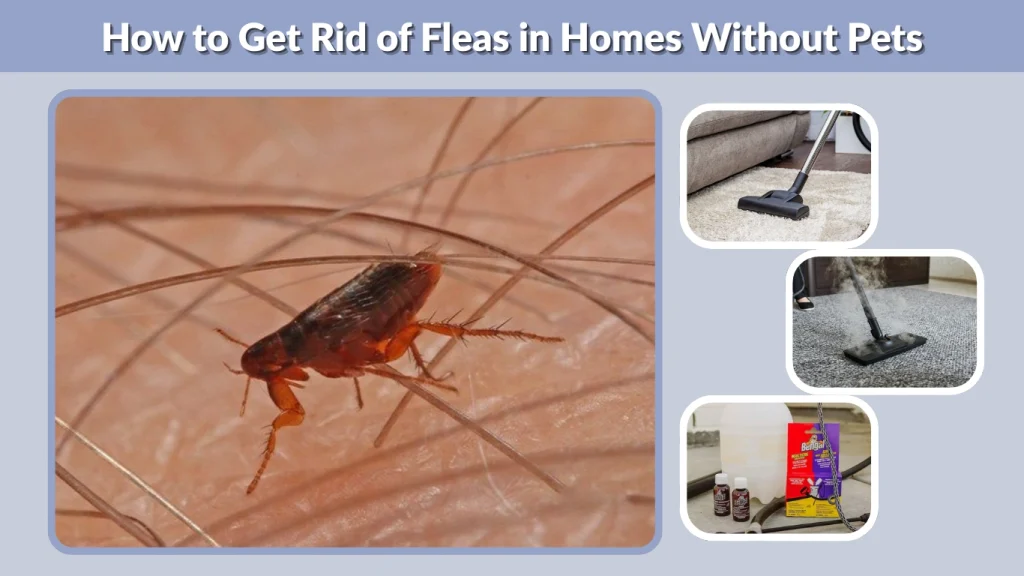
Fleas From Previous Tenants
Homes without pets still get fleas from earlier residents. Eggs and pupae can survive deep within carpets and cracks for weeks or months. When new people move in, vibrations from walking can trigger dormant pupae to hatch. For empty-house flea problems, steam clean, vacuum thoroughly, and apply an IGR spray to break the cycle.
Fleas Brought in From Outdoors
Fleas can hitchhike on shoes, clothing, or used furniture. Even laundry brought in from a yard can carry eggs. Treat entry rugs, doormats, and shoe-storage areas just as thoroughly as you treat carpets.
Empty House Treatment Plan
For homes with no pets:
- Vacuum every room, including closets
- Steam clean carpets and floors
- Use an IGR-based spray for long-term control
- Ventilate, then repeat treatment every 7–10 days
How to Get Rid of Fleas Permanently
Breaking the Flea Life Cycle
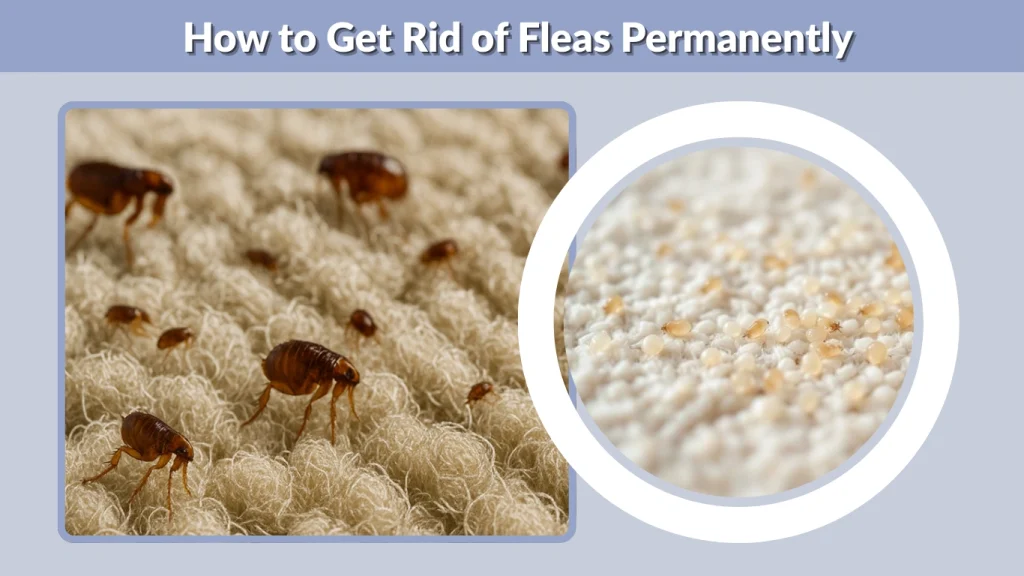
Fleas survive because their life cycle includes stages that are hard to kill. To get rid of fleas permanently:
- Kill adult fleas on pets and in the home
- Stop eggs from hatching
- Remove larvae food sources (flea dirt)
- Trigger pupae to hatch so they can be killed
Only by addressing every stage can you fully eliminate an infestation.
Weekly Maintenance Plan
To prevent fleas from coming back:
- Vacuum carpets and upholstery 2–3 times per week
- Wash bedding weekly
- Continue using flea combs
- Deep-clean pet areas
- Treat pets monthly with flea prevention
Consistency is what prevents eggs or pupae from restarting the cycle.
Pet Prevention Measures
Fleas return to untreated pets even if your house is spotless. Use veterinarian-recommended flea preventatives such as topical medications, chewables, or flea collars. Keep dogs brushed and cats groomed regularly, especially during warm months when fleas are most active.
Special Flea Situations
How to Get Rid of Flea Eggs in the House
Flea eggs fall into hard-to-reach places, so focus on deep cleaning. Brush carpet fibers with a stiff broom before vacuuming to lift eggs to the surface. Steam cleaning is especially effective for eggs because heat destroys them instantly. Use diatomaceous earth or an IGR spray for long-term egg control.
How to Get Rid of Flea Larvae
Flea larvae avoid light and hide under furniture, in cracks, and in carpet padding. Removing flea dirt—their food source—is essential. Vacuum thoroughly, use steam, and apply natural powders like diatomaceous earth to dry them out.
How to Get Rid of Flea Pupae
Pupae are the hardest stage to kill because their cocoons protect them from chemicals. The best way to eliminate pupae is through heat, vibration, and repeated vacuuming. Steam cleaning carpets, walking across clean rooms, and vacuuming afterward helps force pupae to hatch so they can be destroyed.
Sand Fleas & Snow Fleas in the House
Sand fleas (often from beaches) and snow fleas (springtails) are not true fleas. Sand fleas can bite, while snow fleas do not. Removal involves vacuuming, sealing cracks, cleaning floors, and reducing moisture.
Bird Fleas & Rodent Fleas Indoors
Fleas from birds, rats, or squirrels often enter through attics or chimneys. Remove nests, seal openings, and treat the area with an IGR spray. Vacuum repeatedly and wash fabrics the pests may have contacted.
Fleas in the House: What NOT to Do
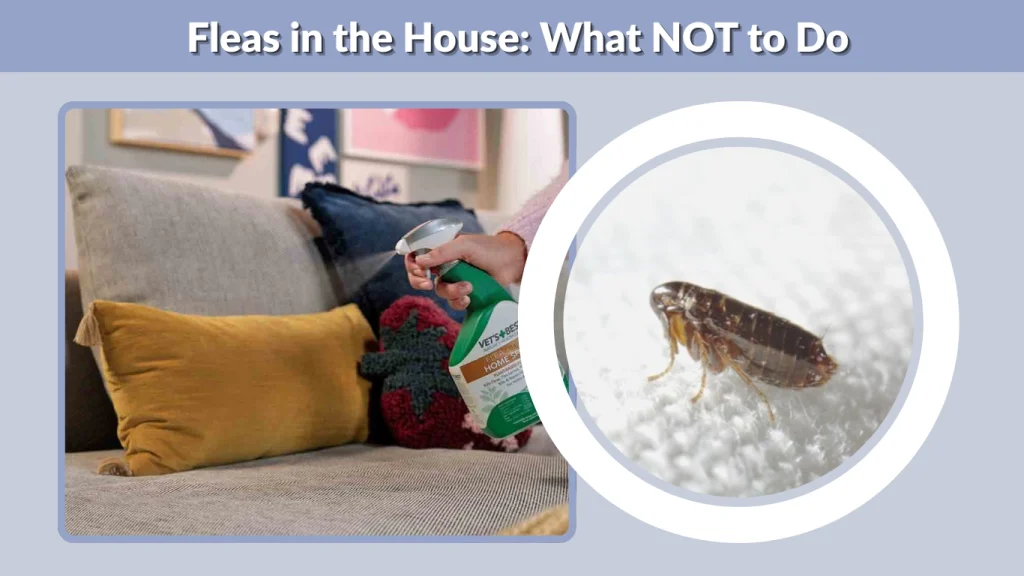
Common Mistakes Homeowners Make
- Treating pets only and ignoring carpets
- Not washing bedding or blankets
- Skipping furniture cleaning
- Using unsafe essential oils on cats
- Relying on a single treatment instead of repeated cleaning
Why Flea Bombs Often Fail
Flea bombs rarely reach eggs or larvae deep in carpets, and many areas—like inside furniture—remain untouched. Bombs can also expose pets to harmful chemicals. Vacuuming, steam, and IGR sprays are more effective and far safer.
Flea Removal Methods Comparison Table
| Method | Kills Adults | Kills Eggs | Fast? | Natural? | Pet Safe? |
| Vacuuming | ✔ | ✔ | ✔ | ✔ | ✔ |
| Steam Cleaning | ✔ | ✔ | ✔ | ✔ | ✔ |
| Diatomaceous Earth | ✔ | ✔ | Slow | ✔ | Usually |
| IGR Sprays | ✖ | ✔ | Medium | ✖ | Some |
| Chemical Sprays | ✔ | ✔ | ✔ | ✖ | Varies |
| Flea Bombs | ✔ | Limited | Medium | ✖ | Often No |
Summary & Quick Action Plan
The 24-Hour Plan
- Treat all pets
- Vacuum carpets and floors
- Wash bedding on high heat
- Steam clean soft surfaces
- Apply DE or IGR spray
The 7-Day Follow-Up Plan
- Vacuum every 1–2 days
- Rewash bedding
- Reapply natural treatments
- Inspect pets again
- Treat the yard if needed
FAQs
What kills fleas instantly in the house?
Steam, high heat from dryers, and certain chemical sprays kill fleas immediately. Vacuuming can also kill adult fleas by rupturing their bodies, but eggs and larvae require heat or repeated cleaning.
How long does it take to fully remove fleas?
Most homes take 2–4 weeks to completely eliminate fleas because of the pupae stage. With aggressive treatment—steam, vacuuming, and IGR sprays—you can reduce fleas significantly within a few days.
What kills flea eggs in carpets?
Steam is the most effective method. Diatomaceous earth, salt, and baking soda also help dry out eggs. IGR sprays prevent eggs from hatching, ensuring long-term control.
Can fleas live in a house with no pets?
Yes. Flea eggs and pupae can survive for weeks without pets. When vibrations or heat are detected, dormant pupae hatch and begin feeding on humans or new pets.
How do I prevent fleas from coming back?
Keep pets on monthly flea treatments, vacuum weekly, wash bedding regularly, treat your yard if pets go outside, and deep clean carpets every few months to prevent flea eggs from accumulating.
