
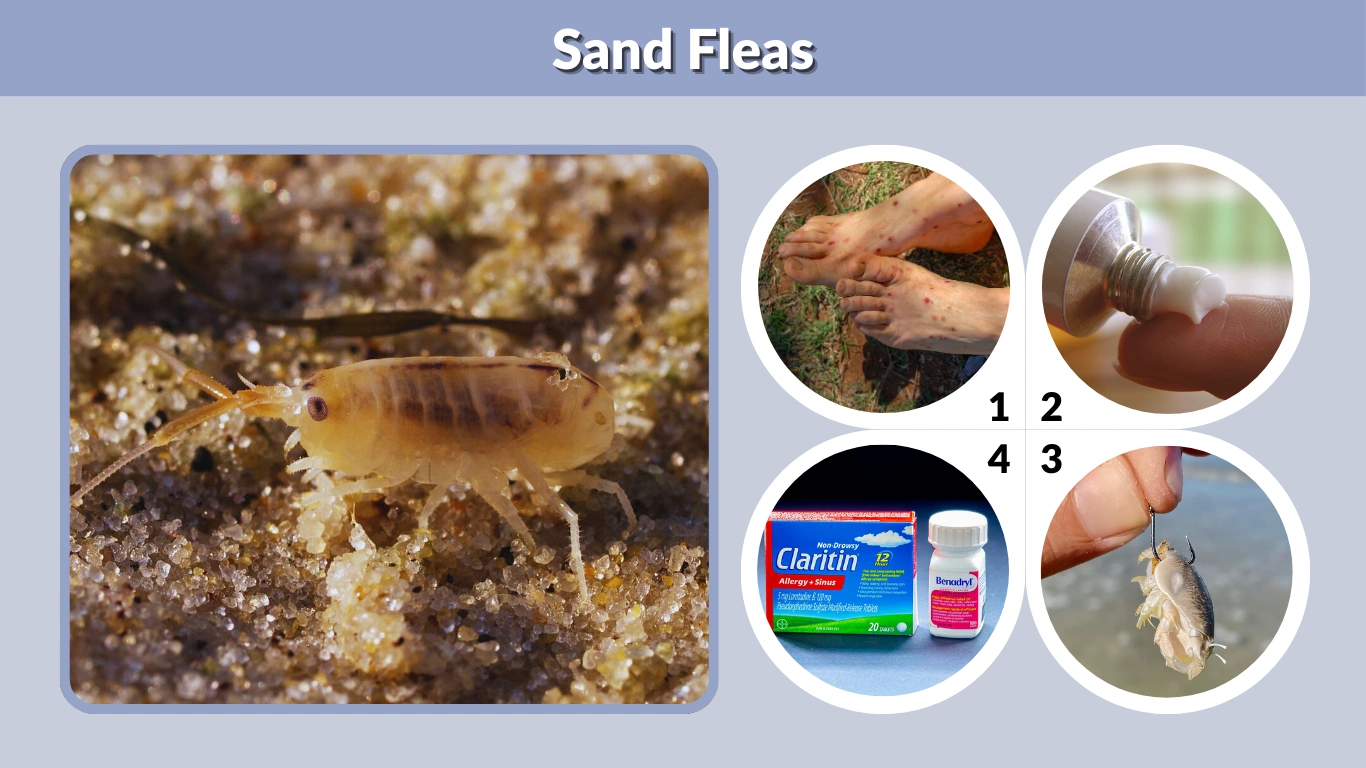
Sand fleas are a common nuisance for beachgoers and anglers, yet they’re also one of the most misunderstood creatures found along the coast. People frequently confuse them with biting insects, parasites, or even bed bugs, leading to myths about sand flea bites, sand flea eggs in skin, and sand flea infestations in homes. This guide explains exactly what sand fleas are, what they look like, whether they bite, how to treat bites, how to prevent encounters, and how fishermen use sand fleas as bait.
What Are Sand Fleas?
Sand Fleas Explained
“Sand flea” is a broad term used to describe several different animals that live in sandy coastal environments. True beach sand fleas are crustaceans, not insects. They belong to the same family as crabs and shrimp, which is why they look nothing like household fleas. Most beach sand fleas are harmless and spend their time buried beneath the sand or feeding on plankton brought in by waves.
Types of “Sand Fleas” People Mean
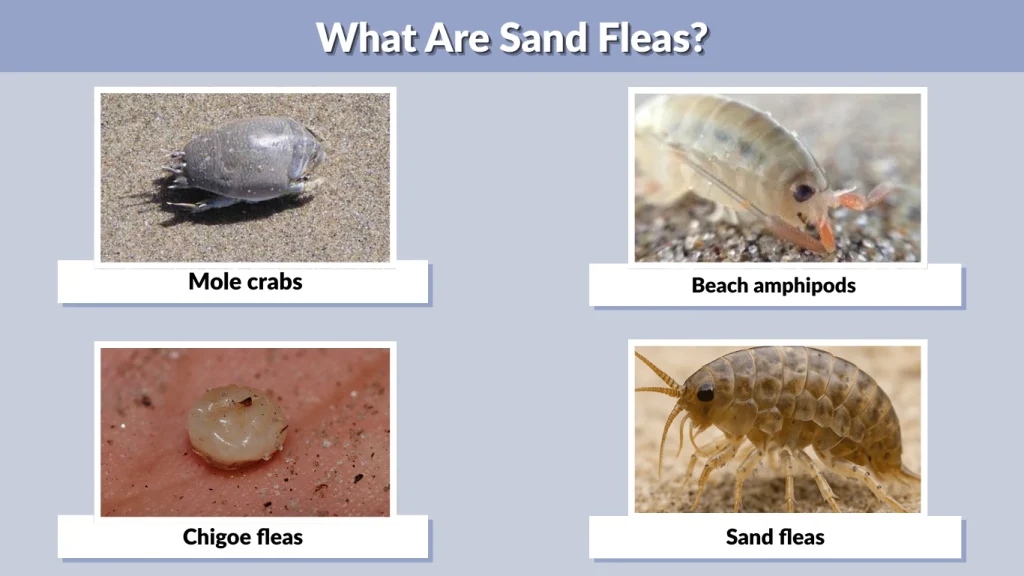
The confusion about sand fleas comes from the fact that this name refers to multiple creatures:
- Mole crabs / beach sand fleas – These are the most common and are completely harmless to humans.
- Beach amphipods – Tiny, hopping creatures that may pinch skin but do not suck blood.
- Chigoe fleas (jigger fleas) – A harmful parasite found in tropical regions. They can burrow into human skin and lay eggs, but they do not live on U.S. beaches.
- Parris Island “sand fleas” – A nickname used by military recruits for any biting pests encountered during training.
Understanding the differences is essential when identifying a bite or skin irritation, because only chigoe fleas can burrow into skin or cause serious health issues.
What Sand Fleas Look Like
Appearance (Size, Shape, Color)
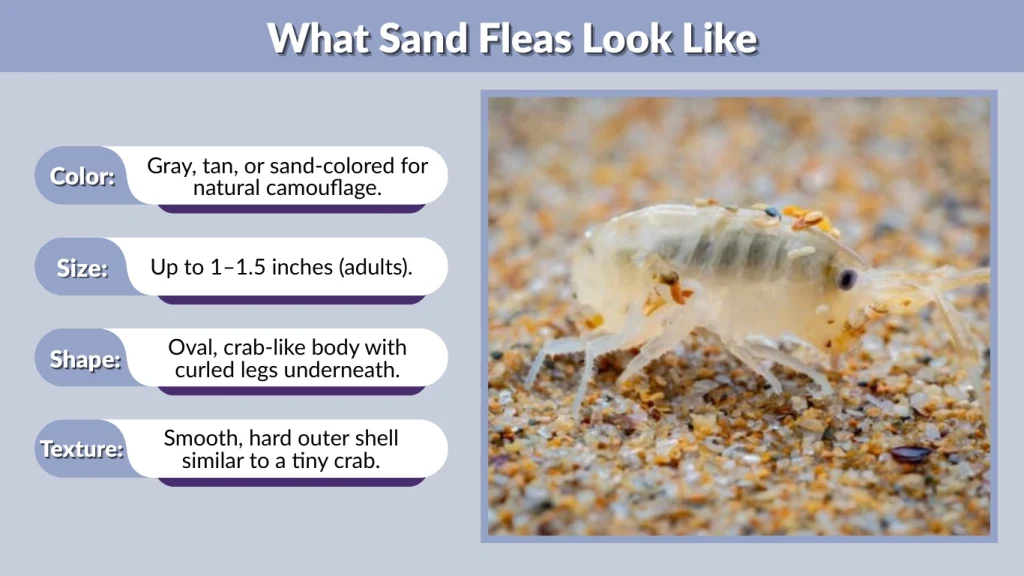
- Size: Typically ¼ inch (juveniles) up to 1–1.5 inches (adults).
- Shape: Oval, crab-like body with curled legs underneath.
- Color: Gray, tan, or sand-colored for natural camouflage.
- Texture: Smooth, hard outer shell similar to a tiny crab.
- Movement: Wiggles or digs backward into wet sand when disturbed.
Pictures of Sand Fleas (Descriptions)
If you were looking at photos of sand fleas, you would typically see:
- An oval, crab-like body tucked partly under the sand
- Multiple legs folded beneath the shell
- A rounded head with two short antennae
- Smaller, shrimp-like amphipods hopping across the surface of wet sand
- Larger mole crabs being dug up in scoops or rakes
Juvenile sand fleas look like small round pebbles or grayish grains scurrying in the surf zone.
Sand Flea vs Mole Crab vs Real Flea
Many people assume “sand fleas” are related to household fleas, but they are completely different species.
- Sand fleas (mole crabs): Crustaceans with 10 legs
- Real fleas: Insects with 6 legs that bite mammals
- Amphipods: Tiny shrimp-like hoppers
Real fleas jump and survive on blood; sand fleas dig and survive on plankton.
Do Sand Fleas Bite?

Do Beach Sand Fleas Bite Humans?
The most common sand fleas—mole crabs—do not bite humans at all. They don’t have mouthparts designed for biting and are harmless when handled. Many people mistake other causes of skin irritation for sand flea bites, especially after spending time in wet sand.
Chigoe (Jigger) Fleas & Skin Burrowing
The only “sand flea” capable of burrowing into human skin is the chigoe flea, found in tropical regions like parts of Africa, the Caribbean, and South America—not on U.S. beaches. These fleas embed into the skin of feet or toes and cause painful bumps. This is the source of the common myth: “sand flea eggs in skin.”
Chigoe infestations require medical treatment, but they have nothing to do with the harmless sand fleas found on American beaches.
Why People Think Sand Fleas Bite
People often blame sand fleas when experiencing:
- Mosquito bites on the beach
- No-see-um bites
- Sea lice (jellyfish larvae) irritation
- Saltwater rash
- Amphipod pinches when walking barefoot
Because these issues occur at the beach, sand fleas are often mistakenly identified as the culprit.
What Sand Flea Bites Look Like
Sand Fleas Bites on Humans (Descriptions)
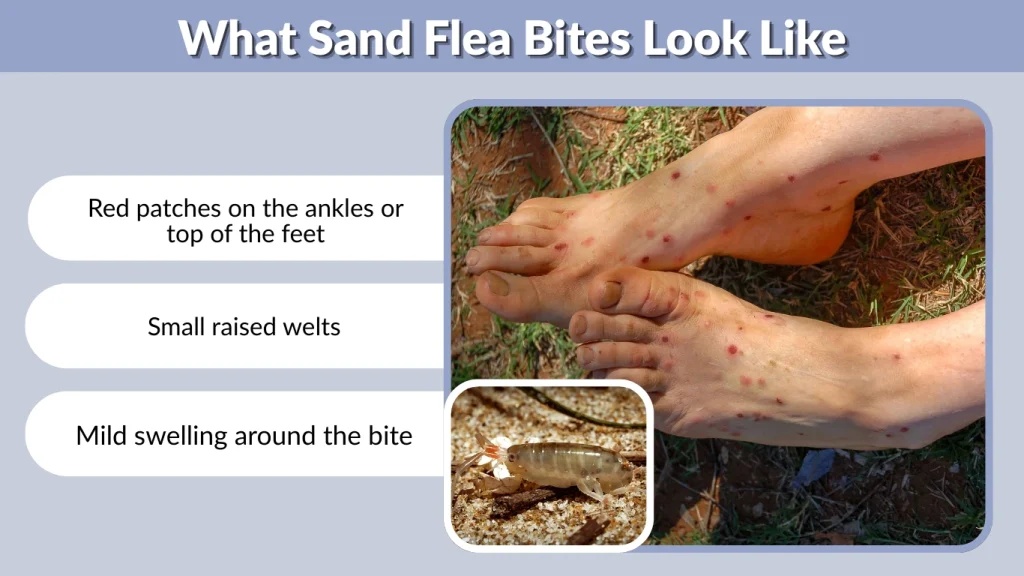
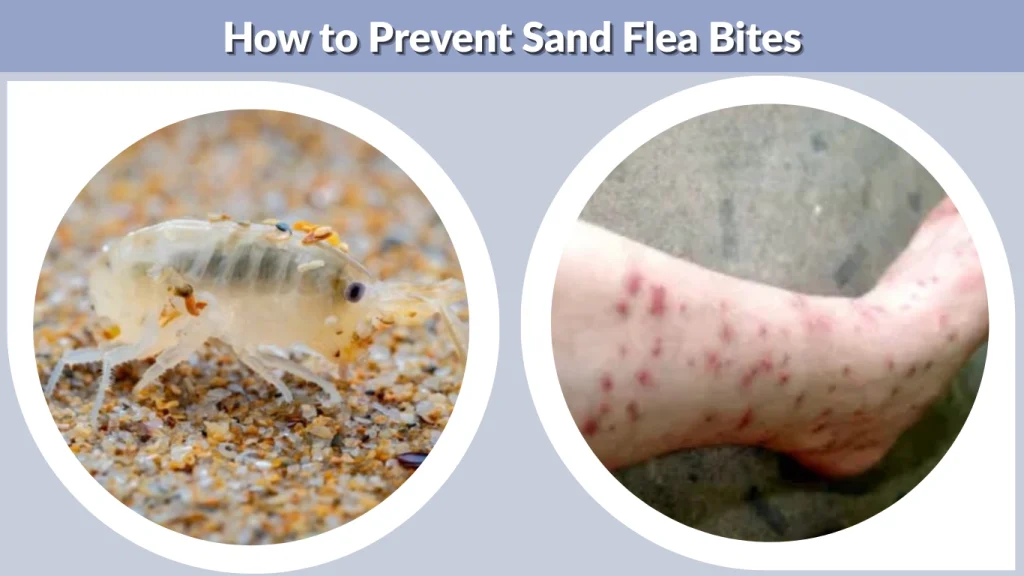
While true sand fleas don’t bite, beach amphipods or no-see-ums can cause small, red, itchy bumps. These bumps commonly appear on:
- Feet
- Ankles
- Lower legs
Bites may appear in irregular clusters, resemble mosquito bites, or create a mild rash in sensitive individuals.
Sand Flea Bites vs Bed Bug Bites
Sand flea–related skin irritation is usually random and scattered. Bed bug bites, on the other hand, appear in straight lines or clusters of three (often called the “breakfast-lunch-dinner” pattern). Beach bites typically occur only after sand exposure, while bed bug bites can happen anytime indoors.
Pictures of Sand Flea Bites (Descriptions)
Photos of sand flea–related bites usually show:
- Red patches on the ankles or top of the feet
- Small raised welts
- Mild swelling around the bite
- Occasional blister-like bumps in severe reactions
How Long Sand Flea Bites Last
Most sand-flea-related bites or irritations last 2–7 days, depending on skin sensitivity. For some people, redness can linger longer—up to two weeks—especially if scratching leads to secondary irritation or infection.
Sand Flea Bite Treatment

Immediate Relief Steps
If you experience itching or redness after being on the beach, the first step is to wash the affected area with cool water and soap. This removes salt, sand, bacteria, and any tiny irritants that may be causing the reaction. Applying a cold compress helps reduce swelling and soothe the skin. Avoid scratching, as it can break the skin and introduce infection.
Best Remedies & Cures
Several over-the-counter treatments work well for sand flea–type bites or beach-related skin irritation:
- Calamine lotion to reduce itching
- Hydrocortisone cream to calm inflammation
- Aloe vera gel for cooling relief
- Witch hazel to reduce redness
- Antihistamines (like Benadryl or Zyrtec) for severe itching
These treatments are especially helpful if you’ve had multiple bites or if your skin reacts strongly to outdoor pests.
Natural Home Remedies
Many people prefer natural solutions, especially for children or sensitive skin. Effective home remedies include:
- Coconut oil: Moisturizes and provides mild anti-inflammatory benefits
- Baking soda paste: Helps dry out irritated skin and soothe itching
- Honey: Natural antibacterial properties
- Lemon juice: Mild antiseptic (use cautiously on broken skin)
When to See a Doctor
Seek medical help if:
- Redness spreads or becomes warm
- Blisters grow larger
- Pain increases
- You experience fever or chills
- You recently traveled to a region known for chigoe fleas and have a painful swelling on your foot
These situations may indicate infection or a more serious condition.
How to Prevent Sand Flea Bites
Best Sand Flea Repellents
Although true sand fleas don’t bite, using repellent helps protect against no-see-ums, mosquitoes, and amphipods. Effective options include:
- DEET (20–30%)
- Picaridin
- Lemon eucalyptus oil (PMD)
Apply repellent on legs, feet, and ankles before walking on sand or near the surf line.
DIY Ways to Repel Sand Fleas
If you prefer natural methods, the following can reduce irritation:
- Coconut oil rubbed on legs and feet creates a protective barrier
- Vinegar-water spray keeps tiny biting insects away
- Citrus sprays (lemon or orange) deter pests in many areas
Beach Behavior Tips
Changing where and how you relax on the beach can dramatically reduce the chance of encountering biting insects or sand irritants:
- Avoid wet sand during early morning and evening
- Place towels higher up the beach, away from the surf
- Use a chair or beach mat instead of sitting directly in sand
- Shake out towels and blankets frequently
- Rinse your feet after walking through seaweed piles
These simple steps prevent most beach-related skin problems.
How to Get Rid of Sand Fleas
Removing Amphipods or Fleas From Skin
If an amphipod latches onto the skin—which happens rarely—rinsing with fresh water usually dislodges it. Gently brush the skin with your hand or a soft cloth. Avoid scratching or trying to dig into the skin, as this can cause irritation or introduce bacteria.
How to Remove Chigoe Fleas (If Traveling Abroad)
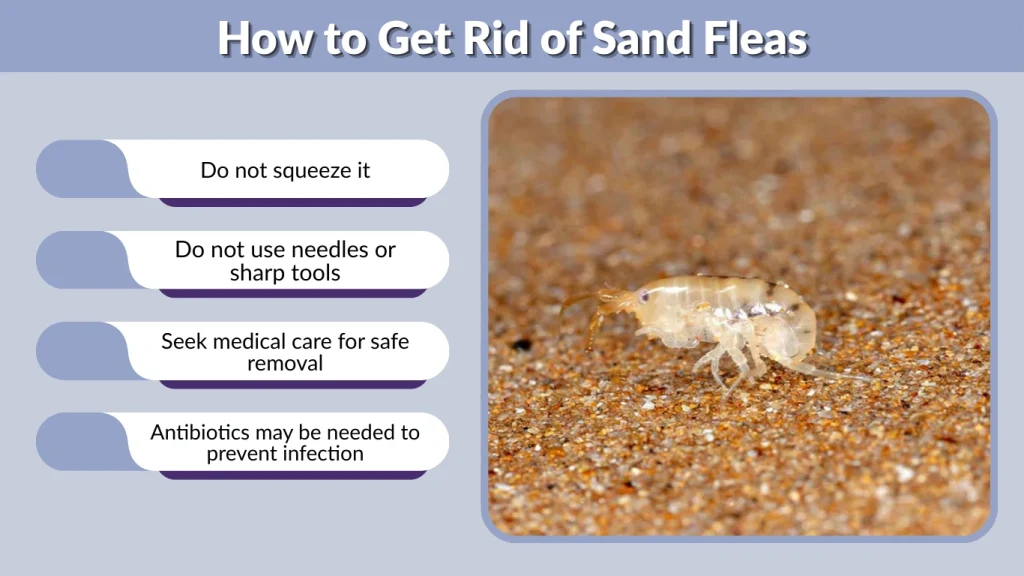
Chigoe fleas (called “jigger fleas”) are a different species that embeds itself in the skin, typically on the feet or toes. If you’ve recently traveled to tropical regions and have a painful, growing bump:
- Do not squeeze it
- Do not use needles or sharp tools
- Seek medical care for safe removal
- Antibiotics may be needed to prevent infection
Again, these fleas are not found on U.S. beaches and are unrelated to the harmless sand fleas used for fishing.
Sand Fleas & Fishing (Bait Section)
Using Sand Fleas as Bait
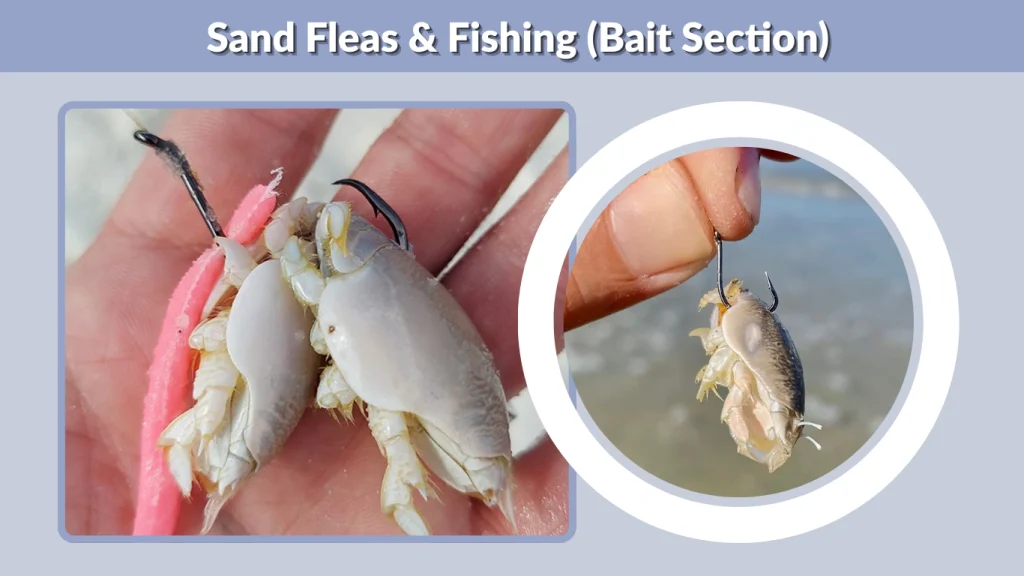
Anglers commonly use sand fleas—especially mole crabs—as bait for surf fishing. They are popular for catching:
- Pompano
- Redfish
- Whiting
- Sheepshead
Their soft bodies and natural scent make them incredibly effective in the surf zone.
How to Catch Sand Fleas
There are three primary methods:
- Hand Digging: Scoop small piles of sand as waves recede.
- Sand Flea Rake: A metal basket on a long handle that drags through the surf to collect sand fleas quickly.
- Sand Flea Scoop/Shovel: Good for deeper sand or larger mole crabs.
Sand fleas typically appear in clusters where waves break, often visible as tiny bubbles across the wet sand.
How to Hook Sand Fleas
When using them as bait:
- Hook through the shell at the underside
- Or hook through the leg joint for a firmer hold
- Make sure the hook does not crack the crab’s body completely
Can You Eat Sand Fleas?
Surprisingly, yes. In some coastal regions, sand fleas are fried or boiled and eaten as crunchy snacks. They must be sourced from clean, uncontaminated beaches and cooked thoroughly. Many anglers taste them fresh to check their freshness as bait.
Sand Fleas on Dogs
Can Sand Fleas Bite Dogs?
Beach sand fleas rarely bite dogs. Amphipods may pinch when a dog lies in wet sand, causing mild irritation, but these are not harmful. Dogs with sensitive skin may experience redness or itching after spending time on the beach.
Treatment for Dogs
If your dog develops irritation:
- Rinse thoroughly with clean water
- Use dog-safe anti-itch spray
- Apply aloe vera (dog-safe formulations only)
- Avoid human creams unless approved by a vet
- Seek veterinary advice if redness worsens or spreads
Summary & Key Identification Checklist
Quick Identification Summary
- Sand fleas are crustaceans, not insects
- True sand fleas don’t bite humans
- Skin irritation at the beach is usually caused by no-see-ums or amphipods
- Bites appear as small red bumps on feet or ankles
- Treatment includes washing, cold compresses, antihistamines, and calamine
- Prevention involves repellents, avoiding wet sand, and staying off seaweed piles
- Sand fleas make excellent fishing bait and can be collected with rakes or scoops
FAQs
What are sand fleas?
Sand fleas are small crustaceans found on beaches. They look like tiny crabs or shrimp and live in wet sand near the surf. Most are harmless and do not bite humans, although people often mistake other beach insects for sand fleas.
What do sand flea bites look like?
Sand-flea-related bites or irritations appear as small red bumps, often in clusters around the ankles or feet. They can be itchy, mildly swollen, or rash-like. These reactions usually come from no-see-ums or amphipods—not true sand fleas.
Do sand fleas burrow into skin?
Only chigoe fleas (jigger fleas), found in tropical countries, burrow into human skin. They are not the same as beach sand fleas in the U.S. Mole crabs and amphipods found on beaches cannot penetrate or lay eggs in human skin.
How do you treat sand flea bites?
Wash the area, use a cold compress, and apply calamine or hydrocortisone. Natural remedies like aloe or baking soda also help. Antihistamines can reduce severe itching. Avoid scratching to prevent infection.
How long do sand flea bites last?
Most sand flea–related bites last 2–7 days. Severe reactions or infections may last longer. Proper treatment—cleaning, soothing creams, and antihistamines—helps shorten recovery time.
