

Sand flea bites are a common nuisance for beachgoers, travelers, and even pets, but the term “sand flea” itself is surprisingly misleading. Most creatures people blame for biting at the beach are not actually fleas at all. Instead, these bites usually come from biting midges—tiny flying insects commonly called no-see-ums—or, more rarely, from parasitic jigger fleas found in tropical regions. While harmless beach mole crabs are also called sand fleas, they don’t bite humans or animals.
This article explains what sand flea bites really are, what they look like, how long they last, how to treat them, and how to prevent them in humans and pets.
What Are Sand Flea Bites?

Sand flea bites occur when small biting insects—typically biting midges—feed on exposed skin. These insects are incredibly tiny, often smaller than a grain of pepper, and their bites leave itchy red bumps that many people assume come from a creature hiding in the sand.
True parasitic sand fleas—Tunga penetrans—are another cause of bites, though they are found mainly in tropical environments such as the Caribbean, South America, and parts of Africa. These fleas burrow into the skin, causing painful lesions.
Beach mole crabs, the “sand fleas” most U.S. beach visitors see, do not bite or sting.
True vs. Misidentified Sand Fleas
- Biting midges (no-see-ums): Main cause of U.S. beach “sand flea bites.”
- Jigger fleas: Tiny parasitic fleas that burrow under skin.
- Amphipods: Sand hoppers; harmless but often blamed for bites.
- Sand flies: A different insect entirely, but also confused with sand fleas.
Do Sand Fleas Bite?
Not all creatures called “sand fleas” bite. Some do, some don’t, and some only bite in specific environments.
- Biting midges: Yes, they bite and cause itchy welts.
- Jigger fleas: Yes, they bite and burrow under human or animal skin.
- Mole crabs: No—these beach “sand fleas” never bite.
- Amphipods: No—they jump but do not bite.
Why some people get bitten more than others comes down to body chemistry, CO₂ output, skin bacteria, and even genetics.
Do Beach Sand Fleas Bite?
Despite their name, beach mole crabs are completely harmless. They cannot bite, sting, or burrow. People often mistake midge bites for “sand flea bites,” especially after sitting on or near wet sand.
Do Parasitic Sand Fleas Bite Humans?
Yes. Jigger fleas can penetrate the skin—usually on the feet—and create a painful swelling with a dark spot in the center. These are not found on U.S. beaches but occur in tropical and subtropical regions.
Do Sand Fleas Bite Dogs and Cats?
Dogs and cats can suffer from jigger flea infestations in tropical areas. Biting midges may also irritate their skin, especially on thin-fur areas like the belly and paws.
What Do Sand Flea Bites Look Like?

Appearance on Humans
Sand flea bites on humans vary depending on the insect causing them. Common characteristics include:
- Red, itchy bumps
- Clusters or lines of multiple bites
- Small welts similar to mosquito bites
- Swelling or raised skin
- Blisters in more severe reactions
- A central black dot if a jigger flea is embedded
Areas like ankles, lower legs, feet, thighs, and waistlines are especially vulnerable because they are close to sand and often uncovered.
Appearance on Dogs and Cats
On pets, bites may appear as:
- Red irritated patches
- Scabs or scratch marks
- Hair thinning around affected areas
- Swelling on paws or belly
Because animals scratch more aggressively, these bites can become irritated quickly.
How to Know If It’s a Sand Flea Bite
You may have sand flea bites if you notice:
- Bites appearing in lines or clusters
- Intense itching that worsens over time
- Bumps showing up hours or even a day later
- Itchy welts after sitting or lying on sand
- Increased swelling after scratching
Bites that appear with a black center or grow increasingly painful could indicate a parasitic flea and require medical care.
Symptoms of Sand Flea Bites

Sand flea bites can trigger a range of symptoms that vary from mild to severe, depending on the person and the type of insect. Typical symptoms include:
- Intense itching
- Redness and swelling
- Small welts or bumps
- Heat around the bite area
- Burning sensation
- Blisters or fluid-filled bumps
- Oozing or pus if infected
People with sensitive skin or stronger allergic responses may experience more swelling or prolonged itching.
Why Sand Flea Bites Itch So Much
The itching is caused by:
- Histamine release
- Allergic reaction to insect saliva
- Skin irritation from scratching
- Delayed immune response
- Heat and sweat making symptoms worse
Some individuals develop hypersensitivity, leading to stronger reactions with repeated exposures.
How Long Sand Flea Bites Last
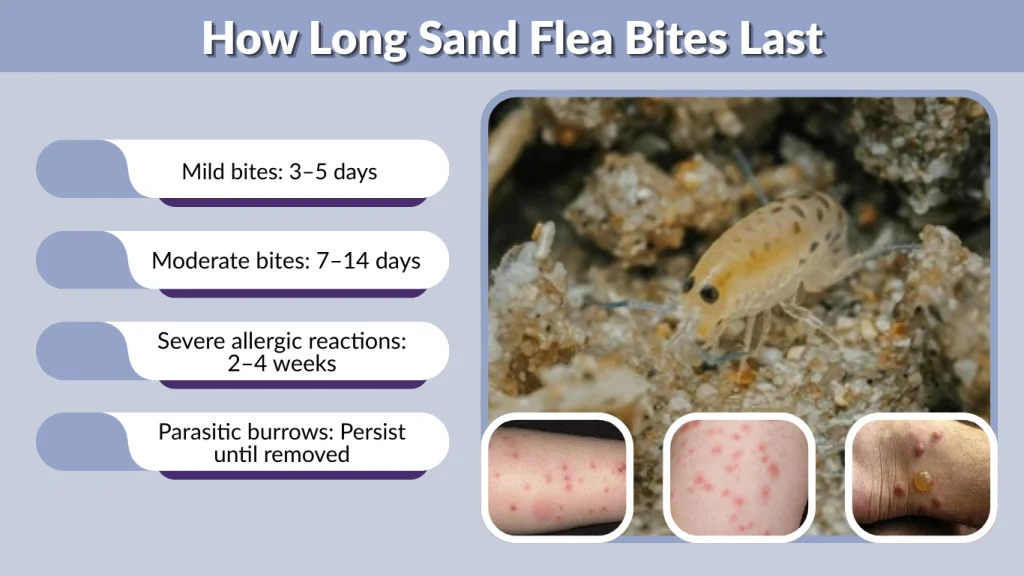
Bite duration depends on severity and sensitivity.
Duration on Humans
- Mild bites: 3–5 days
- Moderate bites: 7–14 days
- Severe allergic reactions: 2–4 weeks
- Parasitic burrows: Persist until removed
Duration on Dogs and Cats
Pets usually recover faster than humans, but their bites can still last 3–10 days depending on sensitivity and scratching. Dogs with thin fur tend to experience more irritation on the belly, paws, and legs. Cats may develop scabs if they scratch too much. If a parasitic jigger flea is present, bites will not heal until the flea is removed.
Why Bites Show Up Days Later
Many people are confused when sand flea bites appear a day or two after being at the beach. This delayed reaction happens because:
- The body’s immune system reacts slowly to midge saliva
- Swelling builds over time
- Heat and sun exposure inflame bites
- Scratching makes welts more visible
- Parasitic fleas burrow deeper over hours or days
Delayed bites are extremely common with biting midges. Many people believe they were bitten at home when the bites actually started at the beach.
When Bites Spread or Worsen
Sand flea bites themselves do not “spread,” but the irritation does, especially if the person scratches. Scratched skin becomes inflamed, which can make it seem like new bites are forming. Infection can also cause redness to expand around the area.
Parasitic fleas can cause multiple lesions if more than one flea embeds itself, but this is uncommon outside tropical regions.
How to Treat Sand Flea Bites
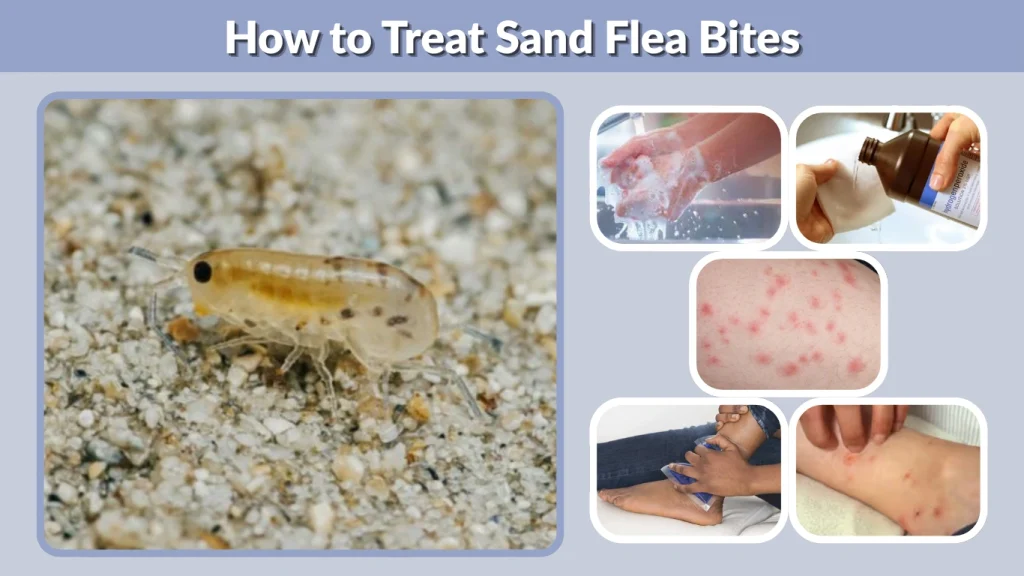
Immediate First Aid
As soon as you notice the bites, basic care helps stop symptoms from worsening:
- Wash gently with soap and warm water
- Apply an antiseptic wipe or solution
- Use a cold compress to reduce swelling
- Avoid scratching, as it increases inflammation
Cleaning early helps prevent secondary infections and reduces itching.
Home Remedies
Many simple home treatments work well to soothe itching and promote healing:
- Aloe vera gel: Reduces burning and irritation
- Baking soda paste: Neutralizes skin acidity
- Vinegar rinse: Relieves itching and disinfects
- Oatmeal bath: Calms irritated skin
- Honey or turmeric: Helps reduce swelling
These remedies offer relief without relying solely on medication.
Oils Used for Relief
Natural oils are commonly used to soothe sand flea bites:
- Tea tree oil: Anti-inflammatory and antimicrobial
- Coconut oil: Moisturizes and reduces irritation
- Lavender oil: Calms itching and redness
- Neem oil: Strong natural insect repellent and healer
Dilute essential oils before applying them to the skin.
Medical Treatment Options
When bites are more severe, medical treatments can help speed recovery:
- Hydrocortisone cream to reduce itching
- Antihistamines for allergy-style reactions
- Topical antibiotic ointments if skin breaks open
- Oral analgesics for pain
- Prescription creams for severe inflammation
For parasitic jigger fleas, professional removal is necessary. Never attempt to remove a burrowed flea with unsterilized tools.
Fast Relief Tips
If you need quick relief, try:
- Ice packs for instant calming
- Anti-itch gels like calamine lotion
- Cold showers
- Loose clothing to avoid friction
- Avoiding heat, which makes itching worse
How to Prevent Sand Flea Bites
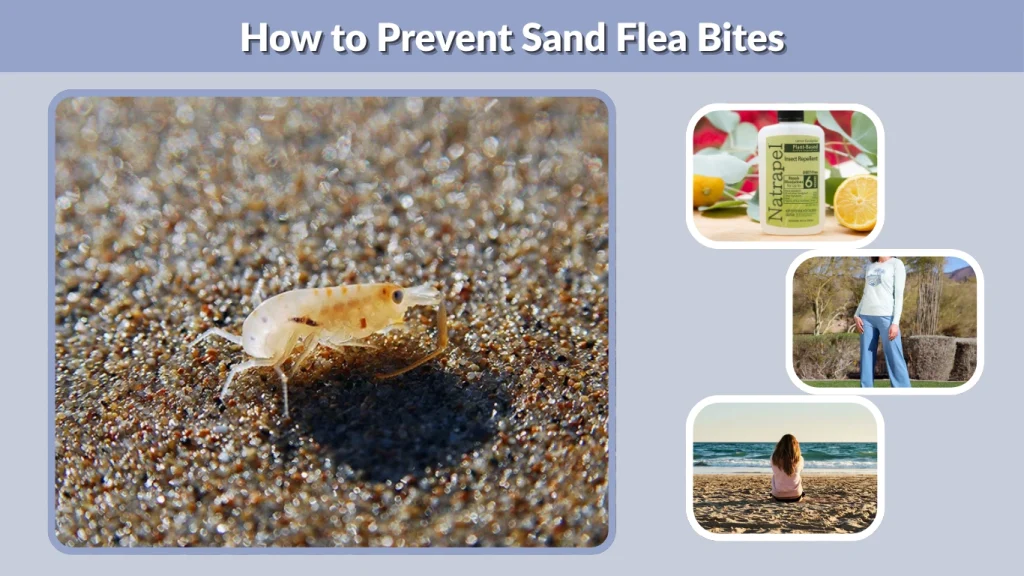
Personal Prevention Tips
You can greatly reduce your risk of bites with simple habits:
- Use insect repellent (DEET, picaridin, lemon eucalyptus)
- Wear long sleeves or long pants at dawn or dusk
- Avoid sitting directly on sand
- Shake out towels and blankets frequently
- Don’t dig bare feet into wet, warm sand
These steps help repel biting midges, the main culprits at beaches.
Beach-Specific Prevention
Certain beach conditions increase the chance of bites:
- Wet, shaded sand is a hotspot for biting midges
- Rotting seaweed attracts insects
- Warm, humid weather boosts insect activity
Use chairs, elevated loungers, or thick beach towels instead of sitting directly on the ground. Shower after swimming to remove salty water, which attracts insects.
Pet Prevention (Dogs & Cats)
Pets can also suffer from sand flea bites, especially when lying on sand:
- Rinse pets after any beach visit
- Use flea-preventative treatments from your vet
- Keep pets off wet sand during peak insect hours
- Check paws and belly for irritation
Pets with existing flea allergies should be protected carefully.
When to See a Doctor
Most sand flea bites heal without medical help, but certain symptoms require professional care:
- Severe swelling that spreads
- Intense redness or warmth around the bite
- Pus, oozing, or open wounds
- Fever or flu-like symptoms
- A dark spot indicating a burrowed flea
- Bites lasting more than two weeks
These symptoms could signal infection or a parasitic infestation.
FAQs
Do sand flea bites look like mosquito bites?
Yes, many appear similar, but sand flea bites often occur in clusters or lines.
Do sand flea bites itch immediately or later?
Many bites itch within minutes; others appear within 6–48 hours depending on your immune response.
Can sand flea bites scar?
Yes, especially if scratched heavily or if skin becomes infected.
Do Florida sand fleas bite?
Beach mole crabs in Florida do not bite, but biting midges at Florida beaches do.
How long until sand flea bites go away?
Most resolve in 3–14 days, depending on your sensitivity and treatment.
