
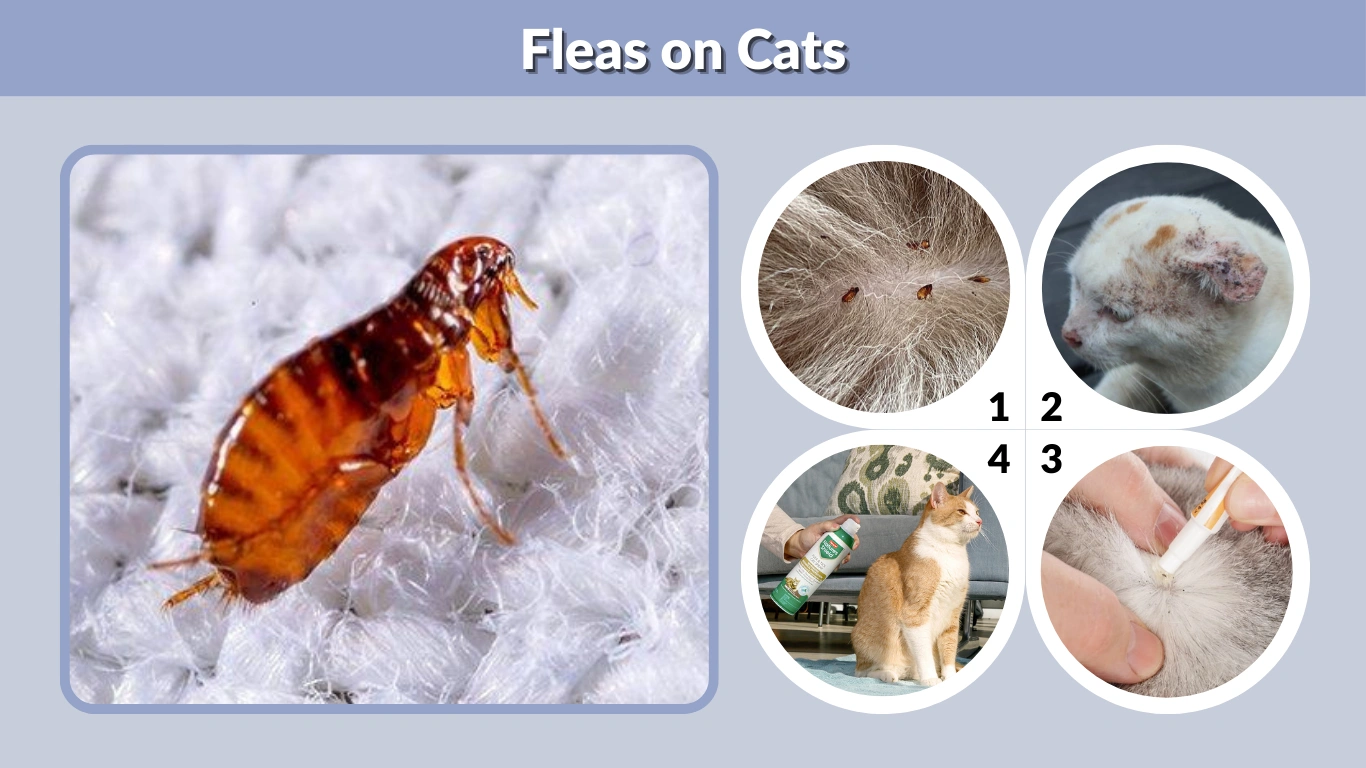
Fleas are one of the most common parasites affecting cats, whether they spend time outdoors or live strictly inside. These tiny insects cause itching, irritation, hair loss, scabs, and in severe cases, anemia. Because fleas reproduce rapidly and spread through bedding, carpets, and furniture, identifying the early signs of fleas on cats is essential for quick treatment. Understanding what fleas, flea dirt, and flea eggs look like—and how to remove them safely—helps protect both your cat and your home.
Identification: What Fleas on Cats Look Like

Adult fleas on cats are small, dark brown insects roughly 1–3 mm in length. They move quickly, darting through the fur and jumping when disturbed. You may spot them around the neck, back, and tail base—areas where they prefer to feed. Flea dirt, flea eggs, and even flea larvae may also be present, giving important clues to the severity of the infestation.
Flea dirt looks like black pepper flakes, flea eggs appear as tiny white grains resembling salt, and larvae look like tiny white worms found in bedding rather than on the cat. Finding any of these signs confirms that fleas are active in your home.
Signs of Fleas on Cats
Behavioral Signs
One of the earliest signs of fleas on cats is sudden, frequent scratching. Cats may also chew or bite at their skin, especially around the tail base or inner thighs. Restlessness, increased grooming, and unusual aggression during petting may indicate discomfort caused by flea bites.
Physical Symptoms
Fleas leave behind clear physical evidence. Small red bumps, irritated patches, or inflamed bite marks often appear on the belly, neck, or rump. Some cats develop scabs, especially around the neck and shoulders—a condition known as “flea allergy dermatitis,” where even a single flea bite triggers a strong allergic reaction.
Hair loss near the tail base is another common indicator, along with a gritty feel in the fur caused by dried flea dirt. If you groom your cat and notice tiny black dots on the comb or skin, fleas are likely present.
Severe Infestation Signs
Heavy infestations go beyond itching. Pale gums may indicate anemia, especially in kittens or older cats. You may see fleas visibly crawling in the fur or flea larvae in bedding. Cats may become lethargic, lose weight, or develop skin infections from constant scratching.
Flea Dirt, Flea Eggs & Flea Poop on Cats

What Flea Dirt Looks Like
Flea dirt is the feces of adult fleas—essentially dried blood. It looks like black pepper sprinkled through the fur, commonly concentrated at the neck and tail base. A simple test confirms it: place some on a tissue and wet it. If it turns reddish-brown, it’s flea dirt.
What Flea Eggs Look Like on Cats
Flea eggs are extremely small (0.5 mm) and pearl white. They do not stick to fur, unlike lice eggs, and instead roll off easily. You may find these salt-like grains around the neck, back, or bedding. On dark fur, they stand out clearly; on light fur, they blend in.
What Flea Larvae Look Like
Flea larvae do not live on cats. They hatch in the environment—carpets, bedding, furniture—and look like tiny white worms 1–5 mm long. If you see them around your cat’s sleeping areas, an infestation is already progressing through multiple life stages.
Where Fleas Hide on Cats
Hotspots
Fleas prefer certain warm, protected areas on a cat’s body. These include the neck, where cats often can’t groom thoroughly, the base of the tail, the belly, and the backs of the thighs. These areas are often the first places you will see flea dirt or red bite marks.
Areas to Check With a Flea Comb
Using a flea comb is one of the best ways to confirm flea activity. Focus on the chin, armpits, groin, and along the spine. Combining these areas over a sheet of white paper will help you spot fleas or flea dirt that falls out of the coat.
Flea Bites on Cats

What Flea Bites Look Like
Flea bites on cats appear as tiny red bumps, often clustered together. These raised spots may be very itchy, causing the cat to scratch vigorously or bite the area. Over time, the bites may become inflamed, especially in allergic cats.
Flea Bite Scabs on Cats
Some cats develop scabs around their necks and shoulders—one of the most common signs of flea allergy dermatitis. These crusty, irritated patches can easily be mistaken for injuries or skin infections. Cats with scabs often need both flea treatment and veterinary care for skin healing.
Cat Fleas on Beds and Furniture
Fleas don’t just stay on cats—they spread throughout the environment. When your cat sleeps on your bed, flea eggs fall onto the sheets, flea dirt stains the fabric, and adult fleas may crawl into mattress seams. Sofas, chairs, blankets, and rugs quickly become part of the infestation cycle.
If you notice tiny black specks on bedding or feel small bites on your legs, fleas may be moving from the cat into living areas.
How to Get Rid of Fleas on Cats (Fast & Safely)

Eliminating fleas on cats requires a combined approach: treating the cat, cleaning the home, and preventing fleas from returning. Fleas lay dozens of eggs per day, so even a few adult fleas can create a large infestation quickly. Acting fast ensures your cat gets relief and your home stays pest-free.
Step-by-Step Treatment
The first step is physically removing fleas with a flea comb. Run the comb through the fur, focusing on the neck, tail base, and back. Place a bowl of soapy water nearby and dunk the comb to kill any fleas you catch.
Next, apply a flea treatment approved for cats. These treatments kill adult fleas, stop reproduction, and break the life cycle. Finally, clean the home thoroughly—vacuum carpets, wash bedding, and treat upholstery to remove eggs and larvae.
What Kills Fleas on Cats Instantly
Some treatments begin killing fleas within minutes. Oral flea pills like Capstar start working in 30 minutes and eliminate most fleas within a few hours. Fast-acting topical treatments such as Revolution or Advantage kill adult fleas quickly and continue working for weeks.
Flea shampoos can remove fleas immediately, but bathing is often stressful for cats and doesn’t provide long-term protection. Shampoo may be used if recommended by a vet, but topical or oral medications are far more effective for prevention.
How Long Flea Medicine Takes to Work
Most modern flea treatments provide visible results within hours, but clearing a full infestation may take several weeks.
- Oral flea pills: begin killing within 30 minutes
- Spot-on treatments: start working within 12–48 hours
- Full home de-infestation: 2–4 weeks
During this time, it’s normal to see dead or dying fleas as treatments take effect.
Flea Treatment Options for Cats
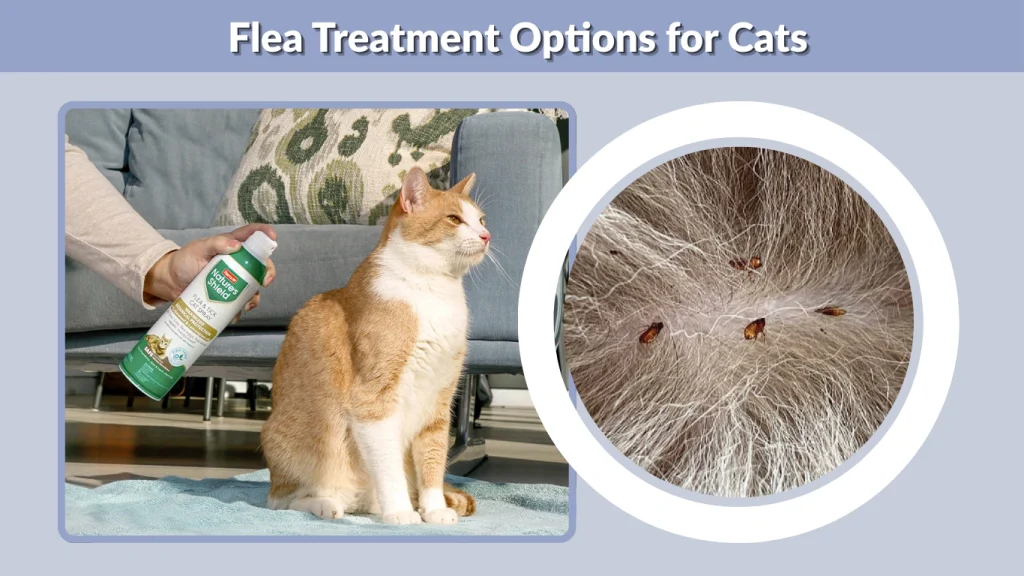
Medicated Options
Topical medications (Advantage, Frontline, Revolution) are highly effective and last one month. They kill adult fleas and often prevent eggs from developing. Oral medications like Capstar and Comfortis are fast-acting and ideal for severe infestations or for cats who resist topical treatments.
Flea Collars
Some flea collars work very well, such as Seresto, providing protection for up to eight months. Cheap collars usually do not work and may even irritate the skin.
Spot-On Flea Treatment Guide
Apply spot-on medication between the shoulder blades where the cat can’t lick it. The medication spreads through natural skin oils, killing fleas on contact. Avoid bathing your cat for 48 hours before or after treatment.
Natural & Home Remedies for Fleas on Cats
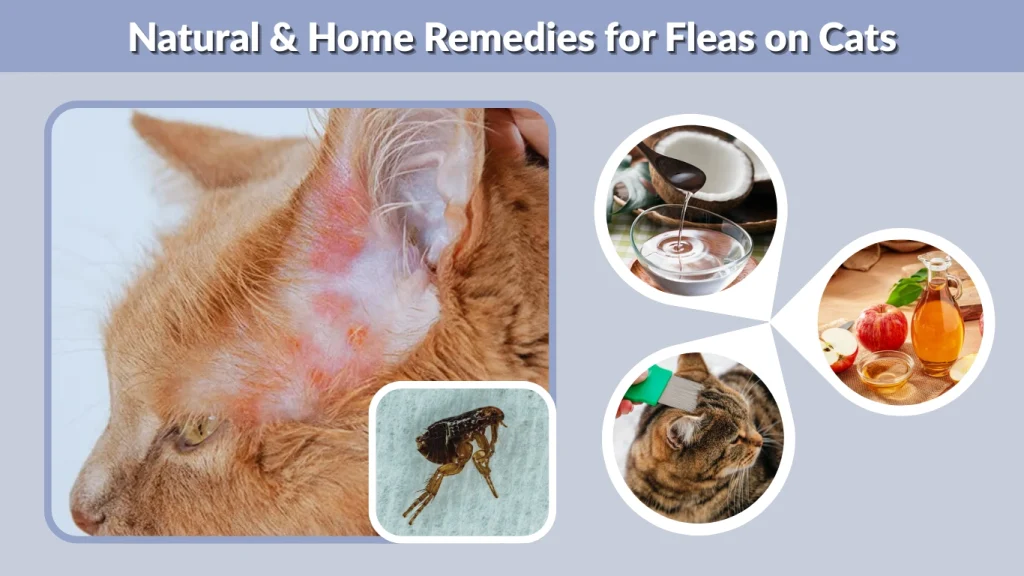
Safe Natural Remedies
Natural remedies can help support flea control, especially alongside medicated treatments.
- Coconut oil: suffocates fleas and soothes skin
- Apple cider vinegar (diluted): creates an unpleasant surface for fleas
- Herbal flea collars: mild repellent effect
- Frequent flea combing: physically removes fleas daily
Essential Oils Safety Warning
Most essential oils are toxic to cats. Do NOT use tea tree, peppermint, wintergreen, citrus, or eucalyptus oils. Only professionally formulated cat-safe blends should be used, and even then, under vet guidance.
Diatomaceous Earth for Fleas on Cats
Food-grade diatomaceous earth (DE) can kill fleas in carpets and bedding by dehydrating them. It should not be heavily applied to a cat’s skin, but a very light dusting may be permitted with vet supervision. DE works best in the environment, not directly on pets.
Home Remedies That Do Not Work
- Dish soap on cats
- Dog flea shampoo
- Essential oils not approved for cats
- Vinegar baths
- Baking soda applied directly to cats
These methods can irritate the skin or cause poisoning.
How to Get Rid of Fleas on Cats Without Bathing
Not all cats tolerate baths—and the good news is, they don’t need to. Most effective treatments do not require water at all.
Use spot-on treatments, oral flea pills, or regular flea combing. Combine this with household cleaning: wash bedding, vacuum frequently, and treat carpets with safe flea sprays or diatomaceous earth. As long as you treat both the cat and the environment, bathing is unnecessary.
Fleas on Cats and Humans
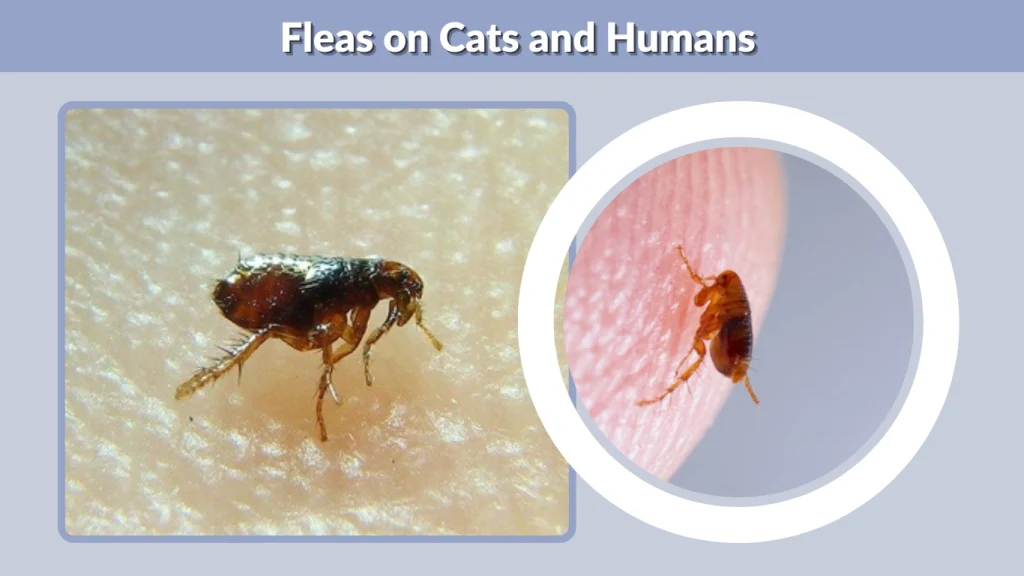
Can Cat Fleas Live on Humans?
Cat fleas can bite humans but cannot live, feed long-term, or reproduce on human skin. Humans lack the temperature and skin conditions fleas need. However, if your home has fleas, you may experience flea bites on your ankles or legs.
Cat Flea Bites on Humans
Cat flea bites appear as small, itchy red bumps, often in clusters. They may occur after sitting on infested furniture or sleeping in a bed where a cat rests. These bites are irritating but typically harmless.
Can Fleas Spread From Cats to Dogs or Humans?
Yes—cat fleas easily jump between pets. In fact, cat fleas infest dogs just as commonly as cats. They can also bite humans, but they cannot survive long-term on us.
Fleas on Cats in the Home Environment
Fleas do not remain only on pets. They live in bedding, carpets, couches, blankets, and other soft areas. Eggs fall off the cat into the home and hatch into larvae and pupae, hiding deep in fibers. Household cleaning is essential to stop reinfestation.
Home Infestation Signs
- Flea dirt on bedding
- Fleas jumping on furniture
- Flea larvae in carpets
- Human flea bites
If these signs appear, both the home and the cat must be treated.
Long-Term Flea Control for Cats
Flea Prevention Plan
Keep cats on a monthly flea medication year-round. Regular grooming helps detect fleas early. Wash bedding frequently and vacuum high-traffic areas weekly.
Flea Collars: Do They Work?
High-quality collars like Seresto can help. Cheap collars often fail to kill fleas and may cause rashes.
Year-Round Prevention Tips
Even indoor cats are vulnerable—fleas can enter through open doors, used furniture, visitors’ clothing, or other pets. Maintaining ongoing prevention ensures long-term protection.
FAQs
How do I get rid of fleas on my cat fast?
Use an oral flea pill for immediate action, then apply a monthly treatment.
Can fleas make my cat sick?
Yes—flea anemia, skin infections, and allergic dermatitis are common concerns.
Can people get fleas from cats?
People can be bitten but cannot host flea colonies.
How do I treat flea scabs on my cat?
Address fleas first, then use vet-recommended topical healing treatments.
How long does flea treatment take to work?
Most treatments show results within hours, with full control in weeks.
