
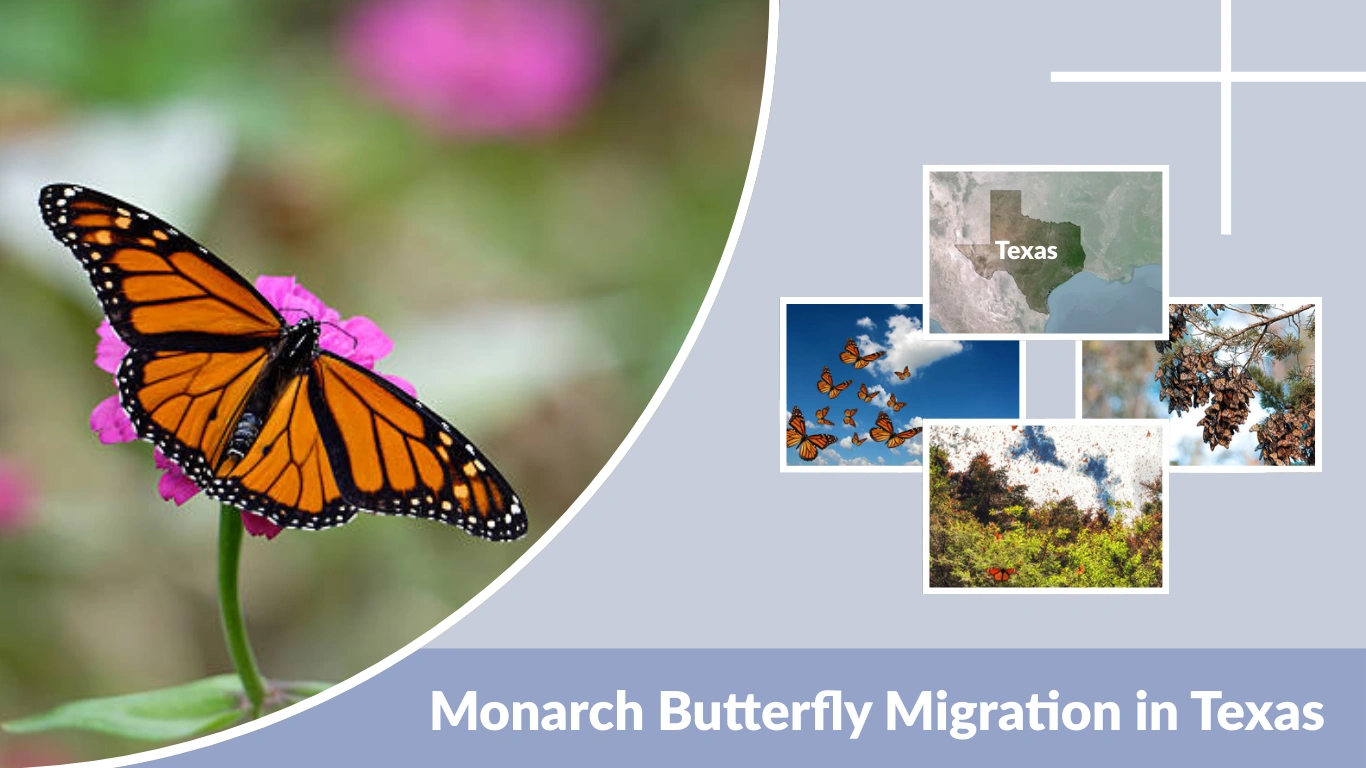
Texas plays a critical role in the monarch butterfly migration. Every year, millions of monarchs pass through the state as they travel between their northern breeding grounds and overwintering sites in Mexico. Because of its size, climate, and geography, Texas acts as both a migration highway and a refueling stop, making it one of the most important regions for monarch survival.
Why Texas Is So Important for Monarch Migration
Texas sits directly between the monarchs’ summer and winter habitats. Nearly all eastern monarch butterflies must pass through Texas twice each year.
Key Reasons Texas Matters
- It lies on the central flyway of the migration route
- It provides nectar plants needed for energy
- It hosts abundant milkweed during spring migration
- It offers varied climates that support both spring and fall movement
Without Texas, the monarch migration as we know it would likely collapse.
When Do Monarch Butterflies Migrate Through Texas?
Timing depends on the season and direction of migration.
Fall Migration in Texas
During fall, monarchs migrate south toward Mexico.
- North Texas: Late September to early October
- Central Texas: October
- South Texas: Late October to early November
This is the most dramatic and visible migration, often with large numbers moving through daily.
Spring Migration in Texas
In spring, monarchs travel northward to breed.
- South Texas: Late February to March
- Central Texas: March to early April
- North Texas: April
Spring migration is more spread out and involves multiple generations.
Monarch Butterfly Migration Route Through Texas
Texas covers hundreds of miles of the monarch migration path, and butterflies disperse widely across the state rather than following a single narrow corridor.
General Migration Path
- Enter Texas from Oklahoma, Arkansas, and Louisiana
- Move south through Central Texas
- Funnel toward South Texas
- Cross into northern Mexico en route to overwintering sites
Weather patterns, wind direction, and food availability can shift the exact route year to year.
Best Places to See Monarch Butterfly Migration in Texas
Some areas consistently offer excellent monarch sightings due to habitat quality and location.
Top Monarch Viewing Locations
- Hill Country – Llano, Fredericksburg, and Kerrville
- Austin area – Parks, greenbelts, and Lady Bird Lake
- San Antonio region – Especially during late October
- Coastal Texas – Galveston, Rockport, and South Padre Island
- South Texas brushlands – Key final stop before Mexico
Areas with native wildflowers and milkweed attract higher numbers.
What Monarchs Do While Migrating Through Texas
Migration through Texas is not nonstop flying. Monarchs must feed and rest to survive the journey.
Key Behaviors Observed
- Nectar feeding on fall-blooming flowers
- Roosting overnight in trees and shrubs
- Using favorable winds to conserve energy
- Avoiding cold fronts and storms
Texas often provides the last major feeding opportunity before monarchs cross into Mexico.
Milkweed and Nectar Plants in Texas
Texas supports more than 30 native milkweed species, making it vital during spring migration.
Important Texas Milkweed Species
- Antelope horns
- Green milkweed
- Zizotes milkweed
- Butterfly weed
In fall, nectar plants like goldenrod, frostweed, sunflowers, and mistflower are especially important.
Monarch Migration in Texas by Year
Searches like “monarch butterfly migration Texas 2024” are common because migration strength varies annually.
Why Migration Changes Each Year
- Weather extremes (droughts, freezes, heat waves)
- Habitat loss along the route
- Conditions at Mexican overwintering sites
- Availability of milkweed and nectar
Some years bring spectacular numbers, while others show noticeable declines.
Threats to Monarch Migration in Texas
Texas monarchs face increasing challenges that affect migration success.
Major Threats
- Loss of native milkweed due to development
- Herbicide use along roadsides and farmland
- Climate change altering migration timing
- Deforestation in Mexico reducing overwintering habitat
Because so many monarchs pass through Texas, local habitat loss has continental-scale consequences.
How Texans Can Help Monarch Butterflies
Small actions across Texas can make a big difference.
Ways to Support Monarch Migration
- Plant native milkweed and nectar plants
- Avoid pesticides in gardens
- Support roadside wildflower programs
- Participate in monarch tracking projects
Texas landowners and gardeners play a vital role in conservation.
Final Thoughts
Texas is not just part of the monarch butterfly migration—it is the backbone of it. From early spring breeding to fall fueling stops, monarchs depend on Texas landscapes for survival. Knowing when monarch butterflies migrate through Texas, where to see them, and how to protect their habitat helps ensure this iconic migration continues for future generations.
