
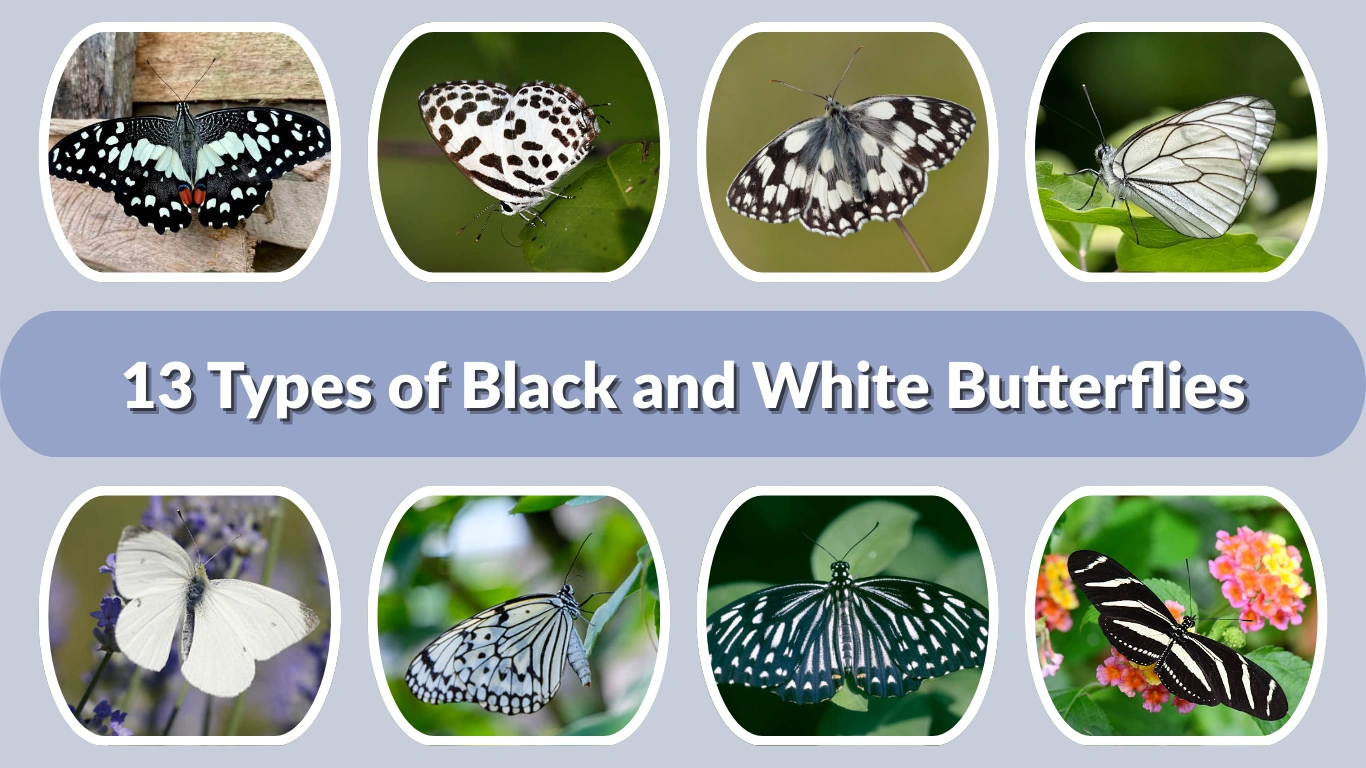
Black and white butterflies are admired for their striking contrast, elegant wing patterns, and graceful flight. These butterflies are found across gardens, forests, grasslands, and tropical regions, each species showing unique markings that make identification easier. From slow-gliding forest dwellers to fast-flying meadow species, black and white butterflies play an important role in pollination and biodiversity while adding natural beauty to their habitats.
1. Zebra Longwing Butterfly
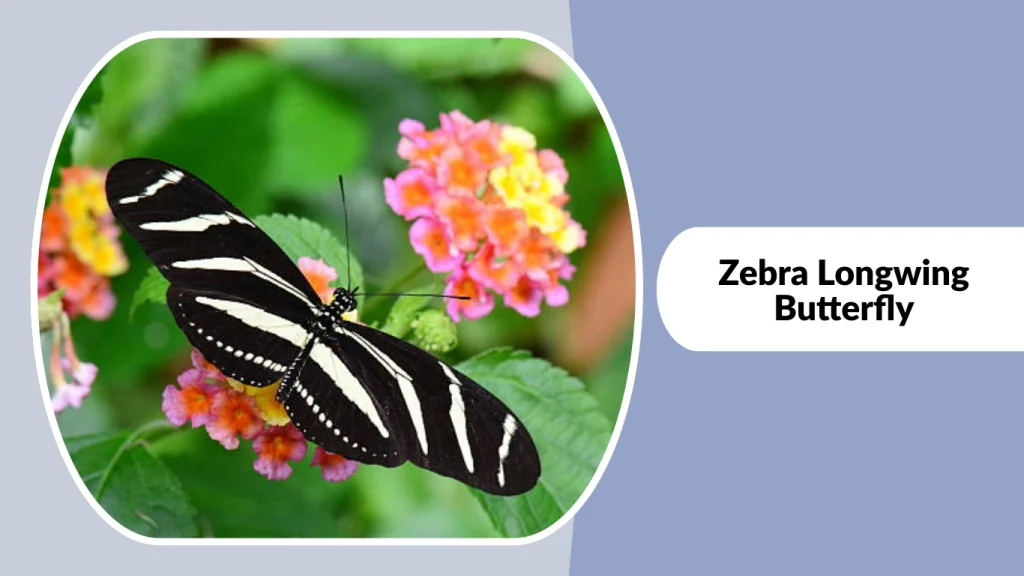
The Zebra Longwing is a striking black-and-white butterfly known for its elongated wings and graceful flight. It is commonly seen gliding slowly through gardens and forests and is especially notable for its intelligence and long lifespan compared to many other butterflies.
Identification
- Long, narrow wings with pointed tips
- Black wings marked with bold white or pale yellow stripes
- Wingspan typically ranges from 7–10 cm
- Slender body with long antennae
Color Pattern
The butterfly features a deep black base color with contrasting white or pale yellow horizontal stripes running across both forewings and hindwings. The underside often appears lighter, helping with camouflage while resting.
Habitat
Zebra Longwings are found in tropical and subtropical regions, especially in open woodlands, forest edges, gardens, and parks. They prefer areas where passionflower vines grow, as these are essential for their life cycle.
Behaviors
This species is slow-flying and often seen gliding rather than fluttering. Unlike most butterflies, Zebra Longwings roost communally at night and can live several months. They are also known to feed on pollen as well as nectar, which contributes to their longevity.
2. Paper Kite Butterfly
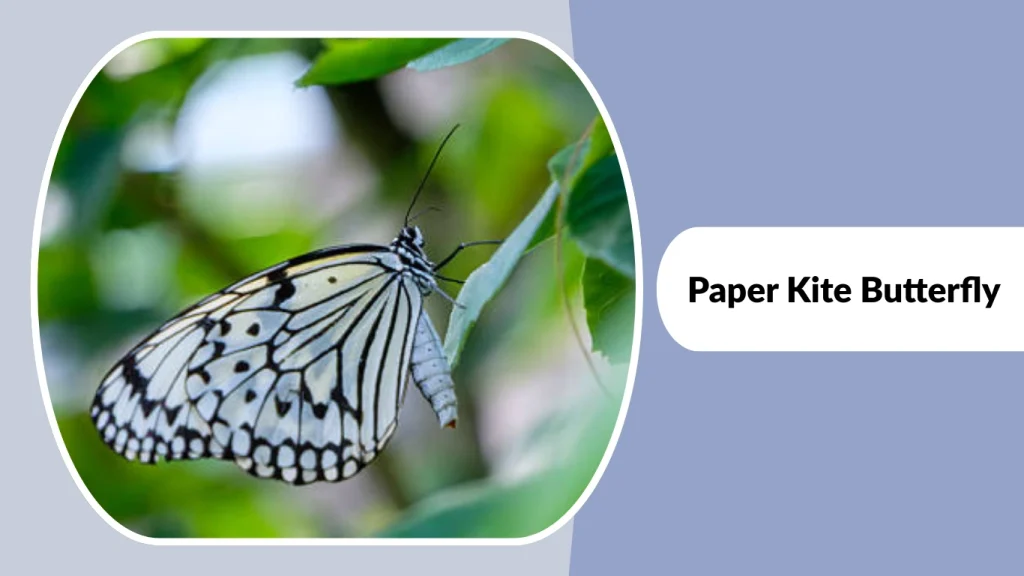
The Paper Kite is a large, elegant black-and-white butterfly admired for its slow, floating flight. Its delicate, paper-like wings make it stand out in tropical landscapes, where it often appears calm and effortless as it moves through the air.
Identification
- Large wings with rounded edges
- Mostly white wings bordered with black
- Wingspan ranges from 8–12 cm
- Slender black body with white markings
Color Pattern
The wings are predominantly milky white with bold black margins and black veins. Small white spots may appear within the black borders, creating a clean and graceful contrast that resembles cut paper.
Habitat
Paper Kite butterflies are commonly found in tropical forests, forest edges, coastal areas, and gardens. They favor warm, humid environments where host plants such as fig trees are abundant.
Behaviors
This butterfly is known for its slow, gliding flight that resembles drifting paper. It often flies at mid to high levels and is rarely seen fluttering rapidly. Paper Kites are generally calm, non-territorial, and frequently gather around flowering plants for nectar.
3. Common Mime Butterfly
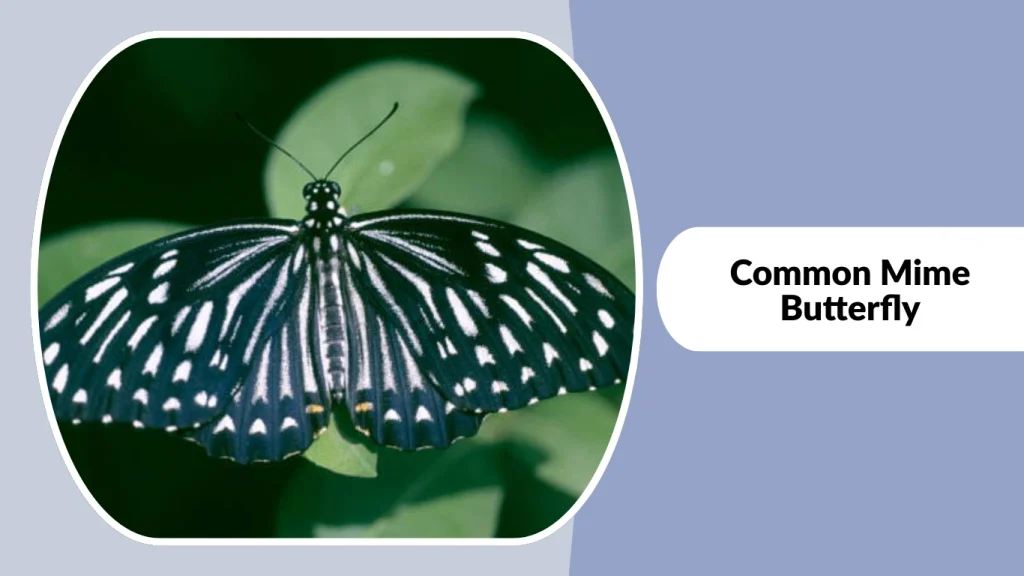
The Common Mime is a bold black-and-white butterfly known for its strong flight and mimicry behavior. It belongs to the swallowtail family and is often mistaken for toxic species, which helps protect it from predators.
Identification
- Medium to large-sized swallowtail butterfly
- Black wings with prominent white patches
- Rounded forewings and broader hindwings
- Wingspan usually between 8–10 cm
Color Pattern
The wings are primarily black with large, irregular white patches across both the forewings and hindwings. Some individuals may show faint grayish tones, giving the butterfly a slightly smoky appearance.
Habitat
Common Mime butterflies are found in tropical and subtropical regions, especially in forests, forest edges, hills, and well-vegetated gardens. They are commonly seen near citrus plants, which serve as larval host plants.
Behaviors
This species is a fast and powerful flier, often seen patrolling open spaces. It is active during sunny hours and frequently visits flowers for nectar. The Common Mime also displays mimicry, resembling unpalatable butterflies to avoid predation.
4. Common Mormon Butterfly
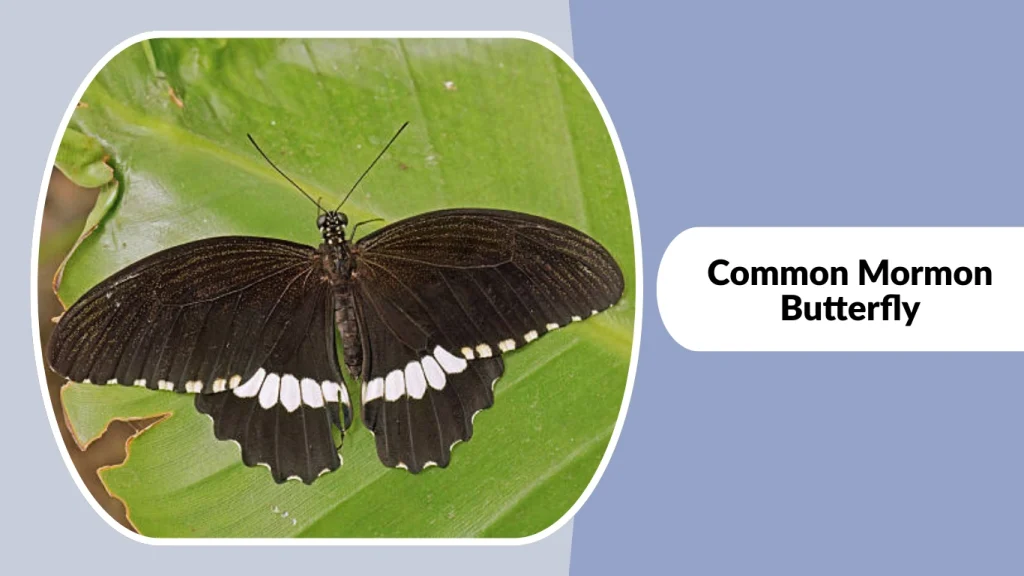
The Common Mormon is a large and adaptable butterfly known for its striking black-and-white appearance and frequent presence in gardens. It is one of the most familiar swallowtail butterflies in South and Southeast Asia.
Identification
- Large swallowtail butterfly with broad wings
- Mostly black wings with white bands or patches
- Hindwings lack long tails
- Wingspan ranges from 9–12 cm
Color Pattern
The butterfly has a deep black base color with a wide white band running across the hindwings and extending onto the forewings. Some individuals show subtle cream or gray tones within the white areas.
Habitat
Common Mormon butterflies are found in gardens, parks, forests, and urban green spaces. They thrive in areas with citrus plants, which are essential host plants for their caterpillars.
Behaviors
This species is a strong and steady flier, often seen gliding between flowering plants. It is active throughout the day and regularly visits flowers for nectar. Common Mormons are also known for puddling behavior, especially in moist soil areas.
5. White Admiral Butterfly
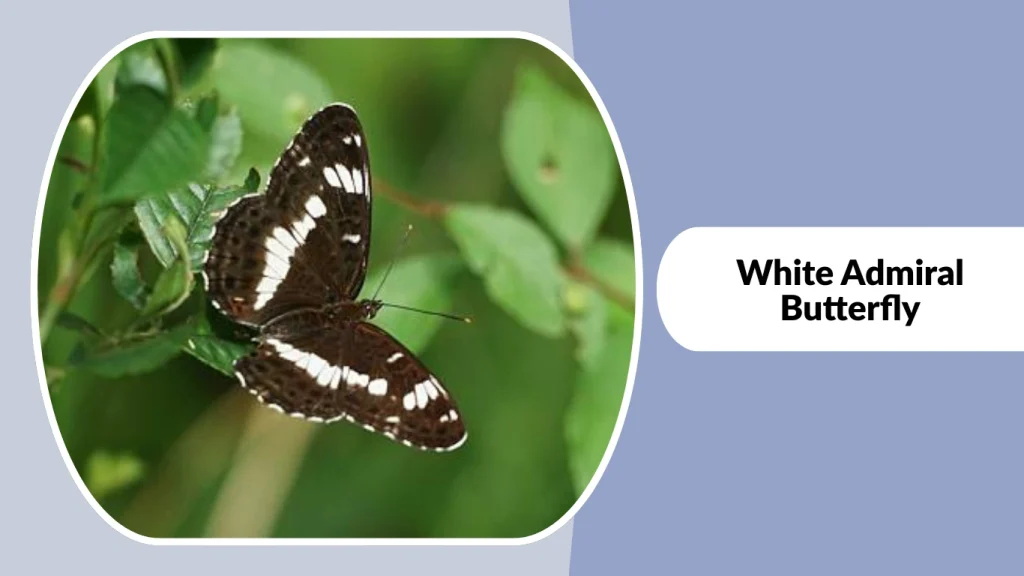
The White Admiral is an elegant black-and-white butterfly admired for its smooth flight and graceful appearance. It is commonly seen gliding through woodlands and shaded paths, where its contrasting wing patterns are easy to spot.
Identification
- Medium-sized butterfly with broad wings
- Dark brown to black wings with white bands
- Rounded wing edges
- Wingspan typically ranges from 6–7.5 cm
Color Pattern
The wings are dark brown or black with a bold white band running across both the forewings and hindwings. The underside shows softer gray and white tones, helping the butterfly blend into its surroundings when at rest.
Habitat
White Admirals prefer deciduous woodlands, forest edges, and shaded woodland paths. They are often found in areas with honeysuckle plants, which serve as important host plants for their larvae.
Behaviors
This butterfly is known for its smooth, gliding flight rather than rapid fluttering. It often rests on leaves or tree trunks and is attracted to tree sap, rotting fruit, and animal droppings more than flowers.
6. Tree Nymph Butterfly
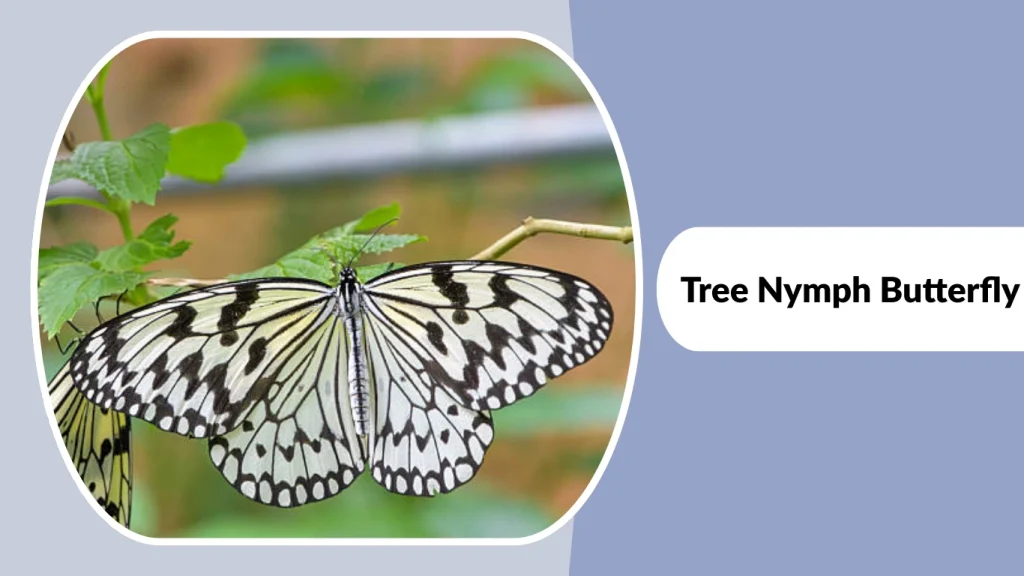
The Tree Nymph is a large, eye-catching black-and-white butterfly known for its slow, floating flight. Its size and graceful movement make it one of the most noticeable butterflies in tropical regions.
Identification
- Very large butterfly with broad wings
- White wings with thick black veins and borders
- Long, slender body
- Wingspan ranges from 12–16 cm
Color Pattern
The wings are creamy white with bold black veins creating a stained-glass appearance. Thick black edges frame the wings, giving the butterfly a dramatic contrast that is easily visible from a distance.
Habitat
Tree Nymph butterflies inhabit tropical forests, forest clearings, mangroves, and coastal woodlands. They are commonly found in warm, humid environments with plenty of host plants and flowering trees.
Behaviors
This species flies slowly and smoothly, often gliding high among tree canopies. It is not easily startled and may be seen drifting calmly through open areas. Tree Nymphs are known to gather around flowering plants and sometimes rest for long periods.
7. Black-Veined White Butterfly

The Black-Veined White is a distinctive black-and-white butterfly known for its bold wing veins and gentle flight. It has a classic, clean appearance and is often associated with open countryside and flowering meadows.
Identification
- Medium to large-sized butterfly
- White wings with strong black veins
- Rounded wing shape
- Wingspan usually between 6–7 cm
Color Pattern
The wings are bright white with thick, clearly defined black veins spreading across both forewings and hindwings. The contrast gives the butterfly a net-like or stained appearance that makes it easy to identify.
Habitat
Black-Veined White butterflies prefer open habitats such as grasslands, meadows, farmland edges, and gardens. They are often found in sunny areas with abundant flowering plants and shrubs.
Behaviors
This species has a slow, floating flight and is often seen gliding over flowers. It regularly visits blossoms for nectar and may rest with wings spread open. The butterfly is generally calm and active during warm, sunny days.
8. Large White Butterfly
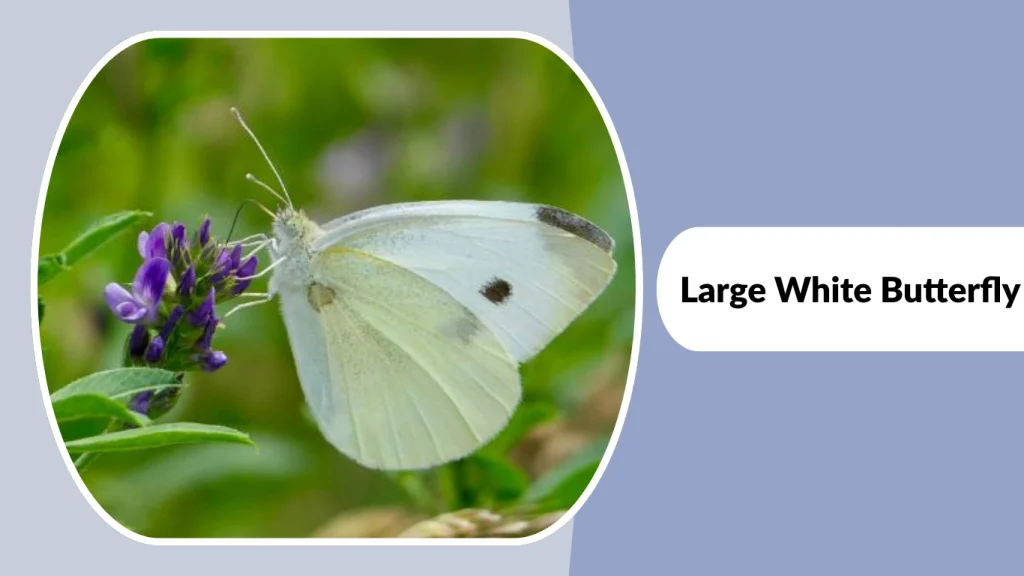
The Large White is a well-known black-and-white butterfly often seen in gardens and farmland. It is recognizable by its broad wings and strong, direct flight, making it one of the most familiar white butterflies in many regions.
Identification
- Large butterfly with broad, rounded wings
- White wings with black tips on the forewings
- Dark spots present, especially in females
- Wingspan ranges from 6–7.5 cm
Color Pattern
The wings are bright white with bold black tips on the forewings. Females typically have two black spots on each forewing, while males have fewer or none. The underside appears slightly yellowish or pale green.
Habitat
Large White butterflies are commonly found in gardens, farmland, meadows, parks, and open countryside. They thrive in areas with cabbage and other mustard-family plants, which are essential for their larvae.
Behaviors
This species is an active and strong flier, often traveling long distances. It frequently visits flowers for nectar and is most active during sunny, warm conditions. Large Whites are also known for their migratory behavior in some regions.
9. Small White Butterfly
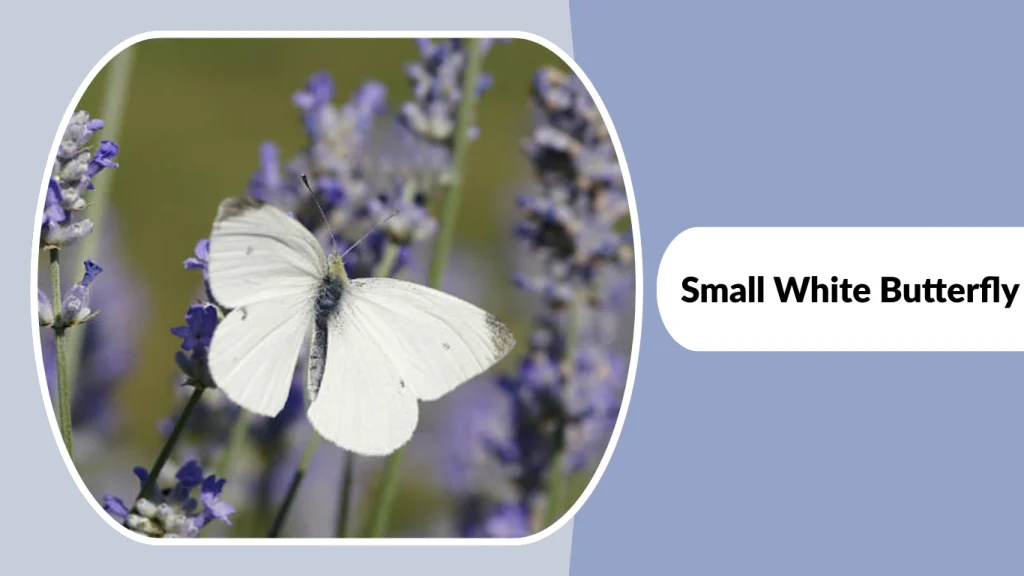
The Small White is a common black-and-white butterfly frequently seen fluttering through gardens and open fields. Though similar in appearance to the Large White, it is smaller and more delicate in size and movement.
Identification
- Small to medium-sized butterfly
- White wings with black tips on forewings
- Slim body and rounded wings
- Wingspan typically ranges from 4–5.5 cm
Color Pattern
The wings are clean white with narrow black tips on the forewings. Females usually have one or two small black spots, while males often lack spots. The underside has a pale greenish-yellow tone that aids camouflage.
Habitat
Small White butterflies inhabit gardens, fields, farmland, parks, and roadsides. They are closely associated with mustard and cabbage plants, which serve as host plants for their caterpillars.
Behaviors
This butterfly has a quick, fluttering flight close to the ground. It is highly active during daylight hours and frequently visits flowers for nectar. Small Whites are adaptable and can be seen throughout much of the year in suitable climates.
10. Chequered Skipper Butterfly
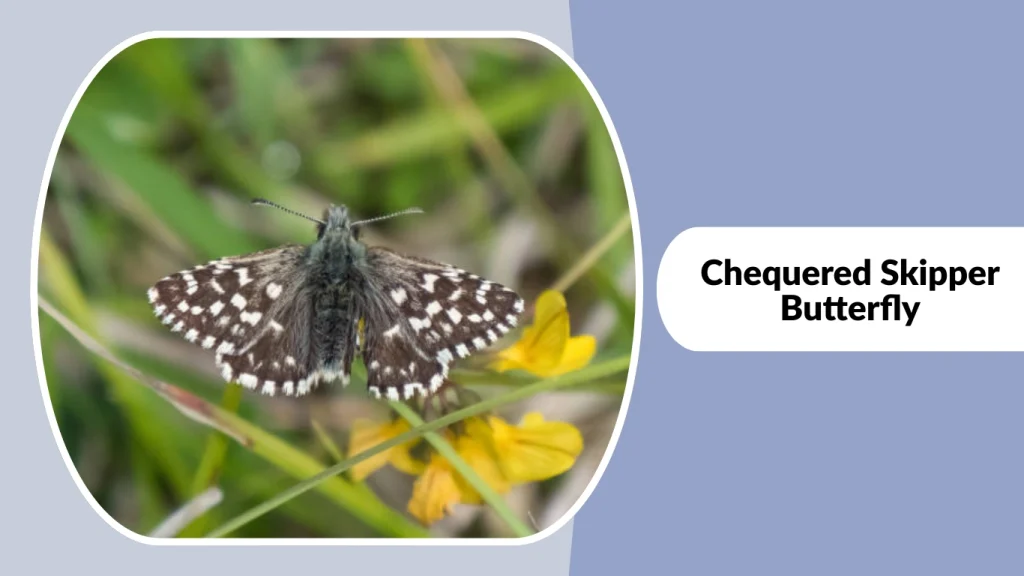
The Chequered Skipper is a small, energetic black-and-white butterfly known for its rapid flight and checkered wing pattern. It is often seen darting quickly across open grassy areas during warm, sunny days.
Identification
- Small, compact butterfly with stout body
- Black wings with distinct white checkered spots
- Short, rounded wings typical of skippers
- Wingspan ranges from 2.5–3.5 cm
Color Pattern
The wings display a bold black background covered with neatly arranged white or pale cream square spots, giving the butterfly its checkered appearance. The underside is usually paler with softer contrast.
Habitat
Chequered Skippers are commonly found in grasslands, meadows, open woodland edges, and grassy hillsides. They prefer sunny areas with plenty of grasses, which are essential for their larvae.
Behaviors
This species is fast-flying and highly active, often making short, rapid flights close to the ground. It frequently rests with wings partially open and is territorial, often returning to the same perch after short flights.
11. Marbled White Butterfly
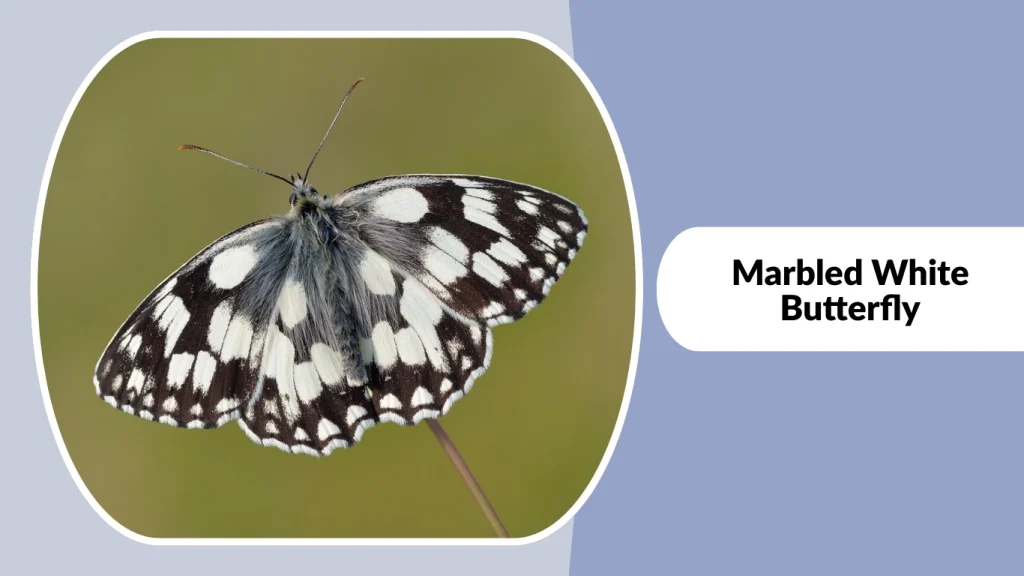
The Marbled White is a striking black-and-white butterfly famous for its bold, marbled wing pattern. It is commonly seen in summer, flying gracefully over grasslands and meadows.
Identification
- Medium-sized butterfly with rounded wings
- Distinctive black-and-white marbled pattern
- Similar markings on both wing surfaces
- Wingspan typically ranges from 5–6.5 cm
Color Pattern
The wings feature a dramatic mix of black and white patches arranged in a marbled or checker-like design. The underside closely resembles the upper side, providing effective camouflage when the butterfly is resting.
Habitat
Marbled White butterflies prefer dry grasslands, chalk downs, meadows, and open hillsides. They are usually found in sunny areas with tall grasses, which are important for their caterpillars.
Behaviors
This butterfly has a slow, floating flight and often glides just above tall grasses. It is most active during warm summer days and frequently rests with wings closed while feeding on nectar from wildflowers.
12. Common Pierrot Butterfly
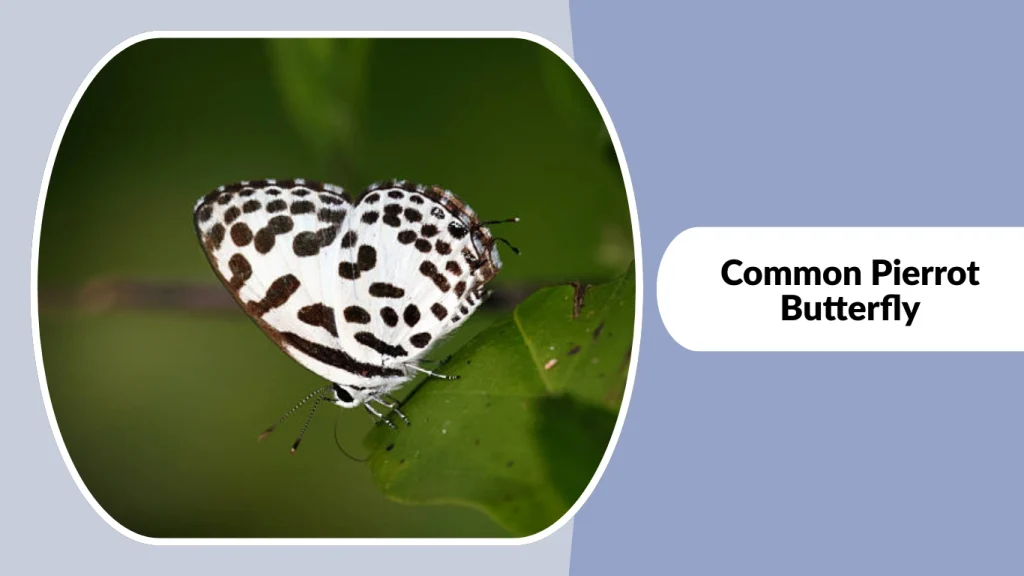
The Common Pierrot is a small, delicate black-and-white butterfly known for its gentle flight and subtle beauty. Despite its size, it is easily noticed due to its contrasting wing colors and frequent presence in gardens.
Identification
- Small butterfly with slender body
- White wings with black borders and markings
- Short, fine antennae
- Wingspan usually ranges from 3–4 cm
Color Pattern
The upper wings are pale white with thin black margins, while the underside shows a more complex pattern of black spots and lines. Some individuals may display faint bluish-gray tones near the base of the wings.
Habitat
Common Pierrots are found in gardens, scrublands, forest edges, and open countryside. They prefer warm climates and areas with host plants such as legumes and small shrubs.
Behaviors
This species has a weak, fluttering flight close to the ground. It often rests on low vegetation and is active during sunny hours. Common Pierrots frequently feed on nectar from small flowers and may bask in sunlight with wings open.
13. Lime Butterfly
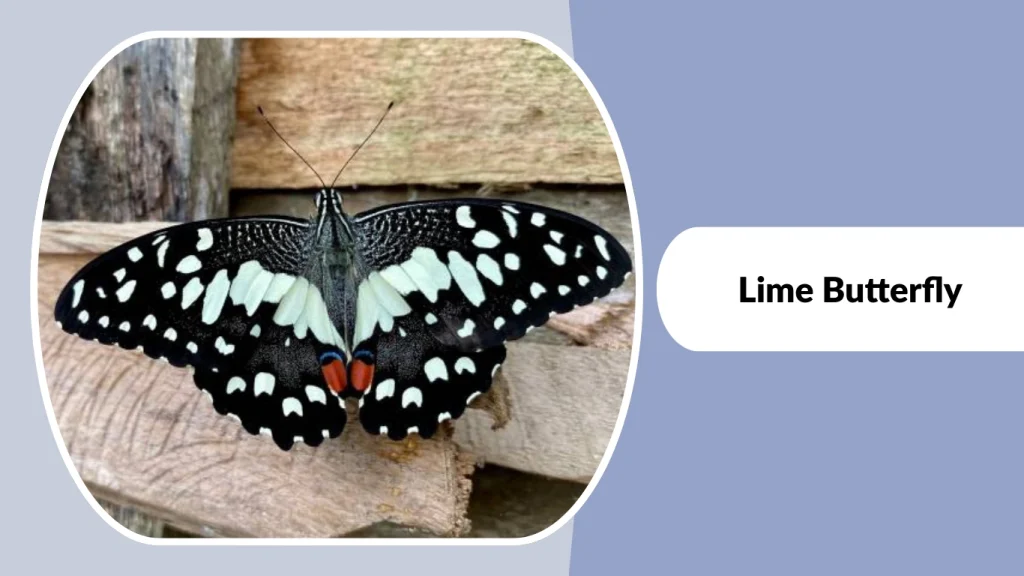
The Lime Butterfly is a large black-and-white species known for its bold markings and strong presence in gardens and forested areas. It is easily recognized by its striking contrast and frequent association with citrus plants.
Identification
- Large butterfly with broad wings
- Black wings marked with white patches and spots
- Sturdy body with rounded wing edges
- Wingspan typically ranges from 9–11 cm
Color Pattern
The wings are deep black with large, creamy-white patches arranged across both forewings and hindwings. The underside appears slightly paler, with softer contrasts that help reduce visibility while resting.
Habitat
Lime Butterflies are commonly found in gardens, orchards, forests, and suburban areas. They are especially abundant where citrus trees grow, as these plants are essential for their caterpillars.
Behaviors
This species is a powerful and confident flier, often seen gliding between trees and flowering plants. It regularly visits flowers for nectar and is active throughout the day. Lime Butterflies are also known for puddling on damp soil to absorb minerals.
