

Lice are tiny parasitic insects that live on humans, animals, and birds, feeding on blood or skin. Because of their small size and color, lice are often mistaken for dandruff, dirt, or hair product residue. Knowing exactly what lice look like at each stage—eggs, immature lice, and adults—makes it much easier to detect an infestation early. Lice can appear different depending on hair color, lighting, and where they’re found, such as on the scalp, in hair, or on a comb.
What Is Lice?
Lice are wingless insects that survive by living on a host. They cannot jump or fly and spread mainly through close contact. Each type of lice is species-specific, meaning human lice cannot live on pets, and animal lice cannot infest humans. Lice spend their entire life cycle on the host, which is why visual identification is one of the most reliable ways to confirm an infestation.
Identification: What Lice Look Like

- Small, flat-bodied insects about the size of a sesame seed
- Oval-shaped with six legs
- Legs end in claw-like hooks for gripping hair
- Colors range from clear and tan to gray or brown
- Adults are visible to the naked eye
- Move quickly but do not jump or fly
What Head Lice Look Like
Adult Head Lice
Adult head lice are about 2–4 millimeters long. They have flat, elongated bodies and six legs that grip tightly to hair strands. Their color varies depending on hair color and whether they’ve recently fed. Before feeding, lice may appear pale or gray, while after feeding they often look darker or reddish-brown. Adult lice move quickly across the scalp, especially when exposed to light.
Immature Lice (Nymphs)
Nymphs are young lice that hatch from eggs. They look similar to adult lice but are much smaller, making them harder to spot. Because of their size and pale color, nymphs are often mistaken for dandruff or debris. Despite being small, they still move and cling tightly to hair.
What Lice Look Like in Hair

In Dark Hair
In dark hair, lice often appear brown or gray and blend in easily, making them difficult to see. Movement is usually the best indicator. Parting the hair under bright lighting and watching closely for crawling insects helps with detection. Nits in dark hair may look yellowish or light brown.
In Blonde or Light Hair
Lice are generally easier to see in blonde or light-colored hair. Adult lice appear darker against the hair, while nits often look tan or yellow. Empty eggs may appear white and are more noticeable on light hair.
Early Infestation Appearance
At the beginning of an infestation, there may only be a few lice present. Itching may be mild or nonexistent. Nits are usually found very close to the scalp, especially behind the ears and at the nape of the neck. Adult lice may be seen only occasionally.
What Lice Eggs (Nits) Look Like
Live Nits
Live lice eggs, commonly called nits, are tiny, oval-shaped, and about the size of a pinhead. They are firmly glued to the hair shaft near the scalp and cannot be brushed off easily. Live nits are usually yellow, tan, or light brown and are often mistaken for dandruff until closely examined.
Dead or Hatched Nits
Dead or hatched nits appear white or clear and are often found farther away from the scalp as hair grows. While they do not indicate an active infestation, they can remain in the hair for months if not removed. Unlike dandruff, nits stay attached even when hair is shaken or brushed.
What Lice Look Like on the Scalp
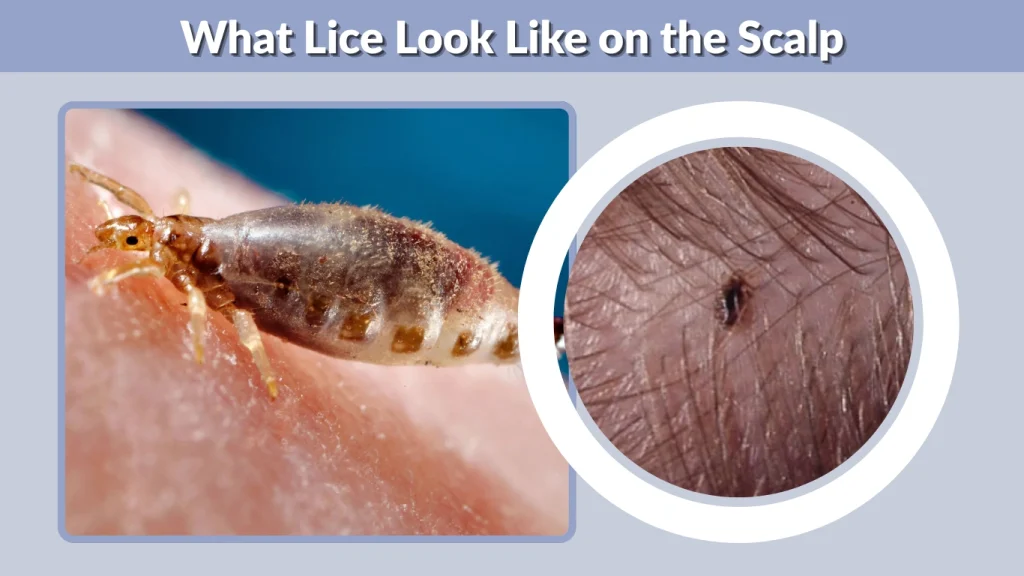
Lice are most commonly found close to the scalp because they rely on body heat and frequent feeding. They tend to gather behind the ears, along the neckline, and at the crown of the head. The scalp may show small red bite marks, irritation, or scratch marks from itching. In heavier infestations, clusters of nits may be visible at the hair roots.
What Lice Look Like on a Comb
Using a fine-tooth lice comb is one of the best ways to confirm an infestation. When combing through wet hair, live lice may appear as small brown or gray insects moving on the comb. Nits often get trapped between the teeth and look like tiny oval beads. Dark specks may also be visible—these are lice feces, made of digested blood, and are another sign of active lice.
What Lice Bites Look Like
Head Lice Bites
Head lice bites appear as small red bumps on the scalp, neck, and behind the ears. Not everyone reacts the same way, but itching is common and can become intense with repeated exposure. Scratching may cause scabs or secondary skin irritation.
Body Lice Bites
Body lice bites usually occur in areas where clothing seams touch the skin, such as the waist, shoulders, and torso. Bites often appear in clusters and may cause thickened or darkened skin with long-term infestation.
Pubic Lice Bites
Pubic lice bites can cause blue-gray or reddish spots and intense itching. These lice are usually found in coarse hair and move more slowly than head lice.
Types of Human Lice and Their Appearance
Head Lice
Head lice are the most common type. They are small, fast-moving, and live directly on the scalp and hair. Their color allows them to blend into different hair shades.
Body Lice
Body lice are slightly larger than head lice and usually grayish or brown. Unlike head lice, they live in clothing seams and move to the skin only to feed.
Pubic (Crab) Lice
Public lice have short, wide bodies that resemble tiny crabs. They move slowly and are often yellow-gray in color.
Lice vs Dandruff
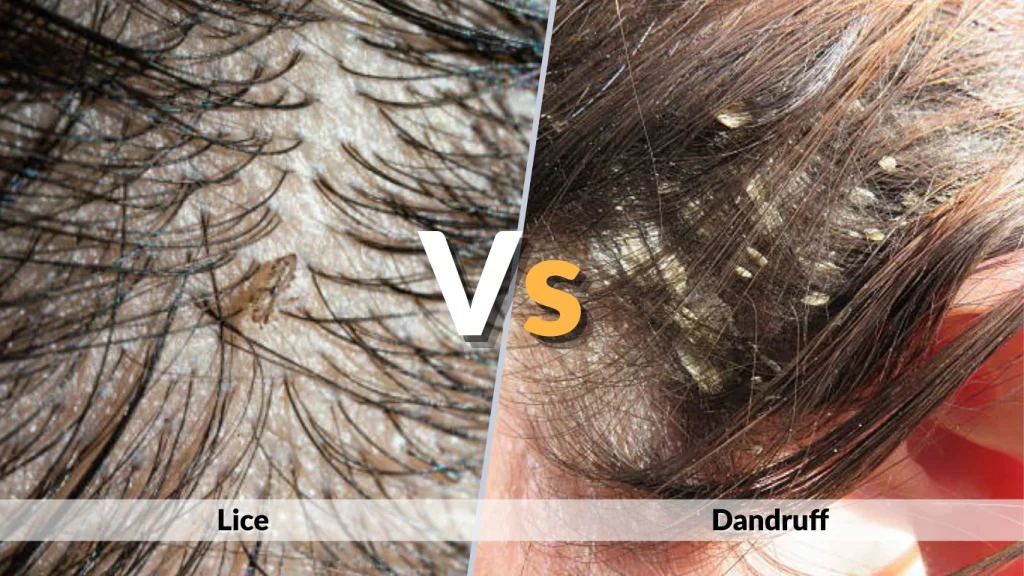
| Feature | Lice | Dandruff |
| Movement | Crawls | Does not move |
| Attachment | Firmly stuck to hair | Loose flakes |
| Shape | Oval insect or egg | Irregular flakes |
| Removal | Hard to remove | Easily brushed off |
What Dead Lice Look Like
Dead lice appear darker and completely still. When touched, they do not move or grip hair. Dead lice eggs are white or clear and often found farther down the hair shaft. While dead lice are not contagious, their presence indicates a previous infestation that may need follow-up checks.
What Super Lice Look Like
Super lice look exactly the same as regular head lice. The term refers to lice that are resistant to common treatments, not to differences in size or shape. They are identified by treatment failure rather than appearance.
What Animal Lice Look Like
Dog and Cat Lice
Pet lice are species-specific and cannot live on humans. They are pale yellow or tan and often visible near the base of the fur. Chewing lice move slowly, while blood-sucking lice stay close to the skin.
Bird and Chicken Lice
Bird lice are fast-moving, straw-colored insects found near feathers and vents. Heavy infestations can cause feather damage and irritation.
Goat and Livestock Lice
Livestock lice are thicker-bodied and easier to see, especially on short hair. They are usually brown or gray and cluster in colder areas of the body.
What Lice Look Like to the Human Eye
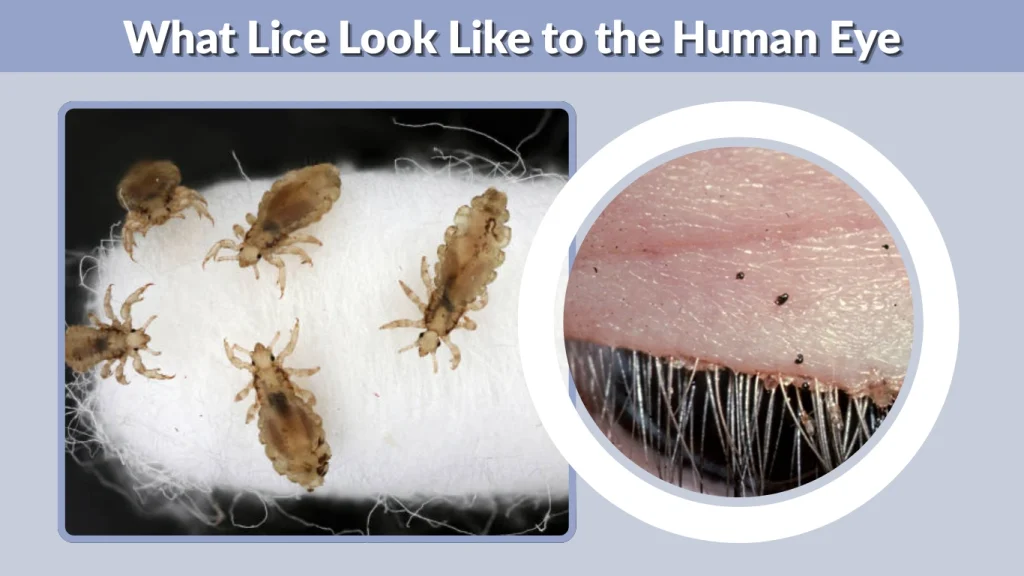
Adult lice can be seen without magnification, especially when moving. Nits are much smaller but still visible under good lighting when hair is parted closely. A lice comb and bright light significantly improve detection accuracy.
Common Things Mistaken for Lice
- Dandruff flakes
- Hair product residue
- Scabs
- Fabric lint or sand
FAQs
What does lice look like in the beginning?
Early infestations usually involve only a few nits near the scalp and occasional adult lice. Itching may be mild or absent, making early detection difficult without close inspection.
What does a lice nit look like on hair?
A nit looks like a tiny oval bead glued to the hair shaft. It does not move or brush off easily and is usually yellow or tan when alive.
What does lice poop look like?
Lice feces appear as tiny black or dark red specks on the scalp, pillowcases, or combs. They may smear slightly when wet.
Can you see lice without a microscope?
Yes, adult lice are visible to the naked eye. Eggs are smaller but still visible under bright light with careful inspection.
What does a scalp with lice look like?
A scalp with lice may show redness, small bite marks, irritation, and clusters of nits near the hair roots, especially behind the ears and along the neckline.
