
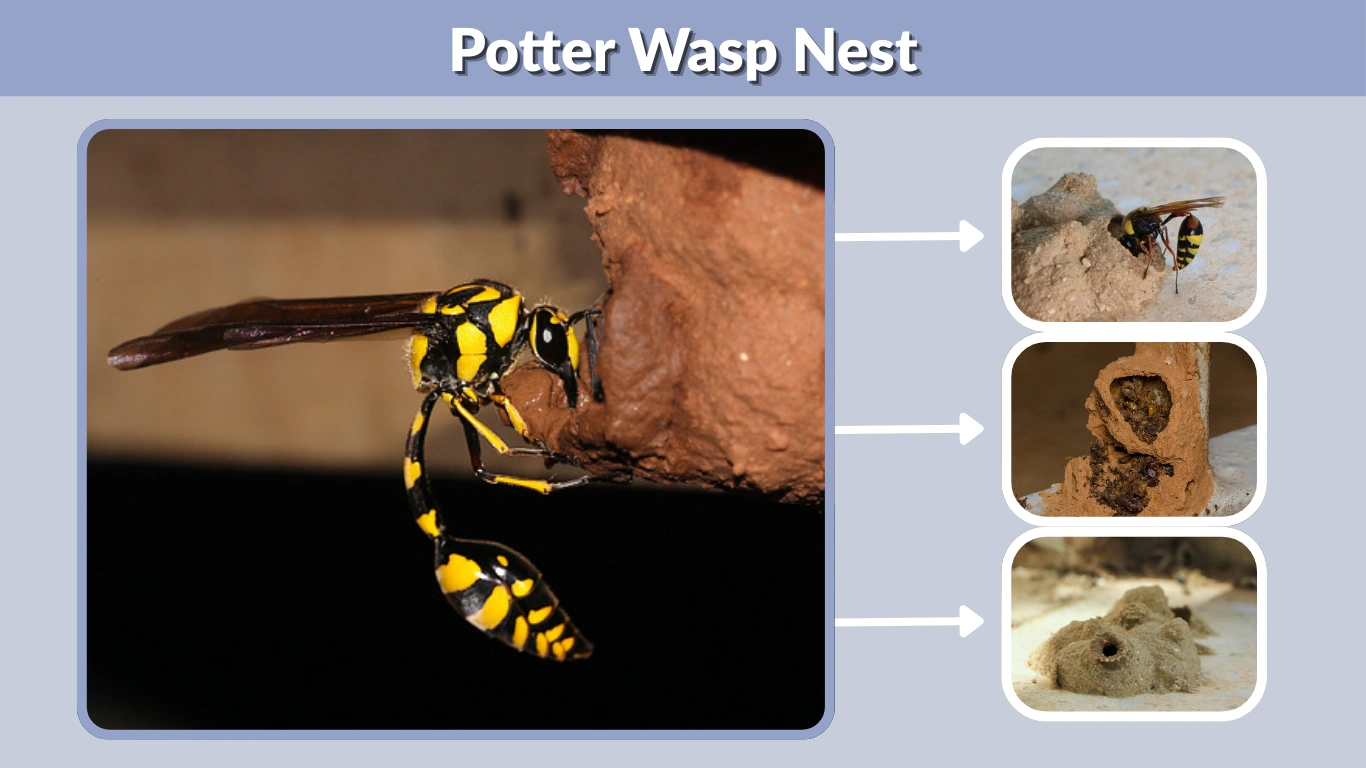
A potter wasp nest is a small but eye-catching structure often found attached to walls, eaves, window frames, or bricks. Because of its unusual pot-like shape, many people mistake it for dried mud, termite tubes, or debris. Others worry it may be dangerous or signal an infestation. In reality, potter wasp nests are built by solitary wasps and are very different from the large paper nests made by social wasps. Understanding what a potter wasp nest looks like, how big it is, and what’s inside can help you decide whether it should be left alone or removed.
What Is a Potter Wasp Nest?
A potter wasp nest is a single-purpose structure created by a female potter wasp to house her offspring. Potter wasps belong to a group of solitary wasps, meaning they do not live in colonies, defend large nests, or cooperate with other wasps.
The nest is not used as a home for adult wasps. Instead, it functions as a sealed chamber where the wasp lays an egg and provides food for the developing larva. Once the nest is completed and sealed, the adult wasp typically leaves and does not return.
This behavior makes potter wasps far less aggressive than many other wasp species, even when their nests are nearby.
What Does a Potter Wasp Nest Look Like?
The most recognizable feature of a potter wasp nest is its pot or urn-like shape. Many nests resemble a tiny clay jug attached sideways to a surface. Others appear more rounded or dome-shaped, depending on the species.
Shape and Texture
Most potter wasp nests are compact and well-defined, with a noticeable opening during construction that is later sealed. The texture can vary:
- Smooth and sculpted, resembling fired pottery
- Rough and grainy when made from coarse mud
- Glossy when resin is used as a building material
Because the nests are individually built and shaped by the wasp, no two look exactly alike.
Color Differences
Color varies widely. Some nests appear dark brown or black, especially when built from damp soil. Others may look tan, gray, or even orange. A freshly built nest often appears darker and slightly moist, while older nests fade, harden, and may crack over time.
Potter Wasp Nest Size
A typical potter wasp nest is small, usually measuring between 2 and 5 centimeters (1 to 2 inches) across. This compact size is one reason they often go unnoticed until someone spots one at eye level or near a doorway.
Most potter wasp nests contain one chamber, designed for a single larva. However, some species build several chambers close together, forming a cluster that looks like multiple pots fused side by side. Even in these cases, the total size remains modest compared to paper wasp or hornet nests.
Despite their small size, potter wasp nests are surprisingly durable and can remain attached to walls or structures long after the wasp has emerged.
Inside a Potter Wasp Nest
The inside of a potter wasp nest is carefully designed to support the wasp’s lifecycle. Once construction begins, the wasp hunts prey before sealing the chamber.
Nest Chambers
Inside the nest is a hollow cell lined with mud or resin. The walls are thick enough to protect the contents from weather, parasites, and minor disturbances. After provisioning, the entrance is sealed completely, leaving no visible opening.
Larvae and Food Supply
Each nest contains:
- One wasp egg
- Several paralyzed insects, usually caterpillars or larvae
The egg hatches inside the sealed chamber, and the larva feeds on the stored prey. This food supply is intentionally paralyzed rather than killed, keeping it fresh until the larva finishes developing. After pupation, the adult wasp emerges by breaking through the nest wall.
Once empty, the nest is not reused.
Types of Potter Wasp Nests
Potter wasp nests differ depending on species and materials used.
Species-Based Variations
Some well-known variations include black potter wasp nests, pear-tailed potter wasp nests, fraternal potter wasp nests, and Philippine black potter wasp nests. While their shapes are similar, differences can be seen in size, color, and whether nests are built singly or in small groups.
Material-Based Nests
Most potter wasps use mud collected from soil mixed with saliva. Some species, however, create resin potter wasp nests, which appear smoother, darker, and more weather-resistant. Resin nests often adhere more strongly to surfaces and may be harder to remove.
Potter Wasp Nest on a House
Potter wasp nests are commonly found on houses because modern buildings provide ideal surfaces for attachment. Smooth walls, brickwork, wooden beams, window frames, and roof eaves offer shelter from rain and wind while remaining close to food sources.
These nests are often built in quiet, undisturbed areas. A potter wasp nest on a house does not usually indicate a larger infestation, as each nest is made by a single wasp. In most cases, the wasp leaves once the nest is sealed, making the structure inactive for long periods.
Potter Wasp Nests by Region
The appearance and frequency of potter wasp nests vary by region due to climate and species diversity.
Potter Wasp Nest in the UK
In the UK, potter wasp nests are relatively small and usually built during warmer months. They are often found on brick walls or garden structures. Due to cooler weather, activity is seasonal and nests are less common than in tropical regions.
Potter Wasp Nest in Singapore
Singapore’s warm and humid climate supports year-round potter wasp activity. Nests are frequently found on concrete buildings, balconies, and sheltered outdoor areas. Resin-based nests are more common here, making them darker and more durable.
Potter Wasp Nest in Australia
Australia is home to several potter wasp species. Nests are often larger and may appear in clusters. They are commonly built on fences, sheds, and homes, particularly in dry, sheltered locations.
How to Remove a Potter Wasp Nest Safely
Removing a potter wasp nest is usually straightforward, especially if the nest is inactive. Timing and caution are important to avoid unnecessary stings.
When Removal Is Necessary
Removal may be appropriate if the nest is near doors, windows, or areas with frequent human contact. Old, empty nests can also attract new wasps if left in place.
DIY Removal
The safest time to remove a potter wasp nest is when no wasp activity is visible, typically early morning or after several weeks of inactivity. The nest can be gently scraped off using a flat tool. Wearing gloves is recommended, as old nests can crumble.
Professional Nest Removal
Professional pest control may be necessary if multiple nests are present, if the nest is in a difficult-to-reach area, or if there is uncertainty about whether the nest is active.
Are Potter Wasps Dangerous?
Potter wasps are generally not aggressive and rarely sting unless handled directly. Because they are solitary, they do not defend their nests like social wasps. Stings can occur but are uncommon and usually mild, posing little risk to most people.
How to Prevent Potter Wasps from Nesting
Preventing potter wasp nests focuses on making surfaces less attractive. Sealing cracks, removing old nests, and cleaning sheltered areas reduce nesting opportunities. Smooth, painted surfaces are less appealing than rough or porous ones. Regular inspection during warm months can help catch new nests early.
FAQs
What does a potter wasp nest look like?
A potter wasp nest usually looks like a small clay pot or rounded mud structure attached to a wall or surface. It may be smooth or rough in texture and varies in color from tan and gray to dark brown or black, depending on the materials used.
How big is a potter wasp nest?
Most potter wasp nests measure between 2 and 5 centimeters in diameter. They are typically small and compact, often containing only one chamber. Some species build several chambers close together, forming a small cluster, but they remain much smaller than paper wasp nests.
What is inside a potter wasp nest?
Inside a potter wasp nest is a single egg along with several paralyzed insects, usually caterpillars. These insects serve as food for the larva after it hatches. The nest is sealed, and the larva develops inside until it emerges as an adult wasp.
Should I remove a potter wasp nest?
A potter wasp nest does not always need to be removed, especially if it is inactive and away from high-traffic areas. Removal may be recommended if the nest is near doors or windows or if multiple nests appear in the same location.
Do potter wasps reuse their nests?
Potter wasps do not reuse old nests. Each nest is built for a single offspring and abandoned once the adult emerges. However, new wasps may build fresh nests nearby, especially if old nests are left in place.
