
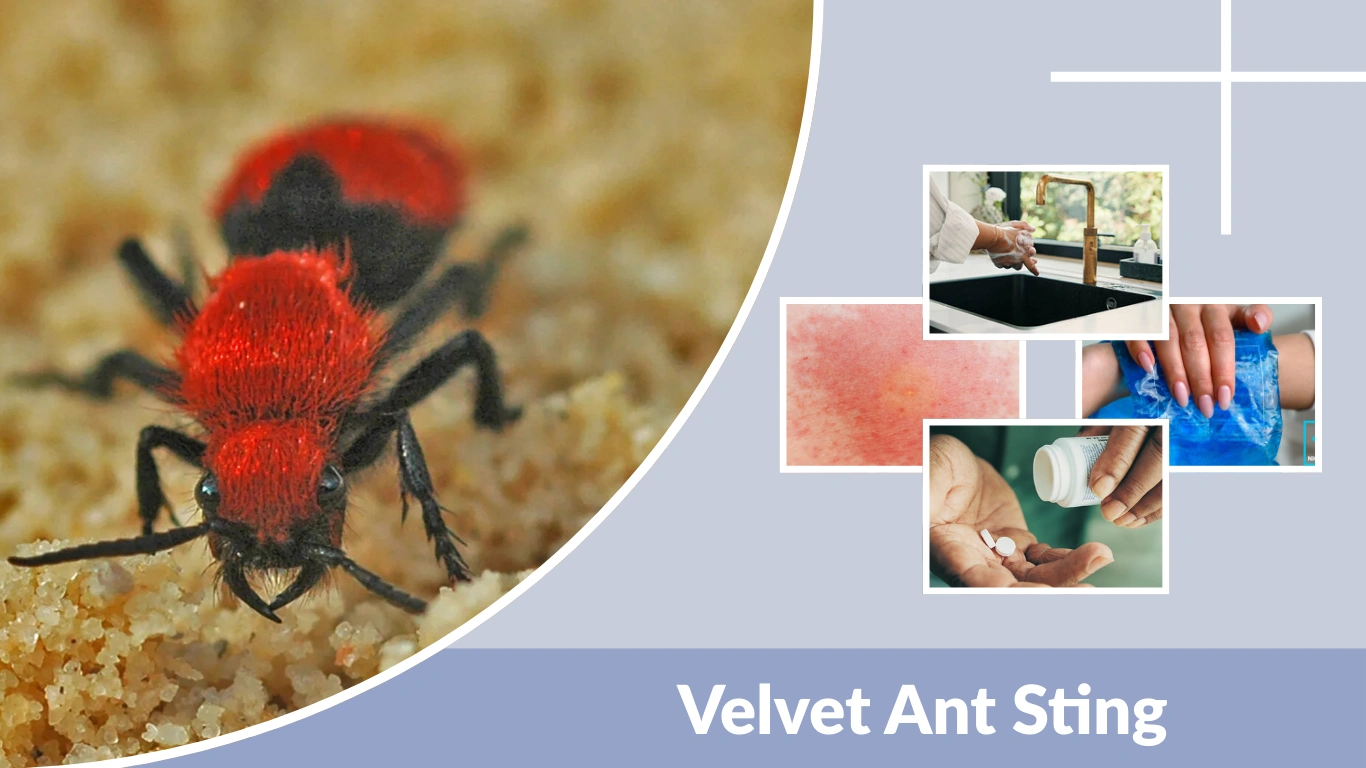
Velvet ants, often nicknamed “cow killer ants,” are fascinating insects known for their bright, velvety appearance and extremely painful sting. Despite the alarming nickname, they are not aggressive toward humans and typically sting only when provoked. Understanding velvet ants, recognizing their sting, and knowing how to respond are important for anyone spending time outdoors in sandy or open areas where they are commonly found. This guide provides detailed information on identification, sting effects, and safe treatment.
What Is a Velvet Ant?
Velvet ants belong to the Mutillidae family, a group of wasp-like insects. Despite the name, the striking, furry females are not ants but wingless wasps. Only the females have the potent sting, while males are winged and harmless. Velvet ants are easily recognizable by their dense, velvety hair, often in bright red, orange, or yellow hues, which serves as a warning to predators.
These insects are solitary and usually spend most of their time in open fields, sandy areas, or under leaf litter. While males may fly in search of females, the wingless females are often seen crawling on the ground.
Why Are Velvet Ants Called “Cow Killer”?
The nickname “cow killer” comes from early accounts of the female velvet ant’s extremely painful sting. Although the sting is intense enough to make a human or animal jump, it is not lethal to humans or cows. The name exaggerates the danger but effectively warns people to avoid handling these insects.
The sting’s pain is often described as more intense than a honeybee or wasp sting, but it typically lasts only a few minutes to an hour. The name has persisted largely due to the insect’s reputation and striking appearance.
Identifying a Velvet Ant
Physical Features
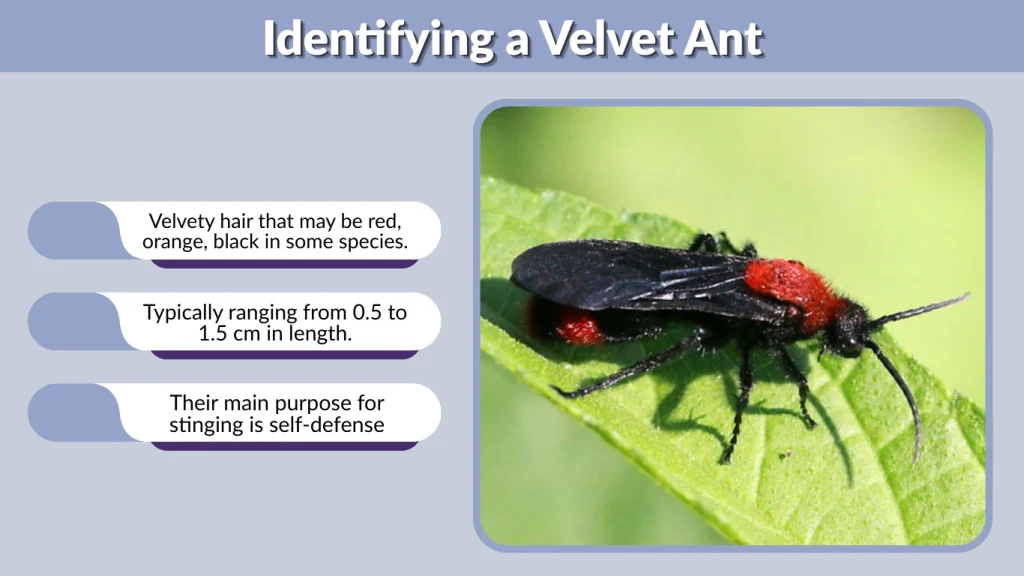
Velvet ants are visually distinct. The female is wingless, with a dense coat of velvety hair that may be red, orange, yellow, or even black in some species. Their exoskeleton is thick, which protects them while delivering their painful sting. Males, in contrast, are winged and often mistaken for wasps. The bright coloring serves as a warning signal to predators, a phenomenon known as aposematism.
Size and Behavior
Velvet ants are relatively small, typically ranging from 0.5 to 1.5 cm in length. Females crawl quickly across the ground and are solitary in nature. They do not attack humans or animals unprovoked. Their main purpose for stinging is self-defense, and they will not pursue humans.
Habitat preferences include sandy soils, open grasslands, and areas with sparse vegetation. They are often encountered in the summer months when females are active searching for host nests.
Velvet Ant Sting: What to Expect

Pain Level
The sting of a female velvet ant is intensely painful, often rated higher than most bee or wasp stings. Pain is sharp, sudden, and localized, usually causing immediate discomfort at the point of contact. However, the pain is short-lived, generally subsiding within minutes to an hour.
Despite the extreme discomfort, the sting is rarely dangerous to healthy adults. Multiple stings are uncommon because velvet ants are not aggressive and sting only when directly threatened.
Symptoms
Common symptoms of a velvet ant sting include:
- Localized redness and swelling
- Intense, sharp pain that may radiate for a few minutes
- Warmth or throbbing at the sting site
- Minor itching or numbness afterward
Serious systemic reactions, such as allergic responses, are extremely rare but possible in individuals with preexisting sensitivities to insect venom.
Causes of Velvet Ant Stings
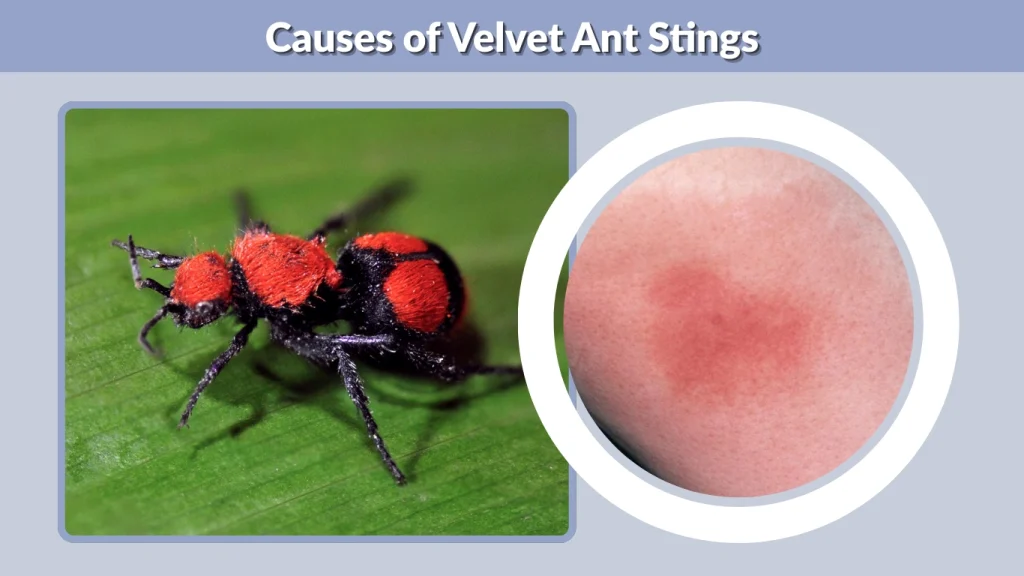
Velvet ants sting primarily as a defense mechanism. Unlike honeybees or fire ants, they do not sting to capture prey or defend a colony—they do it only when threatened or handled. Common scenarios leading to stings include:
- Accidentally stepping on a crawling female while walking barefoot or in thin shoes
- Handling the insect with bare hands
- Disturbing nesting areas in sandy soils
Because velvet ants are solitary and non-aggressive, stings are usually isolated incidents rather than multiple attacks.
Treatment for a Velvet Ant Sting

Although extremely painful, velvet ant stings are rarely dangerous to healthy individuals. Proper care can relieve discomfort and reduce swelling.
Immediate First Aid
- Clean the sting site: Wash the affected area with soap and water to remove any dirt or bacteria.
- Apply ice or cold compress: This helps reduce pain, redness, and swelling. Apply for 10–15 minutes at a time.
- Take over-the-counter pain relievers: Ibuprofen or acetaminophen can help manage pain and inflammation.
Managing Pain and Swelling
- Topical treatments: Anti-itch creams or antihistamine gels may reduce itching and irritation.
- Elevation: If stung on a limb, elevating it can reduce swelling.
- Monitor for allergic reactions: While rare, symptoms such as hives, difficulty breathing, or dizziness require immediate medical attention.
When to See a Doctor
Seek professional medical care if:
- You experience severe allergic reactions (anaphylaxis).
- Swelling or redness spreads significantly.
- The sting site shows signs of infection (pus, increased warmth, or persistent pain).
- Pain persists beyond a few hours or is unusually severe.
Preventing Velvet Ant Stings
Prevention focuses on avoiding contact and minimizing encounters in their natural habitats.
- Avoid walking barefoot: Use shoes when in sandy or open areas where velvet ants are active.
- Recognize and give space: The bright coloration of females serves as a warning. Avoid handling or cornering them.
- Protective clothing: Wear long pants and closed-toe shoes when hiking or gardening in areas where they are common.
- Awareness of habitat: Velvet ants prefer sunny, open, or sandy areas, often near nests of ground-dwelling insects.
By understanding their behavior and habitat, the risk of accidental stings can be greatly reduced.
Interesting Facts About Velvet Ants
- Females are wingless; males can fly: Only females can sting.
- Extreme sting pain: Their sting is one of the most painful among insects but is non-lethal.
- Solitary lifestyle: Velvet ants do not attack in groups; stings usually happen when the insect is directly provoked.
- Ecological role: They are parasitoids, laying eggs in the nests of other insects, which helps regulate those populations.
Velvet Ant Sting vs Other Insect Stings
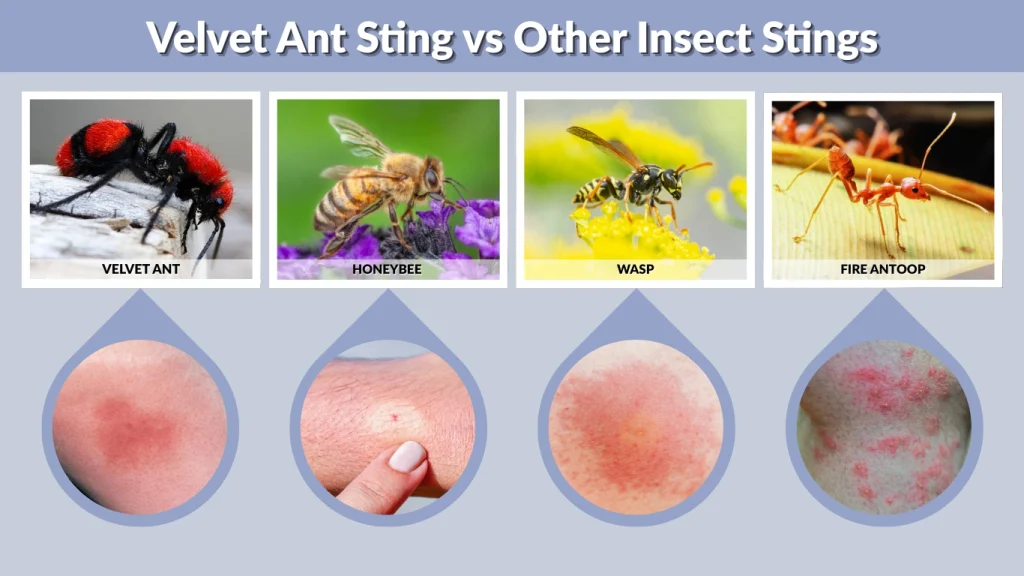
| Insect | Pain Level | Duration | Notes |
| Velvet Ant | Extreme | Minutes to 1 hr | Non-aggressive; sting is defensive only |
| Honeybee | Moderate | Minutes | Can leave stinger behind; venom varies |
| Wasp | Moderate-High | Minutes | Can sting multiple times; aggressive |
| Fire Ant | Moderate | Minutes to hours | Multiple stings possible; aggressive |
This table helps illustrate why velvet ants are feared for pain but are less dangerous overall compared to aggressive species like fire ants or wasps.
Myths and Misconceptions About Velvet Ants
- Not lethal to humans or cows: Despite the nickname “cow killer,” they are harmless in terms of human or livestock mortality.
- Not aggressive: Velvet ants sting only when provoked; they do not seek out humans.
- Single sting defense: They typically sting once and retreat; repeated stings are rare.
- Painful but short-lived: The intense sting subsides quickly and usually does not require medical intervention.
Understanding these myths can reduce unnecessary fear and help people coexist safely with these insects.
FAQs
What does a velvet ant sting feel like?
The sting is extremely sharp, intense, and sudden. Many describe it as more painful than a honeybee sting, but the pain usually subsides within minutes to an hour.
Can a velvet ant sting be dangerous?
For healthy individuals, it is rarely dangerous. Serious reactions are uncommon but possible in people with severe insect allergies.
How long does the pain from a velvet ant sting last?
Pain is usually immediate and sharp, lasting a few minutes to an hour. Mild redness and swelling may persist longer.
How do you treat a velvet ant sting at home?
Clean the area, apply an ice pack, use over-the-counter pain relievers, and consider topical creams for itching. Monitor for allergic reactions.
Can you prevent velvet ant stings outdoors?
Yes. Wear shoes, avoid handling them, recognize their warning colors, and wear protective clothing in sandy or open areas where they live.
