
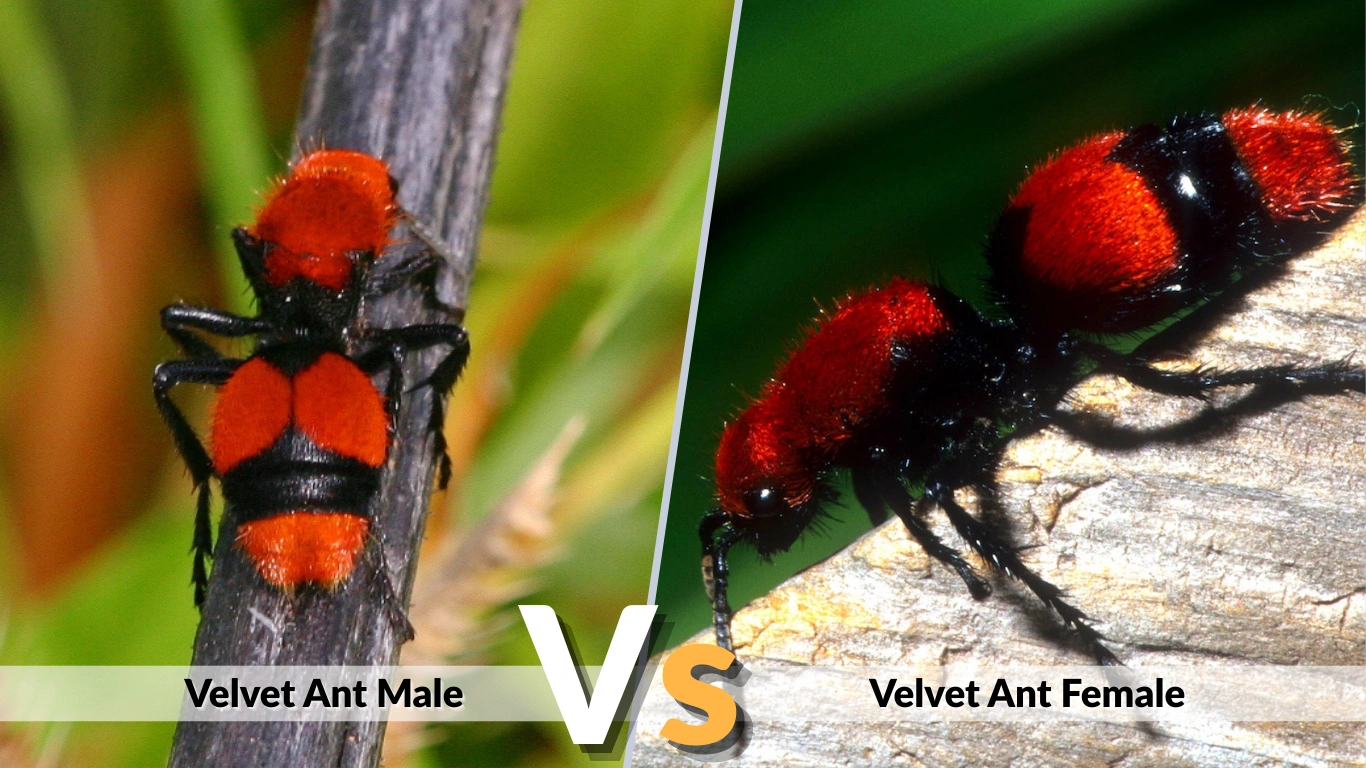
Velvet ants, members of the Mutillidae family, are fascinating insects known for their bright, velvety bodies and painful sting. Despite their nickname “cow killer ants,” they are not aggressive and only sting when threatened. One of the most striking aspects of velvet ants is the difference between males and females, which is essential to recognize for identification, safety, and understanding their behavior. This guide explores the physical, behavioral, and ecological differences between male and female velvet ants.
What Is a Velvet Ant?
Velvet ants are not true ants; they are wingless wasp females and winged males. They are called “velvet ants” because of the dense, soft hairs covering their bodies. These insects are solitary, ground-dwelling, and brightly colored to warn predators of their defensive sting. Velvet ants are commonly found in sandy soils, grasslands, and open areas where females search for host nests to lay eggs.
General Velvet Ant Characteristics
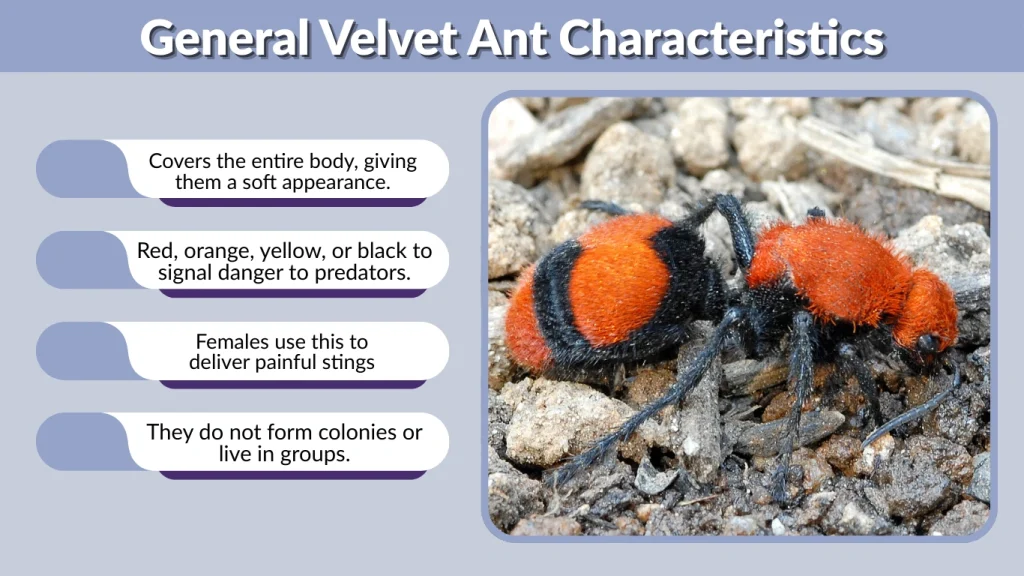
Both male and female velvet ants share several traits:
- Dense velvety hair: Covers the entire body, giving them a soft appearance.
- Bright warning colors: Red, orange, yellow, or black to signal danger to predators.
- Strong exoskeleton: Females use this to deliver painful stings and protect themselves from threats.
- Solitary lifestyle: They do not form colonies or live in groups.
Despite these similarities, male and female velvet ants differ significantly in appearance, behavior, and ecological roles.
Male Velvet Ant Characteristics
Physical Appearance
Male velvet ants are winged, allowing them to fly in search of females during mating season. Their bodies are usually slimmer and less robust than females. Coloration can vary, sometimes being bright like females but often slightly muted depending on the species. Wings make males more mobile but also more noticeable to predators.
Behavior
Males are primarily active in the air, patrolling and searching for females. Unlike females, males rarely sting humans because they do not have a functional sting. Their behavior is focused on reproduction rather than defense. Male activity is often seasonal, coinciding with female emergence and mating opportunities.
Female Velvet Ant Characteristics
Physical Appearance
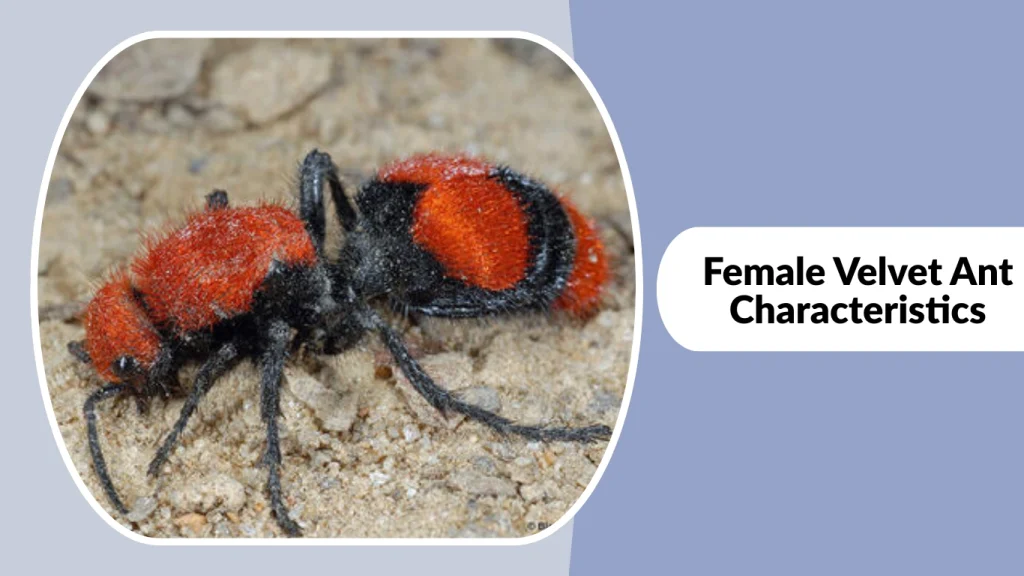
Females are wingless, ground-dwelling, and typically larger and more robust than males. Their dense, velvety hair is often bright red or orange, making them highly conspicuous. Females also have a painful sting, which they use exclusively for defense. Their stout bodies are adapted for crawling on the ground and entering host insect nests.
Behavior
Female velvet ants spend most of their time crawling along the ground in search of nests where they can lay eggs. Their sting is used as a defense mechanism against predators, making them one of the most feared insects relative to pain intensity. They do not fly but are capable of fast, deliberate movements to evade threats. In addition to defense, females are responsible for laying eggs and continuing the species’ life cycle.
Key Differences Between Male and Female Velvet Ants
Some of the most important distinctions include:
- Wings: Males have wings; females are wingless.
- Body size: Females are larger and more robust.
- Sting: Only females can sting.
- Coloration: Females are often brighter as a warning; males may be slightly less vivid.
- Behavior: Males fly and search for mates; females crawl and defend.
- Reproductive role: Females lay eggs inside host nests; males fertilize females.
Recognizing these differences is crucial for safety, proper identification, and understanding the ecology of velvet ants.
Identification Tips for Male vs Female Velvet Ants
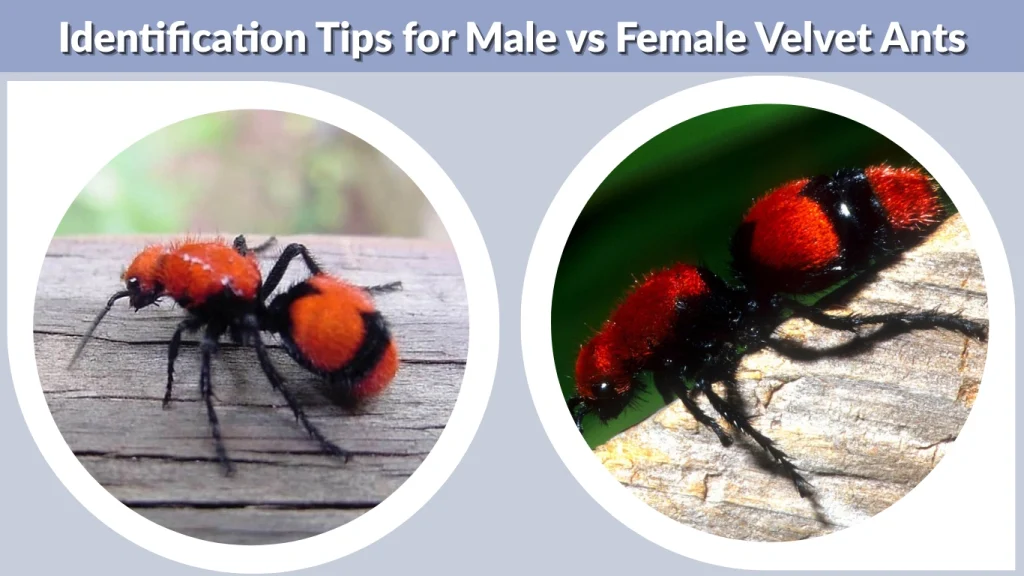
Correctly identifying male and female velvet ants in the field can be done by observing several key traits:
- Look for wings: Males have wings and are capable of flight, whereas females are wingless and crawl along the ground.
- Examine body shape: Females are larger, more robust, and covered in dense, velvety hair. Males are slimmer and more delicate.
- Observe movement patterns: Males fly in search of females, often appearing higher above ground, while females move quickly across the soil in search of host nests.
- Color warning signs: Bright red, orange, or yellow coloring is more pronounced in females as an aposematic signal to predators. Males may have similar coloration but often appear less intense.
- Behavioral cues: If the insect is actively stinging or defending itself, it is almost certainly a female. Males are harmless and focused on reproduction.
By combining these observations—wings, size, coloration, and behavior—you can reliably distinguish between the sexes.
Why Knowing Male vs Female Matters
Understanding the differences between male and female velvet ants is not only important for identification but also for safety and ecological awareness:
- Safety: Only females can sting, so knowing which sex you encounter reduces the risk of painful encounters.
- Behavioral studies: Scientists studying velvet ants rely on sex identification to understand mating patterns and lifecycle.
- Ecological role: Females are parasitoids, laying eggs in host insect nests, which helps control other insect populations. Males play a purely reproductive role.
Recognizing males and females allows outdoor enthusiasts, gardeners, and researchers to respond appropriately without unnecessary panic.
Common Myths About Velvet Ants
- All velvet ants sting: False—only females have a sting, while males are harmless.
- Males are dangerous: False—males cannot sting and pose no risk to humans.
- The nickname “cow killer” applies to both sexes: False—it refers only to females and exaggerates the pain of their sting.
- Velvet ants attack humans aggressively: False—they are solitary and sting only when provoked.
Debunking these myths helps people coexist safely with these insects and reduces unnecessary fear.
Velvet Ant Male vs Female in Ecological Context
- Females are important natural regulators, as they parasitize the nests of ground-dwelling insects such as bees and wasps.
- Males primarily contribute to reproduction but are crucial for genetic diversity.
- Both sexes play a role in maintaining balance in their ecosystems.
Understanding the sexual differences also aids in conservation studies and ecological education.
FAQs
Can male velvet ants sting?
No. Only females have a functional sting. Males are harmless.
How can you tell a male from a female at a glance?
Check for wings—males have wings, females are wingless. Females are also larger, brighter, and more robust.
Why are female velvet ants wingless?
Females are ground-dwelling and need a sturdy body to crawl and access host insect nests. Wings would be unnecessary and cumbersome.
Are males more dangerous than females?
No. Males cannot sting and pose no threat. Females are the only ones capable of delivering a painful defensive sting.
When are males and females most active?
Males are usually active during mating season when searching for females. Females are active whenever they search for host nests and forage on the ground.
