
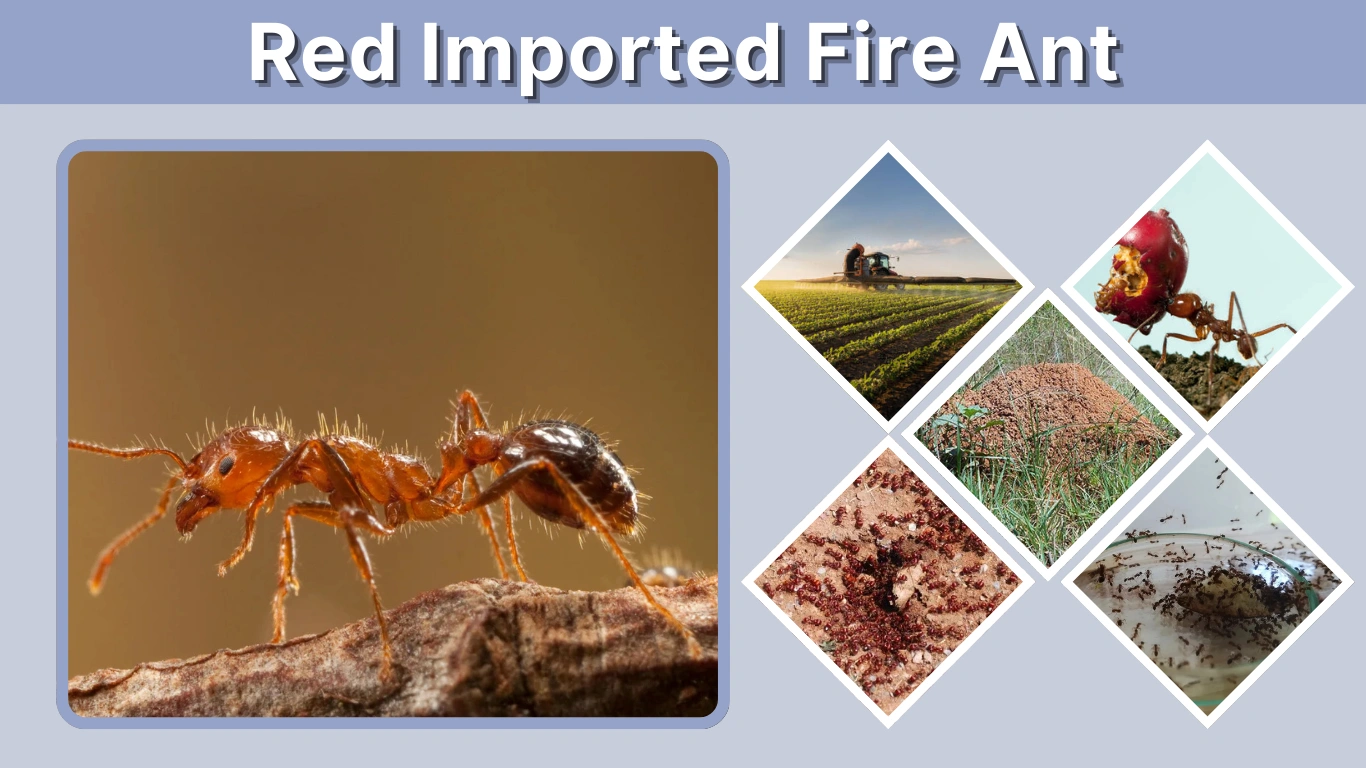
Red imported fire ants (RIFA) are among the most aggressive and invasive ant species in the world. Native to South America, they have spread to parts of North America, Asia, Australia, and other regions, causing serious ecological, agricultural, and health issues. These ants are notorious for their painful stings, rapid colony expansion, and ability to displace native insects and small animals. Understanding their physical characteristics, behaviors, and habitat is essential for early detection and effective management.
Physical Characteristics and Identification
Red imported fire ants are small to medium-sized insects, typically ranging from 2 to 6 millimeters in length. Their body is reddish-brown with a darker, almost black abdomen. The distinct three-segmented body—head, thorax, and abdomen—helps differentiate them from other ants.
Worker vs Queen Ants
- Workers: Smaller in size, reddish-brown, and responsible for foraging, nest maintenance, and defending the colony. Workers can vary slightly in size within a single colony.
- Queens: Larger than workers, generally 12–18 millimeters long, with a more robust body adapted for egg-laying. Queens can produce thousands of eggs over their lifetime.
- Males: Smaller, winged ants that appear primarily during mating flights. They die shortly after mating.
Other identifying features include elbowed antennae and segmented abdomens with visible stingers, which are absent in most non-aggressive native ants.
Habitat and Distribution

Red imported fire ants prefer open, sunny environments and avoid heavily shaded or densely forested areas. They are highly adaptable and can thrive in urban areas, agricultural fields, pastures, lawns, and roadside verges.
Global Spread
Originally from South America, red imported fire ants were introduced to the United States in the 1930s, likely via cargo shipments. Today, they have spread throughout the southeastern U.S., parts of California, and internationally to Asia and Australia. Their ability to survive in diverse climates and travel via transported soil, plants, or cargo has allowed them to become a global invasive species.
Nesting Behavior
RIFA are famous for building large, dome-shaped mounds, which can reach up to 18 inches high. These nests consist of complex underground tunnels with multiple chambers for eggs, larvae, and food storage. Nests are often built in soil with good drainage and are positioned near water sources. In areas prone to flooding, red imported fire ants can survive by forming floating rafts with interconnected bodies, allowing the colony to stay alive until water recedes.
Behavior and Social Structure
Red imported fire ants are highly social and live in colonies that can contain hundreds of thousands of individuals. The colony is divided into specialized roles:
- Queen: The primary egg layer responsible for colony growth.
- Workers: Perform foraging, nest maintenance, and defense.
- Males: Winged ants that participate in mating flights but die soon afterward.
Aggressiveness
These ants are extremely aggressive when disturbed. They swarm intruders, biting and injecting venom from their stingers. Unlike most ants, RIFA will sting multiple times in quick succession, causing intense pain, swelling, and, in some cases, allergic reactions.
Foraging Patterns and Diet
Red imported fire ants are omnivorous. Their diet includes:
- Insects and other arthropods
- Seeds and plant material
- Nectar and sugary substances
- Small vertebrates in some cases
Workers forage in organized trails and are active both during the day and night, depending on temperature and food availability. They communicate using pheromones to guide others to food sources or signal danger.
Diet and Feeding Habits
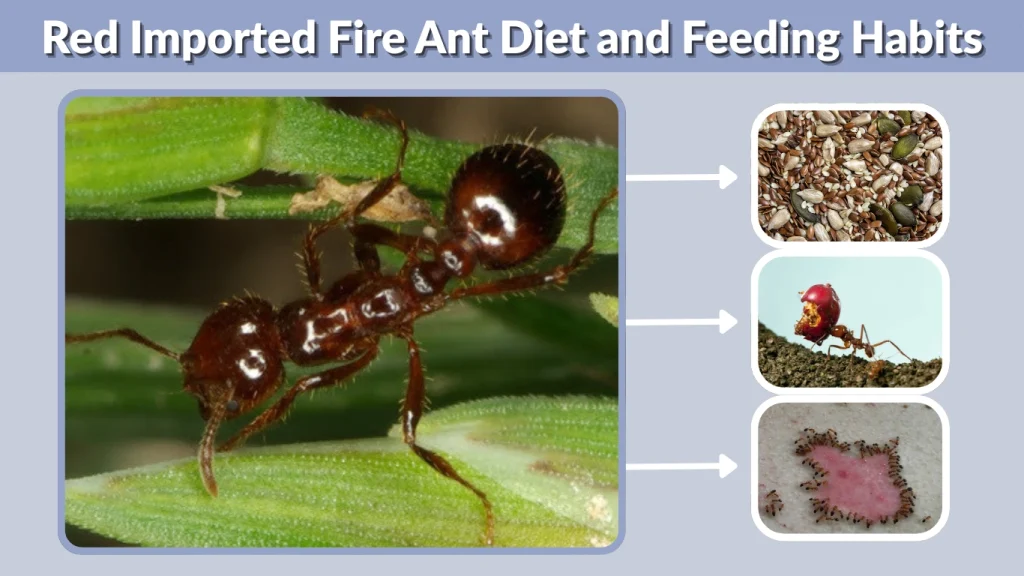
Red imported fire ants are opportunistic feeders. While they primarily feed on protein-rich insects and small invertebrates, they will also consume seeds, fruits, and sugary liquids. In agricultural areas, they can damage crops by feeding on seeds or young plants, and they may even protect aphids and other sap-sucking insects in exchange for honeydew.
This diverse diet allows RIFA to thrive in a variety of environments, from urban backyards to agricultural fields. Their aggressive foraging behavior often gives them a competitive advantage over native ant species, allowing RIFA colonies to dominate large areas.
Early Signs of an Infestation
Detecting a red imported fire ant infestation early is key to effective management. Common indicators include:
- Mound formation: Distinct dome-shaped mounds of loose soil, often in open sunny areas.
- Ant trails: Workers moving in organized lines toward food sources or water.
- Stings: Increased reports of painful stings on humans, pets, or livestock.
- Damage to property: Chewing of electrical wires or nesting in building foundations.
Colonies can rapidly expand, producing multiple satellite nests near the main mound. This makes early detection crucial to prevent widespread infestation.
Lifecycle of Red Imported Fire Ants
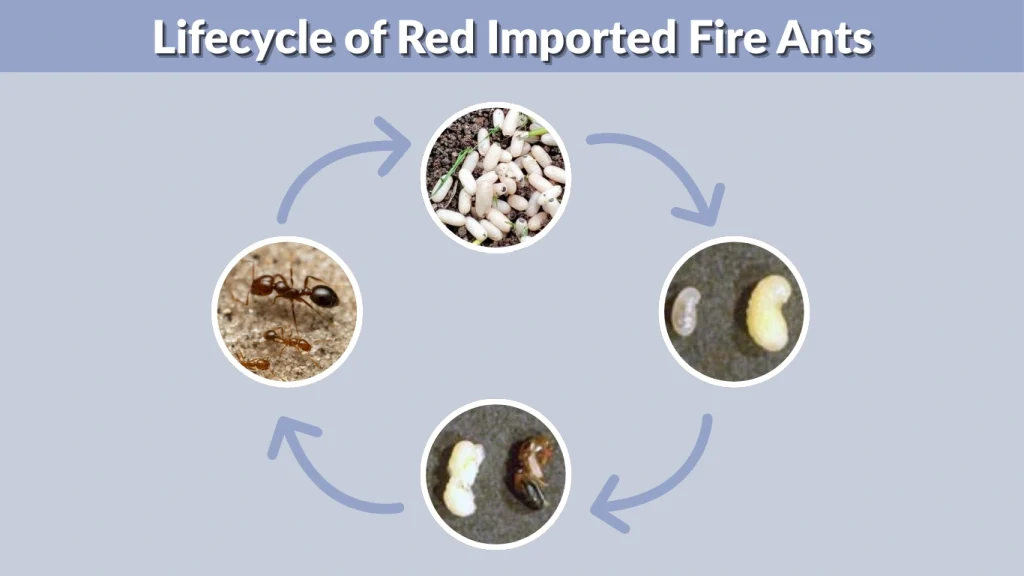
Red imported fire ants have a well-organized lifecycle, which allows them to establish and expand colonies efficiently.
Egg Stage
The queen lays small, oval, white eggs in protected chambers within the nest. The eggs are sticky, allowing them to remain in place, and their development depends heavily on temperature and humidity.
Larva Stage
Eggs hatch into larvae, which are white, soft-bodied, and completely dependent on worker ants for feeding. Workers feed larvae with pre-digested food, including insects, seeds, and other proteins. Larvae molt several times before pupating, gradually increasing in size.
Pupa Stage
During this stage, the larvae transform into pupae, which resemble adult ants enclosed in a cocoon. Workers continue to care for pupae, keeping them clean and safe. The pupal stage is relatively short, after which fully formed adult ants emerge.
Adult Stage
Adult ants assume their roles within the colony immediately. Workers forage, defend the nest, and maintain tunnels, while queens focus exclusively on egg-laying. Colonies can grow to contain hundreds of thousands of individuals. Queens can live for up to seven years, producing thousands of eggs annually, while workers typically live for several months.
Threats and Risks to Humans and Animals
Red imported fire ants pose serious risks due to their aggressive behavior and venomous stings.
- Human Health Risks: Stings are painful, causing swelling, redness, and itching. In some cases, multiple stings can trigger severe allergic reactions or anaphylaxis.
- Pets and Livestock: Fire ants attack small animals and livestock, sometimes causing injury, blindness, or death in extreme cases.
- Environmental Impact: RIFA displace native ant species and prey on other insects, amphibians, and small vertebrates, disrupting local ecosystems.
Signs of a Red Imported Fire Ant Infestation

Detecting an infestation early is crucial. Common signs include:
- Distinctive mounds: Dome-shaped mounds of loose soil, usually in open, sunny areas.
- Increased ant activity: Visible trails of ants foraging for food.
- Multiple nests: Satellite mounds surrounding a main colony.
- Stings or bites: Sudden painful bites when walking near the nest.
- Damage to property: Chewed electrical wires or structural areas where ants have nested.
Control and Management Strategies
Controlling RIFA requires a combination of methods to disrupt colonies and prevent spread.
Chemical Control
- Baits and insecticides are effective for reducing worker populations and targeting the queen.
- Granular or liquid formulations can be applied directly to mounds or along ant trails.
- Follow product instructions carefully to avoid environmental harm.
Biological Control
- Natural predators and pathogens, such as phorid flies or entomopathogenic fungi, can reduce populations over time.
- Biological control is slower but safer for ecosystems and reduces reliance on chemicals.
Environmental and Cultural Control
- Reduce nesting sites by eliminating clutter and improving drainage in lawns and fields.
- Disrupt mounds carefully to expose ants to predators or environmental hazards.
- Avoid moving soil or plants from infested areas to prevent spread.
Professional Pest Control
- Large infestations, particularly in urban or agricultural areas, may require professional intervention.
- Experts use targeted treatments, monitor colonies, and provide long-term management advice.
Prevention of Future Infestations
Preventing RIFA is easier than eliminating a large colony. Key measures include:
- Inspecting soil, plants, and cargo before bringing them indoors.
- Sealing cracks and entry points in buildings.
- Maintaining dry, well-ventilated areas.
- Removing food sources such as pet food, spilled seeds, and sugary substances.
- Monitoring for early mound formation and treating small colonies promptly.
Fascinating Facts About Red Imported Fire Ants
- Can survive floods by forming living rafts.
- Capable of stinging multiple times in rapid succession.
- Colonies can expand aggressively, producing numerous satellite nests.
- Highly adaptable to a variety of climates and environments.
- One of the most studied invasive ant species due to ecological and economic impact.
FAQs
How can I identify red imported fire ants?
Look for reddish-brown ants with darker abdomens, three distinct body segments, elbowed antennae, and dome-shaped soil mounds in open areas.
Are red imported fire ants dangerous to humans?
Yes. Their stings are painful and can trigger allergic reactions. Multiple stings may require medical attention.
What do red imported fire ants eat?
They are omnivorous, feeding on insects, small animals, seeds, sugary substances, and plant material.
How do red imported fire ants spread?
They spread through soil, plants, cargo, and water rafting. Mated queens can start new colonies in suitable habitats.
What is the best way to control a fire ant infestation?
Use a combination of chemical baits, mound treatments, environmental management, and, for large infestations, professional pest control.
