
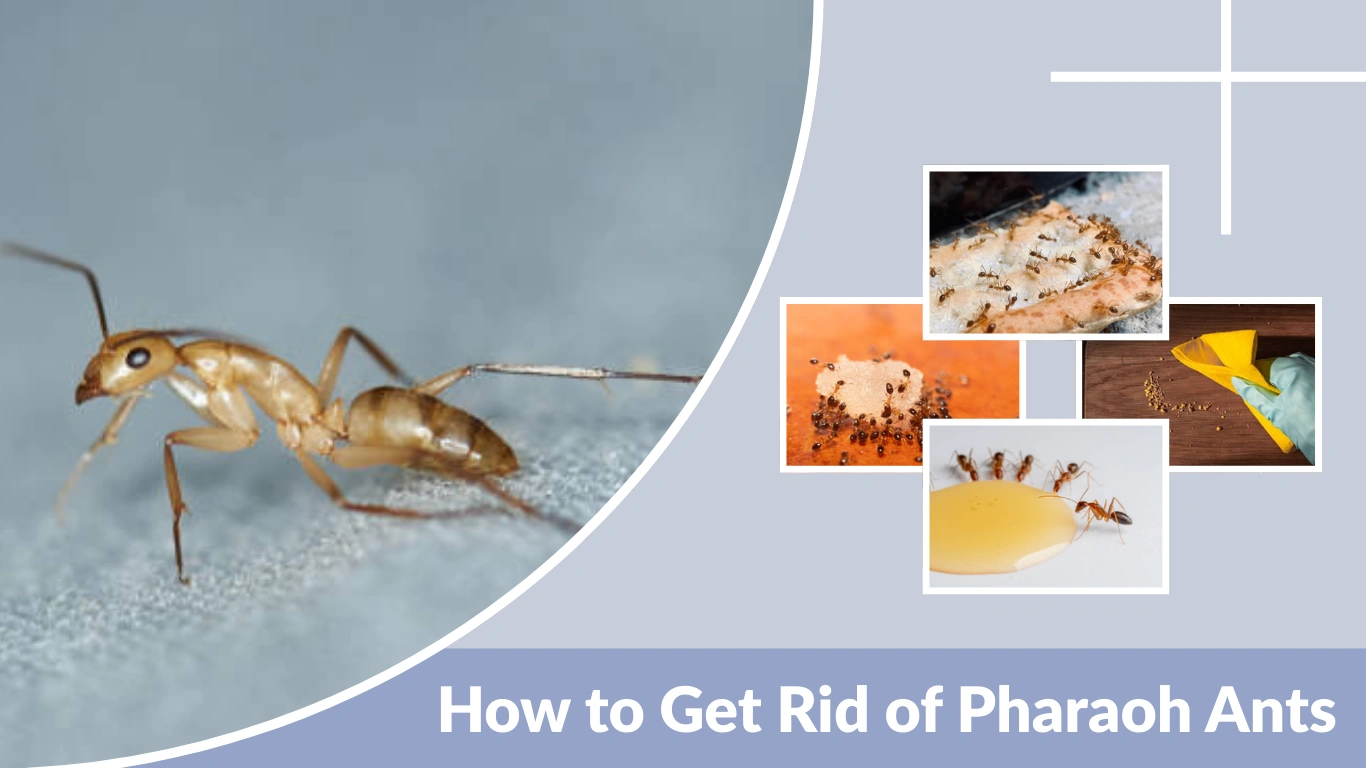
Pharaoh ants (Monomorium pharaonis) are among the most challenging household pests to control. These tiny, light-brown ants thrive in warm, humid indoor environments, including kitchens, bathrooms, and wall voids. Their small size, ability to form multiple-queen colonies, and tendency to create satellite nests make them difficult to eliminate with traditional insecticides. Understanding the proper methods to identify, bait, and manage pharaoh ants is crucial to prevent infestations from spreading throughout your home or commercial space.
Understanding Pharaoh Ants
What Are Pharaoh Ants?
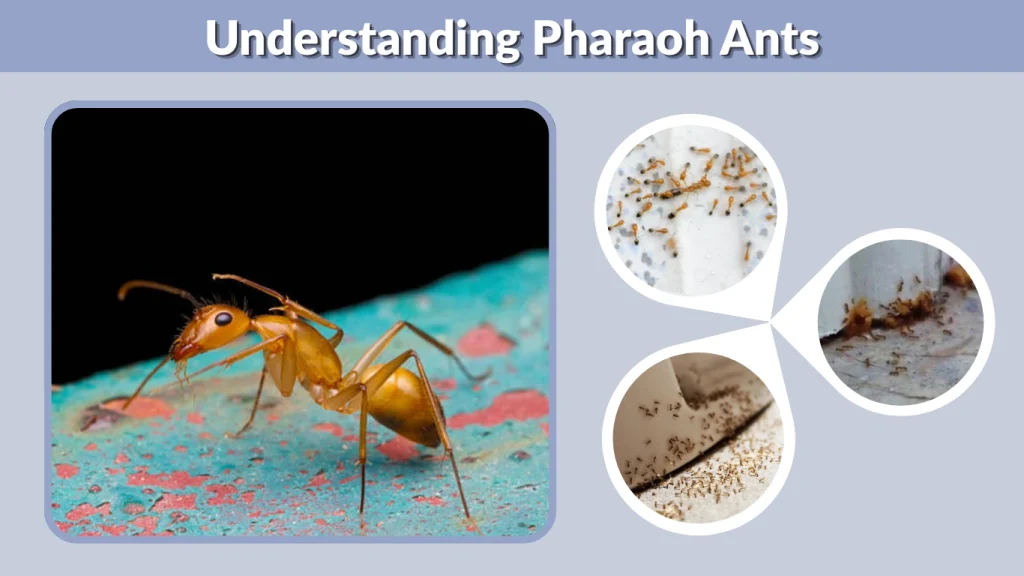
Pharaoh ants are small, measuring only 1.5–2 mm long, with yellow to light brown coloration and darker abdomens. They have three distinct body segments—head, thorax, and abdomen—and elbowed antennae. These ants are social insects that live in colonies with multiple queens, which allows rapid reproduction and makes the colonies resilient to treatment.
Pharaoh ants are commonly found in:
- Kitchens and pantries, attracted by sugar and protein sources
- Bathrooms with high humidity and hidden moisture
- Wall voids, behind baseboards, and under appliances
- Hospitals and commercial buildings, where they can spread bacteria
Why Pharaoh Ants Are Hard to Eliminate
The main challenge in controlling pharaoh ants is their polygynous colonies—multiple queens in a single colony. When threatened or sprayed with insecticides, these colonies fragment into several satellite colonies, which spread throughout the building. This behavior often worsens infestations when people try to kill ants with standard sprays.
Hidden nests in wall voids, ceilings, and appliances make detection difficult. Additionally, pharaoh ants can survive on minimal food and moisture, allowing colonies to thrive even in clean homes.
Signs of Pharaoh Ant Infestation
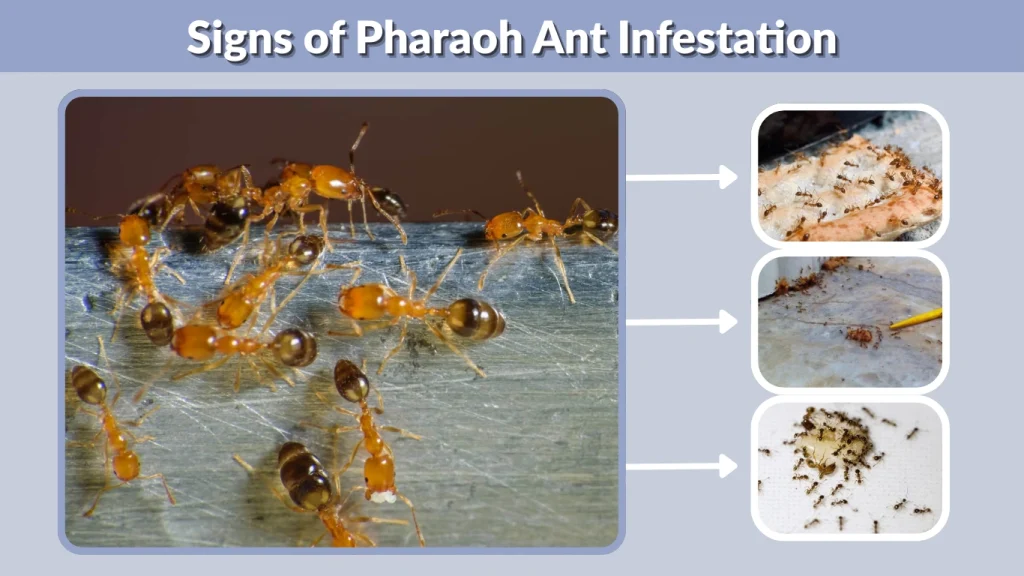
Detecting pharaoh ants early is critical for successful control. Look for:
- Tiny, yellow to light brown ants moving in organized trails along baseboards, countertops, or walls
- Satellite colonies appearing after attempts to spray visible ants
- Ants found near food sources, including sugar, grease, or pet food
- Occasional bites or stings in sensitive individuals
- Contamination of food or surfaces in kitchens, pantries, or hospitals
Because pharaoh ants are so small, infestations can go unnoticed until multiple colonies are established.
Common Mistakes in Pharaoh Ant Control
Many homeowners unintentionally worsen infestations with common errors:
- Spraying visible ants directly: Causes colony fragmentation and spreads the ants to new areas
- Ignoring hidden nests: Colonies can continue reproducing inside walls or appliances
- Using the wrong bait or inconsistent baiting: Some baits may not attract the colony, reducing effectiveness
- Failing to follow up: Without monitoring and repeated treatments, colonies can rebound
Avoiding these mistakes is essential to achieving long-term control.
How to Get Rid of Pharaoh Ants Indoors
Step 1: Correct Identification
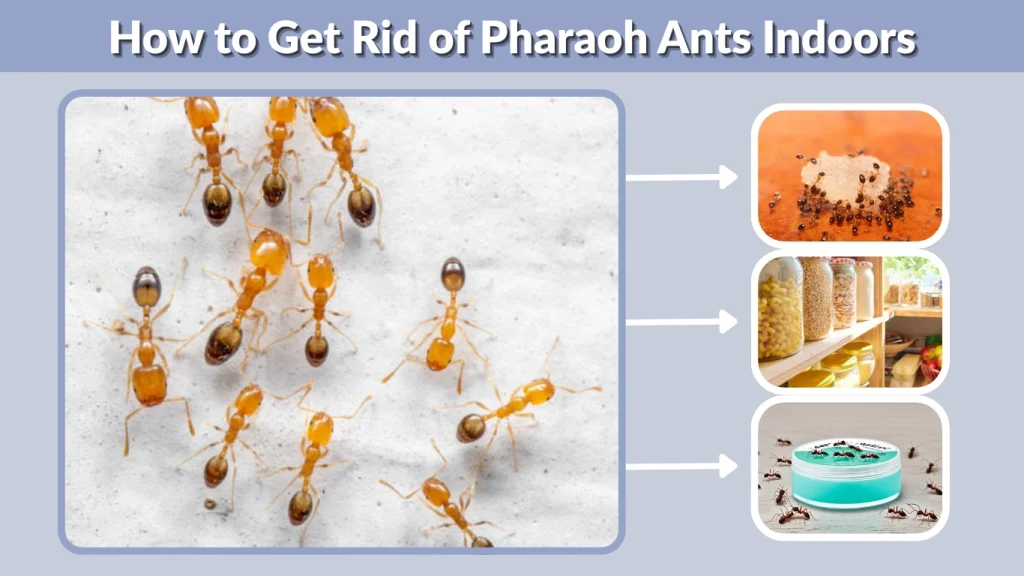
Before beginning treatment, confirm that the ants are pharaoh ants and not other small species, such as thief ants. Identify them by their size, coloration, and nesting behavior. Look for organized trails and potential nest sites in kitchens, bathrooms, and wall voids.
Step 2: Use Targeted Baits
Baiting is the most effective method to eliminate pharaoh ants, as it targets the entire colony, including queens.
- Types of Baits:
- Sugar-based baits for carbohydrate-seeking colonies
- Protein-based baits for colonies in a growth phase
- Mixed baits for general use
- Sugar-based baits for carbohydrate-seeking colonies
- How Baits Work: Worker ants carry the poison back to the colony, gradually killing queens, larvae, and other workers.
- Placement Tips:
- Place baits along trails, near hidden nests, and in areas inaccessible to pets or children
- Avoid spraying insecticides on bait stations, as this can deter ants from feeding
- Place baits along trails, near hidden nests, and in areas inaccessible to pets or children
Step 3: Environmental Management
In addition to baiting, modifying the environment reduces nesting sites and prevents reinfestation:
- Keep food sealed and remove crumbs or spills promptly
- Fix leaks and reduce moisture in bathrooms, kitchens, and laundry areas
- Seal cracks, gaps, and wall voids to prevent hidden nests
- Declutter storage areas to limit hiding spaces
Proper sanitation and habitat management support the effectiveness of baiting and prevent colonies from establishing new nests.
Step 4: Professional Pest Control
For large or persistent infestations, professional pest control is often the most effective solution. Licensed exterminators can:
- Identify all active colonies, including hidden satellite nests
- Place baits strategically to reach queens and larvae
- Monitor the building for reinfestation over time
- Provide guidance on sanitation and habitat management to prevent future problems
Professional treatment is particularly important in hospitals, restaurants, and commercial buildings, where pharaoh ants pose health risks due to food contamination.
Pharaoh Ant Treatment Tips and Long-Term Control
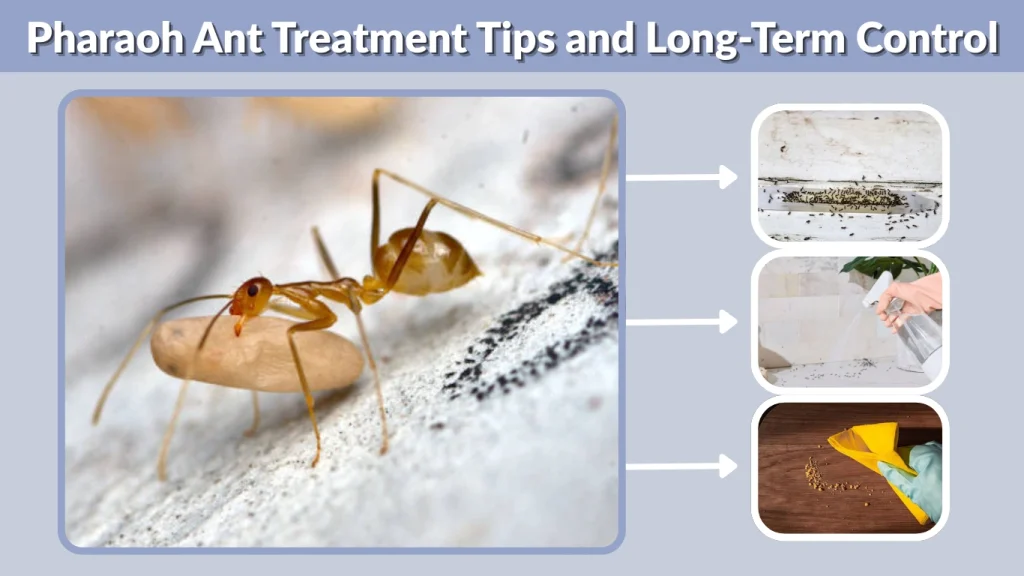
Effective control of pharaoh ants relies on a combination of strategies:
- Consistency: Apply baits according to instructions and monitor their effectiveness regularly.
- Avoid spraying visible ants: Contact insecticides cause colony fragmentation and spread.
- Sanitation: Keep food sealed, clean surfaces regularly, and reduce crumbs and spills.
- Environmental modifications: Reduce moisture, seal cracks, and declutter potential nesting areas.
- Monitoring: Use sticky traps to detect early signs of reinfestation.
Following these steps carefully ensures that colonies are eliminated without triggering further spread.
Preventing Future Pharaoh Ant Infestations
Prevention is the best strategy to avoid recurring infestations:
- Store all food in sealed containers, including pet food.
- Keep kitchen counters, pantries, and dining areas clean.
- Reduce indoor humidity and repair any plumbing leaks.
- Regularly inspect common nesting areas such as wall voids, baseboards, and appliances.
- Avoid introducing soil, plants, or infested materials from outside.
Consistent monitoring and proactive measures can stop pharaoh ants from establishing new colonies.
Interesting Facts About Pharaoh Ants
- Pharaoh ants are among the smallest invasive ant species, measuring only 1.5–2 mm in length.
- Colonies often contain multiple queens, which allows rapid population growth.
- They can nest in hidden locations, including wall voids, ceilings, and appliances, making them difficult to detect.
- Pharaoh ants are highly adaptable, thriving in warm indoor environments like Florida and other subtropical regions.
- They are often confused with thief ants, but pharaoh ants form larger colonies and are more persistent in buildings.
FAQs
How do I know if I have pharaoh ants?
Look for tiny, yellow to light brown ants moving in organized trails along baseboards, countertops, or wall voids. Multiple satellite colonies may form after disturbance.
Can I kill pharaoh ants with spray?
Spraying visible ants often makes the problem worse by causing colonies to fragment and spread. Targeted baits are more effective.
What is the best bait for pharaoh ants?
Use sugar-based or protein-based baits depending on the colony’s current dietary needs. Gel baits work well indoors and reach hidden nests.
How long does it take to eliminate pharaoh ants?
Complete eradication can take several weeks to months, depending on the size of the infestation and the number of satellite colonies.
Are pharaoh ants dangerous to humans?
While they rarely bite, pharaoh ants can contaminate food and surfaces, potentially spreading bacteria. Infestations in hospitals pose additional health risks.
