
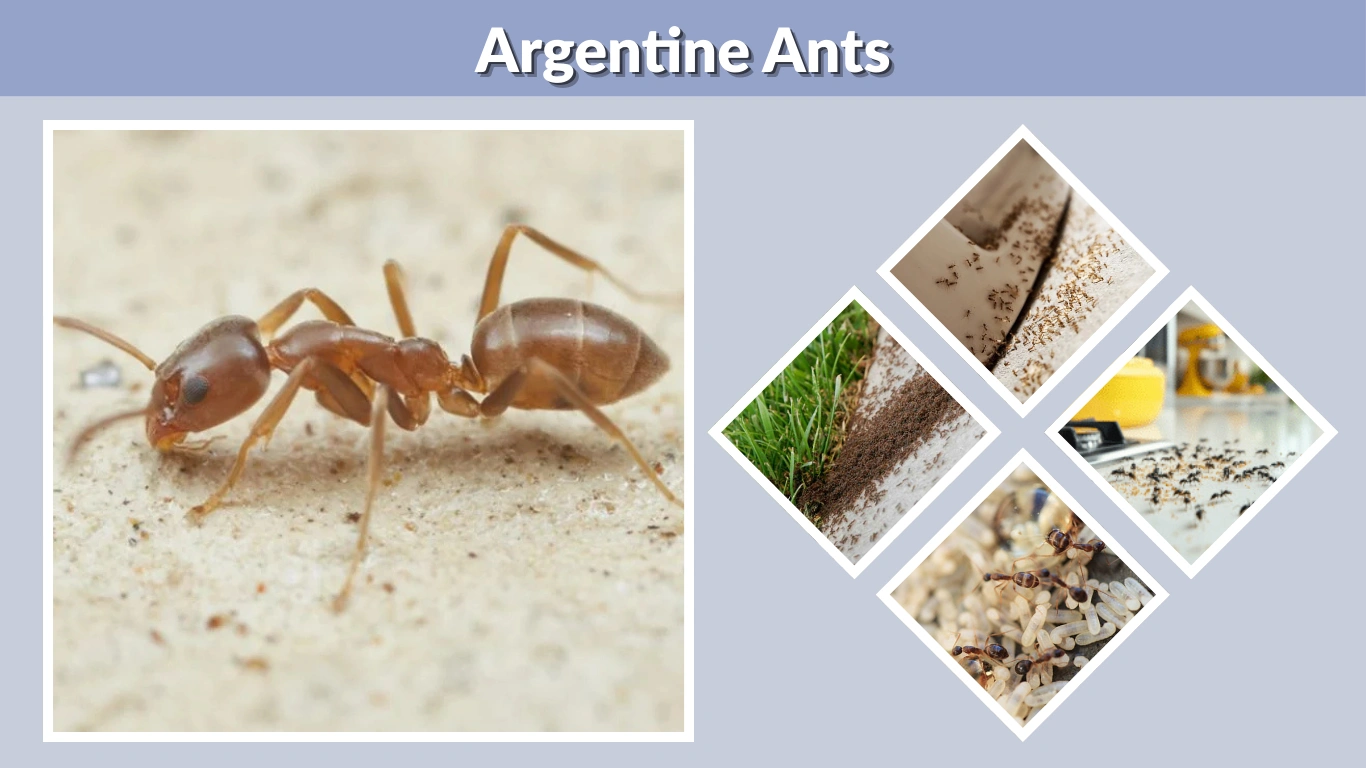
Argentine ants (Linepithema humile) are among the most invasive ant species in the world. Native to South America, they have spread to many regions, including California, Europe, Asia, and Australia, and are known for forming massive colonies that displace native ants and other insects. These small, brown ants are difficult to control because of their multiple-queen colonies, interconnected satellite nests, and adaptability to urban and agricultural environments. Understanding their identification, behavior, and control methods is essential for homeowners, gardeners, and pest management professionals.
What Are Argentine Ants?
Argentine ants are tiny, measuring only 2–3 mm long, with light to medium brown bodies. They have elbowed antennae, slender bodies, and a smooth, shiny appearance. Colonies are highly social and polygynous, meaning multiple queens can coexist within a single colony, which allows rapid reproduction and makes them resilient to partial eradication efforts.
These ants are omnivorous, feeding on sugary substances, small insects, seeds, and honeydew from aphids. Their adaptability to both indoor and outdoor environments enables them to thrive in homes, gardens, farms, and urban areas, particularly in warm and humid climates like California.
Argentine Ant Identification
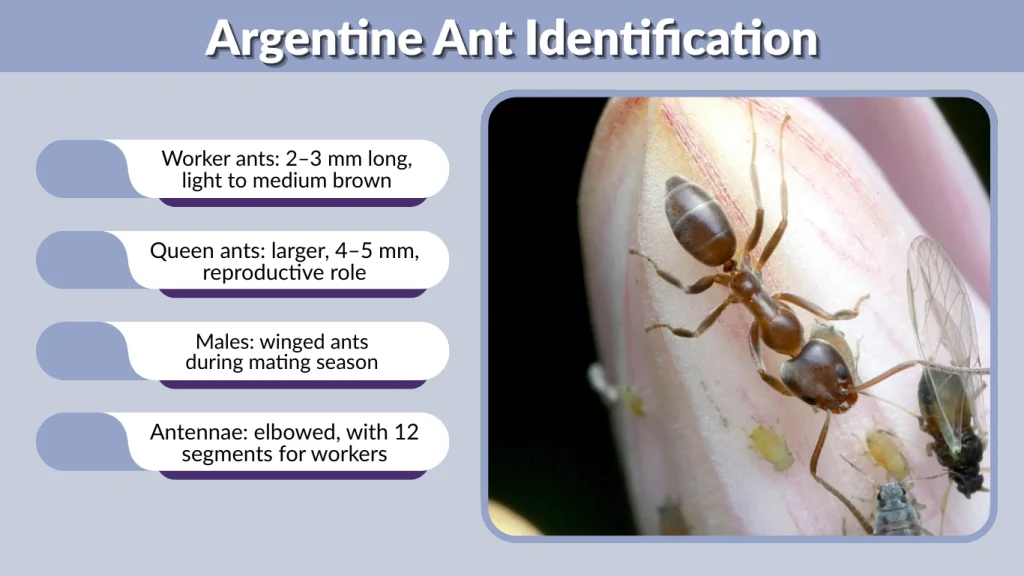
Correct identification is crucial to apply effective control methods.
Physical Characteristics
- Worker ants: 2–3 mm long, light to medium brown, slender bodies
- Queen ants: larger, 4–5 mm, reproductive role
- Males: winged ants during mating season, die shortly afterward
- Antennae: elbowed, with 12 segments for workers
Argentine Ant vs Fire Ant
While Argentine ants are small and brown, fire ants are larger, reddish-brown, and capable of delivering painful stings. Key differences include:
- Size: Argentine ants are much smaller than fire ants
- Aggression: Fire ants are more aggressive and defensive
- Nesting: Argentine ants form interconnected satellite colonies, while fire ants build mounded nests
Correct identification ensures the right control strategy is used, as baits and treatments vary between species.
Argentine Ant Habitat and Range
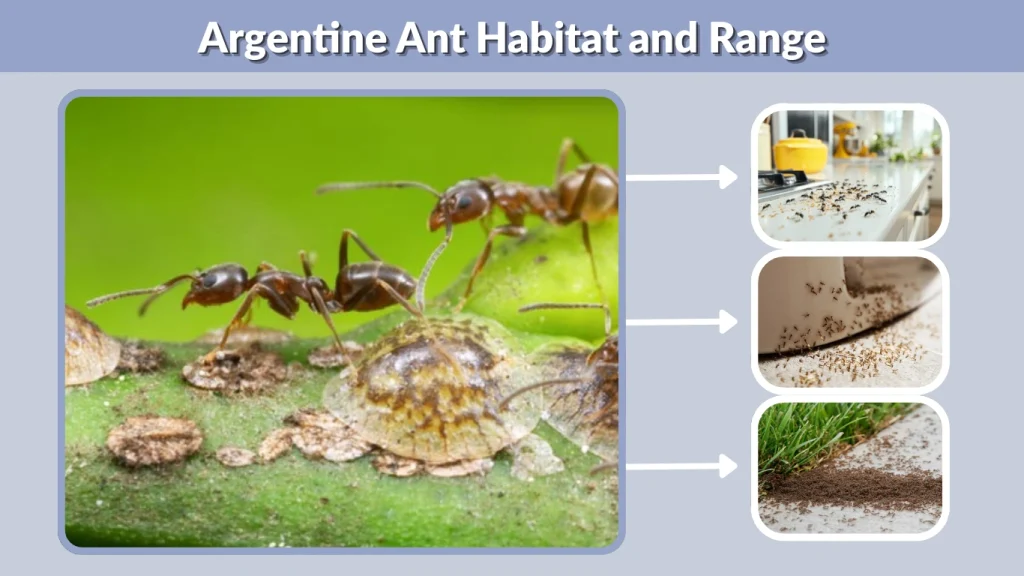
Habitat Preferences
Argentine ants prefer moist, warm environments and are commonly found:
- In urban areas: kitchens, bathrooms, wall voids, under baseboards
- Outdoors: gardens, lawns, under stones, mulch, or soil
- Agricultural areas: orchards, crop fields, and vineyards
They are opportunistic, nesting wherever food, water, and shelter are available. Even clean homes can support colonies if moisture and warmth are present.
Geographic Range
Originally from South America, Argentine ants have spread globally. In California, they are particularly common in urban neighborhoods, agricultural regions, and coastal areas. Their supercolonies can extend for miles, connecting multiple nests and worker populations across a landscape.
Seasonal patterns influence activity: ants are most visible during warm, humid months, while they remain hidden in soil, mulch, or building voids during cooler periods.
Behavior of Argentine Ants
Colony Structure
Argentine ant colonies are polygynous, with multiple queens in a single colony. This allows colonies to survive partial eradication and spread rapidly. Colonies include:
- Queens: Lay eggs continuously and control colony growth
- Workers: Forage for food, defend nests, and care for brood
- Males: Winged ants produced during mating season
The presence of multiple queens means colonies can grow to hundreds of thousands of workers and maintain interconnected satellite nests, making complete elimination challenging.
Foraging Behavior and Diet
Argentine ants are omnivorous and highly organized foragers. They form well-marked trails to food sources, communicating through pheromones. Their diet includes:
- Sugars: honey, syrups, fruit juices
- Proteins: dead insects, small arthropods
- Seeds and plant materials
- Honeydew produced by aphids
This diverse diet allows them to thrive indoors and outdoors, and contributes to their ability to displace native ants and disrupt ecosystems.
Aggressiveness and Impact
While Argentine ants are not aggressive like fire ants, they outcompete native ants, reduce biodiversity, and invade homes, farms, and gardens. Their trails and nests can become a nuisance, and their ability to contaminate food sources in kitchens and pantries makes them a public health concern in certain settings.
Argentine Ant Life Cycle
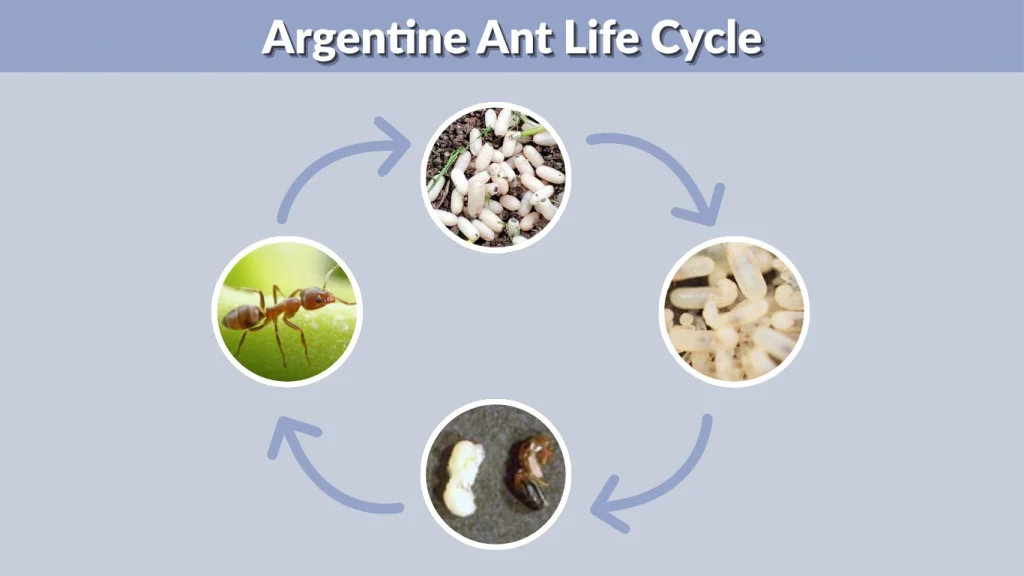
Argentine ants have a structured life cycle that supports rapid colony growth.
Egg Stage
Queens lay tiny, oval, white eggs inside the nest. The eggs are sticky and remain in hidden chambers, protected from light and disturbance. Development depends on temperature and humidity, with warmer, moist conditions speeding up hatching.
Larva and Pupa Stage
Eggs hatch into larvae, which are soft-bodied and entirely dependent on worker ants for feeding and care. Larvae molt multiple times before entering the pupal stage, during which they transform into fully developed adult ants. Workers continue to feed and maintain pupae during this stage.
Adult Stage
Adult Argentine ants include workers, males, and queens. Workers forage, defend the nest, and care for brood. Queens focus solely on reproduction, laying thousands of eggs annually. Colonies grow rapidly due to the presence of multiple queens, and interconnected satellite nests allow expansion across large areas. Adult workers can live several months, while queens may live up to several years under favorable conditions.
Do Argentine Ants Bite or Sting?
Argentine ants are not aggressive toward humans and do not possess a stinger like fire ants.
- Bites: Rare, usually occur only if ants are trapped against skin.
- Stings: Argentine ants do not sting.
- Nuisance: Their main problem is contamination of food and the environment, particularly in homes, restaurants, and hospitals.
Although they do not pose serious direct harm, their presence can be a health concern due to their ability to carry bacteria and other pathogens.
Signs of Argentine Ant Infestation
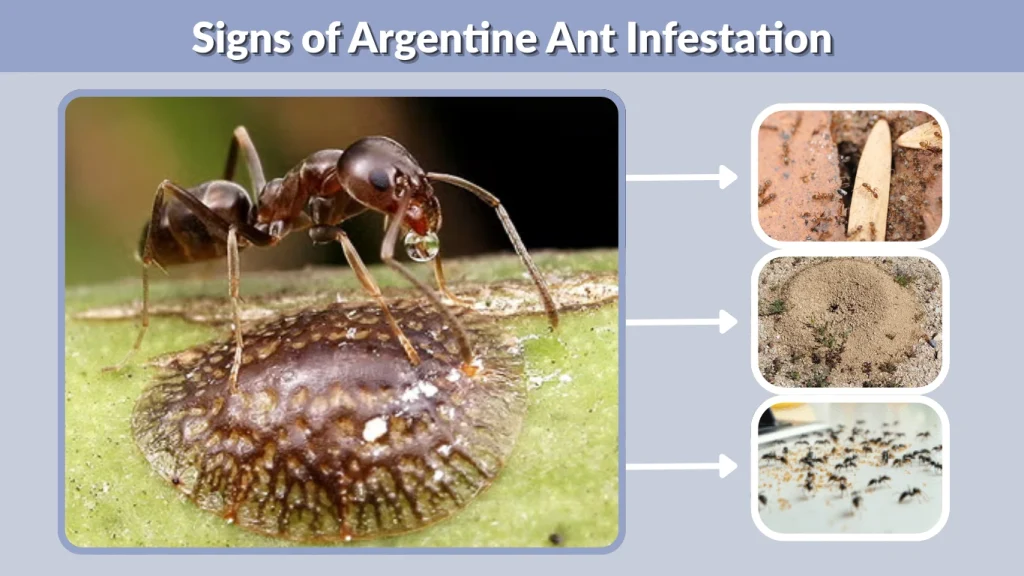
Detecting an infestation early is critical to prevent colony expansion. Common indicators include:
- Visible trails: Lines of small brown ants along walls, baseboards, or countertops.
- Nest presence: Multiple satellite nests in soil, mulch, under stones, or inside wall voids.
- Food contamination: Ants in kitchens, pantries, or around pet food.
- High activity: Large numbers of ants visible during warm, humid months.
- Displacement of native ants: Argentine ants often outcompete other ant species in the area.
Early detection allows homeowners to implement control measures before infestations become widespread.
How to Get Rid of Argentine Ants
Prevention Strategies
Preventing infestations is easier than eradicating established colonies. Effective prevention includes:
- Seal cracks and entry points in walls, windows, and doors.
- Keep food sealed in containers and clean up spills promptly.
- Reduce indoor and outdoor moisture by repairing leaks and maintaining proper drainage.
- Remove clutter and debris that may serve as nesting sites.
Treatment and Control
- Baiting: Sugar-based or protein-based baits target the colony. Workers carry the bait to queens and larvae, effectively eliminating the nest.
- Environmental modification: Reduce mulch, vegetation, and soil contact near structures.
- Professional pest control: Large infestations may require expert intervention for monitoring and strategic bait placement.
Avoid direct spraying of visible ants, as this can cause colony fragmentation and worsen the problem.
Long-Term Management
- Monitor ant trails and satellite nests regularly.
- Reapply baits and maintain sanitation.
- Modify environmental conditions to reduce nesting opportunities.
Consistency and follow-up are critical to ensuring complete colony elimination.
Argentine Ant Facts
- Argentine ants are highly invasive and form supercolonies that can span miles.
- They displace native ant species, reducing local biodiversity.
- Colonies contain multiple queens, allowing rapid reproduction.
- Adaptable to a wide range of environments, especially warm and humid areas like California.
- Despite being small, Argentine ants can cause significant economic and ecological impact in urban and agricultural areas.
FAQs
What is the scientific name of Argentine ants?
The scientific name is Linepithema humile.
How big are Argentine ants?
Workers are 2–3 mm long, while queens are larger, up to 4–5 mm.
Do Argentine ants bite or sting?
Argentine ants rarely bite and do not sting. Their main concern is food contamination and colony spread.
How do I get rid of Argentine ants indoors and outdoors?
Use targeted baiting strategies, reduce moisture, seal entry points, maintain cleanliness, and consider professional pest control for large infestations.
What is the difference between Argentine ants and fire ants?
Argentine ants are smaller, light brown, and do not sting. Fire ants are larger, reddish-brown, aggressive, and deliver painful stings.
