

The eastern tiger swallowtail is one of the most striking and easily recognized butterflies in North America. With its bright yellow wings marked by bold black stripes, it is often seen gliding through gardens, forest edges, and riverbanks. This butterfly is not only visually impressive but also ecologically important, playing a key role in pollination and forest food webs. Learning how to identify the eastern tiger swallowtail, understand its lifecycle, and recognize its habitat helps nature lovers protect and attract this iconic species.
What Is an Eastern Tiger Swallowtail?
The eastern tiger swallowtail (Papilio glaucus) is a large butterfly belonging to the swallowtail family. It is named for the tiger-like black stripes that stretch across its yellow wings. This species is native to eastern North America and is considered one of the most widespread and familiar swallowtails in the region.
Unlike many insects that go unnoticed, the eastern tiger swallowtail is active during the day and frequently visits flowers, making it easy to observe. Its life includes four major stages—egg, caterpillar, chrysalis, and adult butterfly—each with unique features and survival strategies. Both the adult butterfly and its caterpillar play important roles in local ecosystems, from leaf consumption to nectar pollination.
How to Identify an Eastern Tiger Swallowtail
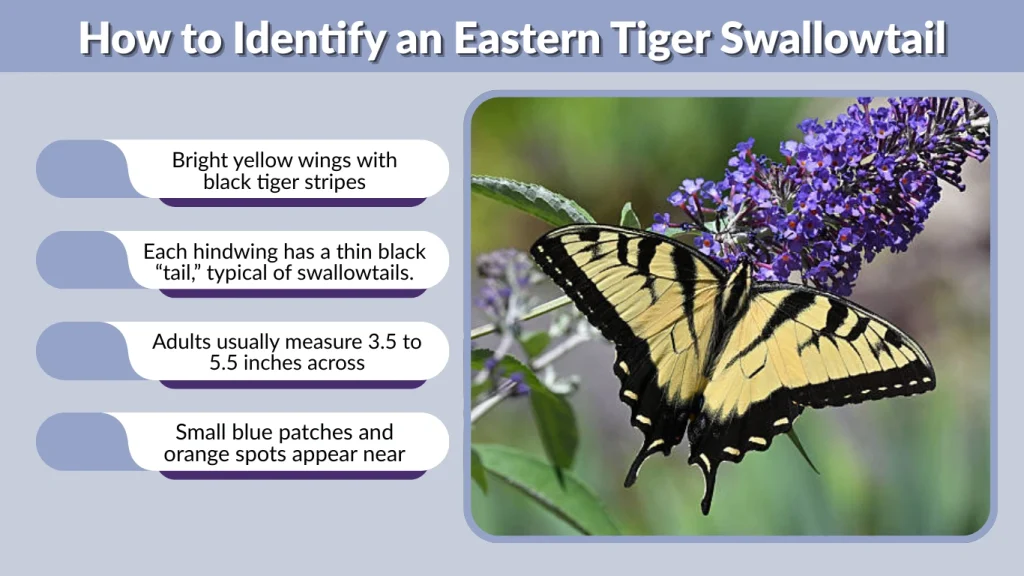
Eastern tiger swallowtails are known for their bold coloration and large size. Although several yellow swallowtails exist, a combination of traits makes this species easier to recognize.
- Bright yellow wings with black tiger stripes: The vertical black bands are thick and clearly defined.
- Blue and orange markings: Small blue patches and orange spots appear near the edges of the hindwings.
- Long tail-like extensions: Each hindwing has a thin black “tail,” typical of swallowtails.
- Large wingspan: Adults usually measure 3.5 to 5.5 inches across, making them one of the largest common butterflies.
- Male vs female differences: Females are often darker and may appear almost black with faint stripes.
- Smooth, gliding flight: Their flight is strong, slow, and soaring rather than rapid and fluttering.
These features separate the eastern tiger swallowtail from monarchs, sulphurs, and other yellow butterflies.
Eastern Tiger Swallowtail Lifecycle

Egg Stage
Female eastern tiger swallowtails lay their eggs singly on the leaves of host trees. The eggs are small, round, and greenish in color, blending in well with foliage. Laying eggs one at a time reduces competition among caterpillars and lowers the chance of predators finding them. Depending on temperature, the eggs usually hatch within four to ten days.
Caterpillar Stage
Newly hatched caterpillars are tiny and dark, resembling bird droppings—a clever form of camouflage that protects them from predators. As they grow and molt through several stages, they become bright green with swollen segments and large, false eye spots near the head. These eye spots make the caterpillar resemble a small snake, startling birds and lizards.
Eastern tiger swallowtail caterpillars feed mainly on the leaves of deciduous trees. They eat steadily, resting on leaf edges and midribs between meals. Like other swallowtails, they can extend an orange, forked osmeterium when threatened, releasing an unpleasant odor that discourages attackers.
Chrysalis Stage
When fully grown, the caterpillar secures itself to a twig or stem with silk and forms a chrysalis. The chrysalis may be green or brown, depending on the surrounding environment, helping it blend into leaves or bark. Inside this protective case, the caterpillar’s body reorganizes into an adult butterfly.
In warm seasons, this stage lasts about 10 to 14 days. Late-season chrysalises often overwinter and emerge the following spring, timed with the return of flowering plants.
Adult Butterfly Stage
An adult eastern tiger swallowtail emerges from the chrysalis with soft, folded wings. Within a few hours, the wings expand, harden, and develop full coloration. Adults spend their time feeding on nectar, finding mates, and laying eggs. Several generations may appear each year in southern regions, while northern areas usually support one or two.
Host Plants and Caterpillar Diet
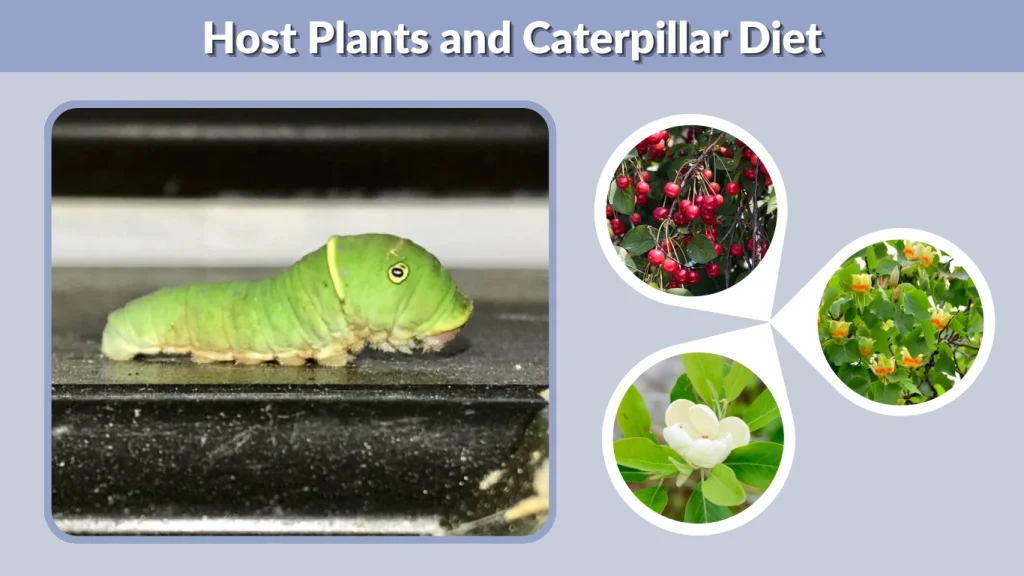
Eastern tiger swallowtail caterpillars depend on specific trees for food and development. Females carefully select these plants when laying eggs because caterpillars cannot survive without them.
- Wild cherry
- Tulip tree (tulip poplar)
- Sweet bay magnolia
- Birch
- Ash
- Willow
Young caterpillars scrape the leaf surface, while older ones consume entire sections. Although they feed heavily, healthy trees usually tolerate their presence without long-term harm.
Habitat and Geographic Range
The eastern tiger swallowtail is found throughout eastern North America, from southern Canada through the eastern United States and into parts of the Gulf Coast. It prefers forest edges, woodland clearings, riverbanks, parks, and large gardens where host trees and nectar plants grow together.
They are most active from spring through early fall. In warm climates, multiple generations appear each year, while in cooler regions, activity peaks in early summer. Their strong flight allows them to travel widely in search of flowers and breeding sites.
Behavior and Survival Strategies
Feeding and Flight Behavior
Adult eastern tiger swallowtails are strong, graceful fliers. They are often seen gliding high above treetops before descending to visit flowering plants. They feed primarily on nectar from large, flat or tubular flowers such as milkweed, phlox, lilac, joe-pye weed, and wild bergamot. Males frequently gather on damp soil, mud, or stream edges in a behavior called puddling, where they absorb minerals essential for reproduction.
They are most active on warm, sunny days and tend to follow regular flight paths between feeding areas, resting sites, and host trees. Their slow wingbeats and soaring movements make them easy to observe and photograph.
Defense and Camouflage
Eastern tiger swallowtails use different defenses at each life stage. Caterpillars rely on camouflage and mimicry, first resembling bird droppings and later imitating a small snake with enlarged eye spots. When disturbed, they may rear back and expose their orange osmeterium, releasing a sharp odor that repels predators.
Adult butterflies depend on flight strength and visual signals. Females sometimes appear dark or almost black, mimicking the toxic pipevine swallowtail, which discourages birds from attacking them. Their bright colors and swift flight also help reduce predation.
Eastern Tiger Swallowtail vs Western Tiger Swallowtail
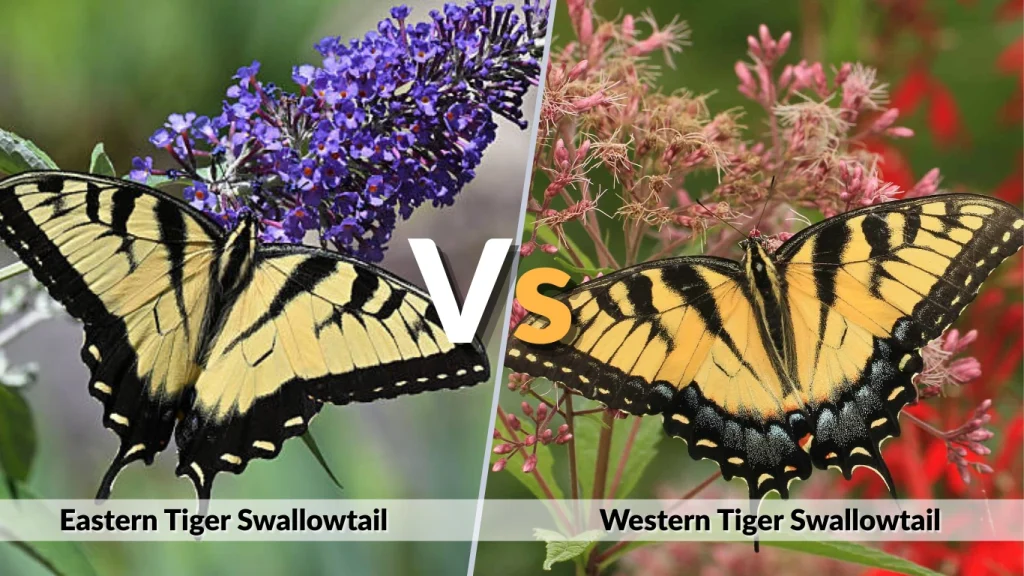
| Feature | Eastern Tiger Swallowtail | Western Tiger Swallowtail |
| Primary range | Eastern North America | Western North America |
| Wing pattern | Bold black stripes, some dark female forms | Paler yellow with narrower stripes |
| Common host plants | Cherry, tulip tree, magnolia, birch | Willow, cottonwood, aspen |
| Average size | Very large, up to 5.5 inches | Large, but slightly smaller on average |
| Caterpillar traits | Prominent eye spots, green mature stage | Similar, but with subtle color differences |
Although closely related, their ranges and host plant preferences usually prevent confusion.
Is the Eastern Tiger Swallowtail Rare or Endangered?
The eastern tiger swallowtail is not considered endangered and remains widespread across its natural range. However, like many butterflies, it faces growing challenges. Habitat loss, pesticide use, and the decline of native trees reduce breeding and feeding opportunities. Urban development often removes the large host trees this species depends on.
Protecting forest edges, planting native trees, and maintaining pesticide-free gardens all help sustain healthy populations. Because they are sensitive to environmental change, eastern tiger swallowtails are also valuable indicators of ecosystem health.
How to Attract Eastern Tiger Swallowtails to Your Garden
Creating a swallowtail-friendly garden increases the chances of seeing both caterpillars and butterflies.
- Plant host trees: Tulip tree, wild cherry, willow, and birch provide breeding sites.
- Grow nectar flowers: Milkweed, zinnias, phlox, and bee balm attract adults.
- Provide puddling areas: Shallow dishes of damp sand supply minerals.
- Avoid pesticides: Chemicals kill caterpillars and reduce nectar sources.
- Add resting spots: Flat stones and shrubs offer basking and shelter.
- Support overwintering: Leave some natural debris where chrysalises can survive.
Even small habitat improvements can significantly increase butterfly visits.
Importance in Ecosystems
Eastern tiger swallowtails play a key role as pollinators, transferring pollen between wildflowers, garden plants, and forest species. Their caterpillars contribute to natural plant pruning and serve as prey for birds, insects, and small mammals. Together, these interactions support balanced food webs.
Their presence often signals a healthy environment with diverse plant life. Because they rely on native trees and unpolluted spaces, protecting this species also benefits countless other insects, birds, and flowering plants.
FAQs
What does an eastern tiger swallowtail caterpillar turn into?
An eastern tiger swallowtail caterpillar becomes an eastern tiger swallowtail butterfly. Inside the chrysalis, the caterpillar’s body reorganizes completely, forming wings, antennae, and adult organs. The resulting butterfly is large and yellow with bold black stripes and blue-orange hindwing markings.
What plants do eastern tiger swallowtail caterpillars eat?
They feed mainly on the leaves of deciduous trees such as wild cherry, tulip tree, sweet bay magnolia, birch, ash, and willow. These plants provide the nutrients caterpillars need to grow and store energy before forming a chrysalis and transforming into butterflies.
How long does an eastern tiger swallowtail live?
From egg to adult, the full lifecycle usually takes about one to two months, depending on temperature. Adult butterflies typically live two to three weeks, during which they feed, mate, and lay eggs. Some individuals overwinter in the chrysalis stage before emerging in spring.
Can eastern tiger swallowtails be raised at home?
Yes, they can be raised if host leaves are available. Caterpillars should be kept in clean, ventilated containers with fresh leaves daily. Once the chrysalis forms, it should be left undisturbed. When the butterfly emerges, it should be released outdoors.
How can you tell a male from a female eastern tiger swallowtail?
Males are bright yellow with strong black stripes. Females may appear similar or much darker, sometimes almost black, with faint striping. Females also tend to be slightly larger and show more blue shading on the hindwings.
