
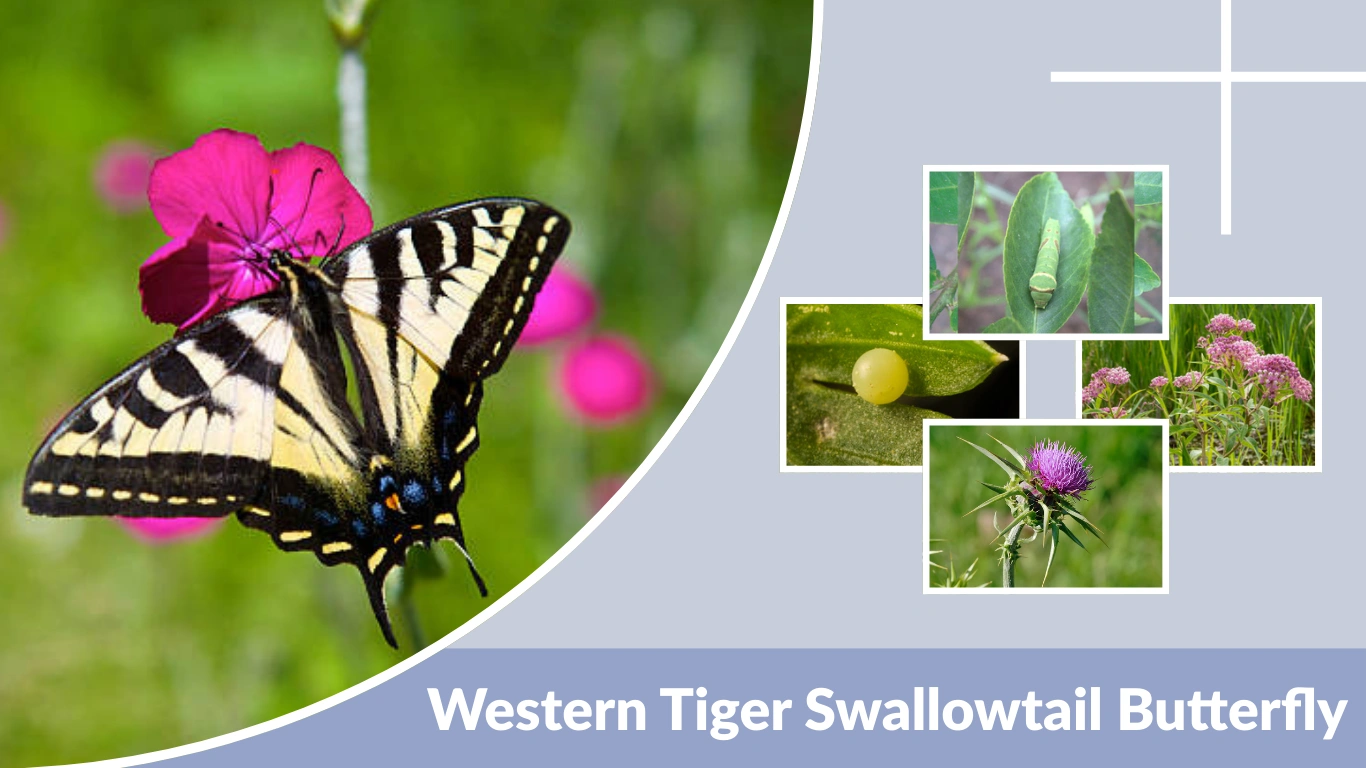
The western tiger swallowtail is one of the most striking and easily recognized butterflies found in western North America. Known for its bright yellow wings marked with bold black “tiger” stripes, this large swallowtail is a favorite among gardeners, hikers, and butterfly watchers. Beyond its beauty, it plays an important ecological role as both a pollinator and a food-web species. Understanding its identification, habitat, and lifecycle helps deepen appreciation for this iconic butterfly.
Western Tiger Swallowtail Overview
The western tiger swallowtail (Papilio rutulus) belongs to the swallowtail family Papilionidae, a group known for large wingspans, strong flight, and tail-like extensions on the hindwings. This species is one of the most widespread and commonly seen swallowtails across the western half of North America, especially near rivers, forests, and flowering gardens.
Adult western tiger swallowtails are among the largest butterflies in their range, often gliding gracefully above treetops or drifting between wildflowers. Their bright coloration makes them highly visible, which is one reason they are frequently photographed and used in butterfly education programs. They are active during warm, sunny days and are most abundant from late spring through summer.
Although often grouped together with other “tiger swallowtails,” the western tiger swallowtail is a distinct species with its own preferred host plants, range, and behaviors. It is particularly associated with riparian ecosystems, where the trees its caterpillars depend on grow in abundance.
Identification Features of the Western Tiger Swallowtail

After a quick look, western tiger swallowtails are easy to recognize, but several features help confirm a correct identification.
- Bright yellow wings with bold black vertical stripes
- Wide wingspan, usually between 3.5 and 5 inches
- Long, narrow black “tails” extending from the hindwings
- Blue shading and small orange spots near the hindwing edges
- Thick black body with yellow markings
- Strong, floating flight style that alternates between flapping and gliding
These features together separate the western tiger swallowtail from smaller yellow butterflies and help distinguish it from other swallowtail species.
Western Tiger Swallowtail vs Other Tiger Swallowtails
Western Tiger Swallowtail vs Eastern Tiger Swallowtail
The western tiger swallowtail is primarily found west of the Rocky Mountains, while the eastern tiger swallowtail dominates the eastern half of North America. Although both share similar yellow-and-black striping, the western species often shows cleaner yellow coloration and is more closely tied to riparian tree habitats such as cottonwood and willow forests.
Western Tiger Swallowtail vs Canadian Tiger Swallowtail
The Canadian tiger swallowtail occupies colder northern regions and higher elevations. It is typically smaller and more cold-tolerant than the western tiger swallowtail. While their appearances overlap, differences in geographic range, climate preference, and breeding habitats help entomologists separate these closely related butterflies.
Natural Habitat and Distribution
The western tiger swallowtail ranges across much of western North America, from southern British Columbia and Alberta down through the western United States and into parts of northern Mexico. It is especially common in California, the Pacific Northwest, the Rocky Mountain region, and along major river systems.
This butterfly thrives in habitats where moist soil and host trees are abundant. Riverbanks, forest edges, canyons, valleys, and open woodlands are among its favorite environments. It is also highly adaptable and frequently appears in parks, botanical gardens, and suburban neighborhoods where suitable plants grow.
Elevation does not strongly limit the western tiger swallowtail. It can be found from lowland river valleys up to mountainous regions, as long as host trees and nectar sources are present. Its wide distribution is one of the reasons it remains a stable and visible species.
Lifecycle of the Western Tiger Swallowtail

The western tiger swallowtail undergoes a complete metamorphosis, passing through four distinct stages.
- Egg stage: Females lay small, round eggs singly on the leaves of host trees.
- Caterpillar stage: After hatching, larvae feed continuously, molting several times as they grow larger.
- Chrysalis stage: The caterpillar forms a camouflaged chrysalis attached to branches or stems.
- Adult stage: The butterfly emerges, expands its wings, and begins feeding, mating, and dispersing.
- Generations per year: Depending on climate, one to three generations may occur annually.
Warmer regions often support multiple broods, while cooler northern areas usually see only one generation per year.
Caterpillar Appearance and Behavior
Young western tiger swallowtail caterpillars resemble bird droppings, a highly effective form of camouflage that protects them from predators. As they grow, they turn bright green and develop large, false eye spots near the head, which make them look like small snakes when threatened.
When disturbed, caterpillars extend an orange, forked organ called an osmeterium from behind the head. This structure releases a strong odor that helps deter ants, spiders, and small predators. Caterpillars spend most of their time feeding on leaves, resting along leaf midribs, and molting as they increase in size.
By the final larval stage, the caterpillar is thick-bodied, smooth, and vividly green, blending perfectly with foliage before forming its chrysalis.
Host Plants and Adult Feeding Habits

Host Plants for Caterpillars
Western tiger swallowtail caterpillars rely mainly on native riparian and woodland trees. Females carefully select host plants where newly hatched larvae can immediately begin feeding. Common host trees include cottonwood, willow, aspen, alder, and sometimes ash or birch. These trees are most often found along streams, rivers, and moist forest edges, which explains why western tiger swallowtails are frequently seen flying near water sources.
The leaves of these trees provide the nutrients caterpillars need for rapid growth and successful metamorphosis. Without access to suitable host plants, western tiger swallowtail populations cannot establish, even if nectar flowers are plentiful.
Nectar Sources for Adults
Adult western tiger swallowtails feed primarily on nectar from a wide range of flowering plants. They are especially attracted to lilac, thistle, milkweed, phlox, butterfly bush, and many native wildflowers. Adults also practice “puddling,” gathering on damp soil, mud, or sand to drink mineral-rich moisture that supports reproduction and overall health.
Behavior and Flight Patterns
Western tiger swallowtails are strong, confident fliers that are most active on warm, sunny days. They often begin flying in the morning and remain active through the afternoon, especially in open areas where sunlight is abundant. Their flight pattern alternates between powerful wingbeats and graceful gliding, making them easy to spot even from a distance.
Males frequently patrol river corridors, forest edges, and open clearings in search of females. Courtship usually occurs in midair, with pairs spiraling upward before mating. Adults are also known to bask with wings open, absorbing sunlight to regulate body temperature.
Seasonally, western tiger swallowtails are most visible from late spring through summer. In warmer regions, multiple generations may appear, leading to extended flight seasons that can last into early autumn.
Ecological Role of the Western Tiger Swallowtail

Beyond their beauty, western tiger swallowtails play important roles within natural ecosystems.
- They serve as pollinators for many native and ornamental flowering plants.
- Their caterpillars help regulate tree growth by feeding on foliage in balanced ecosystems.
- They are a food source for birds, spiders, reptiles, and predatory insects.
- Their presence indicates healthy riparian and woodland habitats.
- They contribute to biodiversity and environmental education efforts.
By supporting both plant reproduction and food chains, this butterfly is a vital part of western North American ecosystems.
Predators and Defense Mechanisms
Throughout their lifecycle, western tiger swallowtails face numerous natural enemies. Eggs and caterpillars are commonly preyed upon by ants, spiders, wasps, birds, and small mammals. Adult butterflies may be captured by birds, praying mantises, and large spiders.
To survive, this species relies on a combination of camouflage, deception, and chemical defense. Young caterpillars resemble bird droppings, making them easy to overlook. Older caterpillars use bright eye spots and the foul-smelling osmeterium to scare or repel attackers. Adults depend largely on rapid flight, high mobility, and keen vision to escape predators.
Western Tiger Swallowtail in Gardens
How to Attract Them
Gardeners can attract western tiger swallowtails by planting a mix of nectar flowers and native host trees. Bright, fragrant blooms draw adults, while cottonwood, willow, and aspen provide breeding opportunities. Shallow water sources and sunny resting spots further increase garden appeal.
Creating a Swallowtail-Friendly Garden
Avoiding pesticides is essential, as chemical sprays kill caterpillars and contaminate nectar. Planting native species, allowing some natural leaf feeding, and maintaining diverse flowering periods throughout the year help support the entire swallowtail lifecycle.
Conservation Status and Modern Threats
The western tiger swallowtail is currently considered stable across much of its range, thanks to its adaptability and wide distribution. However, local populations can decline rapidly when habitats are altered or destroyed.
Urban development, river modification, and deforestation reduce the availability of host trees. Climate change is also shifting seasonal cycles, which may affect breeding success. Pesticide use in agriculture and residential areas remains one of the greatest threats, directly killing larvae and reducing nectar availability.
Protecting riparian corridors, planting native trees, and maintaining pesticide-free green spaces are key actions that support long-term western tiger swallowtail conservation.
Interesting Facts About the Western Tiger Swallowtail
The western tiger swallowtail is one of the largest and most powerful flying butterflies in western North America. Its caterpillars can inflate their false eyes to resemble small snakes, startling predators. Although adult butterflies usually live only a few weeks, they may travel long distances, helping pollinate many different plant species. Their beauty and visibility make them ambassadors for butterfly conservation.
FAQs
What is a western tiger swallowtail butterfly?
The western tiger swallowtail is a large, yellow-and-black butterfly native to western North America. Scientifically known as Papilio rutulus, it is famous for its tiger-like stripes, long tail extensions, and strong flight. It plays an important ecological role as both a pollinator and a food-web species.
Where do western tiger swallowtails live?
Western tiger swallowtails are found across the western United States, western Canada, and parts of northern Mexico. They prefer riverbanks, forest edges, valleys, and open woodlands where host trees like willow and cottonwood grow. They are also common in gardens and urban green spaces.
What do western tiger swallowtail caterpillars eat?
Caterpillars primarily feed on the leaves of native trees such as cottonwood, willow, alder, and aspen. These host plants provide the nutrients needed for rapid growth and successful metamorphosis. Without suitable host trees, western tiger swallowtail populations cannot reproduce.
How long does a western tiger swallowtail live?
The complete lifecycle usually lasts several weeks to a few months, depending on climate. Adult butterflies typically live only two to four weeks, during which they feed, mate, and lay eggs. In warmer regions, multiple generations may appear within a single year.
How can I attract western tiger swallowtails to my garden?
Planting nectar-rich flowers, growing native host trees, providing shallow water sources, and avoiding pesticides are the best ways to attract western tiger swallowtails. A garden that supports both adult feeding and caterpillar development offers the strongest long-term attraction.
