
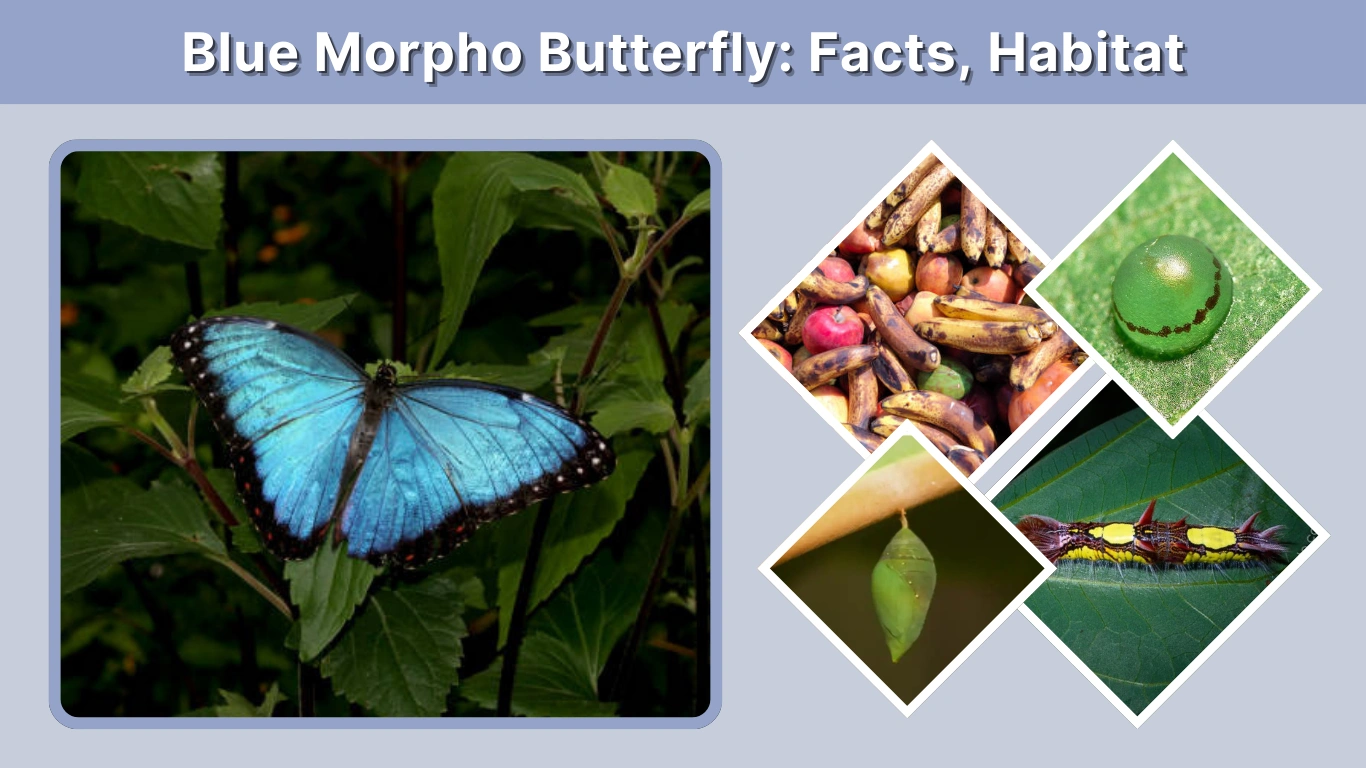
The blue morpho butterfly (Morpho menelaus) is one of the most spectacular insects in the natural world. Famous for its brilliant, metallic-blue wings, this butterfly flashes like a living mirror as it glides through tropical rainforests. Native to Central and South America, the blue morpho is not only admired for its beauty but also for its ecological importance. From rainforest canopies to shaded forest floors, it plays a vital role in nutrient cycling and serves as a symbol of healthy tropical ecosystems.
Scientific Classification and Natural Identity
The blue morpho belongs to the family Nymphalidae, commonly known as brush-footed butterflies. Within this family, it is part of the genus Morpho, a group that includes more than 25 species famous for their shimmering blue wings.
The species name menelaus comes from Greek mythology and reflects the tradition of naming visually striking insects after legendary figures. Scientifically, the blue morpho has become one of the most studied butterflies in the world because its wings do not contain blue pigment. Instead, their color is created by microscopic structures that reflect light.
Biologically, the blue morpho is considered an important rainforest species. It thrives in stable, humid environments and reacts quickly to habitat disturbance, making it useful for studying the effects of deforestation and climate change.
Physical Appearance and Wing Structure
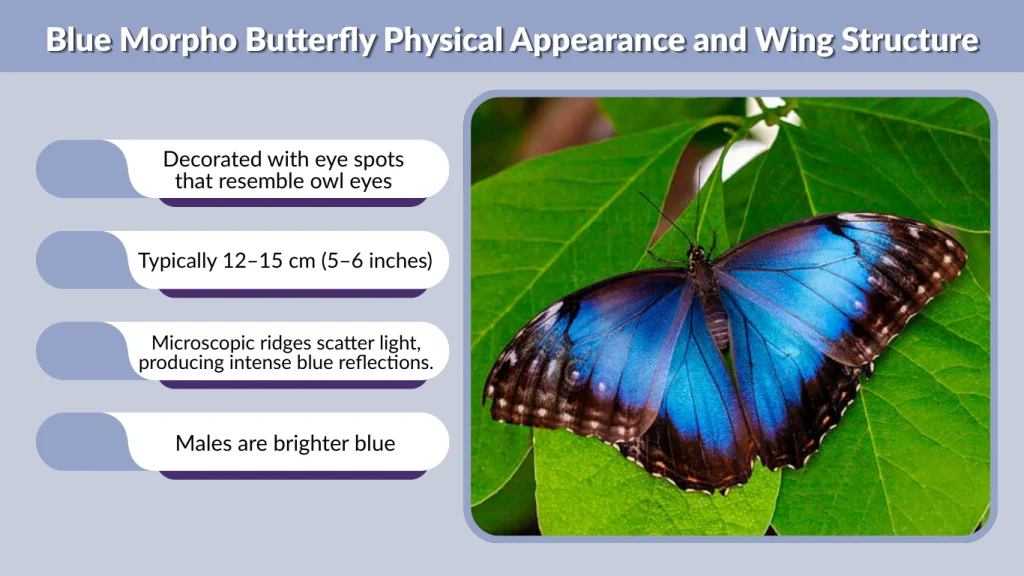
The blue morpho butterfly is instantly recognizable due to its dramatic wing coloration and large size.
Key physical characteristics include:
- Iridescent blue upper wings: Shimmering electric blue caused by light-reflecting scales rather than pigment.
- Brown underwings: Decorated with eye spots that resemble owl eyes, providing camouflage.
- Wingspan and size: Typically 12–15 cm (5–6 inches), making it one of the largest butterflies in the Americas.
- Wing scale structure: Microscopic ridges scatter light, producing intense blue reflections.
- Male vs female differences: Males are brighter blue, while females are slightly duller with broader brown edges.
When flying, the rapid flashing between bright blue and dull brown confuses predators, making it difficult to track the butterfly’s movement.
Habitat and Geographic Distribution
Native Rainforest Range
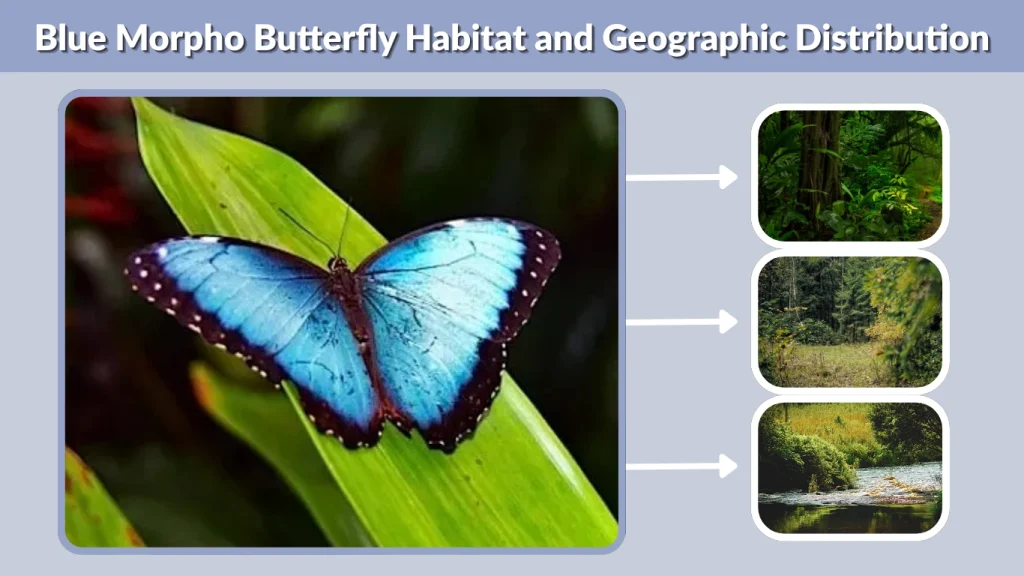
Blue morpho butterflies are native to Central America, Mexico, and much of South America, especially the Amazon Basin. They are commonly found in Brazil, Costa Rica, Peru, Venezuela, and Colombia.
Preferred Living Environments
They inhabit tropical rainforests, favoring forest edges, riverbanks, clearings, and the lower canopy. Although they are powerful fliers, blue morphos usually stay below the treetops, where sunlight can illuminate their wings.
They are also frequently seen near streams and muddy forest paths, where they feed and rest.
Climate Requirements
Blue morphos require warm temperatures, high humidity, and dense vegetation. Seasonal rainfall influences breeding cycles, food availability, and butterfly activity levels.
Behavior and Daily Activity
Blue morpho butterflies are diurnal, becoming most active during the late morning and early afternoon. Their flight is slow, floating, and highly visible, often compared to drifting leaves.
Males are strongly territorial and patrol forest paths and river edges, chasing rivals from their preferred zones. Females fly higher and deeper into vegetation, searching for host plants to lay eggs.
When resting, blue morphos usually close their wings, revealing only their brown underwings. This sudden shift from brilliant blue to dull brown is a powerful survival adaptation that helps them vanish visually in seconds.
Diet and Feeding Habits
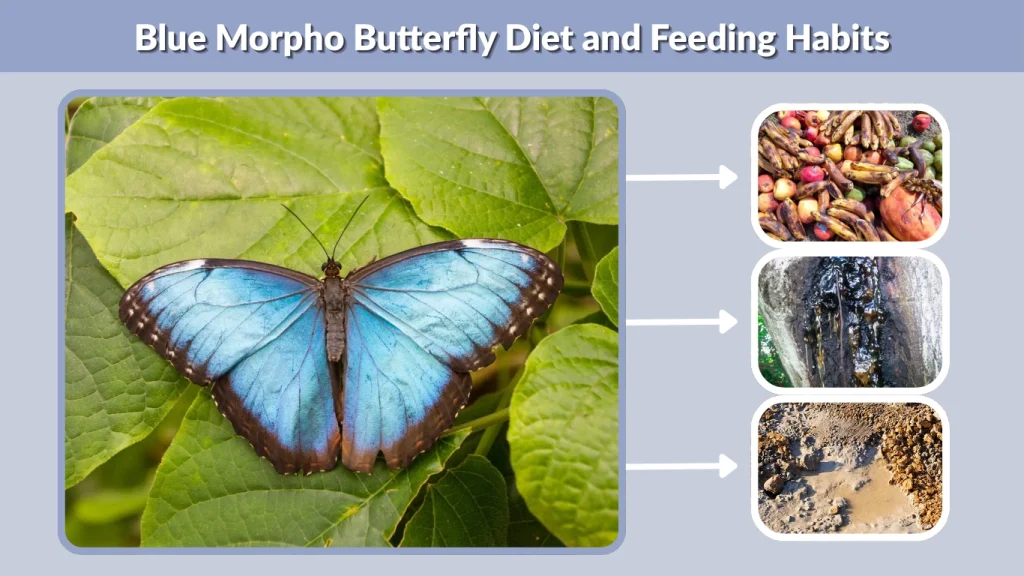
Unlike many nectar-feeding butterflies, adult blue morphos rely heavily on fermenting fruit and plant fluids.
Their feeding habits include:
- Rotting fruit: Bananas, mangoes, and figs on the forest floor.
- Tree sap: Especially from damaged trunks.
- Mineral-rich moisture: From mud puddles and wet soil.
- Occasional nectar: From tropical flowers.
- Caterpillar host plants: Legume family plants, including Machaerium species.
By feeding on decaying fruit, blue morphos help recycle nutrients back into the rainforest ecosystem.
Complete Life Cycle of the Blue Morpho Butterfly

Egg Stage
Female blue morphos lay small, pale-green eggs on the leaves of host plants. These eggs hatch within one to two weeks, depending on humidity and temperature.
Caterpillar Stage
The caterpillars are reddish-brown with bright green patches and long hair-like structures. They feed primarily at night, hiding during the day. Their bodies contain irritating hairs and chemicals that discourage predators.
Chrysalis Stage
After several weeks of feeding and growth, the caterpillar attaches itself to a leaf or stem and forms a smooth, green chrysalis. This pupa closely resembles a fresh leaf, providing excellent camouflage against predators. Inside the chrysalis, the caterpillar undergoes complete metamorphosis. Over the next one to two weeks, its tissues reorganize to form wings, compound eyes, legs, and antennae.
Adult Stage
When development is complete, the adult blue morpho emerges with soft, folded wings. It pumps fluid into the wing veins, expanding and hardening them before its first flight. Newly emerged adults seek food quickly to fuel flight, reproduction, and territorial behavior. Mating usually occurs soon after emergence, beginning a new generation.
Caterpillar Identification and Growth Patterns
Blue morpho caterpillars are striking and unusual. They are reddish-brown to dark maroon, covered in long hair-like bristles that can irritate skin and deter predators. Along their sides are bright green patches and faint eye-like markings, adding to their intimidating appearance.
These caterpillars feed mostly at night and hide on the undersides of leaves during the day. As they grow, they shed their skin several times, becoming thicker and hairier with each molt. Their diet of legume leaves provides the nutrients needed for rapid growth and chemical defense. Once fully grown, the caterpillar searches for a secure spot to pupate.
Defense Mechanisms and Survival Strategies

The blue morpho relies on both visual illusions and physical defenses to survive in predator-rich rainforests.
Key survival strategies include:
- Flash coloration effect: Sudden bursts of bright blue disorient predators.
- Camouflaged underwings: Brown wings with eye spots mimic forest debris.
- False eye markings: Discourage birds and lizards.
- Erratic flight pattern: Makes tracking difficult.
- Irritating caterpillar hairs: Provide protection during larval stages.
These combined tactics make blue morphos surprisingly difficult prey.
Wings, Color Science, and Light Reflection
Why Blue Morphos Look Blue
The blue color of morpho wings is not caused by pigment. Instead, it results from microscopic scale structures arranged like tiny layered ridges. These ridges reflect blue wavelengths of light while canceling others, producing intense iridescence. This phenomenon is called structural coloration.
How Wings Confuse Predators
As the butterfly flies, the wings constantly open and close. Predators see a bright flash of blue followed by a sudden disappearance into brown camouflage. This rapid color change creates an illusion of vanishing, making it hard to predict the butterfly’s path.
Role in the Rainforest Ecosystem
Blue morpho butterflies help maintain rainforest balance. By feeding on rotting fruit, they assist in breaking down organic matter and recycling nutrients into the soil. They also contribute modestly to pollination when visiting flowers.
They serve as prey for birds, frogs, reptiles, and spiders, making them an important link in the food chain. Because blue morphos are sensitive to environmental change, scientists often use them as indicators of forest health.
Blue Morpho Butterfly and Conservation
Natural Threats
In the wild, blue morphos face predation from birds, monkeys, lizards, and large insects. Heavy rainfall and fungal infections can also affect populations.
Human-Related Threats
Deforestation is the greatest danger. Large areas of rainforest are cleared each year, destroying host plants and breeding zones. The commercial butterfly trade also impacts local populations in some regions.
Conservation Efforts
Butterfly farms, rainforest reserves, and sustainable ecotourism programs help protect blue morphos. Many conservation projects focus on habitat protection rather than captive breeding alone.
Symbolism, Cultural Meaning, and Interesting Facts
In many indigenous cultures, the blue morpho symbolizes transformation, guidance, and spiritual awakening. Its sudden flashes of blue are often associated with unseen energies and rainforest spirits.
Interestingly, scientists study morpho wings to inspire anti-counterfeiting technology, solar panels, and color-fast materials. The blue morpho is also one of the most photographed butterflies in the world and a flagship species for tropical conservation.
FAQs
Why is the blue morpho butterfly so blue?
Blue morphos appear blue because of microscopic wing scales that reflect specific wavelengths of light. This structural coloration produces a shimmering metallic effect that changes with viewing angle, unlike normal pigment-based colors.
Where do blue morpho butterflies live?
They live in tropical rainforests of Central and South America, especially around river edges, forest clearings, and lower canopy zones where sunlight filters through.
What do blue morpho caterpillars eat?
Blue morpho caterpillars feed mainly on leaves from legume family plants. These host plants supply nutrients and defensive chemicals that protect larvae from predators.
How big is a blue morpho butterfly?
Blue morphos are among the largest butterflies in the Americas, with wingspans ranging from about 12 to 15 centimeters (5 to 6 inches).
Is the blue morpho butterfly endangered?
The species is not currently classified as endangered, but deforestation and habitat loss threaten local populations. Protecting rainforest ecosystems is essential for their long-term survival.
