
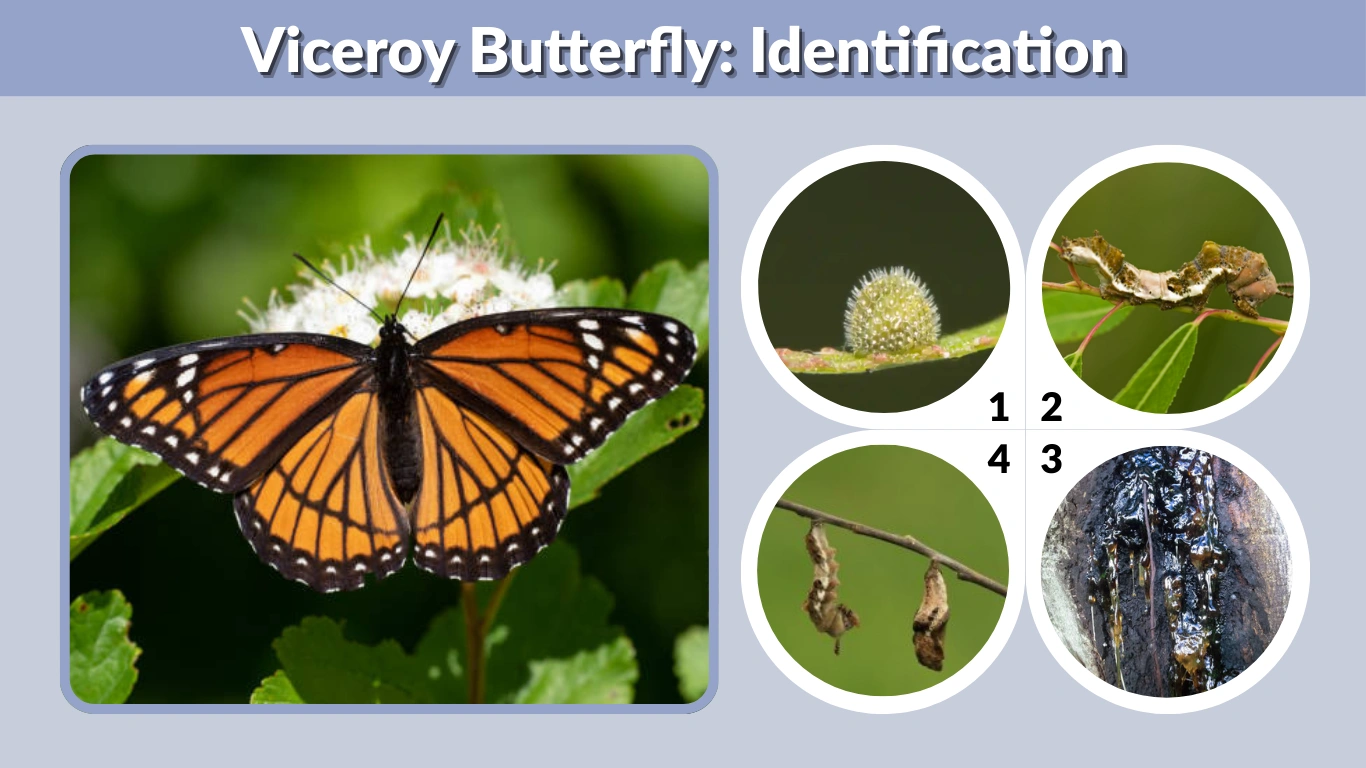
The viceroy butterfly is one of North America’s most recognizable insects, famous for its striking resemblance to the monarch butterfly. For many years, even scientists believed the viceroy was harmless and only copying the monarch’s warning colors. Modern research has revealed a much more complex story involving mimicry, chemical defenses, and survival adaptation. This guide explores how to identify the viceroy butterfly, where it lives, how it develops, and why it plays an important role in natural ecosystems.
Viceroy Butterfly Identification

The viceroy butterfly (Limenitis archippus) can be easily confused with the monarch, but several distinct traits help separate the two. Careful observation of wing markings, size, and flight style makes identification much more accurate.
- Scientific name and classification: Limenitis archippus, family Nymphalidae
- Average wingspan and size: About 2.5 to 3 inches, slightly smaller than monarchs
- Wing coloration: Bright orange wings with bold black veins and white spots along the edges
- Distinct black line: A thin black band runs across the hindwings, the most reliable field mark
- Male vs female differences: Females are often slightly larger with rounder wings
- Flight behavior: Low, gliding flight with slow wingbeats
Physical Appearance and Wing Patterns
The viceroy butterfly displays a vivid orange background color crossed by heavy black veins, creating a stained-glass appearance when sunlight passes through its wings. Along the outer edges, neat rows of white dots sit within thick black borders, giving the wings a crisp, high-contrast outline that is visible from a distance.
The most important identification feature is the black postmedian line that runs horizontally across the hindwings. Monarch butterflies lack this marking, making it the fastest way to distinguish between the two species. When the butterfly is resting with open wings, this curved black line is usually easy to spot.
Seasonal and regional variation can influence coloration. Northern populations often appear darker and more heavily marked, while southern individuals may show slightly brighter orange tones. Wing wear also changes appearance over time, fading colors and softening contrasts as the butterfly ages.
The viceroy’s body is dark brown to black with small white spots, and its antennae end in distinct clubs. Its legs, like most brush-footed butterflies, are reduced in the front pair, giving the illusion that it walks on four legs instead of six.
Viceroy vs Monarch Butterfly

| Feature | Viceroy Butterfly (Limenitis archippus) | Monarch Butterfly (Danaus plexippus) |
| Primary identification mark | Thin black line across the hindwings | No black line across hindwings |
| Average wingspan | 2.5–3 inches (6.4–7.6 cm) | 3.5–4 inches (8.9–10.2 cm) |
| Wing color | Bright orange with black veins and white edge spots | Deep orange with thicker black veins and white edge spots |
| Toxicity level | Mildly toxic | Highly toxic |
| Type of mimicry | Müllerian mimicry | Müllerian mimicry |
| Main host plants | Willows, poplars, aspens, cottonwoods | Milkweed species |
| Caterpillar appearance | Brown, white, bird-dropping mimic | Bold black, white, and yellow stripes |
| Flight style | Lower, gliding, short-distance movement | Higher soaring, strong long-distance flight |
| Migration behavior | Does not migrate long distances | Famous for long-distance migration |
| Preferred habitat | Wetlands, river edges, forest borders | Open fields, meadows, gardens |
| Overwintering stage | Caterpillar (in rolled leaves) | Adult butterflies |
| Geographic range | North America (especially near wetlands) | North America, Central America |
Habitat and Geographic Range
The viceroy butterfly is widely distributed across North America, ranging from southern Canada through the United States and into northern Mexico. It is absent only from the far western deserts and high mountain regions, where suitable host plants are limited.
Viceroys prefer habitats closely associated with water sources. Wetlands, marshes, riverbanks, lake edges, and damp meadows provide ideal conditions because they support willows and poplars—the main host plants for their caterpillars. These environments also supply abundant nectar and sap sources for adults.
They are frequently found along forest edges and open woodlands, where sunlight reaches low vegetation. This combination of warmth, shelter, and food makes such transitional habitats perfect for breeding and feeding.
In recent years, viceroys have become more common in suburban gardens and parks, especially where native trees and wildflowers are planted. Backyard ponds, rain gardens, and unmanaged natural corners often create microhabitats that support their full life cycle.
Life Cycle of the Viceroy Butterfly

Like all butterflies, the viceroy undergoes complete metamorphosis, progressing through four major life stages. Each stage is specially adapted for survival and growth.
- Egg stage: Small, pale eggs are laid singly on the tips of willow or poplar leaves
- Caterpillar stage: Larvae feed on host leaves and grow through several molts
- Chrysalis stage: The pupa resembles a dried leaf or broken twig
- Adult stage: The butterfly emerges, expands its wings, and begins feeding and mating
- Generations per year: Two to three broods occur depending on climate
Caterpillar Appearance and Host Plants
What viceroy caterpillars look like
Viceroy caterpillars are famous for their unusual disguise. Instead of bright colors, they resemble bird droppings, a clever form of camouflage that discourages predators. Their bodies are brown, white, and olive, with irregular shapes and small spines that enhance the illusion. As they grow, their markings become more complex, making them even harder to recognize as edible prey.
They often construct small leaf shelters where they rest during the day. In colder regions, young caterpillars overwinter inside rolled leaves, protected from snow and freezing temperatures.
Host plants and feeding behavior
Viceroy caterpillars feed primarily on willows, poplars, aspens, and cottonwoods. These trees contain chemical compounds that the larvae absorb and retain, contributing to the butterfly’s defensive toxicity. Host plant availability strongly determines where viceroys can live and breed, linking their distribution closely to wetland and riparian environments.
Mimicry and Survival Strategy
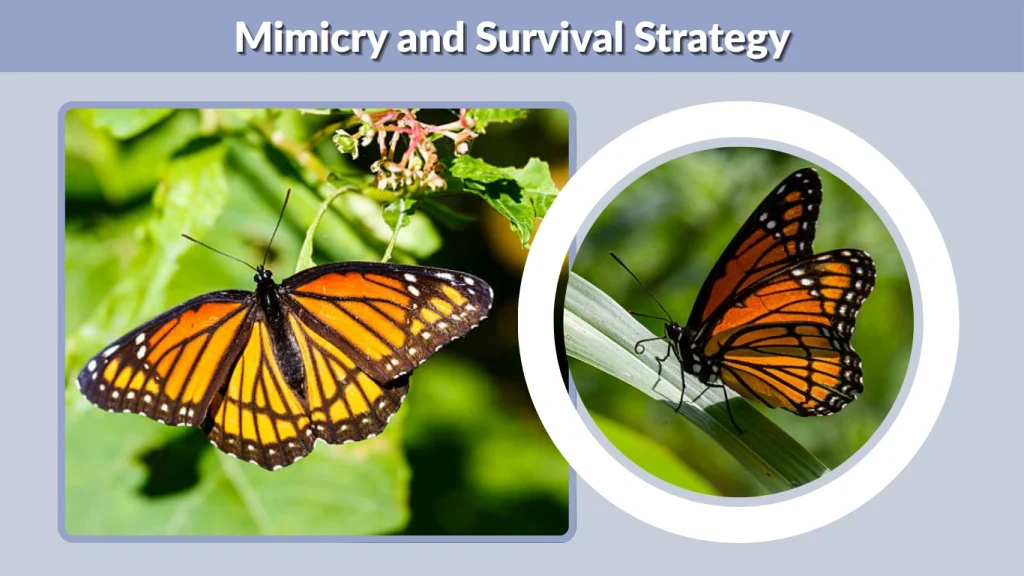
The viceroy butterfly is best known for its powerful survival strategy—mimicry combined with chemical defense. For many decades, scientists believed viceroys were harmless insects copying the monarch’s toxic warning colors. Modern studies, however, have revealed that viceroys themselves are mildly toxic, making their resemblance to monarchs a case of Müllerian mimicry, where two unpalatable species share similar appearances to reinforce predator avoidance.
Viceroy caterpillars acquire defensive chemicals from their host plants, especially willows and poplars. These compounds remain in their bodies after metamorphosis, giving adult butterflies a bitter taste. Birds that attempt to eat a viceroy often quickly release it and remember the unpleasant experience.
This shared warning pattern benefits both species. Predators learn faster when multiple toxic insects display the same colors, reducing attacks on all of them. Over time, natural selection has refined this resemblance, producing one of the most famous visual examples of adaptive evolution in the insect world.
Behavior and Flight Characteristics
Viceroy butterflies are active during warm, sunny hours, especially from late morning to mid-afternoon. They are often seen gliding slowly along forest edges, watercourses, and open meadows, occasionally stopping to bask with wings spread wide to absorb heat.
Their flight is generally lower and steadier than that of monarchs. Instead of long soaring journeys, viceroys move in short, purposeful glides punctuated by rapid wingbeats. Males frequently patrol territories near host plants and nectar sources, chasing away rivals and intercepting females.
When resting, viceroys often perch on low vegetation or tree leaves. They may hold their wings open or partially closed, positioning themselves to regulate body temperature. This behavior is especially common in the morning when butterflies need sunlight to become active.
Diet and Feeding Habits

Adult viceroy butterflies feed on a wide range of nectar-producing flowers, including goldenrod, milkweed, aster, joe-pye weed, and thistles. These blooms supply the sugars needed for flight, reproduction, and daily activity.
In addition to nectar, viceroys frequently drink from tree sap, rotting fruit, and damp soil. This behavior, known as “puddling,” allows them to absorb essential minerals such as sodium, which supports nerve function and reproductive success.
Seasonal changes influence diet. Early in the year, sap flows and moist ground are especially important, while late-summer adults rely more heavily on flowering plants. This flexible feeding strategy helps viceroys thrive in a variety of habitats.
Role in the Ecosystem
Viceroy butterflies contribute to ecosystems primarily as pollinators. While feeding, they transfer pollen between flowers, supporting plant reproduction and genetic diversity. Although they are not as specialized as bees, their frequent movement among wildflowers makes them valuable ecological partners.
They also occupy an important place in food webs. Caterpillars serve as prey for insects and small predators, while adults are part of the diet of birds, reptiles, and spiders—despite their toxicity discouraging many attacks.
Because they depend on wetland trees and healthy plant communities, viceroys are often considered indicator species. Stable populations suggest well-functioning riparian and meadow ecosystems, while sharp declines can signal environmental problems.
Threats and Conservation Status
The viceroy butterfly is not currently endangered, but it faces growing threats from habitat loss and environmental change. Wetland drainage, river modification, and urban development reduce the availability of host plants critical to their reproduction.
Pesticide use also presents a serious risk. Chemicals can kill caterpillars directly or contaminate nectar and sap sources used by adults. Climate change further alters breeding cycles and may shift suitable habitats northward.
Conservation efforts focus on protecting wetlands, planting native trees, and reducing chemical use. Maintaining natural vegetation corridors and preserving forest edges help sustain healthy viceroy populations.
How to Attract Viceroy Butterflies to Your Garden
Supporting viceroys at home is possible by creating habitats that meet their basic needs.
- Plant native willows, poplars, or aspens to support caterpillars
- Grow nectar-rich flowers such as aster, goldenrod, and milkweed
- Avoid pesticides and herbicides
- Provide shallow water or muddy spots for mineral intake
- Create sunny, sheltered areas with diverse vegetation
Gardens that mimic natural edges and wet areas are especially attractive to viceroys.
Interesting Facts About the Viceroy Butterfly
The viceroy butterfly was once used as a textbook example of harmless mimicry, but modern science overturned that idea. Its mild toxicity reshaped how biologists understand warning coloration.
Viceroy caterpillars overwinter in rolled leaves, surviving freezing temperatures in a suspended state. This unique adaptation allows them to emerge early in spring.
Some southern populations are darker and richer in color, while northern individuals often appear more heavily marked. This variation reflects local climate and plant chemistry.
FAQs
Is the viceroy butterfly poisonous?
The viceroy butterfly is mildly toxic rather than deadly. It stores defensive chemicals from willow and poplar leaves consumed as a caterpillar. These substances give the adult butterfly a bitter taste that discourages birds and other predators from eating it.
How can you tell a viceroy from a monarch butterfly?
The easiest way is to look for a thin black line crossing the hindwings of the viceroy butterfly. Monarchs lack this line. Viceroys are also slightly smaller and usually fly closer to the ground.
Where do viceroy butterflies live?
Viceroy butterflies live throughout much of North America, especially near wetlands, rivers, lakes, and forest edges. They prefer habitats that support willows, poplars, and other host trees for their caterpillars.
What do viceroy caterpillars eat?
Viceroy caterpillars feed mainly on willow, poplar, aspen, and cottonwood leaves. These plants provide both nutrition and chemical compounds that later help protect the adult butterfly from predators.
Do viceroy butterflies migrate long distances?
Unlike monarchs, viceroy butterflies do not make long-distance migrations. They move locally between breeding and feeding areas, with populations surviving winter mainly in the caterpillar stage.
