
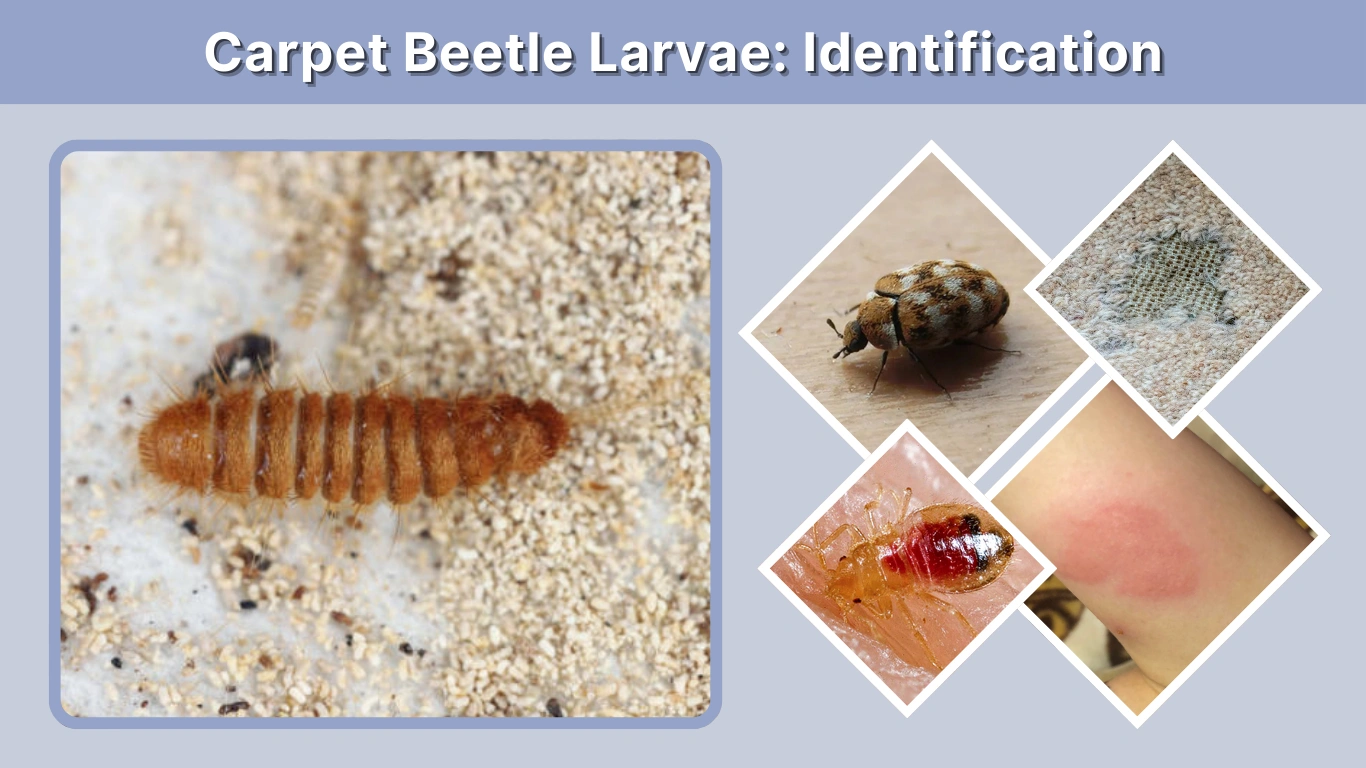
Carpet beetle larvae are one of the most misunderstood household pests. Many people mistake them for bed bugs, skin parasites, or tiny worms, especially when they appear in beds, clothing, or along walls. While adult carpet beetles are harmless, their larvae are destructive feeders that can quietly damage carpets, clothes, furniture, and stored fabrics. They can also trigger skin irritation in sensitive individuals. Learning how to identify carpet beetle larvae, where they come from, and the early signs of infestation is the first step toward effective control and prevention.
What Are Carpet Beetle Larvae?
Carpet beetle larvae are the immature stage of carpet beetles, a group of small insects in the family Dermestidae. While adult beetles mainly feed on pollen outdoors, the larvae live indoors and are responsible for almost all household damage. They feed on materials that contain animal-based fibers or proteins, including wool, silk, feathers, leather, pet hair, dead insects, and food crumbs trapped in carpets and furniture.
Unlike many pests that reproduce quickly and bite humans, carpet beetle larvae develop slowly and focus entirely on feeding. A single larva can survive for several months, and in some indoor conditions, even close to a year. During this time, it molts multiple times, shedding its skin as it grows. These shed skins are often the first visible sign that a home has an infestation.
Because larvae prefer dark, undisturbed areas, people often don’t notice them until fabric damage appears or larvae start wandering onto walls, beds, or bathroom floors in search of new food sources.
What Do Carpet Beetle Larvae Look Like?
Carpet beetle larvae are small, elongated, and usually described as “worm-like,” though they are insects, not worms. Most species have a carrot-shaped body that is broader at the head and tapers toward the tail. Their bodies are covered in fine hairs or bristles, which can give them a fuzzy or striped appearance.
Colors vary depending on species and age. Some larvae appear brown or dark brown, others are blackish, while some look tan or lightly banded. “White” carpet beetle larvae are usually very young larvae or freshly molted individuals before their darker hairs fully develop.
They move slowly, often curling slightly as they crawl. When disturbed, some species may roll or try to hide in fabric seams or under debris.
Size, Color, and Body Shape
Most carpet beetle larvae range from about 2 mm to 6 mm long, depending on species and growth stage. Younger larvae are tiny and pale, while mature larvae are darker, longer, and more noticeably bristled. Black carpet beetle larvae tend to be longer and more uniformly dark, while varied or variegated carpet beetle larvae often show light and dark banding across the body.
Carpet Beetle Larvae Shells and Shed Skins
As larvae grow, they shed their outer skin several times. These dry, hollow skins are often found in closets, drawers, under beds, or along baseboards. They look like tiny, brittle replicas of the larvae themselves and are a strong indicator of an active or past infestation. Many people first notice these shells before seeing live larvae.
Identification and Key Physical Features
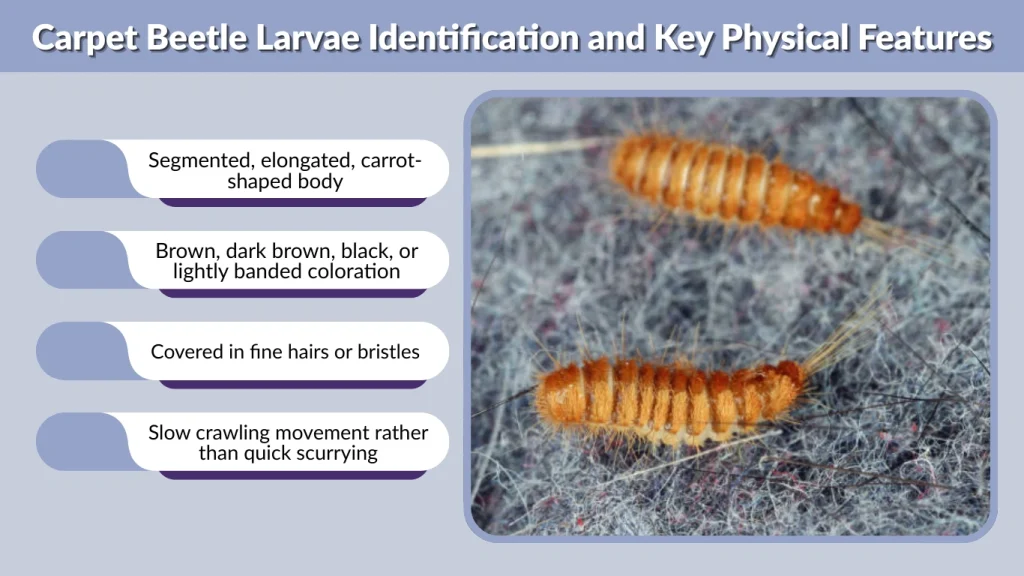
Correct identification is important because carpet beetle larvae are frequently confused with bed bug nymphs, moth larvae, or even lint and debris.
Key features that help identify carpet beetle larvae include:
- Segmented, elongated, carrot-shaped body
- Brown, dark brown, black, or lightly banded coloration
- Covered in fine hairs or bristles
- Slow crawling movement rather than quick scurrying
- Tapered tail end often with longer hairs
- Presence of dry, hollow shed skins near fabrics or carpets
These physical traits clearly separate them from bed bugs, which are smooth, flat, and lack body hairs.
Where Do Carpet Beetle Larvae Come From?

Carpet beetle larvae originate from eggs laid by adult carpet beetles. Adult beetles usually enter homes from outdoors through open windows, doors, or vents. They are often brought inside on cut flowers, clothing, furniture, or second-hand items. Once indoors, females lay eggs in dark, protected places close to food sources, such as inside closets, under carpets, in air vents, or within stored fabrics.
After hatching, larvae remain hidden and feed quietly. Because they avoid light and disturbance, infestations can grow for months before anyone realizes there is a problem.
Why You May See Larvae but No Adult Beetles
Many people report seeing carpet beetle larvae but never noticing adult beetles. This happens because adult carpet beetles are short-lived indoors and are attracted to light, often flying toward windows. They may die or exit the home quickly, while larvae remain hidden in dark feeding areas for long periods. As a result, larvae are far more likely to be seen than the adult insects that produced them.
Common Places Carpet Beetle Larvae Are Found in Homes
Carpet beetle larvae are usually found in areas where natural fibers, dust, and hair accumulate. Typical locations include carpets, rugs, and the padding beneath them, as well as mattresses, bed frames, upholstered furniture, and closets. They are often discovered in stored clothing, blankets, or boxes that haven’t been disturbed for months.
Larvae may also appear along baseboards, inside drawers, behind radiators, in bathroom corners, or even inside cars where pet hair and fabric debris collect. When populations grow or food sources run low, larvae may wander into open areas such as walls, beds, or floors, making them more noticeable.
Signs of Carpet Beetle Larvae Infestation
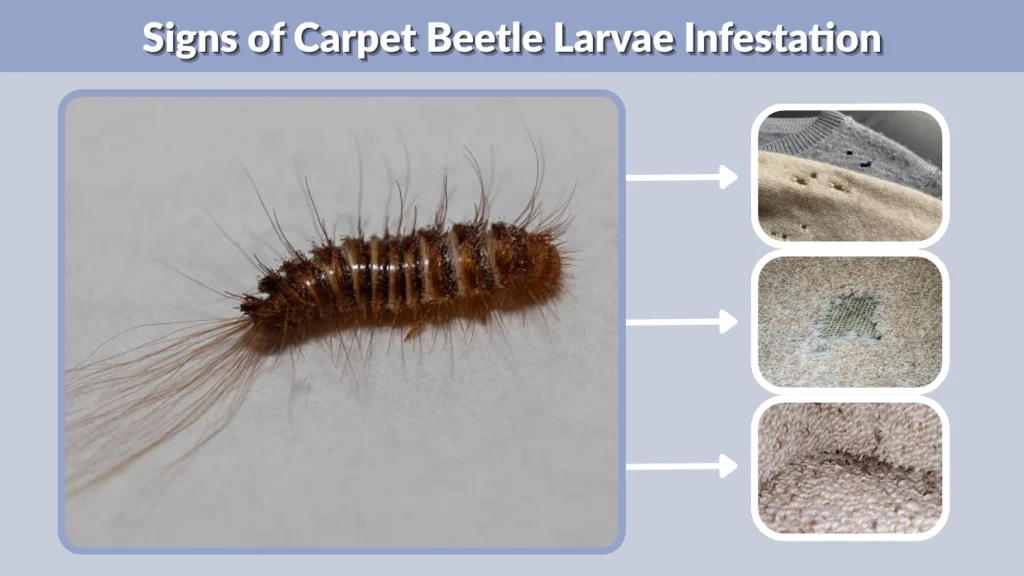
An infestation is often identified by a combination of physical damage and visible evidence rather than by seeing adult beetles.
Common signs include:
- Irregular holes in clothes, carpets, or blankets
- Shed larval skins near closets, beds, or baseboards
- Live larvae crawling slowly on walls or bedding
- Damage under furniture or along carpet edges
- Accumulations of fabric dust or loose fibers
- Unexplained skin irritation with no biting insect found
Carpet Beetle Larvae Damage to Clothes, Carpets, and Homes
Carpet beetle larvae are serious fabric pests. Their diet focuses on materials that contain keratin or other animal-based proteins, which is why they are commonly found feeding on wool rugs, silk clothing, fur items, leather goods, feathers, and upholstered furniture. They also consume pet hair, lint, dead insects, and food crumbs trapped deep in carpets and floor cracks.
Damage usually appears as irregular holes, thinning fabric, or bare patches in carpets and rugs. Unlike clothes moths, which often target specific areas, carpet beetle larvae may feed across wide surfaces, weakening fabrics over time. Stored items are particularly vulnerable because larvae prefer undisturbed environments. Museum collections, vintage clothing, and sentimental textiles can suffer severe damage before an infestation is discovered.
Mattresses and bedding may also be affected, not because larvae feed on humans, but because they are attracted to hair, skin flakes, and dust that accumulate in sleeping areas. Over time, this feeding can result in fabric deterioration and contamination of household items with shed skins and waste.
Carpet Beetle Larvae Bites, Rash, and Skin Irritation
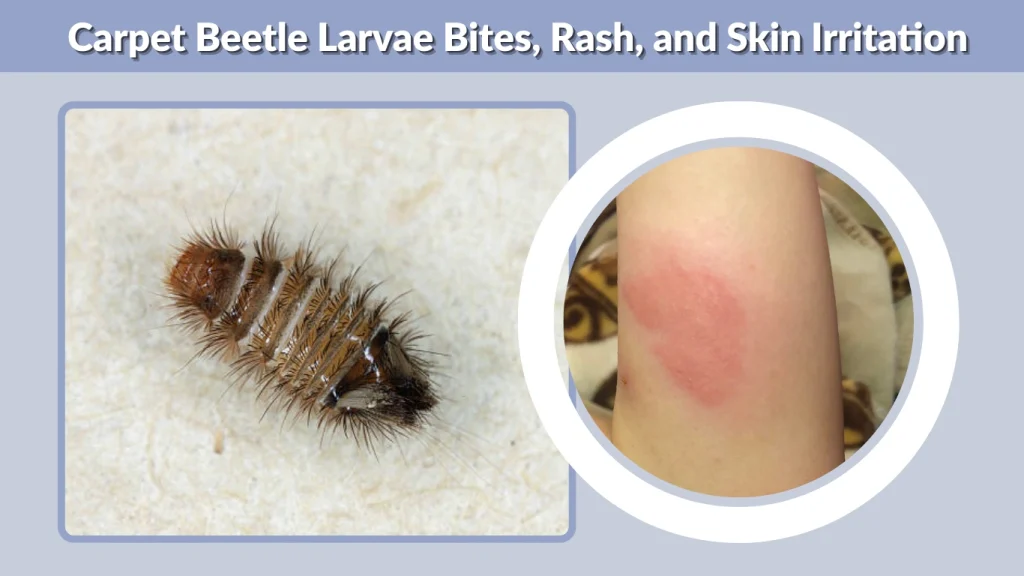
A common concern is whether carpet beetle larvae bite. They do not bite humans or animals. However, their tiny hairs can cause allergic reactions in some people. These hairs may become embedded in the skin or transferred to bedding and clothing, leading to red, itchy bumps that resemble insect bites.
This condition is often called “carpet beetle rash.” Symptoms may include small red welts, mild swelling, itching, and a crawling or prickling sensation on exposed skin. Some people also experience irritation on the scalp, neck, or arms after contact with contaminated fabrics.
Carpet Beetle Larvae vs True Insect Bites
Unlike bed bug or flea bites, carpet beetle reactions are not caused by feeding. They usually appear randomly rather than in straight lines or clusters. The irritation often continues even when no insects are present on the skin, and symptoms typically improve once infested fabrics are cleaned and larvae are removed from the environment.
Bed Bug Larvae vs Carpet Beetle Larvae
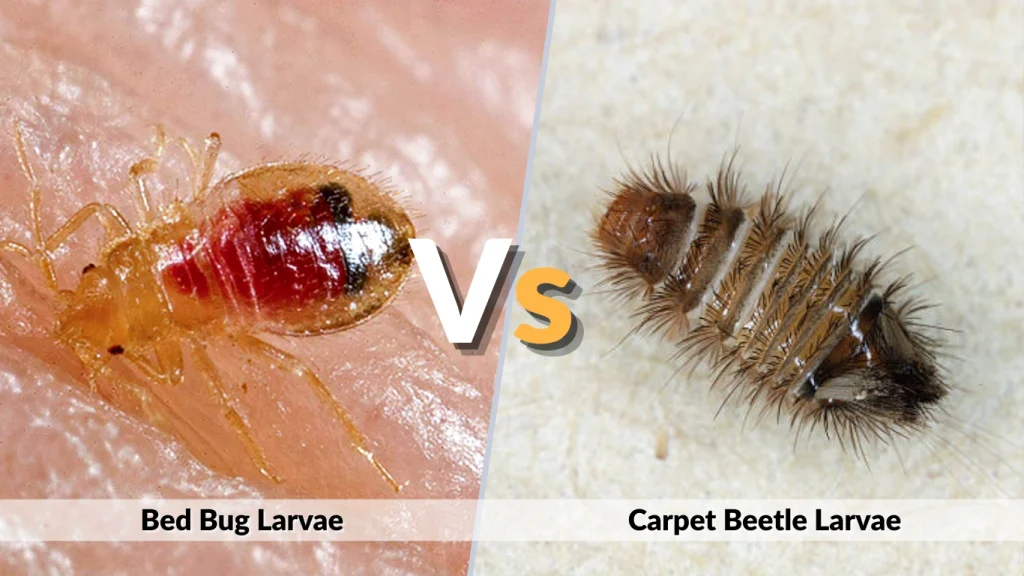
Carpet beetle larvae are one of the most commonly misidentified household pests. Because people often discover them in beds or near skin irritation, they are frequently mistaken for bed bugs.
Comparison Table – Bed Bug vs Carpet Beetle Larvae
| Feature | Carpet Beetle Larvae | Bed Bug Nymphs |
| Appearance | Long, carrot-shaped, hairy | Flat, oval, smooth |
| Body hairs | Present, bristly | Absent |
| Movement | Slow crawling | Faster crawling |
| Feeding | Fabrics, hair, debris | Blood from humans |
| Skin effects | Allergic rash | True bites |
| Fabric damage | Yes | No |
| Where found | Carpets, closets, stored items | Mattresses, bed frames, cracks |
| Visible signs | Shed skins, fabric holes | Blood spots, fecal marks |
Understanding these differences is essential, because treating a bed bug infestation is very different from controlling carpet beetle larvae.
How to Get Rid of Carpet Beetle Larvae
Successful control requires a combination of deep cleaning, targeted treatment, and long-term prevention.
Effective methods include:
- Thorough vacuuming of carpets, rugs, furniture seams, closets, vents, and baseboards, followed by immediate disposal of vacuum contents
- Washing infested clothes, bedding, and fabrics in hot water and drying on high heat
- Freezing delicate items for several days to kill larvae and eggs
- Steam cleaning carpets, mattresses, and upholstered furniture
- Applying boric acid or diatomaceous earth into cracks, carpet edges, and closets
- Using residual insecticides or insect growth regulators where infestations are severe
- Contacting professional pest control services for widespread or recurring infestations
The most important step is locating and removing the food source that supports the larvae.
Carpet Beetle Larvae Treatment for Beds, Clothes, and Cars
Beds and mattresses should be vacuumed thoroughly, focusing on seams, tufts, and under the bed frame. Bedding should be washed weekly in hot water during treatment periods. Mattress encasements can help isolate hidden larvae and prevent reinfestation.
Clothing and stored fabrics must be inspected individually. Washable items should be laundered and dried on heat, while delicate items can be frozen or professionally cleaned. Storage containers should be cleaned before reuse.
Cars can harbor larvae due to fabric upholstery and pet hair. Vacuum seats, floor mats, and trunks carefully. Steam treatment is particularly effective for vehicle interiors.
How to Prevent Carpet Beetle Larvae Infestations
Long-term prevention depends on cleanliness and monitoring. Regular vacuuming removes food sources such as lint, hair, and dead insects. Clothes should be stored clean in sealed containers, especially seasonal items. Closets, drawers, and storage areas should be inspected every few months.
Sealing cracks, repairing window screens, and reducing indoor insect attraction can limit adult beetle entry. Pet bedding should be washed frequently, and bird nests near windows should be removed when possible. Sticky monitoring traps can help detect adult beetles before larvae become established.
FAQs
What kills carpet beetle larvae most effectively?
Heat is one of the most reliable methods for killing carpet beetle larvae. Washing fabrics in hot water, drying on high heat, steam cleaning, and freezing delicate items are all effective. These methods physically destroy larvae and eggs without relying solely on chemicals.
Do carpet beetle larvae bite humans?
Carpet beetle larvae do not bite. The skin reactions people experience are caused by contact with larval hairs, which can trigger allergic irritation. These reactions often look like bites but are actually a form of contact dermatitis.
Why do I keep finding carpet beetle larvae in my bed?
Beds attract larvae because they contain hair, skin flakes, and natural fibers. Larvae hide in mattress seams, under bed frames, and in nearby carpets. Regular vacuuming and frequent hot washing of bedding usually eliminates this problem.
Can carpet beetle larvae live in hair or on skin?
They do not live on the body. However, larval hairs can cling to skin, clothing, and hair, causing itching or rashes. The larvae themselves remain in the environment and must be removed from fabrics and living spaces.
Are carpet beetle larvae dangerous to humans?
They are not dangerous in the way biting insects are, but they can cause allergic reactions and significant property damage. In sensitive individuals, skin irritation can be persistent. Infestations should be treated promptly to protect both health and belongings.
