
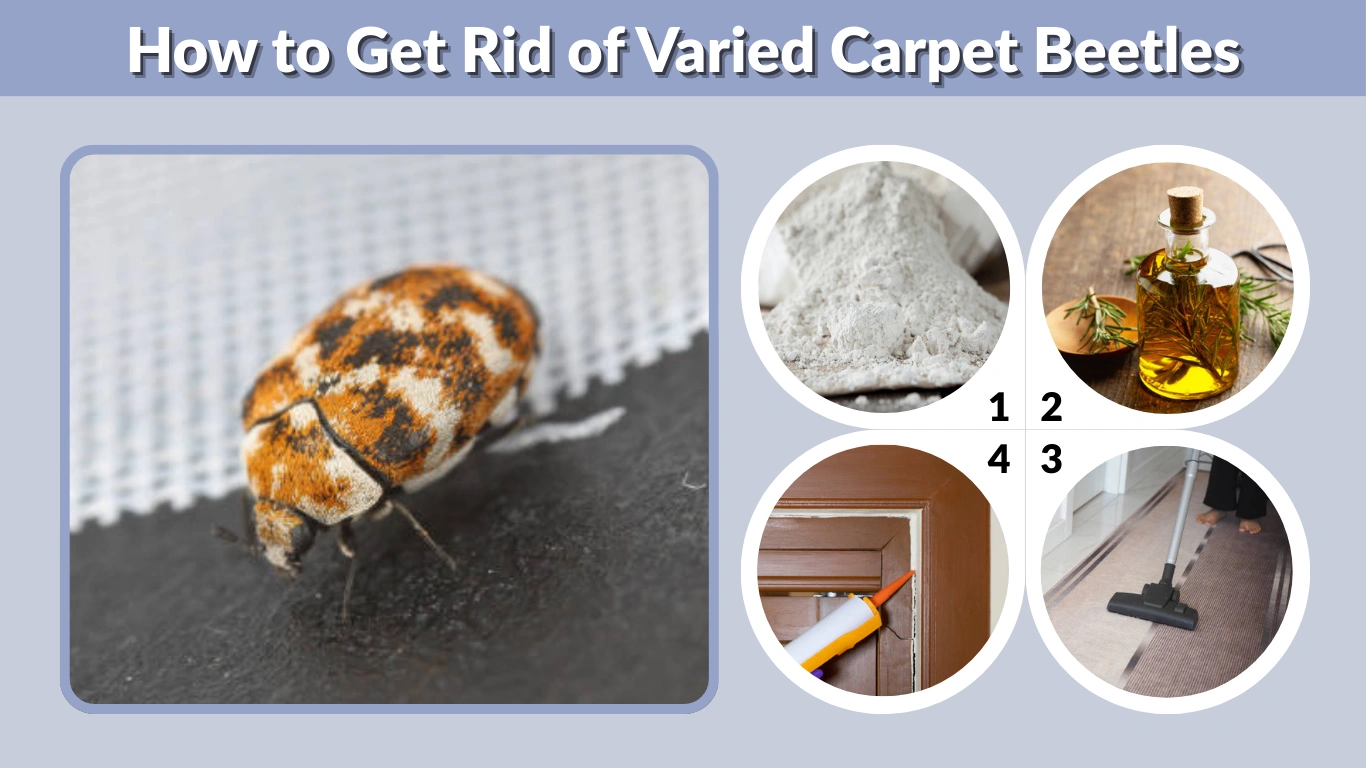
Varied carpet beetles are small household pests that often go unnoticed until they begin damaging carpets, clothing, and upholstered furniture. Although adult beetles are harmless, their larvae feed aggressively on natural fibers, pet hair, and stored fabrics. Many infestations quietly spread inside closets, under furniture, and along carpet edges. Understanding what varied carpet beetles are, how they live, and where they hide is the first step toward eliminating them effectively and preventing long-term household damage.
What Are Varied Carpet Beetles and Why They Invade Homes
Varied Carpet Beetle Overview
The varied carpet beetle (Anthrenus verbasci) is a small, round beetle known for its mottled pattern of white, brown, and yellow scales. Adult beetles are usually found near windows, light sources, and flowering plants, while the larvae live hidden indoors. The larvae are elongated, brownish, and covered in tiny hairs, giving them a fuzzy appearance. These larvae are responsible for almost all household damage.
Adult varied carpet beetles feed mainly on pollen and nectar outdoors, but they enter homes to lay eggs near food sources for their larvae. Once the eggs hatch, the larvae begin feeding on organic materials, especially natural fibers. Because they prefer dark, undisturbed areas, infestations often remain hidden for long periods.
Why Homes Attract Varied Carpet Beetles
Homes provide ideal conditions for varied carpet beetles. Natural-fiber carpets, wool clothing, silk fabrics, feathers, leather, lint, and pet hair are all suitable food sources. Closets, storage boxes, air ducts, and the space under furniture create warm, protected environments where larvae can feed and develop without disturbance.
Outdoor sources also play a major role. Adult beetles often enter through open windows and doors or travel inside on cut flowers. Bird nests, dead insects, and pollen buildup around roofs and wall openings can support breeding populations that repeatedly move indoors, causing reinfestation.
Life Cycle of Varied Carpet Beetles and Infestation Growth
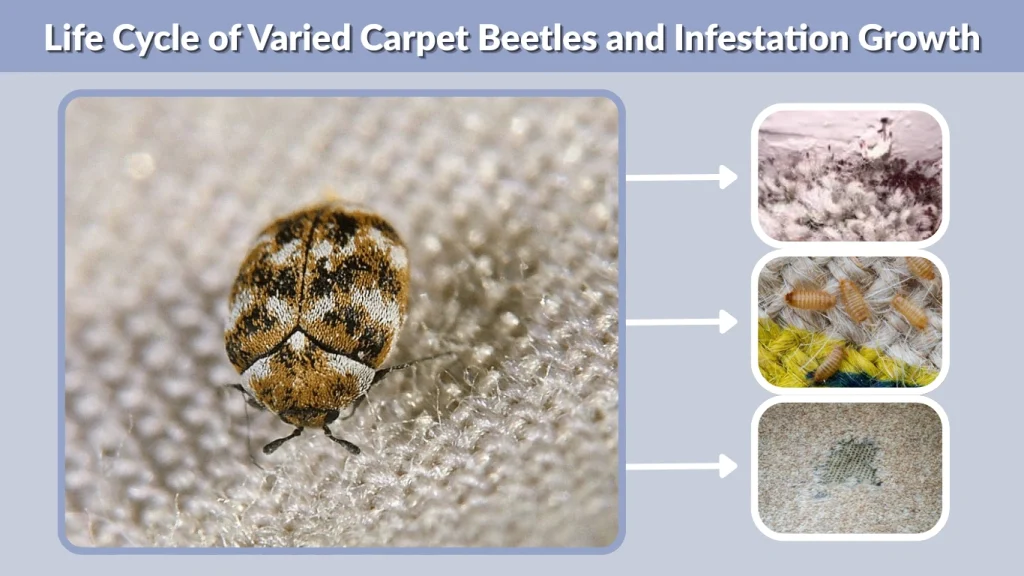
Egg to Adult Development
The life cycle of a varied carpet beetle begins when a female lays dozens of tiny eggs near a suitable food source. These eggs hatch within one to three weeks, releasing larvae that immediately start feeding. The larval stage is the longest and most destructive period, sometimes lasting several months to over a year, depending on temperature and food availability.
As larvae grow, they shed their skins multiple times, leaving behind brown, bristly casings that often signal an infestation. After completing development, larvae pupate in hidden locations such as carpet fibers, wall cracks, or inside furniture. Adult beetles then emerge, ready to fly, feed outdoors, and restart the reproductive cycle.
How Fast Infestations Spread
Infestations spread gradually but persistently. Because larvae develop slowly and hide well, many homeowners underestimate the problem. A single female can produce enough eggs to create a large indoor population within months. Warm indoor temperatures allow larvae to feed year-round, unlike outdoor populations that are limited by seasonal changes.
The ability of adults to fly and re-enter homes repeatedly also contributes to ongoing problems. Without eliminating both indoor larvae and outdoor sources, varied carpet beetle populations can continuously rebuild even after surface-level treatments.
Signs of a Varied Carpet Beetle Infestation
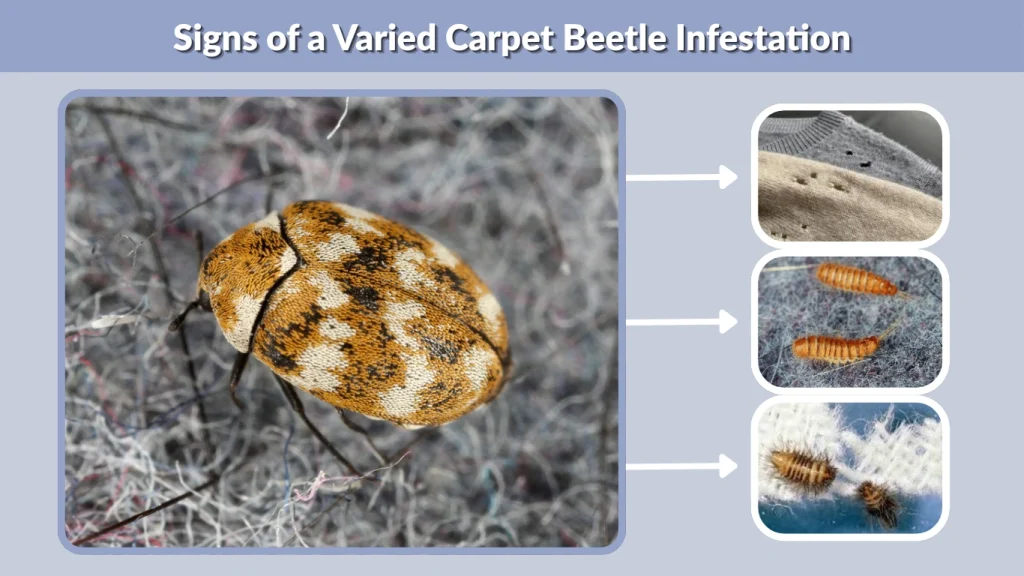
Short overview: Recognizing early warning signs allows faster control and reduces fabric damage.
- Irregular holes in wool clothing, carpets, blankets, or upholstery
- Brown, shell-like larval skins near baseboards, drawers, or shelves
- Slow-moving, fuzzy larvae in dark, undisturbed areas
- Small, round adult beetles near windows or light fixtures
- Damage inside stored clothes, boxes, and beneath furniture
Where Varied Carpet Beetles Hide Inside a House
Common Indoor Hiding Spots
Varied carpet beetle larvae prefer dark, quiet locations close to food. Carpet edges, baseboards, and the spaces under heavy furniture are among the most common hiding areas. Closets and wardrobes containing rarely used clothing provide ideal conditions, especially when natural fibers are present.
Upholstered furniture, air vents, and cracks in flooring also serve as breeding grounds. Because larvae avoid light, infestations often develop deep within furniture padding or along carpet backing, where routine cleaning may not reach.
Outdoor Sources That Re-introduce Beetles
Outdoor breeding sites frequently fuel indoor problems. Bird nests in roof spaces, dead insects trapped in light fixtures, and pollen buildup around windows all support adult beetles. Gardens with flowering plants can attract beetles that later enter homes through small openings.
Unless these outdoor sources are addressed, new adults can continuously enter the home, lay eggs, and restart the infestation even after indoor treatments.
Are Varied Carpet Beetles Harmful to Humans and Homes
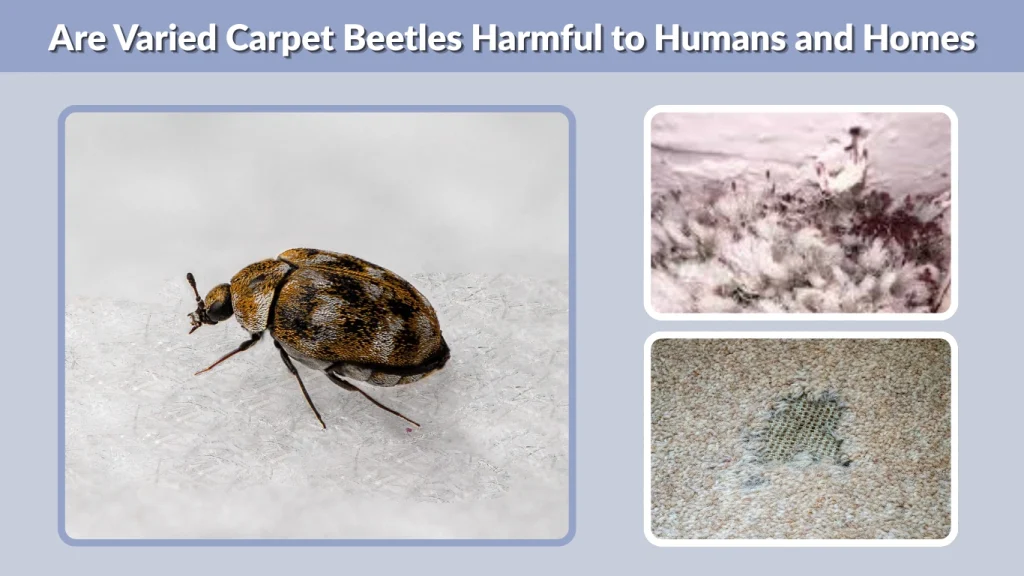
Varied carpet beetles are not dangerous in the traditional sense, but they can cause significant household damage. Their larvae feed on carpets, clothing, blankets, and furniture, often destroying expensive or sentimental items. Over time, this damage can become widespread and costly to repair or replace.
Although they do not bite, the tiny hairs on larvae can cause skin irritation in sensitive individuals. Some people develop itchy rashes after contact with infested fabrics or contaminated dust. In heavily infested homes, airborne larval hairs may also trigger mild allergic reactions.
Beyond physical damage, infestations often create ongoing stress. Because larvae remain hidden, homeowners may feel unable to control the problem. This makes proper identification and targeted elimination methods essential.
How to Get Rid of Varied Carpet Beetles
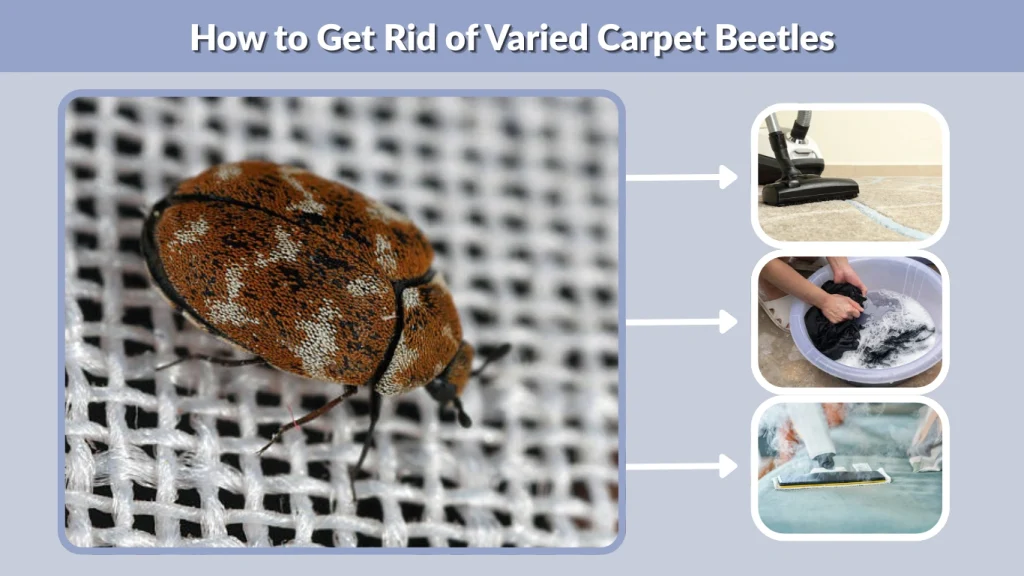
Short overview: Complete control requires combining deep cleaning, fabric treatment, and removal of hidden larvae.
- Thorough vacuuming of carpets, edges, furniture, and vents
- Washing infested fabrics in hot water and drying on high heat
- Freezing delicate items for at least 72 hours
- Steam-cleaning carpets, rugs, and upholstery
- Discarding heavily infested or unsalvageable items
Natural and Home Remedies for Carpet Beetles
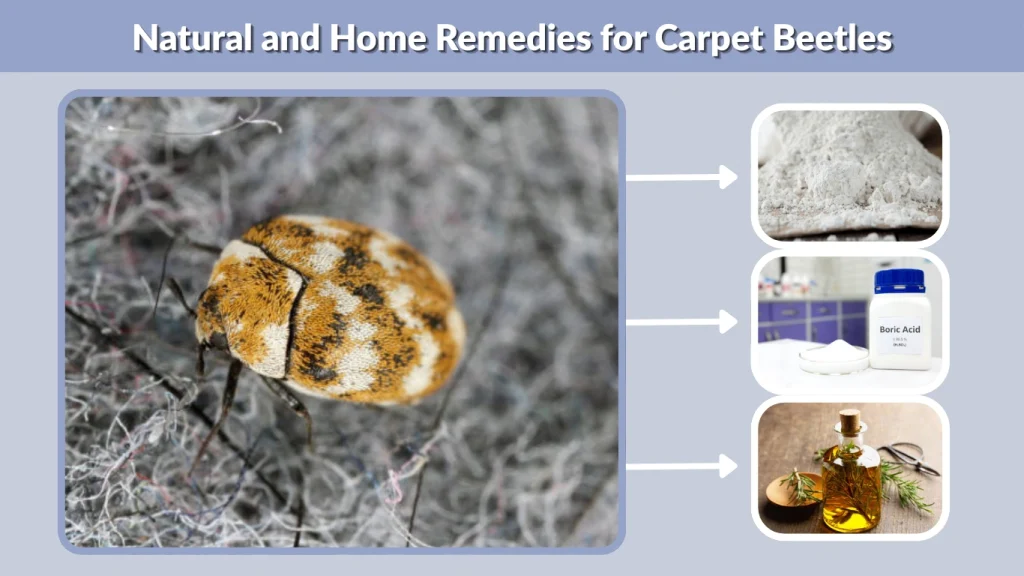
Non-Toxic Treatment Options
Natural remedies can help reduce carpet beetle populations and are especially useful for light infestations or as supportive treatments. Diatomaceous earth is one of the most effective non-toxic options. When lightly dusted into cracks, carpet edges, and behind furniture, it damages the protective outer layer of larvae, eventually dehydrating and killing them.
Boric acid also works well in wall voids, under appliances, and beneath carpets. It acts as a stomach poison when larvae crawl over treated areas. Vinegar-based cleaning solutions are useful for wiping shelves, drawers, and hard surfaces. While vinegar does not kill hidden larvae deep inside carpets, it helps remove eggs, food residues, and scent trails that attract beetles.
Essential Oils That Help Repel Them
Certain essential oils may help repel adult carpet beetles and discourage egg-laying. Lavender oil is commonly used in closets and drawers because of its insect-repelling scent. Cedarwood oil mimics the natural aroma of cedar, a traditional beetle deterrent, and can be applied to cotton balls or wooden blocks.
Peppermint oil is another popular option. When diluted with water and sprayed lightly around windows, baseboards, and storage areas, it creates an unfriendly environment for adult beetles. Essential oils are best used as preventive tools rather than primary extermination methods.
Chemical Treatments and Professional Control
When infestations are moderate to severe, chemical treatments may be necessary to reach hidden larvae. Residual insecticide sprays formulated for carpet beetles can be applied along baseboards, carpet edges, cracks, and inside closets. These sprays continue killing larvae that emerge from hidden areas over time.
Insect growth regulators are often used alongside sprays to disrupt the beetles’ development cycle. These products prevent larvae from maturing into reproducing adults, helping to break the infestation long term. Crack-and-crevice dusts are useful in wall voids, floor gaps, and behind built-in furniture.
In some situations, professional pest control services are the best option. Professionals can locate hidden breeding sites, apply commercial-grade treatments, and design a complete control plan, especially when infestations persist despite repeated home treatments.
How to Prevent Varied Carpet Beetles from Returning
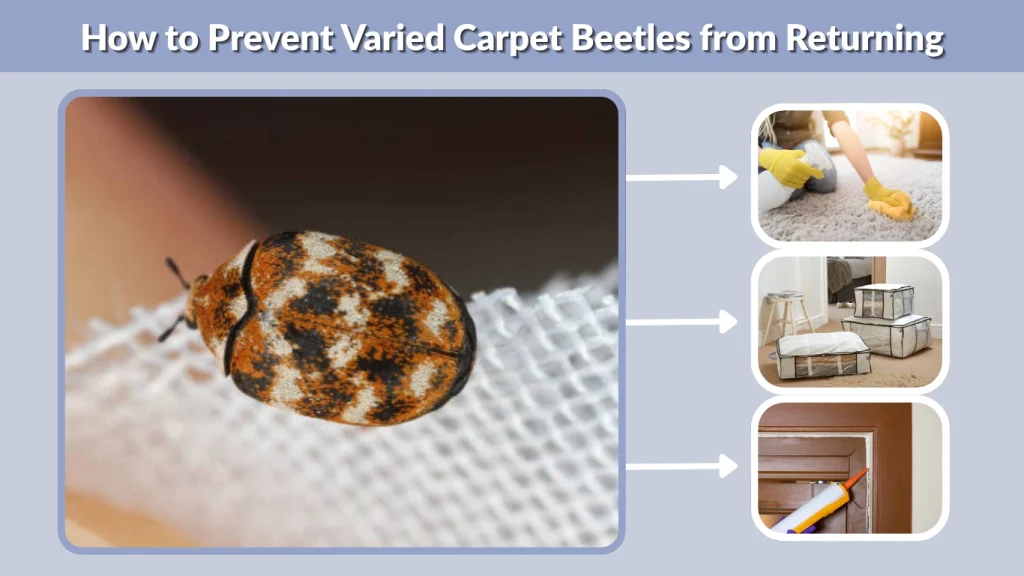
Short overview: Long-term success depends on removing food sources and blocking future access points.
- Maintain regular deep-cleaning routines, including under furniture and along carpet edges
- Store clothing and fabrics in sealed containers or garment bags
- Seal cracks, vents, and gaps around doors and windows
- Remove bird nests, dead insects, and debris from around the home
- Inspect closets, carpets, and stored items routinely
Protecting Clothes, Carpets, and Furniture from Future Damage
Clothing and Fabric Protection
Clothing made from wool, silk, fur, and cotton is particularly vulnerable to carpet beetle larvae. Seasonal clothing should be washed before storage to remove sweat, oils, and food particles. Airtight containers, vacuum-sealed bags, and garment covers help block access to fabrics.
Cedar blocks, lavender sachets, and regularly aired-out closets can further discourage beetles. Periodic inspections are important, especially for rarely worn garments, blankets, and stored textiles.
Carpet and Upholstery Protection
Carpets and furniture should be vacuumed thoroughly, including edges, seams, and areas beneath cushions. Steam cleaning once or twice a year helps kill hidden larvae and eggs. Rotating furniture exposes dark areas to light and cleaning, making them less suitable for infestations.
Area rugs should be lifted occasionally, and the floor beneath them cleaned. This prevents larvae from establishing long-term feeding sites.
Common Mistakes That Make Carpet Beetle Infestations Worse
One of the most common mistakes is focusing only on adult beetles. Killing visible adults without removing larvae and eggs allows the infestation to continue unnoticed. Another error is relying on sprays alone. Without deep cleaning, chemical treatments cannot reach food sources or hidden larvae.
Keeping infested items is another major setback. Even a single contaminated blanket or rug can restart an infestation. Finally, many homeowners overlook hidden spaces such as air vents, wall voids, and the undersides of furniture, allowing beetles to survive treatments.
Varied Carpet Beetles vs Clothes Moths
Varied carpet beetles are often confused with clothes moths because both damage fabrics. However, carpet beetles are round, hard-shelled insects, while clothes moths are soft-bodied and winged. Carpet beetle larvae cause irregular holes and feed on a wide range of organic materials, whereas moth larvae prefer certain fabrics.
Control methods also differ. Moths respond well to pheromone traps, while carpet beetle management focuses on deep cleaning, habitat removal, and targeted insecticides. Correct identification ensures the right treatment approach.
When to Call a Professional Exterminator
Professional help is recommended when infestations are widespread, keep returning, or appear to originate from wall voids or structural areas. Large homes, apartment buildings, and commercial properties often require coordinated treatment plans. Professionals also provide long-term monitoring and preventive strategies.
FAQs
What attracts varied carpet beetles into homes?
Varied carpet beetles are attracted to natural fibers, pet hair, food crumbs, dead insects, and pollen. Adult beetles often enter through open windows, doors, or vents, while larvae thrive in dark, undisturbed areas where organic debris collects.
Are varied carpet beetles dangerous to humans?
They do not bite or transmit disease, but their larvae have tiny hairs that can cause skin irritation or allergic-type rashes. The main risk is damage to carpets, clothes, and furniture rather than direct harm to people.
How long does it take to get rid of varied carpet beetles?
Light infestations may be controlled within a few weeks with proper cleaning and treatment. Heavier infestations often take several months because hidden larvae and eggs must be eliminated to fully stop the life cycle.
Can carpet beetles come back after treatment?
Yes. If food sources remain or entry points are not sealed, new adult beetles can enter and restart the infestation. Ongoing cleaning, inspections, and preventive measures are essential for long-term control.
What is the most effective long-term solution?
The most effective long-term solution is a combination of deep cleaning, targeted treatments, proper fabric storage, and routine inspections. Eliminating food sources and blocking outdoor entry prevents new infestations from becoming established.
