
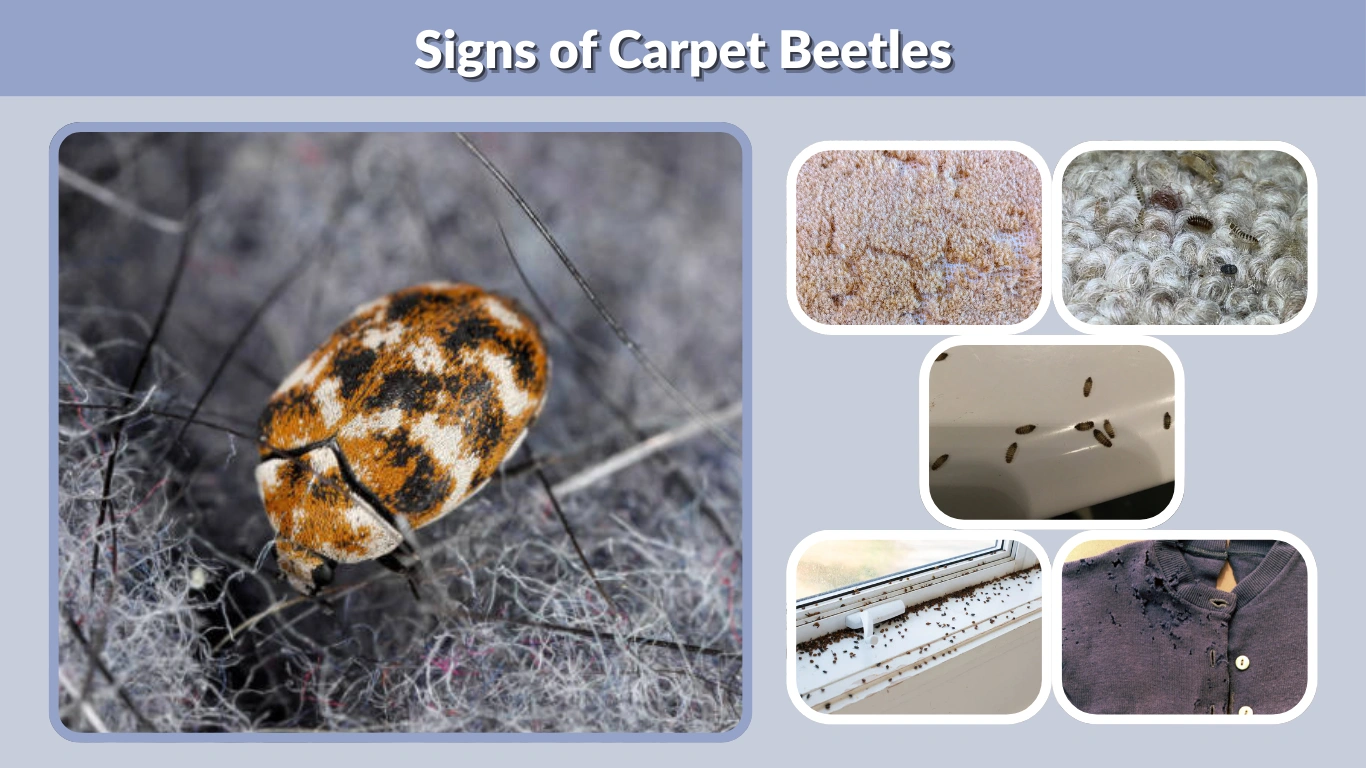
Carpet beetles are one of the most common household pests, yet many infestations go unnoticed until real damage has already begun. These tiny insects quietly feed on carpets, clothing, furniture, and stored fabrics, often hiding in dark, undisturbed areas of the home. Knowing the early signs of carpet beetles is the key to stopping them before they spread. By learning what to look for, you can protect your home, fabrics, and indoor environment from long-term infestation.
What Carpet Beetles Are and Why They Become a Problem
Carpet beetles are small insects that belong to the Dermestidae family. Adult beetles are usually oval-shaped and may appear black, brown, or patterned with white, yellow, and orange scales. While adult carpet beetles mainly feed on pollen outdoors, they often enter homes through open windows, doors, or on cut flowers.
The real problem comes from carpet beetle larvae. These tiny, slow-moving larvae are covered with fine hairs and prefer dark, quiet areas where food sources are available. They feed on natural fibers such as wool, silk, cotton, leather, feathers, fur, and even pet hair or dust buildup. Over time, their feeding weakens fabrics, creates holes, and causes visible deterioration.
Infestations usually begin when adult beetles lay eggs in hidden locations. Closets, storage boxes, under carpets, inside furniture, and near baseboards provide ideal conditions. Because larvae grow slowly and remain out of sight, many homeowners do not realize they are present until damage becomes noticeable.
Why Carpet Beetle Infestations Are Hard to Notice
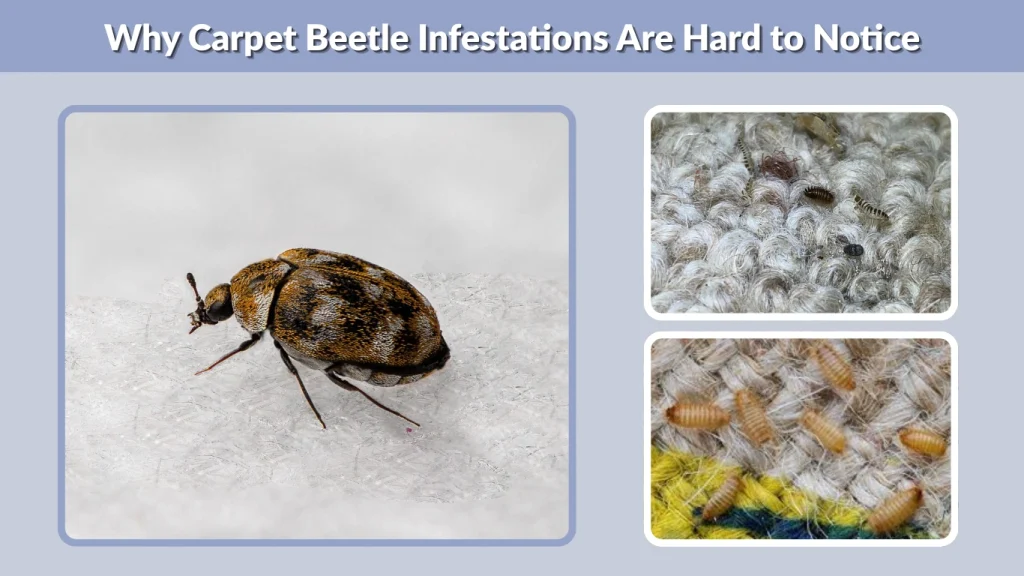
One of the main reasons carpet beetles are difficult to detect is their secretive behavior. Larvae avoid light and prefer undisturbed places, such as beneath furniture, inside closets, behind baseboards, and within air vents. These areas are rarely cleaned thoroughly, allowing larvae to feed and develop without interruption.
Another factor is the slow nature of the damage. Unlike sudden infestations from some pests, carpet beetle destruction happens gradually. Fabrics weaken little by little, and early holes may look like normal wear and tear. Because of this, many people assume their clothes or carpets are simply aging.
Carpet beetle signs are also commonly mistaken for other problems. Shed larval skins may look like lint, dust, or dead insects. Fabric holes are often blamed on moths. Even skin irritation caused by larval hairs may be confused with bed bug bites or allergies. These similarities make early detection more challenging unless homeowners know exactly what to look for.
Visible Physical Signs of Carpet Beetles
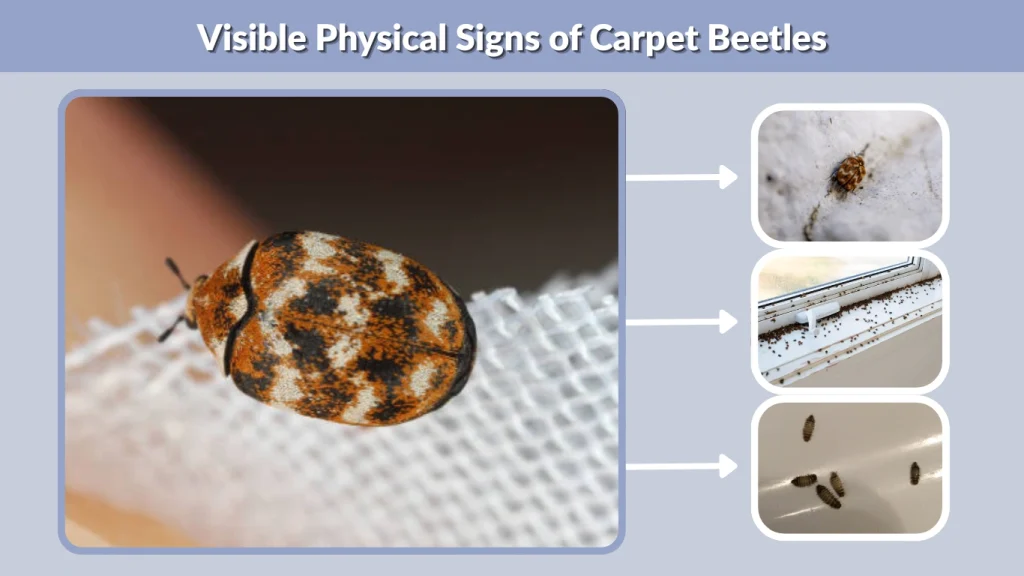
Several physical clues can point to the presence of carpet beetles in a home. These signs are often found near feeding areas, windows, or hidden corners.
- Adult beetles crawling on window sills or near light sources
- Small, brownish or striped larvae moving slowly along edges
- Shed larval skins around baseboards, shelves, or drawers
- Dead beetles collected in corners or behind curtains
- Fine, sand-like debris from damaged fabrics and fibers
Adult beetles are usually seen first, especially near windows. They are attracted to light and often gather on sills as they attempt to escape outdoors. While adults themselves do little damage, their presence often means eggs have already been laid somewhere inside the home.
Larvae are a stronger sign of infestation. They may be found crawling slowly along walls, inside closets, or near carpets. Shed skins, which look like tiny hollow shells, are another clear indicator that larvae are growing and molting nearby.
Fabric, Carpet, and Upholstery Damage
Signs on Clothing and Stored Fabrics
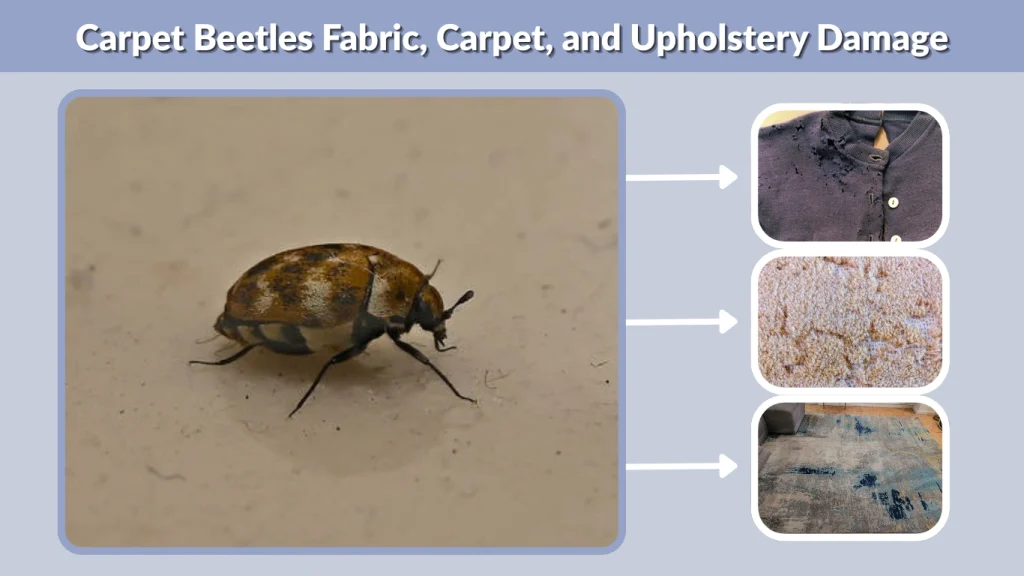
Carpet beetle larvae prefer natural fibers, making clothing and stored textiles a primary target. Wool sweaters, silk garments, blankets, scarves, leather goods, and feather-filled items are especially vulnerable. Damage often appears as small, irregular holes rather than clean cuts.
In some cases, fabrics may not have obvious holes but instead show thinning, rough patches, or weakened seams. You may also notice loose fibers, powdery residue, or shed skins inside drawers or storage boxes. Items that are rarely worn or stored for long periods are most likely to be affected first.
Signs on Carpets, Rugs, and Furniture
Carpets and rugs provide both food and shelter for carpet beetle larvae. Areas under heavy furniture, along edges, and near baseboards are common feeding zones. Over time, these spots may develop bald patches, uneven thinning, or visible fiber loss.
Upholstered furniture can also suffer damage, particularly along seams, under cushions, and on the underside of sofas or chairs. Because dust, hair, and crumbs accumulate in these areas, they attract larvae and support their growth. Many infestations remain hidden inside furniture until damage becomes widespread.
Hidden Places Where Signs Commonly Appear
Carpet beetle activity is rarely obvious in open spaces. Instead, signs usually appear in low-traffic or hard-to-reach areas. Closets, storage trunks, basements, attics, and spare rooms are common starting points for infestations.
Larvae often gather under beds, beneath rugs, inside air vents, and behind baseboards. Cardboard boxes, old clothing piles, and stored blankets provide both food and protection. Because these areas are disturbed infrequently, larvae can remain active for months without detection.
Checking hidden spaces is essential for early identification. Lifting rugs, moving furniture, and inspecting storage areas with a flashlight can reveal larvae, shed skins, or damaged materials before the infestation spreads further.
Signs Found Near Windows, Walls, and Light Sources
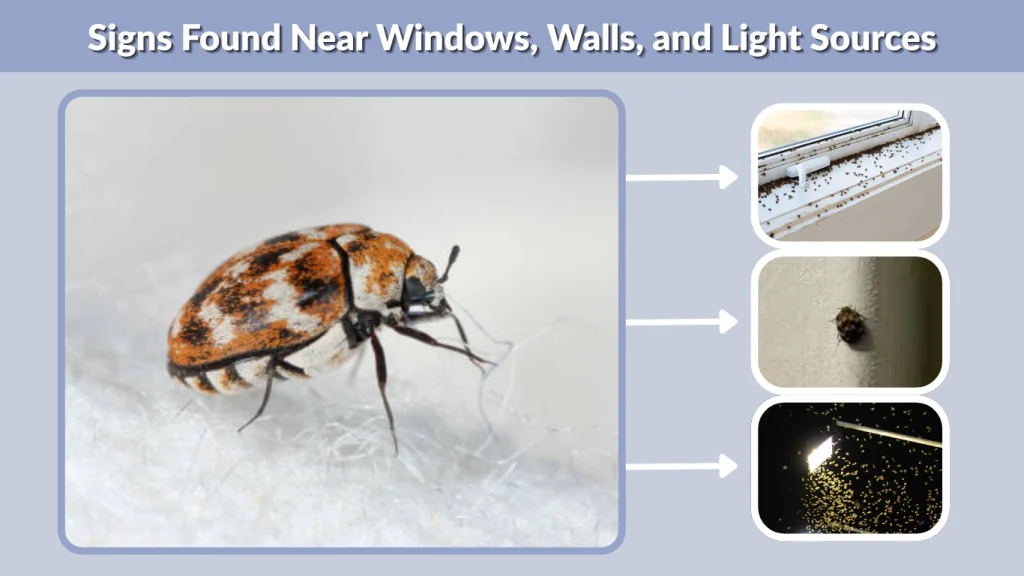
Adult carpet beetles are strong fliers and are naturally attracted to light. Because of this behavior, windows, curtains, and light fixtures often become the first visible areas where people notice them. Window sills, especially in spring and early summer, are common gathering spots where adult beetles can be seen crawling or resting.
- Beetles clustering on window sills or glass
- Insects flying toward lamps or ceiling lights
- Dead beetles behind curtains or blinds
- Shed skins trapped in spider webs
- Larvae crawling along wall edges and corners
Seeing adult beetles repeatedly near windows usually means there is a breeding source somewhere inside the home. Although adults do not damage fabrics, they lay eggs in hidden areas, which soon hatch into fabric-feeding larvae.
Skin, Allergy, and Health-Related Clues
Carpet Beetle Rash and Skin Irritation
Carpet beetles do not bite, but their larvae are covered in tiny hairs that can cause skin irritation. When these hairs come into contact with human skin, they may trigger red, itchy bumps that resemble insect bites or allergic rashes. This reaction is commonly known as carpet beetle dermatitis.
Rashes often appear on exposed skin such as arms, neck, or legs, especially after contact with infested clothing, bedding, or furniture. Because the irritation looks similar to bed bug bites, fleas, or eczema, many people do not realize carpet beetles are the cause until physical evidence is found in the home.
Respiratory or Eye Sensitivity
In heavier infestations, shed skins and fine larval hairs may become airborne. Sensitive individuals may experience sneezing, itchy eyes, coughing, or mild breathing discomfort. People with asthma or existing allergies may notice worsening symptoms in rooms where beetles are active.
While these reactions are not dangerous in most cases, they often serve as an indirect warning sign that carpet beetles are present and multiplying in hidden areas.
Secondary and Environmental Signs of Infestation
Beyond visible insects and fabric damage, carpet beetle infestations can leave behind subtle environmental clues. In long-standing infestations, a faint musty odor may develop, especially in closets, storage rooms, or attics. This smell comes from accumulated shed skins, insect debris, and deteriorating organic materials.
You may also notice an unusual buildup of dust-like particles near baseboards, shelves, or inside drawers. These particles often consist of fabric fragments, dead larvae, and molted skins. Another overlooked sign is increased spider activity. Because spiders feed on insects, a rise in spider webs and trapped beetles can indicate an underlying pest population.
Key Areas to Inspect for Early Detection
Carpet beetles concentrate around food sources and undisturbed spaces. Regular inspection of certain zones can help detect problems before they become severe.
- Closets, wardrobes, and clothing drawers
- Under rugs, carpets, and heavy furniture
- Upholstered furniture seams and cushions
- Air vents, duct edges, and baseboards
- Pantries, pet-food areas, and storage boxes
Checking these areas every few months, especially during warmer seasons, increases the chance of spotting larvae, shed skins, or early fabric damage. Using a flashlight and vacuum during inspections can help reveal signs that are otherwise easy to miss.
How to Confirm Carpet Beetle Presence
Confirming carpet beetles involves more than seeing a single insect. Start by closely inspecting damaged fabrics, carpet edges, and dark storage areas. Look for larvae, shed skins, and clusters of adult beetles near windows.
Sticky insect traps can help monitor adult activity and identify the species present. Vacuuming suspected areas and examining the contents of the vacuum bag often reveals larvae or skins. If signs continue to appear despite cleaning, or if damage is widespread, professional pest inspection may be necessary to locate hidden breeding sites and assess infestation severity.
FAQs
What are the earliest signs of carpet beetles?
The earliest signs are usually adult beetles near windows or small, fuzzy larvae hiding along baseboards, in closets, or under furniture. Shed larval skins are often among the first physical clues. Visible fabric damage typically appears later, after larvae have been feeding unnoticed.
How can I tell carpet beetle damage from moth damage?
Carpet beetle damage is usually irregular and spread across different rooms and materials. You may find shed skins and larvae nearby. Moths often leave cleaner holes and webbing in specific garments. Carpet beetles also damage carpets, furniture, and stored items, not just clothing.
Can carpet beetles be present without damaging clothes?
Yes. Early infestations often feed on dust, pet hair, dead insects, and hidden fibers before reaching clothing. This means beetles may exist for weeks or months before obvious wardrobe damage becomes visible.
Are carpet beetle rashes a sure sign of infestation?
Rashes can be an important warning sign, but they are not proof by themselves. Carpet beetle dermatitis looks like many other skin reactions. Confirmation requires finding larvae, shed skins, adult beetles, or fabric damage in the home.
Where should I check first if I suspect carpet beetles?
Start with window sills, closets, under rugs, and beneath furniture. Storage boxes, air vents, and upholstered furniture seams are also high-risk areas. These locations often reveal larvae or shed skins before widespread damage occurs.
