
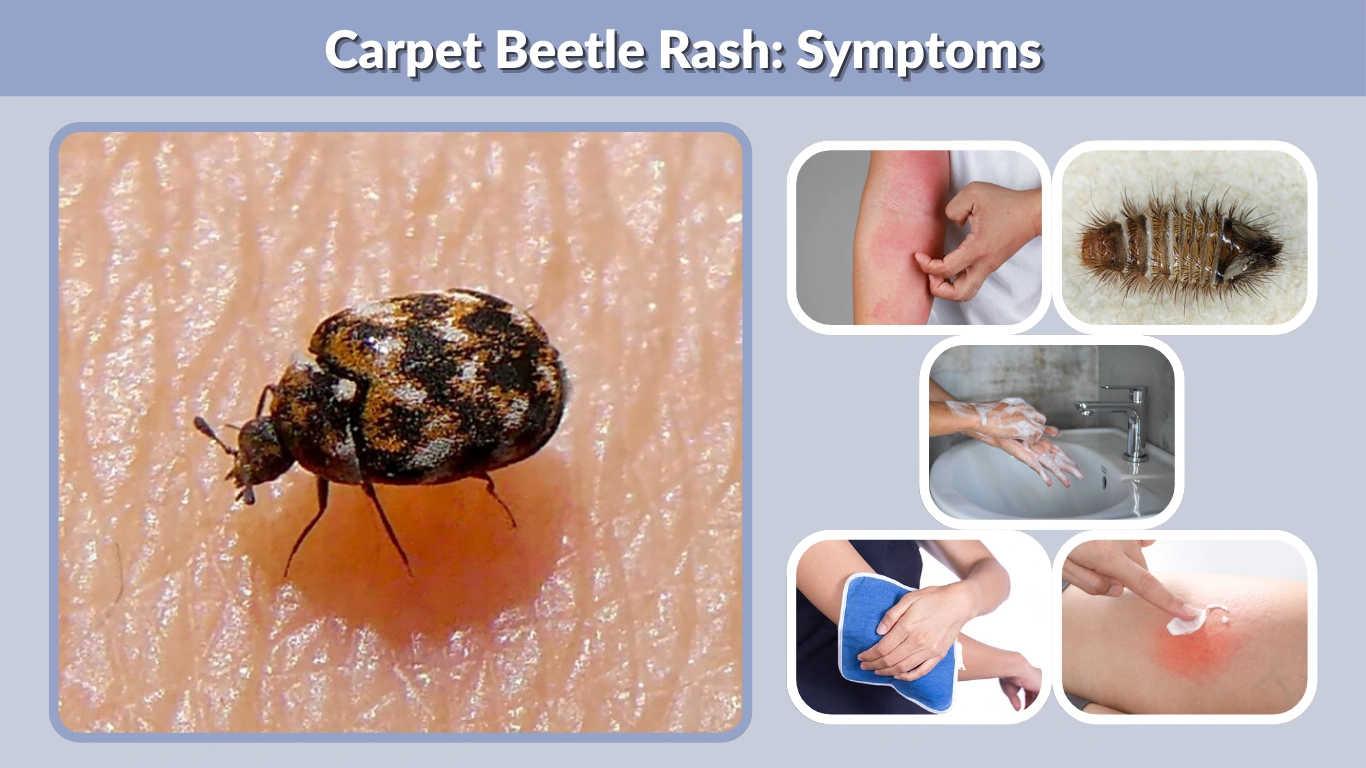
Carpet beetle rash is a skin reaction that many people mistake for bed bug bites, scabies, or allergies. It usually appears as small red bumps, itchy patches, or irritated areas on the skin after contact with infested clothing, furniture, or bedding. Unlike biting insects, carpet beetles do not bite humans. Instead, the rash develops from contact with tiny hairs shed by carpet beetle larvae. Understanding how this rash forms and what it looks like is essential for both treating the skin and removing the real source inside the home.
What Is Carpet Beetle Rash and What Causes It
Carpet beetle rash, often called carpet beetle dermatitis, is an allergic skin reaction caused by contact with microscopic hairs from carpet beetle larvae. These larvae are small, slow-moving, and covered in fine bristles. When their hairs touch human skin, they can trigger irritation, redness, and itching in sensitive individuals.
Adult carpet beetles themselves do not cause rashes. They mainly feed on pollen outdoors and accidentally enter homes through windows, doors, or cut flowers. Once inside, they lay eggs in dark, hidden places where food is available. The eggs hatch into larvae, which feed on natural fibers such as wool, silk, cotton, leather, fur, feathers, pet hair, and dust buildup. As larvae move and shed their skins, their tiny hairs spread into clothing, furniture, carpets, and bedding.
The black carpet beetle and varied carpet beetle are two of the most common indoor species associated with skin reactions. Their larvae often hide in closets, drawers, under carpets, and inside upholstered furniture. When people wear infested clothes, sleep on contaminated bedding, or sit on affected furniture, larval hairs may contact the skin and cause irritation.
Why Carpet Beetle Rash Is Often Misdiagnosed
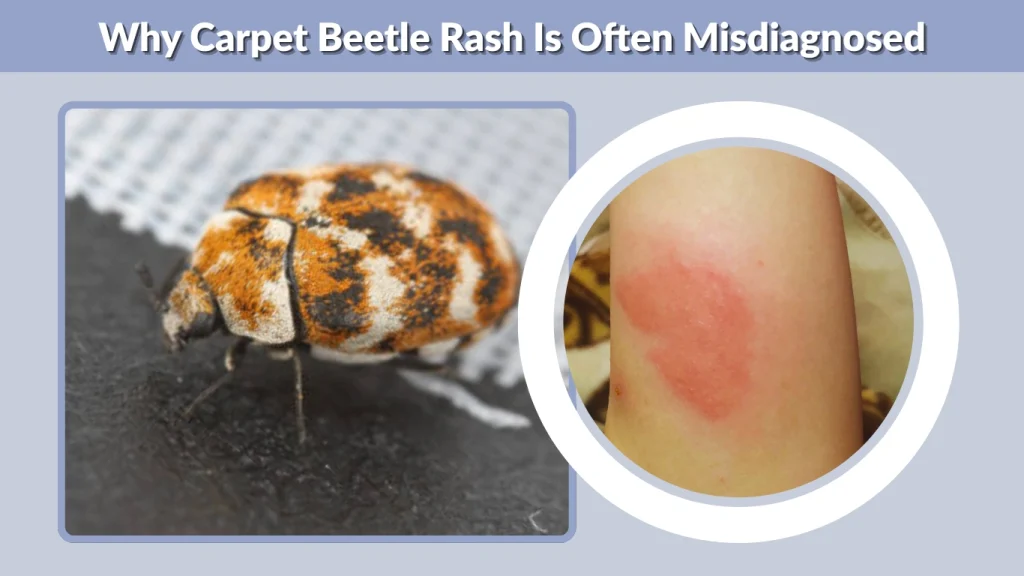
Carpet beetle rash is frequently mistaken for other skin conditions because it closely resembles many common problems. The red bumps and itching can look almost identical to bed bug bites, flea bites, scabies, mosquito bites, or allergic contact dermatitis. Because of this, many people focus only on medical treatment without investigating their home environment.
Another reason for misdiagnosis is the delayed nature of the reaction. Some people develop symptoms hours after contact, making it difficult to connect the rash to clothing, furniture, or a specific room. The rash also appears randomly rather than in neat lines or clusters, which further confuses identification.
Many households also fail to notice carpet beetles themselves. Larvae hide in dark, undisturbed areas such as closets, storage boxes, air vents, and under furniture. Adult beetles are small and often only seen near windows. Without obvious insects or major fabric damage, people may assume the rash is coming from a medical or environmental allergy rather than a hidden infestation.
Common Signs and Symptoms of Carpet Beetle Rash
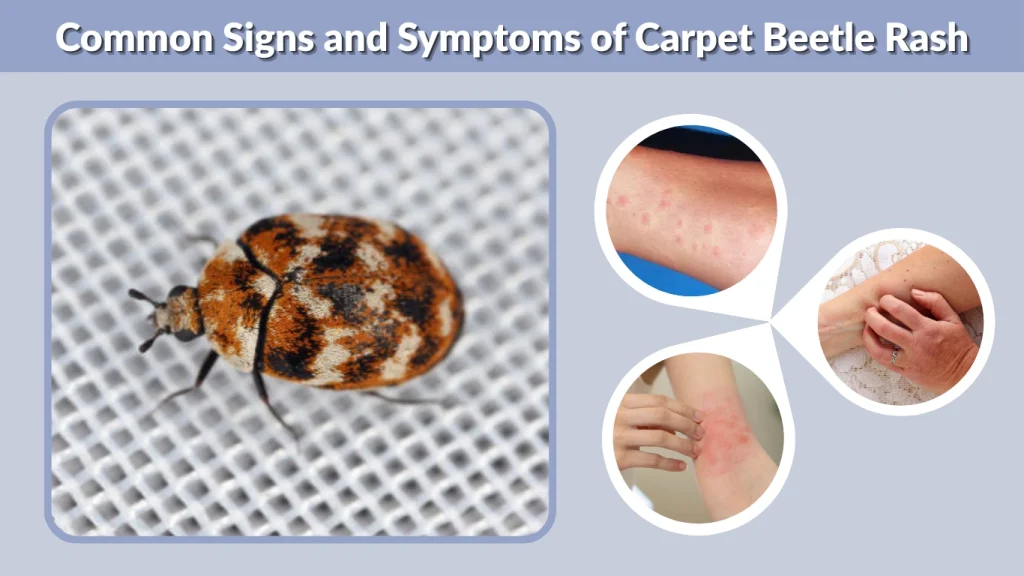
Carpet beetle rash can vary from mild irritation to intense itching depending on a person’s sensitivity and level of exposure.
- Small red bumps, spots, or patches on the skin
- Persistent itching or burning sensation
- Inflamed or swollen areas after contact with fabrics
- Blister-like or pimple-shaped marks
- Rashes appearing on arms, neck, chest, legs, or waistline
The rash most often appears on exposed areas of skin or places where clothing fits tightly, such as the collar, waistband, or cuffs. Some people notice symptoms after wearing stored clothes or sleeping on infested bedding. Scratching can make the skin appear worse and may lead to secondary infections if irritation continues.
What Does Carpet Beetle Rash Look Like
Typical Appearance on Human Skin
Carpet beetle rash usually appears as scattered red bumps rather than large solid patches. The spots may be flat or slightly raised and often resemble tiny pimples, hives, or insect bites. In some cases, the skin becomes rough, irritated, or inflamed, especially after repeated exposure.
The rash does not follow a consistent pattern. Unlike bed bug bites, which often form lines or clusters, carpet beetle dermatitis tends to appear randomly wherever the skin touched contaminated materials. Common areas include the arms, neck, shoulders, legs, stomach, and face. The size and intensity of the rash vary depending on skin sensitivity and the number of larval hairs involved.
Carpet Beetle Rash Pictures and Visual Clues
Photos of carpet beetle rash commonly show small red bumps, mild swelling, or blotchy irritated areas. Some images display closely grouped spots, while others show scattered single bumps. On lighter skin tones, the rash often appears bright red or pink. On darker skin tones, it may look brownish, purple, or slightly raised without intense redness.
Many online photos labeled as carpet beetle rash closely resemble allergic dermatitis or flea bites, which is why visual clues alone are not enough. The most important supporting evidence comes from finding larvae, shed skins, or beetles in the home environment.
Carpet Beetle Rash vs Other Skin Conditions
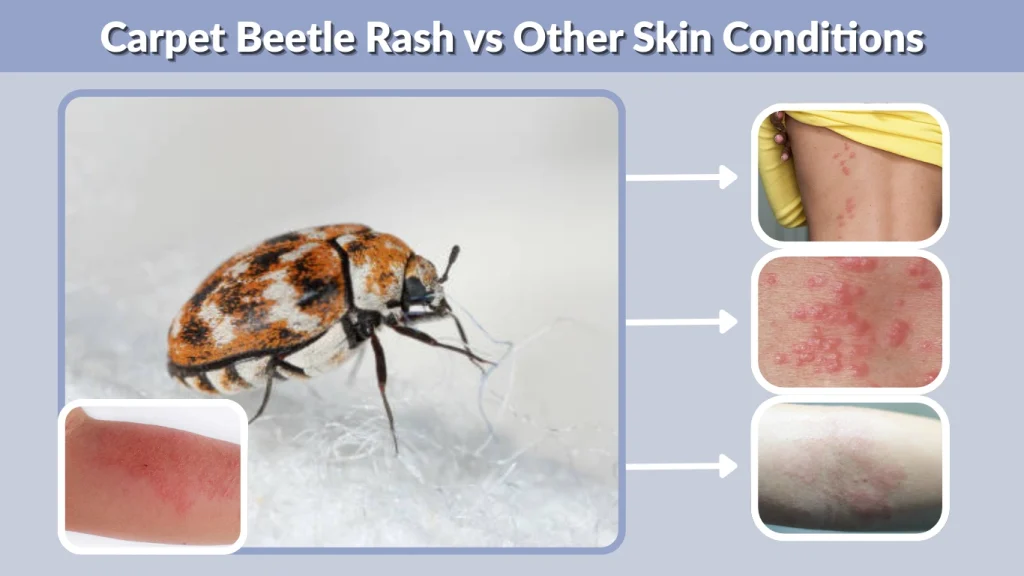
Carpet Beetle Rash vs Bed Bug Bites
Bed bug bites usually appear in straight lines or tight clusters and are often noticed after sleeping. They are caused by actual bites that draw blood. Carpet beetle rash, however, comes from contact with larval hairs and appears more randomly. Homes with carpet beetles may show fabric damage, larvae, and beetles near windows, rather than blood stains or bug shells near mattresses.
Carpet Beetle Rash vs Scabies
Scabies causes intense itching and burrow-like lines under the skin, especially between fingers, on wrists, and around joints. Carpet beetle rash does not create burrows and usually appears on exposed or fabric-contact areas. Scabies spreads from person to person, while carpet beetle rash only occurs through environmental exposure.
Carpet Beetle Rash vs Allergic Contact Dermatitis
Allergic contact dermatitis often affects areas that touch a specific substance such as soap, metal, or plants. Carpet beetle rash tends to return repeatedly until the home infestation is removed. Improvement after cleaning fabrics and vacuuming strongly points toward carpet beetles as the cause.
Carpet Beetle Larvae Rash and Allergic Reactions
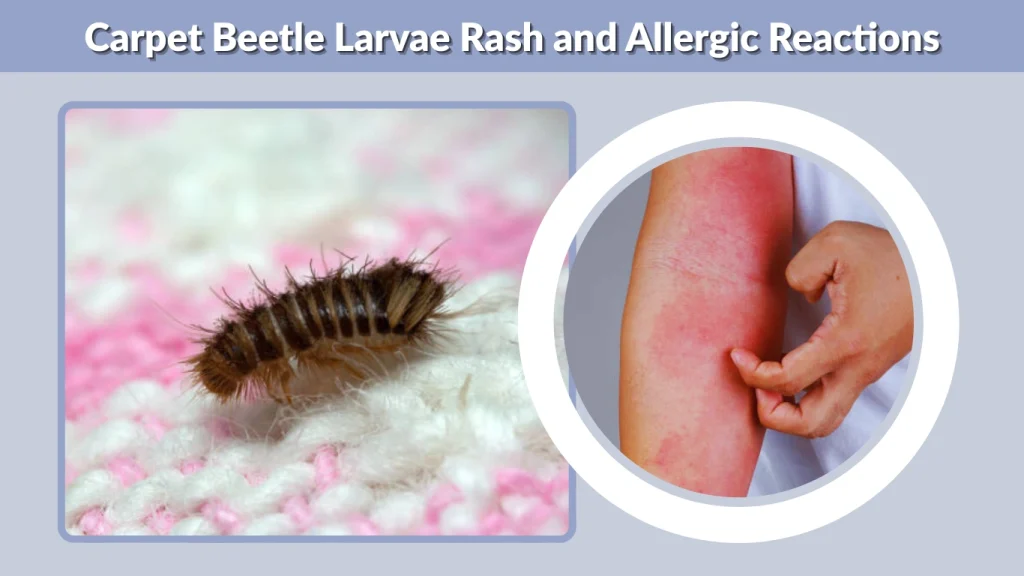
Carpet beetle larvae are responsible for almost all skin reactions linked to these insects. Their bodies are covered with fine, spear-shaped hairs that easily break off and embed in fabrics, furniture, and dust. When these microscopic hairs come into contact with human skin, they can trigger allergic inflammation.
Some people experience only mild redness, while others develop intense itching, swelling, or blister-like bumps. Individuals with asthma, eczema, or general allergies are often more sensitive. Repeated exposure can worsen symptoms, causing rashes to appear again even after earlier spots have healed. Because larvae hide in clothing, carpets, and upholstery, people may unknowingly expose themselves multiple times a day.
How Long Does Carpet Beetle Rash Last
The duration of carpet beetle rash depends on skin sensitivity, severity of exposure, and whether the source has been removed. Mild cases often improve within a few days once contact stops. Redness usually fades first, followed by itching and small bumps.
Moderate rashes may last one to two weeks, especially if scratching irritates the skin or if exposure continues through infested clothes or bedding. In heavier infestations, rashes may appear repeatedly, giving the impression that the problem never fully heals.
Without removing the carpet beetles, treatment only offers temporary relief. New rashes can continue to develop as long as larval hairs remain in the environment. Once the home is properly cleaned and the infestation eliminated, most people see full skin recovery within one to three weeks.
Carpet Beetle Rash Treatment Options
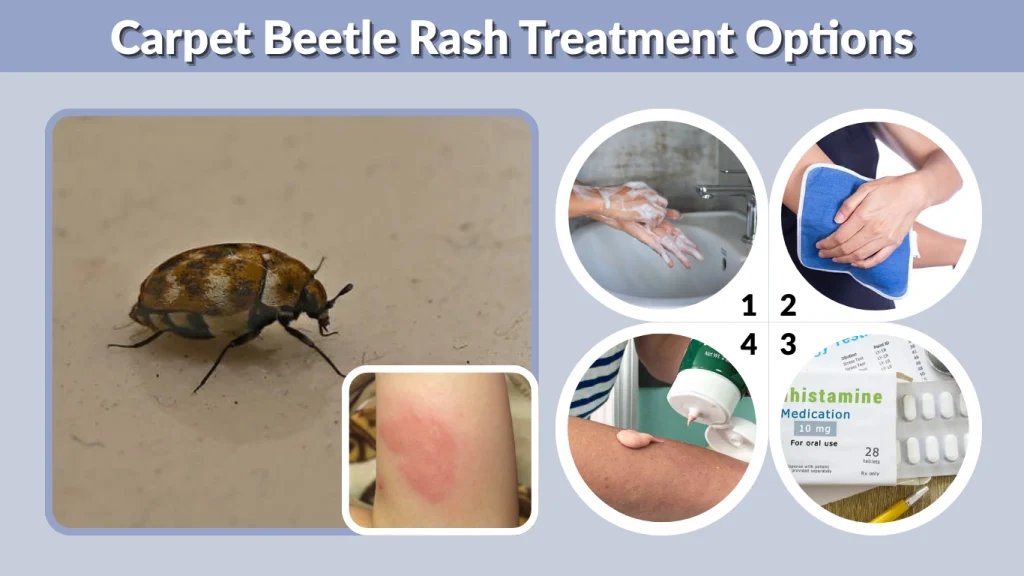
Treating carpet beetle rash involves soothing the skin and stopping further exposure.
- Gently wash the affected area with mild soap and cool water
- Apply hydrocortisone or anti-itch cream to reduce inflammation
- Use oral antihistamines for allergic reactions
- Apply cold compresses to calm itching and swelling
- Seek medical advice if blisters, infection, or severe reactions develop
Avoid scratching, as broken skin can become infected. Washing recently worn clothes, bedding, and towels in hot water helps remove larval hairs and prevents new rashes from forming.
How to Get Rid of Carpet Beetle Rash at the Source
Skin treatment alone is not enough. The infestation must be eliminated to stop the rash permanently. Begin by thoroughly vacuuming carpets, rugs, baseboards, furniture seams, and closets. Dispose of vacuum contents immediately.
Wash all potentially contaminated fabrics, including clothing, blankets, curtains, and pet bedding, using hot water and high heat drying. Declutter storage areas and inspect boxes, drawers, and under furniture. Pay special attention to natural fiber items.
If beetles or larvae continue to appear, professional pest control may be necessary. Targeted treatment helps locate hidden breeding sites and prevents the infestation from spreading to new areas of the home.
Carpet Beetle Rash on Pets (Especially Dogs)
Carpet beetle rash can also affect pets, particularly dogs and cats. Pets may show signs such as excessive scratching, licking, redness, small bumps, or patchy hair loss. Because animals spend time on carpets and bedding, they are frequently exposed to larval hairs.
Infested pet beds, blankets, and resting areas often act as major sources of exposure. Washing all pet fabrics and vacuuming pet areas is essential. If a pet shows ongoing skin irritation, sores, or hair loss, a veterinarian should examine them to rule out fleas, mites, infections, or allergic dermatitis.
Hidden Signs of Carpet Beetles When a Rash Appears
When unexplained rashes occur, it is important to inspect the home for carpet beetles.
- Larvae or shed skins in closets and drawers
- Adult beetles on window sills or near lights
- Holes or thinning in clothing and carpets
- Casings in storage boxes
- Dust-like debris along baseboards
Finding even one of these signs strengthens the likelihood that carpet beetles are involved and that environmental treatment is necessary.
How to Confirm Carpet Beetles Are Causing the Rash
Confirmation requires combining skin symptoms with home evidence. Inspect mattresses, bedding, stored clothes, furniture seams, air vents, and carpet edges using a flashlight. Look for larvae, fuzzy skins, or adult beetles.
Sticky traps near windows and closets can help detect adult beetle activity. Vacuum suspected areas and check the vacuum contents for insect remains. If beetles continue to appear or rashes persist despite cleaning, professional inspection can identify hidden infestations and provide proper treatment recommendations.
FAQs
What does a carpet beetle rash look like?
Carpet beetle rash usually appears as small red bumps, irritated patches, or pimple-like spots. It often looks similar to insect bites or allergic dermatitis. The rash does not follow straight lines and commonly appears on areas that contacted infested clothes, furniture, or bedding.
Does carpet beetle rash itch?
Yes, itching is one of the most common symptoms. Many people feel persistent itching, burning, or tingling on affected areas. The reaction is caused by larval hairs triggering an allergic response in the skin rather than an actual bite.
How long does carpet beetle rash last?
Mild rashes may clear within a few days after exposure stops. Moderate reactions can last one to two weeks. If carpet beetles remain in the home, rashes may continue to reappear until the infestation is removed.
How can I tell carpet beetle rash from bed bug bites?
Bed bug bites often appear in straight lines or tight clusters and are linked to sleeping areas. Carpet beetle rash appears randomly and is associated with clothing, carpets, and furniture. Finding larvae, shed skins, or fabric damage points toward carpet beetles.
How do you treat carpet beetle rash effectively?
Effective treatment includes soothing creams, antihistamines, and washing contaminated fabrics. However, permanent relief only occurs after eliminating carpet beetles through deep cleaning and, if needed, professional pest control.
