
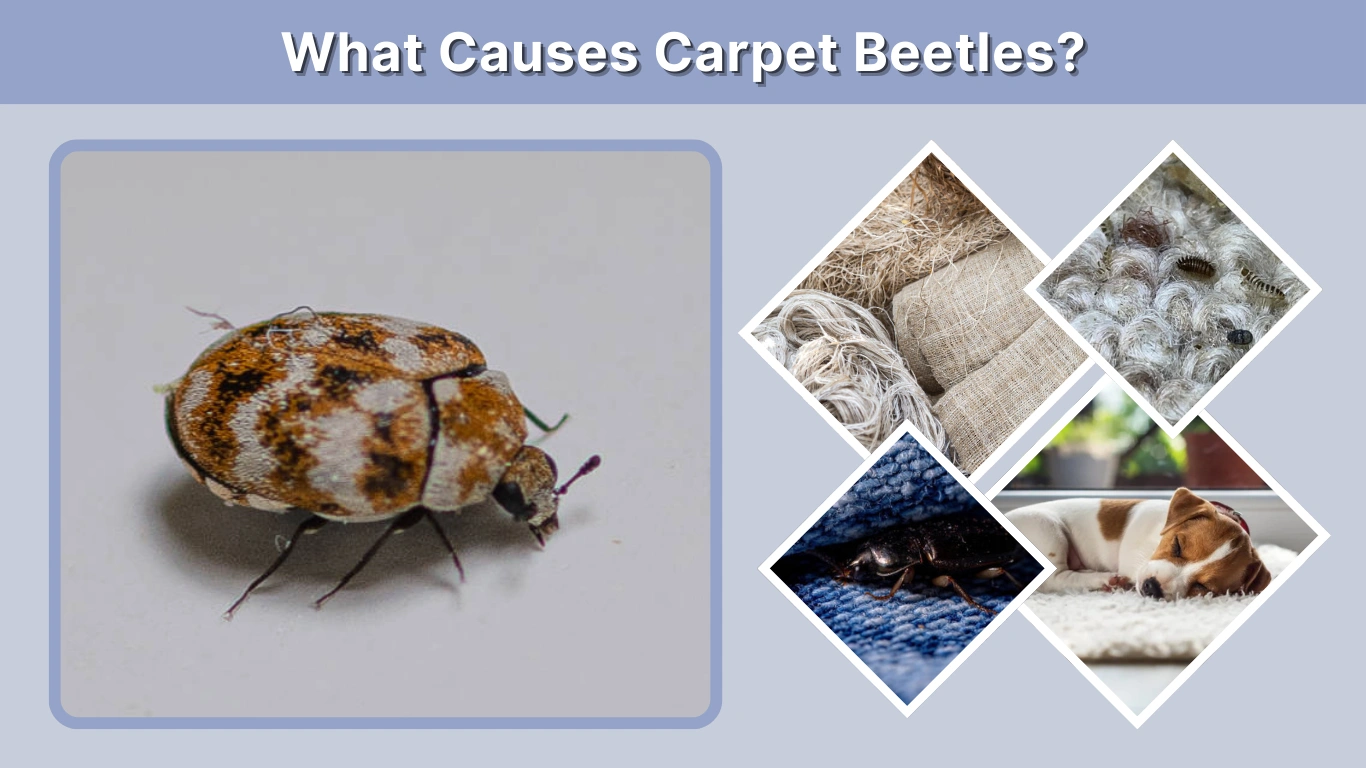
Carpet beetles are one of the most common household insects, yet many people are surprised to find them in clean, well-kept homes. When adult beetles or larvae suddenly appear, the first question is often, “What caused this?” Carpet beetles are not caused by dirt, but by food sources, shelter, and easy access points inside and around a home. Understanding what causes carpet beetles is the most effective way to remove an infestation and prevent it from returning.
What Carpet Beetles Are and Why They Invade Homes
Carpet beetles are small insects from the Dermestidae family. The most common indoor species include the black carpet beetle, varied carpet beetle, and furniture carpet beetle. Adult beetles are usually oval and may be solid black or patterned with white, brown, and yellow scales. Outdoors, adults feed mainly on pollen and nectar, but they often wander indoors through open windows and doors.
Inside homes, the real problem comes from carpet beetle larvae. These tiny, slow-moving larvae are covered with fine hairs and are attracted to natural organic materials. They feed on wool, silk, cotton, leather, feathers, fur, pet hair, dead insects, and even food crumbs or lint. Homes provide steady warmth, shelter from predators, and a continuous supply of hidden food sources, making them ideal environments for larvae to grow.
Carpet beetles invade homes because they offer everything the insects need to complete their life cycle. Once adult beetles enter and lay eggs, the larvae can survive for months, quietly feeding in dark, undisturbed places without being noticed.
The Main Causes of Carpet Beetles in the House
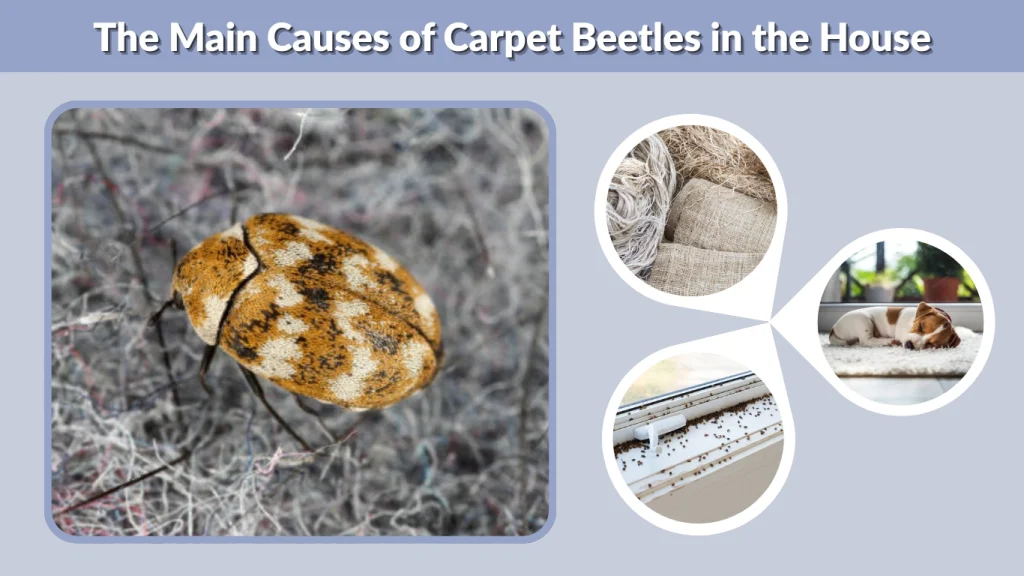
Carpet beetles do not appear randomly. Infestations start when certain conditions exist inside or around a home.
- Presence of natural fiber materials such as carpets, clothes, blankets, and upholstery
- Accumulated dust, pet hair, and lint that provide hidden food
- Dark, low-traffic areas like closets, basements, and under furniture
- Entry points such as open windows, doors, and wall gaps
- Stored items, boxes, or long-unused fabrics
When several of these factors combine, carpet beetles are far more likely to settle and reproduce indoors.
How Carpet Beetles Get Inside Your Home
Openings and Structural Entry Points
One of the most common causes of carpet beetles is simple access. Adult beetles fly and are often drawn toward light. Open windows, unscreened vents, door gaps, cracks in walls, and roof openings all provide easy entry. Beetles may also enter through utility lines, attic spaces, or damaged weather stripping.
Homes near gardens, trees, or flowering plants are more likely to experience beetle entry, as adult carpet beetles feed outdoors before moving indoors to lay eggs. Once inside, they seek out dark, protected areas to begin reproducing.
Items That Carry Carpet Beetles Indoors
Carpet beetles are also commonly introduced through objects. Cut flowers, second-hand furniture, rugs, blankets, clothing, and storage boxes may already contain eggs or larvae. Thrift store items and long-stored belongings are especially high-risk.
Moving boxes from basements, attics, or storage units into living spaces can spread carpet beetles quickly. Even pet bedding or decorative items made from natural fibers can unknowingly transport larvae into new areas of the home.
What Causes Carpet Beetle Infestations to Start
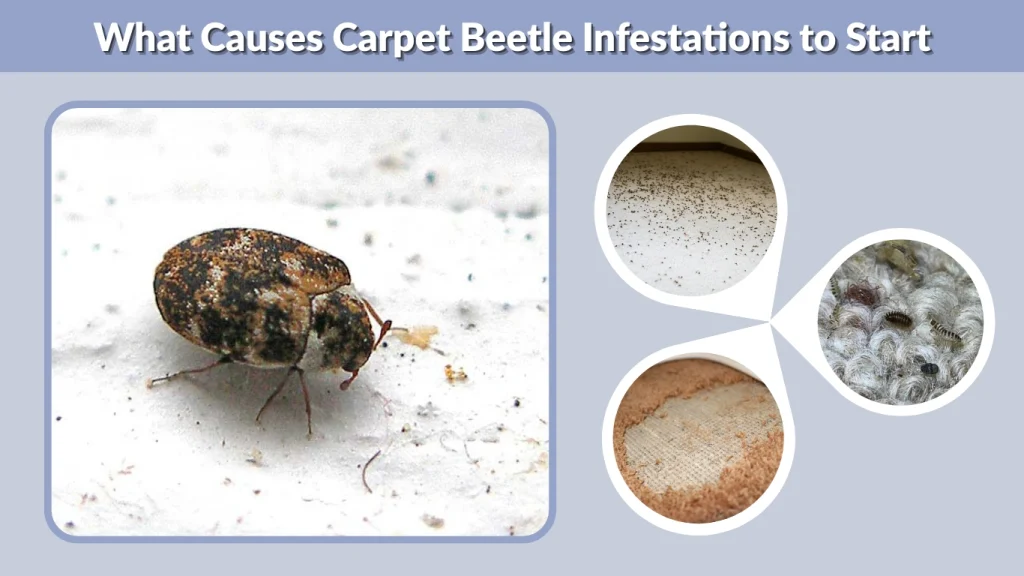
Eggs Laid Indoors by Adult Beetles
Once adult carpet beetles enter a home, they search for safe places to lay eggs. Females can deposit dozens of eggs at a time in locations that offer food and protection. Common egg-laying sites include carpet edges, air vents, closets, drawers, upholstered furniture, and inside stored fabrics.
These eggs hatch into larvae within a few weeks. Because larvae are small and avoid light, they can remain hidden while feeding continuously. This silent stage is what allows infestations to grow before people realize there is a problem.
Outdoor Sources That Trigger Indoor Problems
Outdoor conditions often play a direct role in what causes carpet beetles indoors. Bird nests, rodent nests, dead insects, and accumulated organic debris around a building provide natural breeding grounds. Adult beetles that develop outdoors may then migrate inside through nearby openings.
Flowering plants close to windows and doors also attract adult carpet beetles. After feeding on pollen, they may enter nearby homes to seek egg-laying sites. Homes with attic nests, wall voids, or neglected exterior areas often experience repeated infestations until these outside sources are addressed.
What Causes Carpet Beetle Larvae to Thrive
Carpet beetle larvae thrive where food and shelter are abundant. Natural fibers are their primary food source, but they also feed on hair, dust, dead insects, and food spills. Areas that are rarely disturbed allow larvae to grow for months without interruption.
Closets, under beds, beneath rugs, behind baseboards, inside air ducts, and under heavy furniture are ideal habitats. Stored clothing, old blankets, and unused furniture provide constant feeding material. Warm indoor temperatures allow larvae to remain active year-round, extending infestation cycles.
Because larvae do the actual damage, the conditions that allow them to thrive are the true causes behind long-term carpet beetle problems.
What Causes Black Carpet Beetles and Varied Carpet Beetles

Different species of carpet beetles are drawn indoors for similar reasons, but some conditions affect them more strongly. Black carpet beetles are especially attracted to dark, quiet spaces with long-stored natural fabrics. They are commonly linked to basements, closets, stored clothing, and upholstered furniture. Their larvae prefer wool, leather, fur, pet hair, and dead insects.
Varied carpet beetles are often introduced through flowers, open windows, and outdoor activity. Adults feed heavily on pollen and are frequently found near windows. Once inside, their larvae spread throughout homes, damaging clothing, carpets, furniture, and stored goods. Varied carpet beetles are known to feed on a wide range of materials, including silk, feathers, cotton, lint, and even pantry products.
What makes varied carpet beetles especially destructive is their adaptability. They move easily between rooms and food sources, allowing infestations to spread quickly if underlying causes are not removed.
What Causes Carpet Beetles in Cars, Closets, and Storage Areas
Carpet beetles are not limited to living rooms and bedrooms. Cars, closets, and storage spaces often provide perfect conditions. Vehicles accumulate pet hair, food crumbs, and fabric fibers in seats and carpets. When windows are left open or flowers and boxes are transported inside, beetles may settle in these enclosed environments.
Closets and storage areas are major infestation centers because they contain undisturbed fabrics. Seasonal clothing, blankets, shoes, and stored decorations offer both food and protection. Storage bins, cardboard boxes, and suitcases kept in basements or attics are common breeding locations. When these items are moved, larvae can spread throughout the home.
Environmental and Household Factors That Encourage Infestation
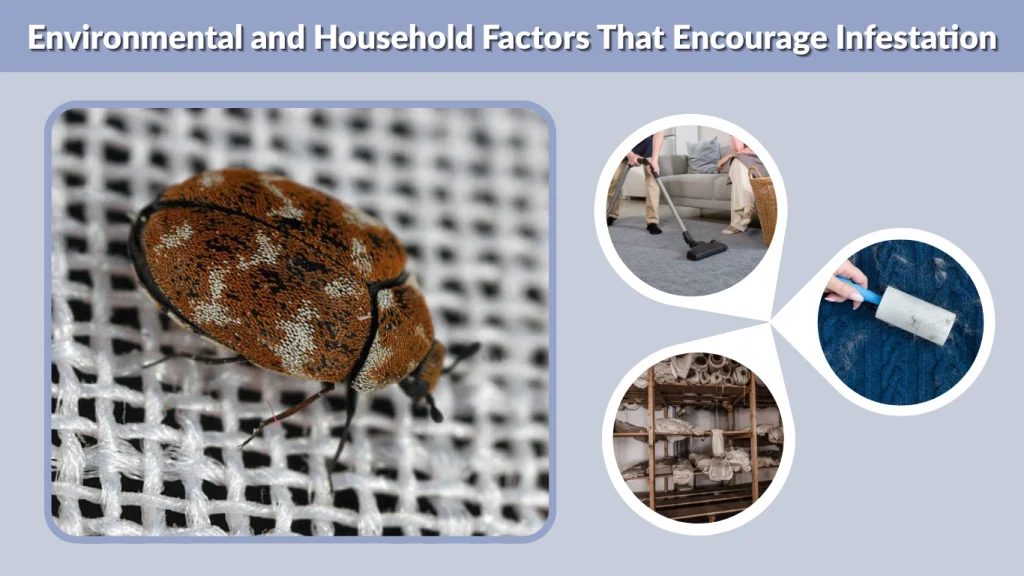
Several lifestyle and environmental factors directly influence what causes carpet beetle infestations to grow.
- Infrequent deep cleaning and vacuuming
- High dust and lint buildup
- Long-term storage of natural fabrics
- Cluttered rooms and packed closets
- Poorly sealed windows, doors, and vents
Homes with pets are also more attractive because pet hair, dander, and food spills increase available food sources. Attics with bird or rodent nests and wall voids containing dead insects significantly raise infestation risk.
Early Warning Signs That the Causes Are Present
Recognizing early warning signs can help identify the conditions causing carpet beetles before damage becomes severe. Adult beetles often appear first, especially near windows and lights. Seeing several beetles usually means eggs have already been laid indoors.
Other early indicators include small fuzzy larvae near baseboards, shed larval skins in drawers or closets, unexplained holes in clothes, thinning carpets, and fine debris in corners. These signs point to active feeding areas and confirm that food sources and shelter conditions exist inside the home.
How to Remove the Causes of Carpet Beetles
Eliminating carpet beetles requires removing the factors that allow them to survive. Begin with thorough vacuuming of carpets, rugs, furniture seams, closets, baseboards, vents, and storage spaces. Dispose of vacuum contents immediately.
Wash clothing, bedding, curtains, and blankets in hot water and dry them on high heat. Declutter closets and storage areas. Store cleaned fabrics in sealed containers. Inspect second-hand items before bringing them indoors.
Seal cracks, repair window screens, and install door sweeps to reduce entry points. Remove outdoor attractants such as bird nests, insect buildup, and flowering plants close to windows. If beetles continue to appear, professional pest control can locate hidden breeding sources and apply targeted treatments.
How to Prevent Carpet Beetles From Returning
Prevention focuses on limiting food sources and blocking access. Vacuum regularly, especially under furniture and inside closets. Clean air vents and window sills. Store natural-fiber clothing in airtight containers. Shake out stored fabrics every few months.
Inspect flowers, boxes, and used furniture before bringing them inside. Keep windows screened and doors sealed. Reducing dust, clutter, and outdoor insect activity dramatically lowers the chance of future infestations.
FAQs
What is the main cause of carpet beetles in a home?
The main cause is the presence of natural fibers, dust, and hidden food sources combined with easy entry points. Carpet beetles are attracted to wool, clothing, carpets, pet hair, and dark storage areas where larvae can feed undisturbed.
What causes carpet beetle infestations to start suddenly?
Sudden infestations often begin when adult beetles enter through open windows, doors, or vents, or when infested items are brought inside. Eggs hatch quietly, allowing larvae to spread before damage becomes noticeable.
What causes carpet beetle larvae to appear?
Larvae appear when adult beetles lay eggs near food sources such as stored clothes, carpets, or furniture. Warm indoor temperatures and undisturbed spaces allow larvae to grow and remain hidden for long periods.
What causes black carpet beetles specifically?
Black carpet beetles are strongly attracted to dark storage areas with wool, leather, pet hair, and dead insects. Basements, closets, attics, and long-stored fabrics are their most common indoor habitats.
What damage do varied carpet beetles cause?
Varied carpet beetles damage clothing, carpets, rugs, upholstery, feathers, stored fabrics, and sometimes pantry items. Their larvae feed on many organic materials, making them one of the most destructive household carpet beetle species.
