
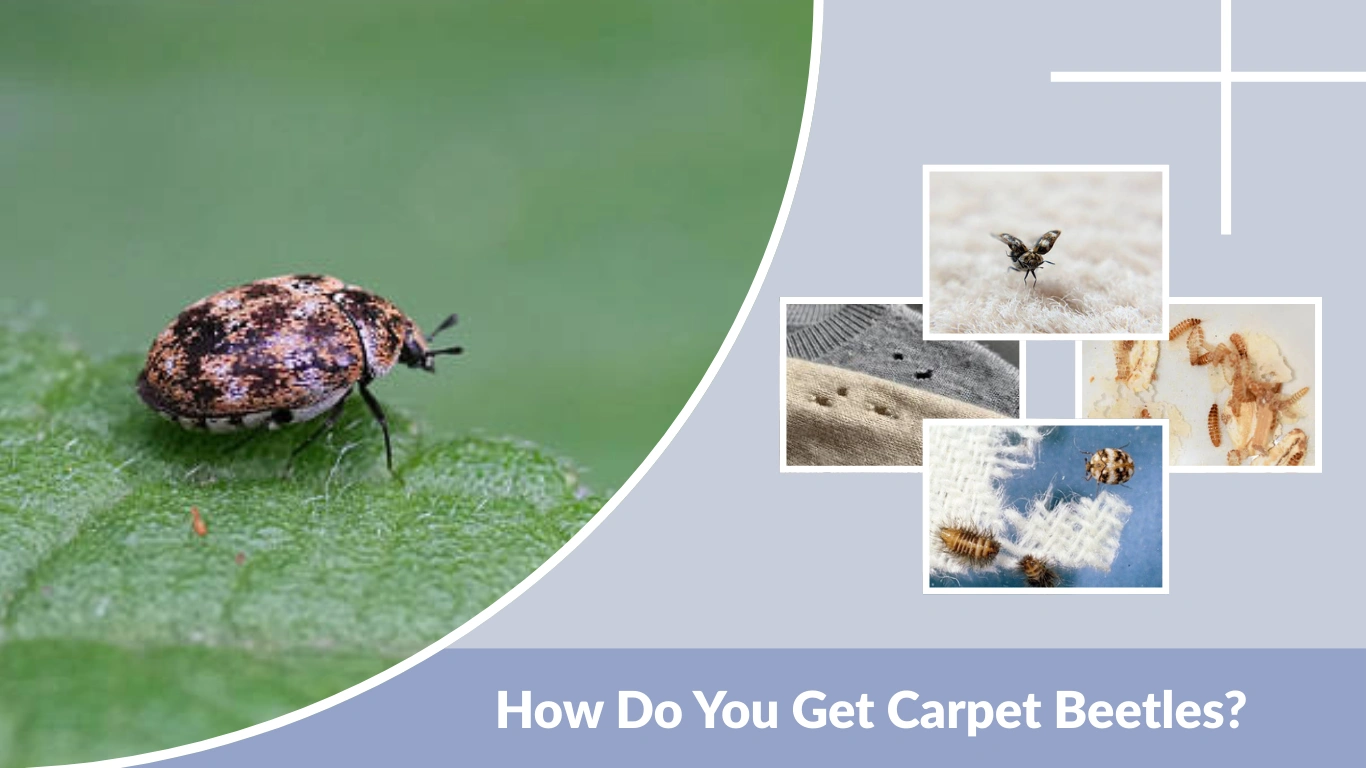
Carpet beetles are one of the most common household pests, yet many people are confused about how they suddenly appear inside clean homes. Unlike pests that spread through obvious infestations, carpet beetles often enter quietly and remain hidden for months before signs become noticeable. They usually arrive through everyday activities such as opening windows, bringing in plants, or storing clothing. Understanding how carpet beetles get into a house, what attracts them, and where they begin nesting is the first step to preventing long-term damage and repeated infestations.
What Carpet Beetles Are and Why They Invade Homes
Carpet beetles are small insects that feed on natural materials found inside homes. While adult carpet beetles mainly feed on pollen and nectar outdoors, their larvae are responsible for household damage. The larvae feed on wool, silk, cotton, fur, feathers, pet hair, and even food crumbs or dead insects.
Homes provide everything carpet beetles need to survive. Warm temperatures, undisturbed storage spaces, and abundant organic material make indoor environments ideal breeding grounds. Closets, carpets, furniture, air vents, and attics all offer shelter and food sources.
One reason infestations go unnoticed is that larvae avoid light and stay hidden in cracks, behind furniture, or deep inside stored fabrics. By the time adults are seen on windows or walls, larvae may already be spread throughout the home.
How Carpet Beetles Get Inside Your House
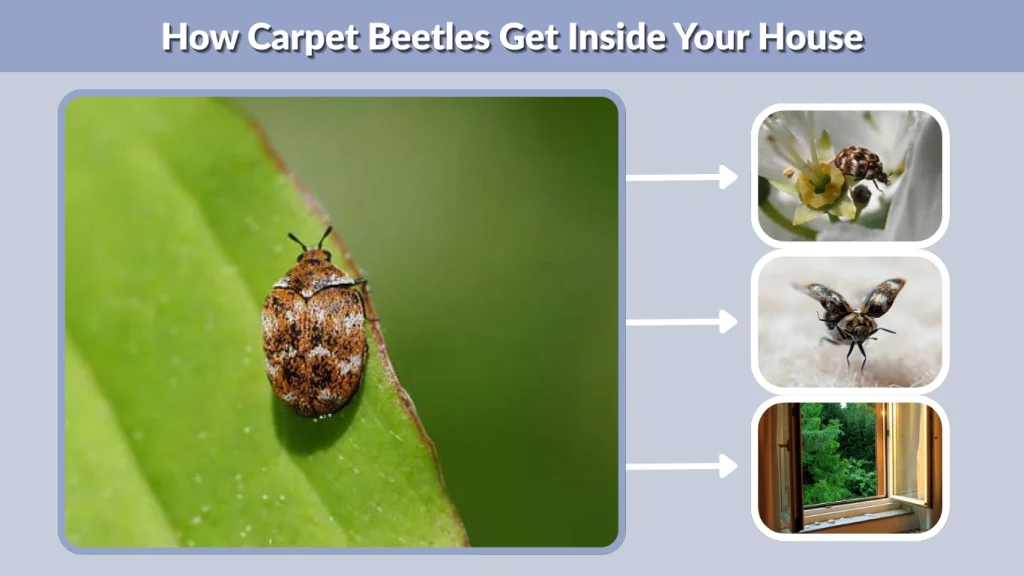
Carpet beetles usually enter homes naturally from the outside environment. Adult beetles can fly and are often attracted to light, warmth, and flowering plants near windows and doors. When windows or doors are open, beetles can easily fly indoors without being noticed.
Small structural openings are another major entry route. Gaps around window frames, door seals, vents, chimneys, and utility lines allow beetles to slip inside. In apartments or shared buildings, carpet beetles may also travel through wall voids, ceiling spaces, or ventilation systems from neighboring units.
Seasonal changes strongly influence entry. During spring and early summer, adult carpet beetles become more active outdoors and frequently migrate indoors. This is why many people notice infestations starting or worsening during warmer months.
Common Ways People Accidentally Bring Carpet Beetles Indoors
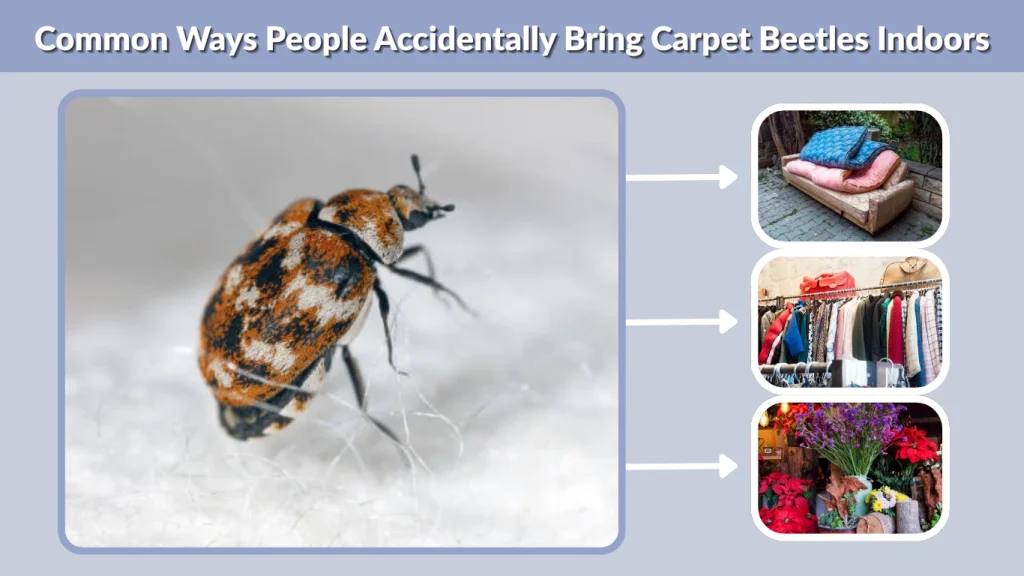
Most carpet beetle infestations begin when beetles, larvae, or eggs are unknowingly carried inside on everyday items.
- Second-hand furniture, rugs, mattresses, and cushions
- Stored or thrifted clothing and blankets
- Fresh flowers, wreaths, indoor plants, and firewood
- Cardboard boxes from basements, garages, or shipping deliveries
- Pet bedding, wool items, feathers, and decorative materials
- Pantry goods, bird seed, and dry pet food
Items kept in storage for long periods are especially risky. Beetles may already be present before the item ever enters the living space, allowing infestations to start immediately once conditions are favorable.
What Attracts Carpet Beetles to Stay and Multiply
Once carpet beetles enter a home, they stay if food and shelter are available. Larvae feed on natural fibers and organic debris, including wool carpets, upholstered furniture, clothing, lint, human hair, pet fur, and even crumbs trapped in floor edges.
Dark, undisturbed areas are particularly attractive. Closets, drawers, storage bins, basements, attics, and spaces beneath heavy furniture provide safety from light and foot traffic. These locations also allow larvae to feed continuously without disruption.
Moisture and warmth further support development. Homes with poor ventilation, long-term storage, or limited cleaning in hidden areas often experience faster population growth. The more undisturbed material present, the easier it is for larvae to survive and spread.
Where Carpet Beetle Infestations Usually Begin
Most infestations start in hidden or rarely cleaned areas. Window sills and light fixtures are common places where adults are first seen, but these are usually not the main nesting sites.
Larvae often begin feeding in closets, inside stored clothing, beneath beds, along carpet edges, in air vents, or within upholstered furniture. Attics and basements are also frequent starting points, especially when bird nests, dead insects, or old fabrics are present.
As larvae grow, they move outward from these hidden zones into carpets, rugs, and open living spaces. By tracing where larvae, shed skins, or damage appear first, it becomes easier to identify how the beetles entered and where the infestation began.
Household Habits That Increase Your Risk
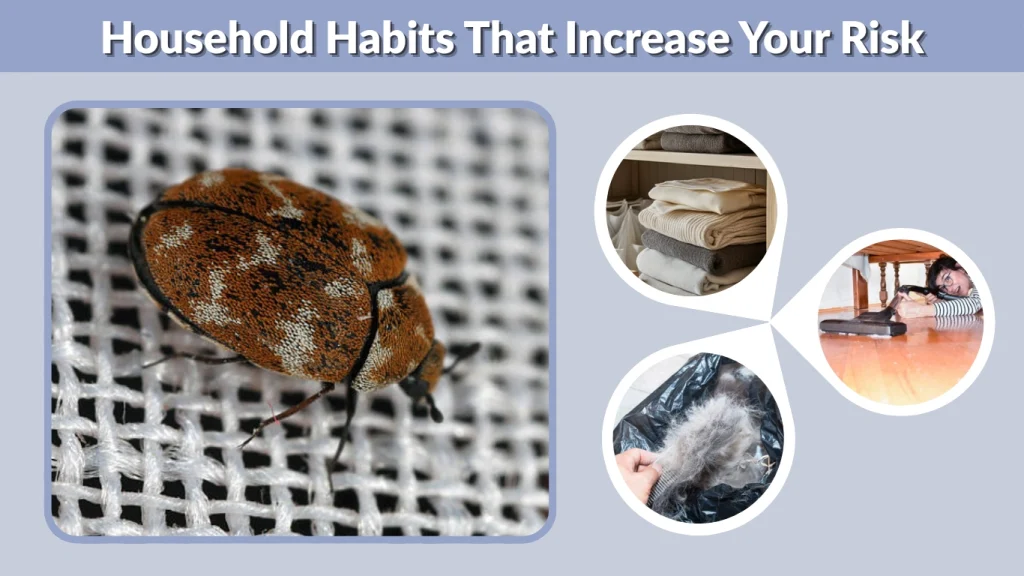
Certain everyday habits unknowingly create ideal conditions for carpet beetles.
- Storing seasonal clothes without washing them first
- Rarely vacuuming corners, baseboards, and under furniture
- Allowing pet hair and lint to accumulate
- Keeping long-term cardboard storage indoors
- Leaving bird nests or dead insects in attics and vents
- Poorly sealing windows, doors, and wall openings
These habits provide both food and shelter, allowing carpet beetles to establish themselves before being detected.
Seasonal and Environmental Factors Behind Carpet Beetles
Carpet beetle activity is strongly influenced by seasonal and environmental conditions. Infestations most commonly increase in spring and early summer because adult beetles become active outdoors during these months. As temperatures rise, adults leave outdoor breeding sites and begin searching for pollen, light, and warm shelter, which often leads them indoors through windows, doors, and vents.
Homes surrounded by gardens, flowering plants, or trees are especially vulnerable. Adult carpet beetles feed on pollen and are naturally drawn to flowers near windows. Once they enter, they may lay eggs in hidden indoor locations close to natural fibers and organic debris.
Environmental structure also plays a major role. Older homes often have more cracks, wall voids, and ventilation gaps that provide entry points and nesting areas. Apartments and shared buildings face additional risk because beetles can move between units through ceilings, pipes, and duct systems. Warm, poorly ventilated spaces such as attics and basements further increase survival rates, allowing populations to grow quietly.
Signs That Reveal How You Got Carpet Beetles
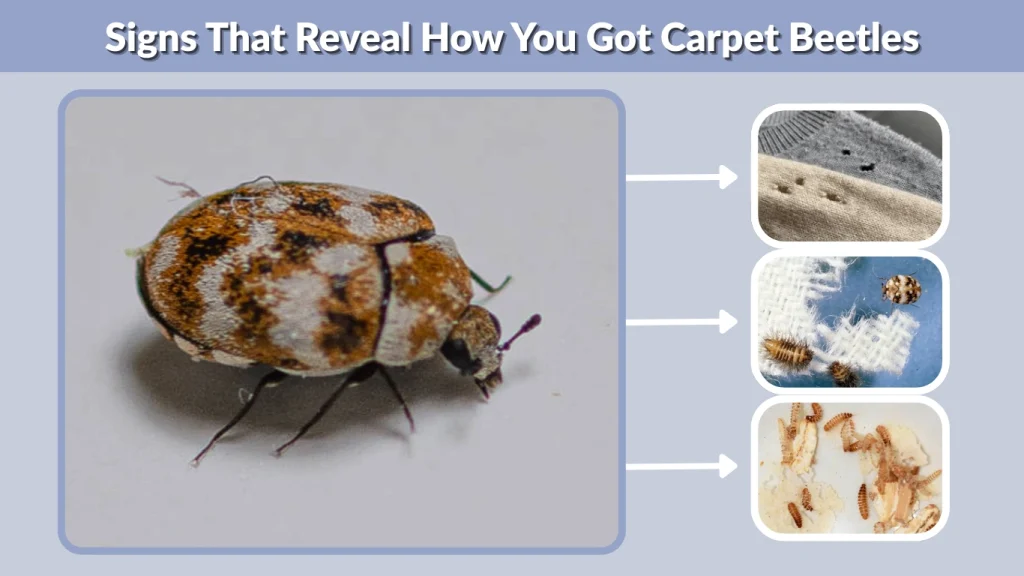
Understanding the early signs of carpet beetles can help determine how they entered and where they are nesting.
Physical Signs Inside the Home
The most common signs include small brown or black larvae, shed larval skins, and tiny irregular holes in natural-fiber fabrics. Damage is often first noticed on wool clothing, rugs, blankets, upholstered furniture, or stored textiles. Larvae may also be seen crawling slowly along baseboards or inside drawers.
Where You Notice Adults First
Adult carpet beetles are often seen on window sills, ceilings, light fixtures, and near lamps. Their presence near windows usually suggests outdoor entry, while adults appearing in closets or bedrooms often indicate a nearby breeding source.
Linking Signs to the Source
The location of damage and larvae helps identify the origin. Infestations starting in wardrobes often point to stored clothing, while attic or basement activity may indicate old boxes, dead insects, or bird nests. Tracing these patterns is essential for stopping the infestation permanently.
How to Prevent Getting Carpet Beetles in the Future
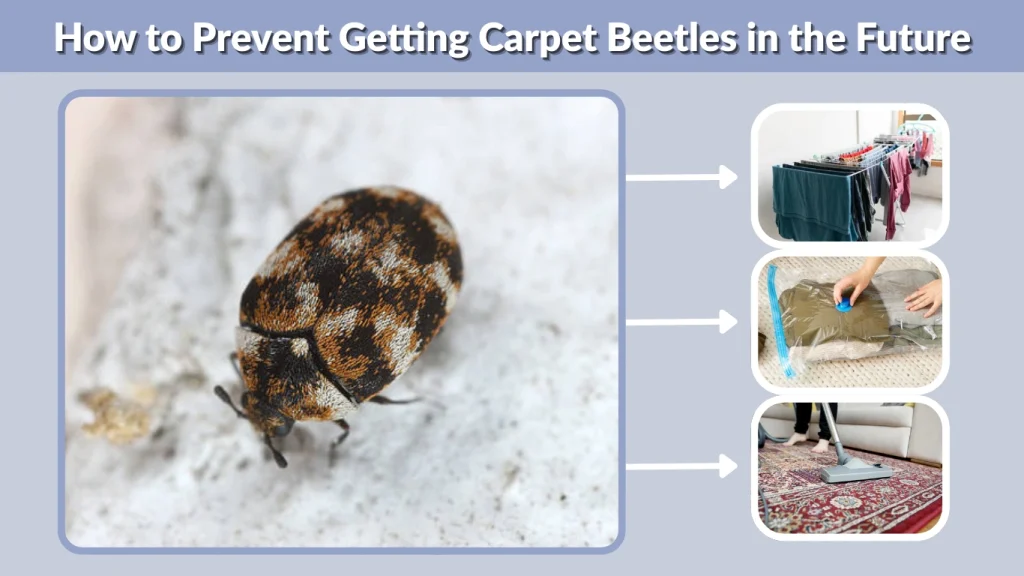
Long-term prevention focuses on blocking entry points, removing food sources, and reducing nesting areas. Simple routine changes are often enough to stop repeated infestations.
- Wash and heat-dry clothes before storing them
- Keep natural-fiber items in sealed containers or garment bags
- Vacuum weekly, especially edges, under furniture, and inside closets
- Inspect plants, flowers, furniture, and boxes before bringing them inside
- Seal cracks around windows, doors, vents, and baseboards
- Reduce indoor lint, pet hair, and dead insects
- Keep outdoor flowers, nests, and debris away from windows
By removing what attracts carpet beetles and sealing how they enter, homes become far less suitable for breeding and survival.
FAQs
How do carpet beetles suddenly appear in clean homes?
Carpet beetles can enter even very clean homes because adults fly in through open windows, vents, or tiny gaps. They can also hitchhike on flowers, furniture, or clothing. Infestations often begin hidden, so people only notice them months after they arrive.
Do carpet beetles come from carpets?
Carpets are not the source of carpet beetles, but they are a common food target. Infestations usually start when beetles enter from outside or arrive on stored items. The larvae then spread to carpets because they contain fibers, hair, and trapped organic debris.
Can new clothes or furniture bring carpet beetles?
Yes, although it is less common, beetles or eggs can arrive on new items, especially those stored in warehouses. Second-hand furniture and long-stored clothing pose a higher risk. Washing fabrics and inspecting furniture before use greatly reduces this possibility.
Why do carpet beetles keep coming back after cleaning?
Recurring sightings usually mean eggs or larvae were left behind in hidden areas such as wall voids, vents, storage boxes, or furniture. If the original food source is not completely removed, the life cycle continues and adults will reappear.
Are carpet beetles a sign of a dirty house?
Carpet beetles are not strictly a sign of poor hygiene. They are attracted to natural fibers and organic material found in all homes. However, clutter, pet hair, and undisturbed storage areas make infestations easier to establish and harder to eliminate.
