
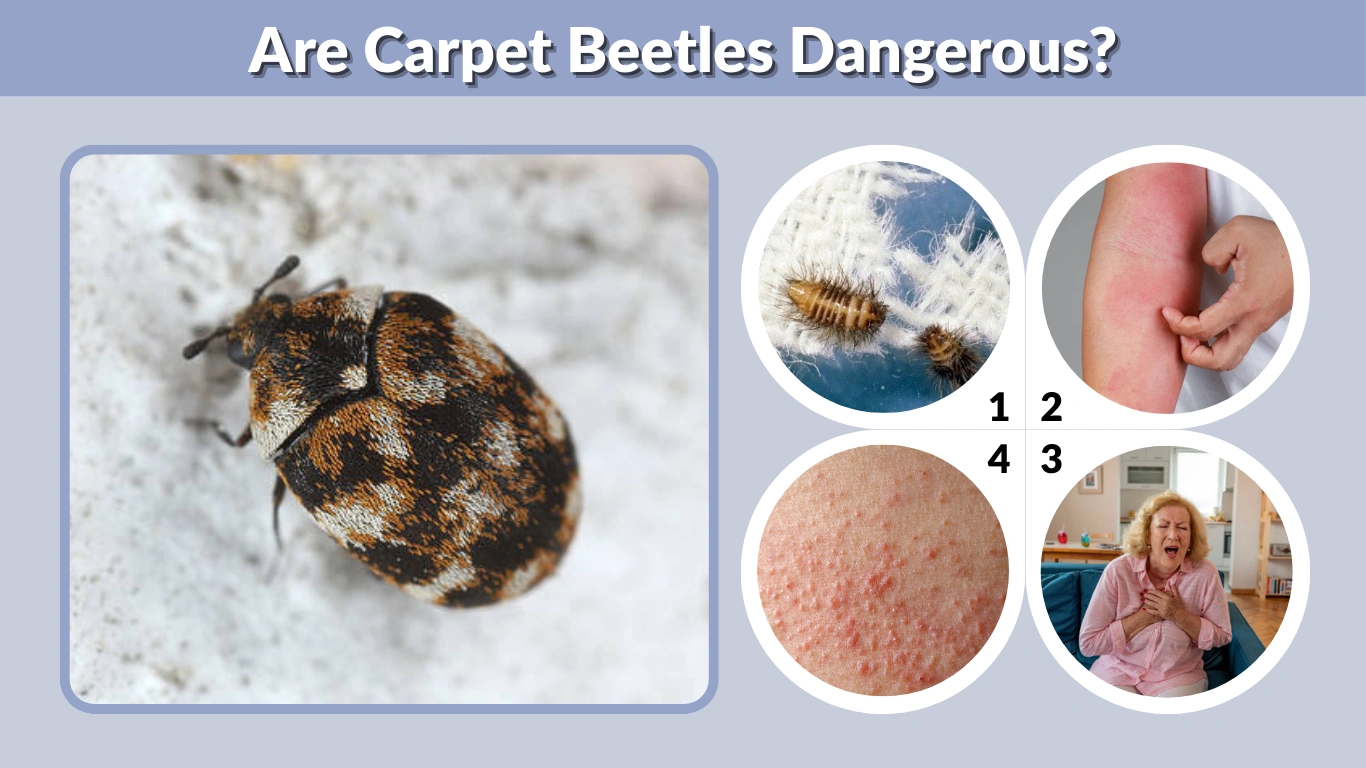
Carpet beetles are common household insects, but finding them indoors often causes immediate concern. Many people worry that carpet beetles might bite, spread disease, or pose serious health risks. Others become alarmed when they notice skin irritation, damaged clothing, or larvae crawling along baseboards. Although carpet beetles are not aggressive insects, they can still create real problems inside a home. Understanding whether carpet beetles are dangerous, how they affect humans and pets, and what risks they pose to household belongings is essential for responding properly.
Are Carpet Beetles Dangerous? (Quick Overview)
Carpet beetles are not considered dangerous in the way that venomous insects or disease-carrying pests are. They do not bite, sting, or inject toxins into humans or animals. However, this does not mean they are harmless. Carpet beetles can cause skin irritation, trigger allergic reactions, and seriously damage household materials.
The real danger of carpet beetles lies in their larvae. Larvae feed on natural fibers and organic materials, destroying carpets, clothing, furniture, and stored fabrics. Their tiny hairs can also cause irritation when they come into contact with human skin. While carpet beetles are not life-threatening, they should never be ignored because untreated infestations can lead to widespread property damage and ongoing health discomfort.
Are Carpet Beetles Dangerous to Humans
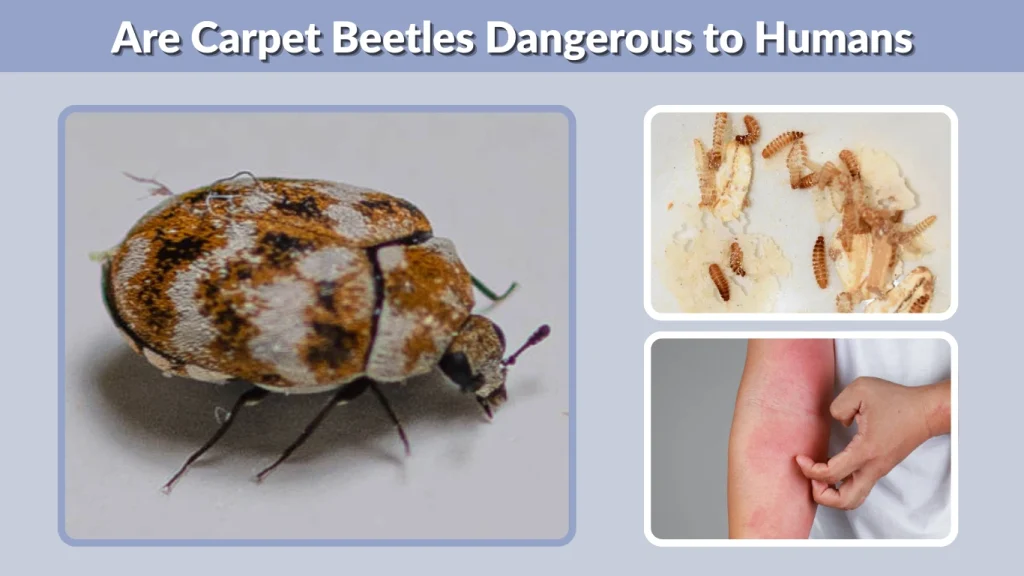
Carpet beetles are not directly dangerous to humans. They do not bite, suck blood, or transmit known diseases. Unlike bed bugs or fleas, carpet beetles have no interest in feeding on people.
However, people can still experience problems when carpet beetles are present indoors. The tiny hairs covering carpet beetle larvae can break off and stick into the skin. In sensitive individuals, this can lead to allergic reactions known as carpet beetle dermatitis. These reactions may cause red bumps, itching, or rashes that are often mistaken for insect bites.
In some cases, people with asthma or strong allergies may experience respiratory irritation if larval hairs become airborne and are inhaled. While these reactions are uncommon, they highlight that carpet beetles can still affect human health even without biting or stinging.
Can Carpet Beetles Cause Skin Problems
Carpet Beetle Rash Explained
Carpet beetle rashes are not bites. They occur when the tiny hairs on larvae come into contact with the skin. These hairs can act like microscopic needles, triggering an allergic response. When the skin reacts, redness, swelling, and itching may appear.
Common Symptoms
Symptoms vary from person to person. Some people develop small red bumps, while others experience itchy patches, welts, or burning sensations. The rash often appears on exposed areas such as arms, neck, face, or legs, especially after contact with infested carpets, clothing, or bedding.
Why Carpet Beetle Rash Is Often Misdiagnosed
Because the rash looks similar to bed bug bites, flea bites, or contact dermatitis, many people misidentify the cause. This often delays proper treatment of the infestation, allowing carpet beetles to continue spreading unnoticed.
Are Carpet Beetles Dangerous to Pets

Carpet beetles are not parasites and do not live on pets. They do not bite animals or feed on their blood. However, pets can still be affected indirectly.
Larvae may infest pet bedding, blankets, or resting areas where fur, feathers, and organic debris accumulate. This can cause mild skin irritation in sensitive pets, especially if larval hairs become embedded in fur. Additionally, stored pet food, bird seed, or treats may become contaminated if carpet beetles are present.
While carpet beetles are not considered medically dangerous to pets, infestations can create uncomfortable living conditions and hygiene issues if left untreated.
Are Carpet Beetles Dangerous to Your Home
The most serious danger carpet beetles pose is to household materials. Carpet beetle larvae feed on natural fibers such as wool, silk, cotton, fur, feathers, leather, and even upholstery stuffing. Over time, this feeding causes holes in carpets, thinning in clothing, damage to furniture, and destruction of stored fabrics.
Infestations often begin in closets, storage boxes, attics, basements, or under furniture. Because larvae avoid light and remain hidden, damage can become extensive before being noticed. Museums, collectors, and households with large amounts of stored textiles are especially vulnerable.
If not controlled early, carpet beetles can spread throughout a home, resulting in costly replacement of clothing, rugs, blankets, and furniture.
What Makes Carpet Beetles a Serious Problem
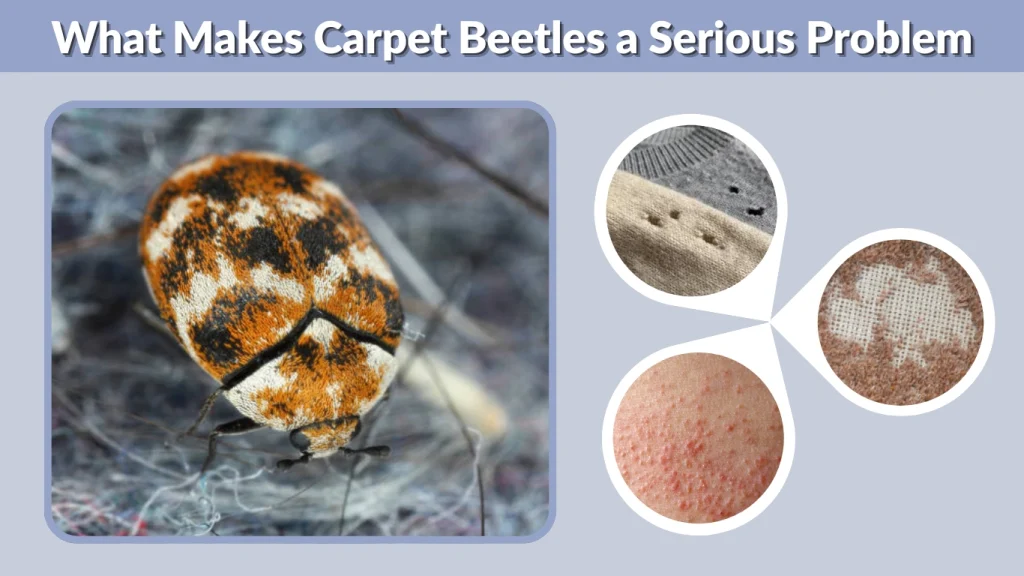
Although carpet beetles are not deadly, they become a serious issue when infestations are allowed to grow.
- Destruction of natural-fiber clothing and carpets
- Damage to furniture, curtains, and stored fabrics
- Skin irritation and allergy-like reactions
- Contamination of household and pet items
- Hidden spread through closets, vents, and wall voids
- Expensive long-term household damage
Are Carpet Beetles Poisonous or Toxic
Carpet beetles are not poisonous, toxic, or venomous. They do not produce toxins, inject venom, or contaminate humans or pets through bites or stings. Touching a carpet beetle or accidentally coming into contact with larvae does not cause poisoning.
The irritation some people experience is caused by the tiny hairs on carpet beetle larvae, not by any toxic substance. These hairs can trigger allergic reactions when they touch the skin or become airborne. This reaction is physical and allergic in nature, not chemical or poisonous. Understanding this distinction helps prevent unnecessary fear and allows homeowners to focus on proper control rather than medical panic.
When Carpet Beetles Become Truly Dangerous
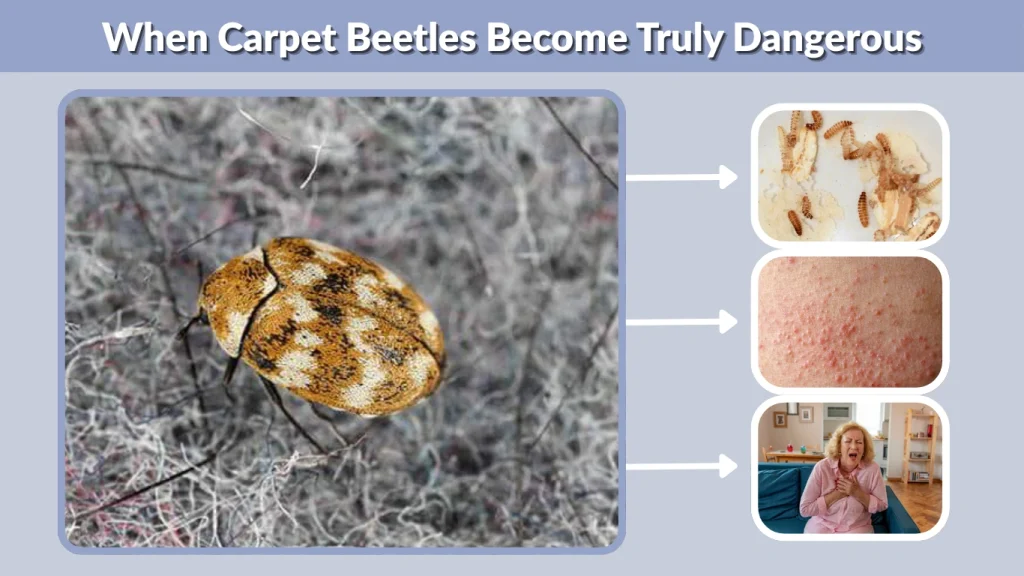
Carpet beetles become more serious when infestations are heavy, widespread, or left untreated for long periods. Large populations increase the amount of shed larval hairs in the environment, raising the likelihood of skin irritation or breathing discomfort in sensitive individuals.
Homes with asthma sufferers, allergy-prone individuals, infants, or elderly residents may experience greater health discomfort. In addition, people who collect wool clothing, antique furniture, taxidermy, books, or natural-fiber décor face higher financial and material risk. In these environments, carpet beetles can cause extensive damage in a short time.
Psychological stress is another overlooked factor. Constant rashes, repeated sightings, and ongoing destruction of personal belongings can significantly affect comfort and peace of mind.
Signs That Carpet Beetles Are Becoming a Risk
Health-Related Warning Signs
Repeated unexplained rashes, persistent itching, or ongoing respiratory irritation may suggest prolonged exposure to larval hairs. If these symptoms continue while carpet beetles are present, the infestation may be reaching a level that affects household health comfort.
Household Damage Warning Signs
Irregular holes in clothing, thinning carpets, damaged upholstery, and visible larvae or shed skins indicate active feeding. Discovering damage in multiple storage areas often means the infestation is well established.
Infestation Growth Indicators
Seeing adult beetles regularly, finding larvae in several rooms, or noticing repeated damage after cleaning are strong signs that the infestation is spreading and becoming a larger household risk.
How to Reduce the Dangers of Carpet Beetles
Reducing carpet beetle risks involves removing food sources, eliminating larvae, and preventing future infestations.
- Vacuum carpets, baseboards, closets, and under furniture weekly
- Wash clothing, blankets, and fabrics in hot water and heat-dry them
- Store natural-fiber items in sealed containers or garment bags
- Remove lint, pet hair, and organic debris regularly
- Seal cracks around windows, doors, vents, and baseboards
- Inspect second-hand furniture, boxes, and plants before bringing them indoors
- Monitor hidden areas such as attics, basements, and storage rooms
Consistent cleaning and early detection greatly reduce both household damage and health discomfort.
FAQs
Are carpet beetles dangerous to humans?
Carpet beetles are not medically dangerous. They do not bite or spread disease. However, larval hairs can cause skin irritation, rashes, or allergic reactions in some people, making infestations uncomfortable if left untreated.
Can carpet beetles make you sick?
Carpet beetles do not cause illness, but sensitive individuals may experience itching, rashes, or mild respiratory irritation from larval hairs. These symptoms are allergic responses rather than infections or poisoning.
Are carpet beetles dangerous to dogs and cats?
Carpet beetles are not dangerous to pets in a medical sense. They do not bite animals. However, infested bedding and fabrics may cause mild irritation and hygiene issues if infestations are heavy.
Are carpet beetles worse than bed bugs?
Carpet beetles and bed bugs cause different problems. Bed bugs directly bite and feed on humans, while carpet beetles mainly damage household items and cause indirect skin irritation. Both require treatment, but their risks are different.
Should carpet beetles be eliminated immediately?
Yes. Although not deadly, carpet beetles should be dealt with quickly to prevent fabric damage, spread throughout the home, and ongoing skin irritation or allergy problems.
