
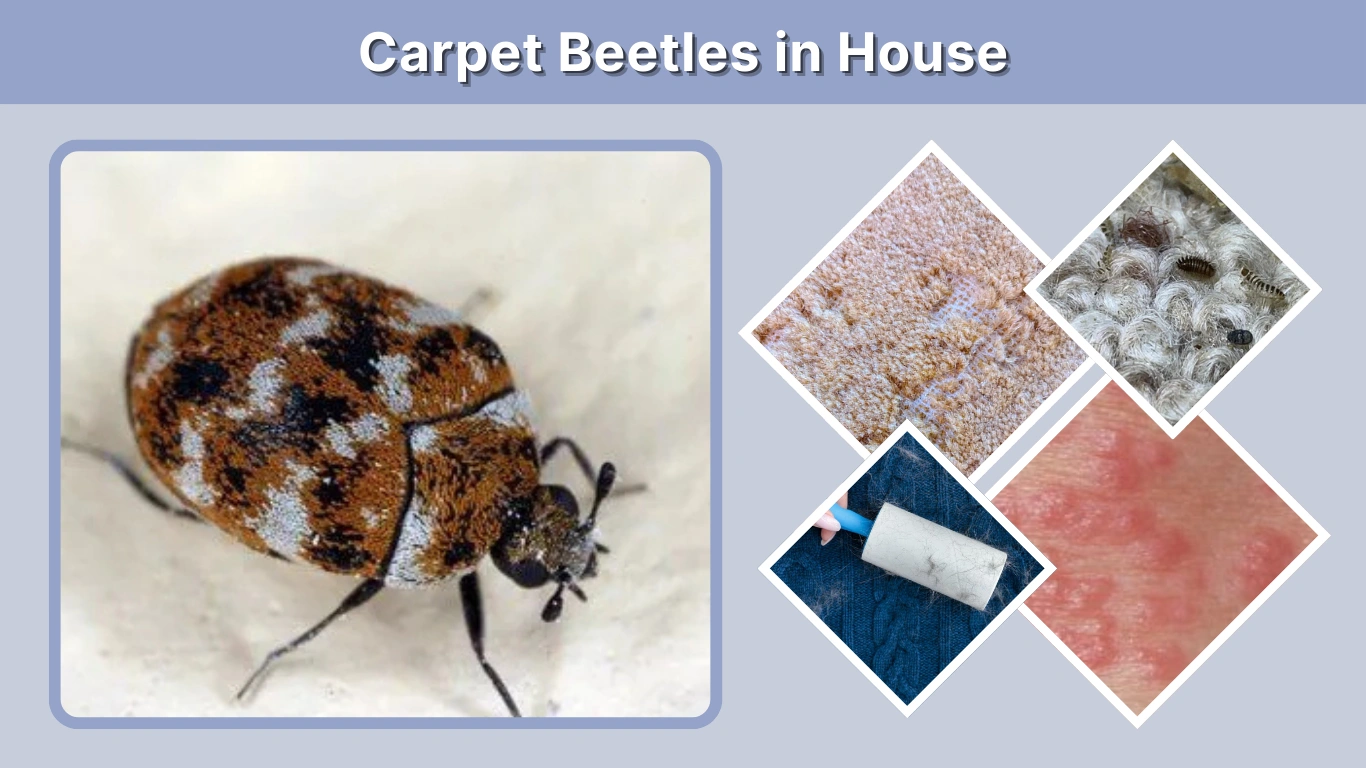
Carpet beetles in the house are a common household pest problem that often goes unnoticed until visible damage appears. Many people first discover them after finding carpet beetle larvae in closets, tiny black beetles near windows, or mysterious holes in clothing and carpets. While carpet beetles do not bite, they can seriously damage fabrics, furniture, and stored items. Understanding what causes carpet beetles, how they get inside, and where they hide is the first step to controlling an infestation.
What Is a Carpet Beetle in the House?
A carpet beetle is a small household insect that feeds on natural fibers found in many homes. Adult carpet beetles are tiny, oval-shaped, and usually black, brown, or patterned. They are often seen crawling near windows or light sources. While adults mainly feed on pollen outdoors, they enter houses to lay eggs.
The real problem inside homes is the larvae. Carpet beetle larvae are small, brownish, and covered in fine hairs. They feed on wool, silk, leather, feathers, pet hair, upholstery, carpets, stored clothing, and even dust buildup. Because larvae hide in dark, undisturbed areas, infestations can grow for months before homeowners realize what is happening.
Types of Carpet Beetles Found in Houses
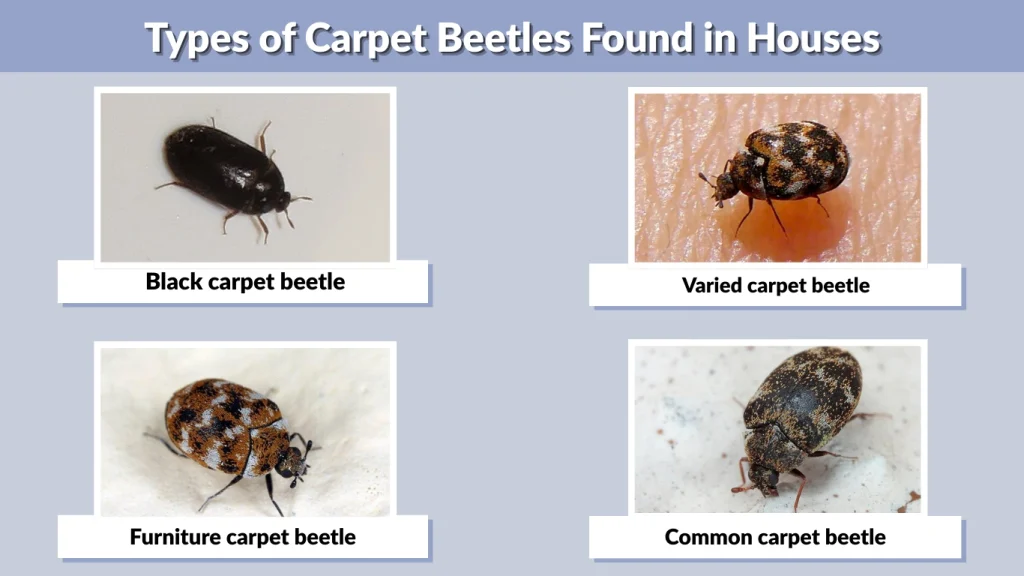
Several species are responsible for indoor infestations. The most common types include:
- Black carpet beetle
- Varied carpet beetle
- Furniture carpet beetle
- Common carpet beetle
Black carpet beetles are usually solid dark brown or black and are known for causing heavier fabric damage. Varied carpet beetles have mottled white, brown, and yellow scales. Furniture and common carpet beetles are smaller but can still cause widespread destruction when larvae are present.
Carpet Beetle Life Cycle in Homes

Eggs and Hatching Stage
Female carpet beetles lay tiny white eggs in hidden indoor areas where food is available. Common egg-laying sites include carpet edges, closets, air vents, furniture seams, and stored clothing boxes. These eggs hatch within one to three weeks. Because the eggs are microscopic and hidden, most infestations begin without any visible warning signs.
Larvae Stage (Most Destructive)
The larval stage is when carpet beetles become a serious household pest. Larvae feed constantly on natural fibers, pet hair, lint, dead insects, and food crumbs. They often hide deep inside carpets, clothing piles, furniture stuffing, and wall cracks. This stage can last several months and is responsible for fabric holes, carpet thinning, damaged blankets, and contamination of stored items.
Pupae and Adult Stage
After feeding, larvae pupate in hidden areas before emerging as adult beetles. Adults are often seen near windows because they are attracted to light. While adults do not damage household items, their presence usually means larvae are hidden somewhere inside the home continuing the infestation cycle.
How Do Carpet Beetles Get in Your House?
Carpet beetles can enter houses in many ways. Adults commonly fly in through open windows, doors, and damaged screens. They may also arrive on cut flowers, houseplants, or through attic and vent openings. Another major source is second-hand furniture, rugs, stored clothing, and cardboard boxes that already contain eggs or larvae.
Pets can also transport carpet beetles indoors, especially if they lie on outdoor surfaces. Once inside, adult beetles search for dark, quiet places to lay eggs, allowing infestations to start without immediate detection.
What Causes Carpet Beetles in the House?

Carpet beetles are attracted to homes that provide both shelter and food sources. The most common causes include:
- Natural fibers such as wool, silk, fur, and feathers
- Lint, dust buildup, and pet hair
- Stored clothes, blankets, and carpets
- Dead insects in walls, light fixtures, and vents
- Indoor plants, dried flowers, and old decorations
Homes with cluttered storage areas, rarely moved furniture, or infrequent deep cleaning provide ideal breeding conditions for carpet beetles.
Where Do Carpet Beetles Come From in the House?
Inside a home, carpet beetles usually originate from hidden nesting zones. These include closets, under carpets and rugs, behind baseboards, inside air ducts, beneath beds, and within upholstered furniture. Attics, storage rooms, and cardboard boxes are also common sources.
Because larvae avoid light and disturbance, they often remain deep inside fabrics or structural gaps. This is why many people see adult beetles near windows but struggle to find the real infestation source elsewhere in the house.
Signs of Carpet Beetle Infestation in a House

Seeing Carpet Beetles or Larvae
Spotting small black or patterned beetles on windowsills, or fuzzy brown larvae crawling on walls, bedding, or floors, is one of the first visible signs of an infestation.
Fabric, Carpet, and Furniture Damage
Carpet beetle damage often appears as irregular holes in clothing, thinning carpets, bare patches on rugs, and damaged upholstery. Natural materials are attacked first, but blended fabrics can also be affected.
Skin Irritation and Allergy Confusion
Although carpet beetles do not bite, some people experience itchy red rashes after contact with larvae hairs or shed skins. This reaction, often called carpet beetle dermatitis, is caused by allergic sensitivity rather than an actual bite. Because the rash may look like insect bites, many homeowners confuse carpet beetles with bed bugs or fleas, delaying proper treatment.
Carpet Beetle Larvae in House: Why They’re the Real Problem
The true threat in any carpet beetle infestation is not the adult beetles but the larvae hiding throughout the home.
- They feed constantly on household materials, causing long-term damage.
- They hide deep in fabrics and cracks, making them difficult to detect.
- They shed skins that trigger allergies and rashes.
- They survive for months indoors, even with limited food.
Unless larvae are eliminated, adult beetles will continue appearing even after surface treatments.
Carpet Beetle Nests in Houses: Where to Look
Carpet beetles do not build visible nests like ants or wasps. Instead, a “nest” usually means a hidden breeding zone where eggs, larvae, shed skins, and food sources are concentrated. Common locations include inside closets, under carpet edges, behind baseboards, inside air vents, beneath beds, in sofa stuffing, and around stored clothing.
To find these areas, inspect places that are dark, rarely disturbed, and rich in lint or natural fibers. Removing these hidden centers is essential for full control.
Black Carpet Beetles in House: Special Risks
Black carpet beetles are among the most destructive indoor species. Their larvae feed aggressively on wool, leather, feathers, stored food, and even animal remains trapped in walls. They also take longer to develop, which means infestations may persist unnoticed for long periods. Homes with black carpet beetles often show heavier fabric loss and recurring outbreaks.
How to Kill Carpet Beetles in a House
Eliminating carpet beetles requires a combination of physical removal and targeted treatment.
- Deep vacuuming routines remove larvae, eggs, and shed skins from carpets, cracks, and furniture.
- Hot washing and high-heat drying kill all life stages in clothing, bedding, and curtains.
- Insecticide sprays and dusts can be applied to baseboards, closets, and hidden crevices.
- Freezing delicate fabrics for several days destroys larvae without damage.
- Professional extermination may be needed for widespread or recurring infestations.
Consistent follow-up cleaning is just as important as the first treatment.
How to Get Rid of Carpet Beetles in Your House Permanently
Cleaning and Physical Removal
Start by vacuuming every affected area, including carpets, furniture seams, closet floors, and baseboards. Dispose of the vacuum bag immediately. Wash all washable fabrics in hot water and dry them on high heat. Dry-clean items that cannot be washed.
Chemical and Natural Treatments
Apply residual insecticide sprays to cracks, under carpets, and storage areas. Boric acid and diatomaceous earth can be lightly dusted into voids and along edges to kill larvae. Natural repellents like cedar oil or essential oil blends may help deter adults but should not replace direct treatments.
Monitoring After Treatment
Sticky traps near windows and closets help detect remaining adults. Regular inspections, weekly vacuuming, and re-treating problem zones ensure the infestation does not return.
Why Are There Carpet Beetles in My House Repeatedly?
Repeated infestations usually happen when hidden larvae remain, or new beetles are brought inside on clothing, furniture, or plants. Open entry points, cluttered storage areas, and untreated breeding zones allow carpet beetles to rebuild populations. Without sealing cracks, removing attractants, and maintaining cleaning routines, infestations often reappear.
How to Prevent Carpet Beetles in the House
- Seal cracks, vents, and damaged screens to block entry.
- Store clothes and fabrics in airtight containers.
- Vacuum carpets, closets, and furniture regularly.
- Reduce lint, dust, and pet hair buildup.
- Inspect second-hand items before bringing them indoors.
Long-term prevention depends on cleanliness, inspection, and limiting food sources.
FAQs
Are carpet beetles in the house dangerous to humans?
Carpet beetles are not dangerous in the traditional sense because they do not bite or transmit disease. However, their larvae hairs can cause allergic skin reactions, itching, and respiratory irritation in sensitive individuals. The main risk comes from the damage they cause to clothing, carpets, furniture, and stored materials.
Why do carpet beetles keep coming back to my house?
They usually return because hidden eggs or larvae were not fully removed, or new beetles were introduced through plants, clothing, or furniture. Without sealing entry points and eliminating hidden breeding zones, adult beetles can continue laying eggs, restarting the infestation cycle.
How long does it take to get rid of carpet beetles in a house?
Small infestations may be controlled within two to three weeks of deep cleaning and treatment. Larger or long-term infestations can take one to three months. Success depends on killing larvae, removing food sources, and maintaining consistent monitoring and follow-up cleaning.
Do carpet beetles live in beds and sofas?
Yes, carpet beetles commonly live in mattresses, sofas, and upholstered furniture because these items contain fabric, dust, and hair. Larvae often hide deep in seams and padding, feeding unnoticed until damage or rashes appear.
Can carpet beetles survive after pest control treatment?
They can survive if treatments miss hidden larvae or eggs. Professional pest control greatly reduces populations, but continued vacuuming, washing fabrics, sealing cracks, and using monitoring traps are essential to fully eliminate carpet beetles and prevent reinfestation.
