
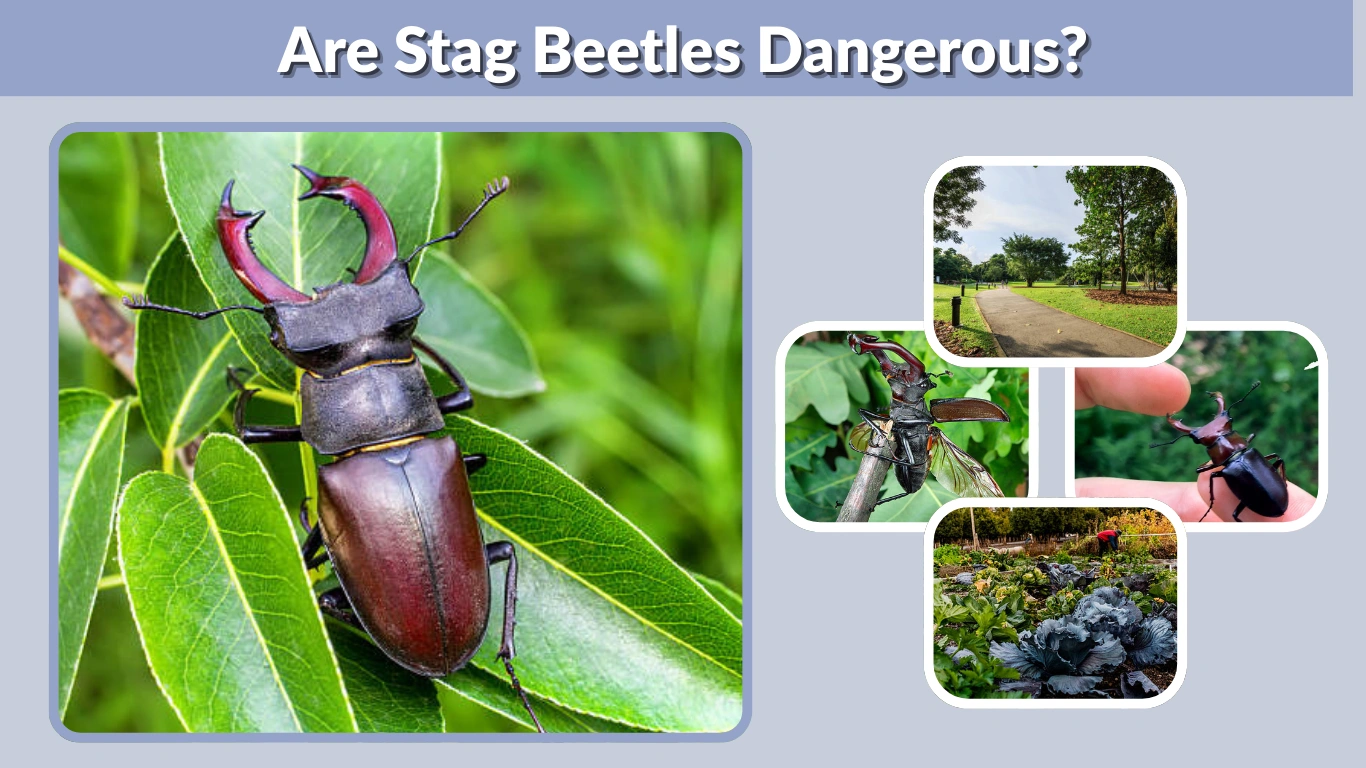
Stag beetles are among the most striking insects in the world, easily recognized by their large, antler-like jaws and impressive size. Because of their unusual appearance, many people wonder whether stag beetles are dangerous, whether they bite, or even if they can fly. These beetles often spark curiosity—and sometimes fear—when they appear in gardens, forests, or near homes during warm months.
In reality, stag beetles are mostly harmless insects that play an important role in nature. This article explores what stag beetles are, how big they grow, where they live, what they eat, and how they behave around humans. Understanding these fascinating beetles helps clear up common myths and highlights why they deserve protection rather than fear.
What Is a Stag Beetle?
A stag beetle is a type of beetle belonging to the family Lucanidae. They get their name from the large mandibles found on males, which resemble the antlers of a stag (male deer). These jaws are not primarily used for biting humans but for wrestling with other males during mating competitions.
Stag beetles have strong, compact bodies, six legs, and hard wing covers called elytra that protect their flying wings underneath. Males and females look quite different. Males are usually larger and have much more prominent jaws, while females are smaller with shorter, stronger mandibles designed for chewing rather than display.
Despite their intimidating appearance, stag beetles are generally shy and non-aggressive. They spend much of their lives hidden from view, especially during their long larval stage.
How Big Are Stag Beetles?

Average Size
Most adult stag beetles measure between 5 and 8 centimeters (2–3 inches) in length, although size varies depending on the species. Males are typically larger than females, mainly because of their oversized jaws. Females may look more compact, but they are often stronger biters due to their shorter, more powerful mandibles.
Largest Stag Beetle Species
Some stag beetle species are among the largest beetles in the world. The giant stag beetles found in parts of Asia can grow over 12 centimeters (nearly 5 inches) long, including their mandibles. These impressive sizes contribute to their popularity among collectors and explain why some species are considered valuable or expensive.
Where Do Stag Beetles Live?
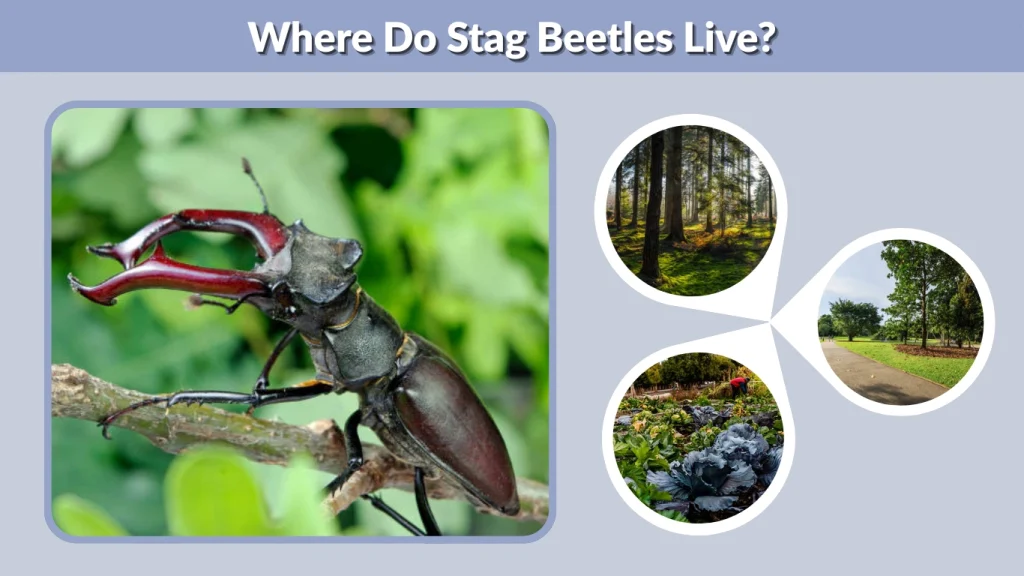
Natural Habitat
Stag beetles prefer habitats with plenty of dead or decaying wood. Forests, woodlands, parks, and old gardens are ideal environments for them. Rotting tree stumps, fallen logs, and underground roots are especially important, as stag beetle larvae develop inside decaying wood for several years.
Because modern landscaping often removes dead wood, suitable habitats for stag beetles are becoming increasingly rare.
Where Are Stag Beetles Found?
Stag beetles are found across Europe, Asia, and North America, with the greatest diversity occurring in Asia. Different species are adapted to different climates, but most prefer warm, temperate environments. In some countries, stag beetles are considered a protected species due to declining populations.
What Do Stag Beetles Eat?
What Adult Stag Beetles Eat
Adult stag beetles mainly feed on tree sap and plant juices. They are often attracted to sap flows on damaged trees or to overripe and fermenting fruit on the ground. Unlike many insects, adult stag beetles do not chew solid wood; their mouthparts are designed for lapping up liquids.
Because adults eat relatively little, their lifespan above ground is fairly short.
What Stag Beetle Larvae Eat
The larval stage is the most important feeding period in a stag beetle’s life. Stag beetle larvae feed on decaying wood, breaking it down and recycling nutrients back into the soil. This stage can last anywhere from 3 to 7 years, depending on species and environmental conditions.
By feeding on rotting wood, stag beetle larvae play a crucial role in maintaining healthy ecosystems.
Can Stag Beetles Fly?

Yes, stag beetles can fly, although many people are surprised by this. They have fully developed wings hidden beneath their hard wing covers. Stag beetles usually fly during warm summer evenings, especially at dusk.
Their flight can appear clumsy and noisy due to their large bodies, but they are capable of covering significant distances when searching for mates or food. Males are more commonly seen flying than females.
Do Stag Beetles Bite?
Stag beetles can bite, but it is very rare and usually only happens if they feel threatened or are handled roughly. Male stag beetles have large mandibles, but these jaws are designed mainly for fighting other males, not for injuring predators or humans. In most cases, a male’s bite feels like a mild pinch and does not break the skin.
Female stag beetles, although smaller, have shorter and stronger jaws and can deliver a more noticeable bite if provoked. Even so, stag beetle bites are not dangerous and do not carry venom. Simply leaving them alone or gently guiding them onto a surface is enough to avoid any risk.
Are Stag Beetles Dangerous or Harmful?

Despite their fearsome appearance, stag beetles are not dangerous. They are not aggressive, do not attack humans, and are not poisonous. Stag beetles pose no threat to pets, children, or property, and they do not sting.
Most defensive behavior occurs only when the beetle is picked up or disturbed. In the wild, stag beetles prefer to flee or remain still rather than confront a threat. Their large size and jaws are primarily for mating displays, not for causing harm. Overall, stag beetles are considered harmless insects that should be respected rather than feared.
How Long Do Stag Beetles Live?
The lifespan of a stag beetle depends greatly on its life stage. Adult stag beetles typically live for only a few months, usually emerging in late spring or summer to mate and reproduce.
However, the majority of a stag beetle’s life is spent as a larva. During this stage, which can last several years, the beetle develops slowly inside decaying wood. This long developmental period allows the larvae to grow large and store energy before emerging as adults. Once their reproductive role is complete, adult stag beetles naturally die, completing their life cycle.
Are Stag Beetles Endangered?
In many regions, stag beetle populations are declining, and some species are considered endangered or protected. The primary reason for this decline is habitat loss, especially the removal of dead wood from forests, parks, and gardens.
Urban development, intensive gardening, and modern forestry practices reduce the availability of rotting wood that stag beetle larvae need to survive. In response, several countries have introduced conservation laws to protect stag beetles and their habitats. Leaving fallen logs, tree stumps, and undisturbed soil can significantly help support local populations.
Why Are Stag Beetles So Expensive?
Some stag beetle species can be surprisingly expensive, particularly in countries where they are kept as pets or collected. Large or rare species, especially those from Asia, can sell for high prices due to their impressive size and distinctive appearance.
Breeding stag beetles is time-consuming because of their long larval stage, which adds to their value. However, it is important to note that collecting or selling stag beetles is illegal in some regions. Ethical and legal considerations should always come before commercial interest.
Are Stag Beetles Friendly?
Stag beetles are not “friendly” in the way pets are, but they are calm and non-aggressive by nature. They do not seek out human interaction and will usually try to avoid contact altogether.
If encountered in the wild, the best approach is to observe without touching. If a stag beetle is in danger, such as being on a road, gently moving it to safety is usually safe for both the beetle and the person.
Interesting Facts About Stag Beetles
Stag beetles have one of the strongest bites relative to body size among insects, although this strength is rarely used against anything other than rival males. They are mostly nocturnal, becoming active at night during warm months. Stag beetles also play an important ecological role by helping decompose dead wood and recycle nutrients back into the soil.
Conclusion
Stag beetles are fascinating insects that often suffer from misunderstanding due to their size and appearance. While they may look intimidating, they are harmless, non-poisonous, and essential to healthy ecosystems. From their unusual jaws and clumsy flight to their long larval development, stag beetles are a remarkable example of nature’s complexity.
By learning more about stag beetles and protecting their habitats, we can help ensure that these unique insects continue to thrive for generations to come.
