
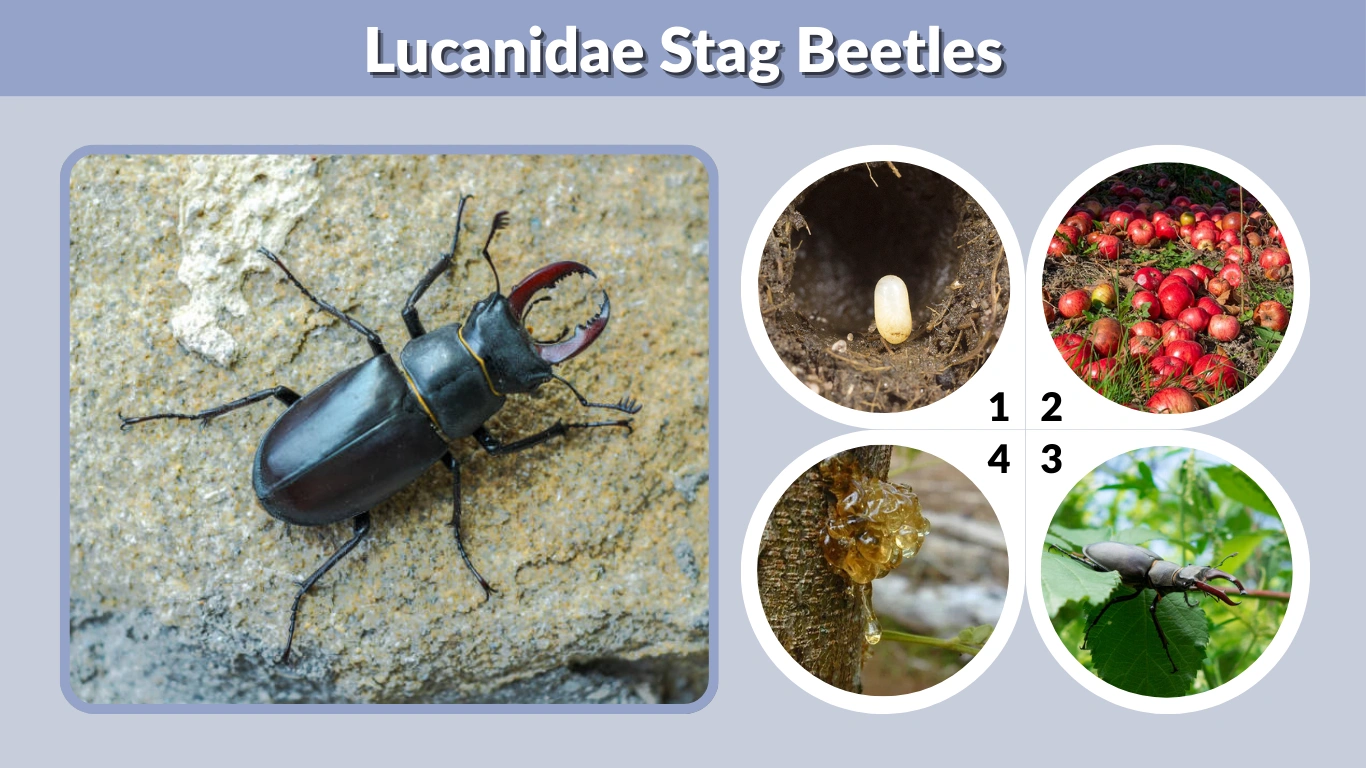
Lucanidae, commonly known as stag beetles, are one of the most recognizable beetle families due to the oversized mandibles found in many species. These beetles belong to the order Coleoptera and are especially admired for their unique appearance and ecological role. Found mainly in forested environments, stag beetles spend most of their lives hidden inside decaying wood, contributing to nutrient recycling. This article explores the classification, physical traits, life cycle, and habitat of Lucanidae, offering a clear understanding of why these insects are so important in natural ecosystems.
What Are Lucanidae Stag Beetles?
Lucanidae is a family of beetles commonly referred to as stag beetles because the enlarged jaws of males resemble the antlers of a stag. The family includes over a thousand described species worldwide, ranging from small, inconspicuous beetles to large, striking insects. Stag beetles are part of the order Coleoptera, which is characterized by hardened forewings known as elytra that protect the flying wings underneath.
These beetles are best known for their strong mandibles, which are primarily used during mating competitions rather than for feeding. While stag beetles may look intimidating, they are generally harmless to humans. Their biology and behavior are closely tied to dead and decaying wood, making them an essential component of healthy forest ecosystems.
Taxonomy and Classification
Scientific Classification of Lucanidae
Stag beetles belong to the following scientific classification:
Kingdom Animalia, Phylum Arthropoda, Class Insecta, Order Coleoptera, and Family Lucanidae. Members of this family are identified based on features such as elbowed antennae with a comb-like club, robust bodies, and distinct mandible structures.
Taxonomists often rely on mandible shape, antennal structure, and body proportions to distinguish between genera and species within Lucanidae. Sexual dimorphism is also an important characteristic, as males and females can appear quite different from one another.
Relationship to Other Beetle Families
Lucanidae are sometimes confused with beetles from the family Scarabaeidae, such as rhinoceros beetles. However, stag beetles differ in several ways, including their feeding habits, antenna structure, and larval development. While scarab beetles often feed on dung or living plant material, stag beetle larvae primarily consume decaying wood. These differences support Lucanidae’s classification as a distinct beetle family.
Physical Characteristics of Lucanidae Stag Beetles
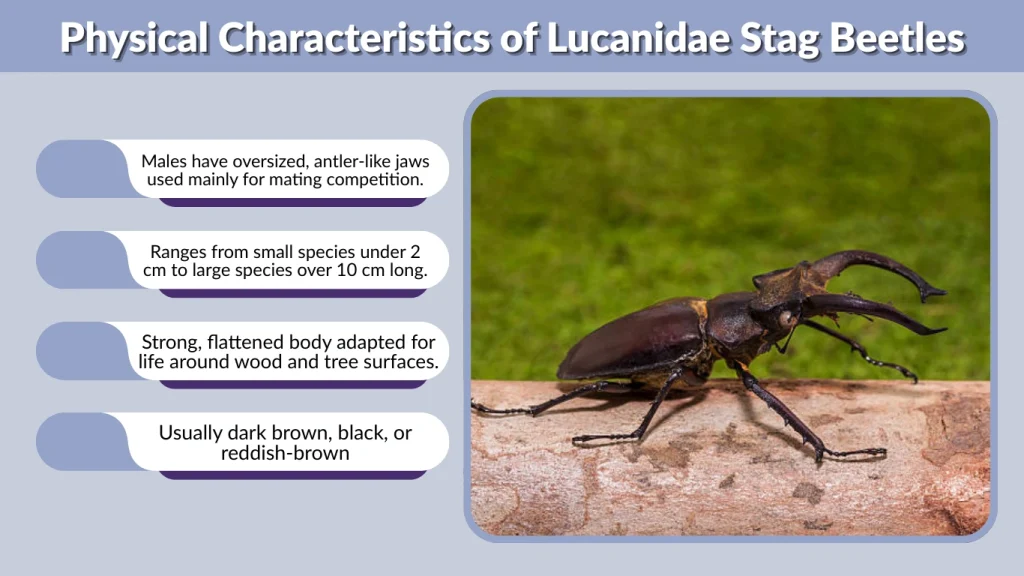
- Large mandibles: Males have oversized, antler-like jaws used mainly for mating competition.
- Sexual dimorphism: Males and females differ in mandible size and overall appearance.
- Body size: Ranges from small species under 2 cm to large species over 10 cm long.
- Body shape: Strong, flattened body adapted for life around wood and tree surfaces.
- Coloration: Usually dark brown, black, or reddish-brown; some species show subtle gloss.
- Hardened exoskeleton: Tough outer shell provides protection and structural support.
- Elytra (wing covers): Hard forewings protect the delicate flight wings underneath.
- Strong legs and claws: Adapted for gripping bark, logs, and uneven surfaces.
Life Cycle of Lucanidae Stag Beetles
Egg and Larval Stages
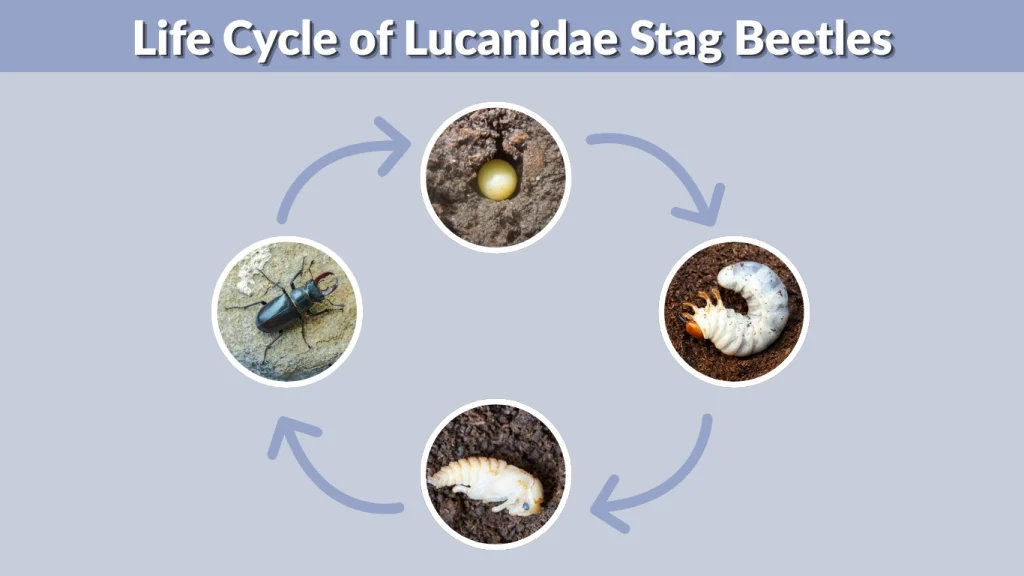
The life cycle of stag beetles begins when females lay eggs in or near decaying wood, such as rotting logs, tree stumps, or underground roots. After hatching, the larvae spend several years feeding on decomposing wood. This larval stage is the longest part of the stag beetle’s life cycle and may last anywhere from two to seven years, depending on species and environmental conditions.
During this time, larvae play a crucial role in breaking down dead wood and returning nutrients to the soil.
Pupal and Adult Stages
Once fully grown, the larva forms a pupal chamber within the soil or wood and undergoes metamorphosis. After emerging as adults, stag beetles typically live for only a few months. Adult activity is often seasonal, with most species appearing during warmer months to mate and reproduce.
Habitat and Geographic Distribution
Natural Habitat
Lucanidae stag beetles are closely associated with woodland and forest habitats where deadwood is abundant. They thrive in environments with fallen logs, decaying tree roots, and old stumps, which provide both food and breeding sites. Mature forests with minimal disturbance are especially important for sustaining healthy stag beetle populations.
Global Distribution
Stag beetles are distributed across many parts of the world, with the greatest diversity found in temperate and subtropical regions. They are especially common in Europe, East and Southeast Asia, and parts of North and South America. Some species have very localized ranges, while others are widespread across multiple countries and habitats.
Climate plays an important role in determining where Lucanidae species can thrive. Most prefer regions with moderate humidity and access to long-established forests. Because their larvae rely on decaying wood, stag beetles are less common in areas where deadwood is routinely removed or forests are heavily managed.
Diet and Feeding Behavior
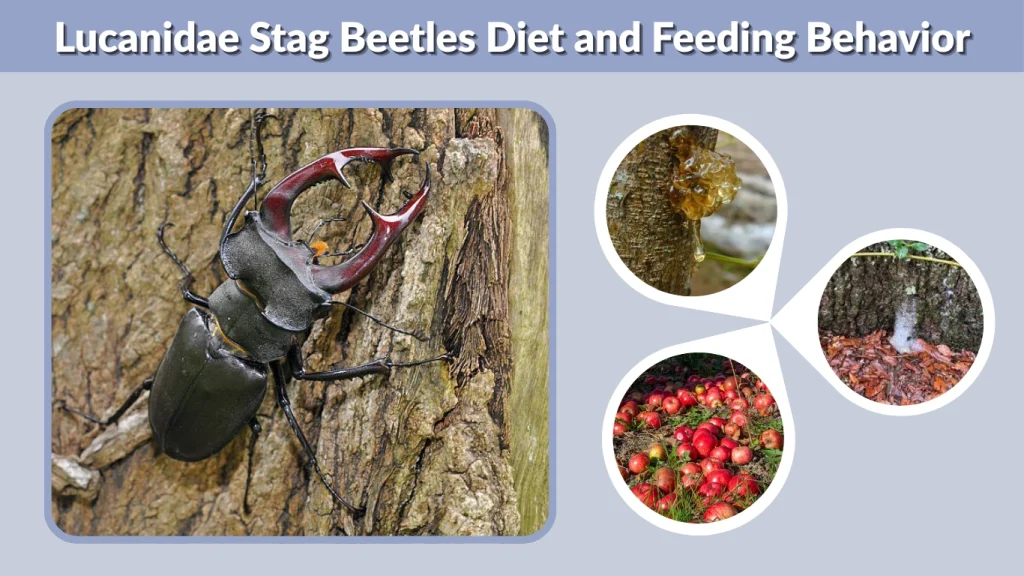
The diet of stag beetles varies depending on their life stage. Larvae feed almost exclusively on decaying wood, breaking down tough plant fibers with the help of symbiotic microorganisms in their digestive systems. This process contributes significantly to the decomposition of fallen trees and the recycling of nutrients within forest ecosystems.
Adult stag beetles have a much simpler diet. They primarily feed on tree sap, oozing plant fluids, and overripe or fallen fruit. Adults are not strong feeders and consume relatively little food during their short lifespan, focusing instead on reproduction.
Behavior and Ecology
Stag beetles are generally nocturnal, becoming most active during the evening and nighttime hours. Adults are often attracted to lights, which sometimes brings them into contact with human environments. Despite their intimidating appearance, they are typically slow-moving and non-aggressive.
Male stag beetles are well known for their competitive behavior during the breeding season. They engage in ritualized battles, using their mandibles to lift or push rivals away rather than injure them. These contests determine mating opportunities and are an important part of sexual selection within the family.
Ecologically, Lucanidae are considered saproxylic insects, meaning they depend on decaying wood for at least part of their life cycle. By breaking down dead plant material, they support soil formation and nutrient cycling, benefiting many other organisms within the ecosystem.
Notable Species of Lucanidae
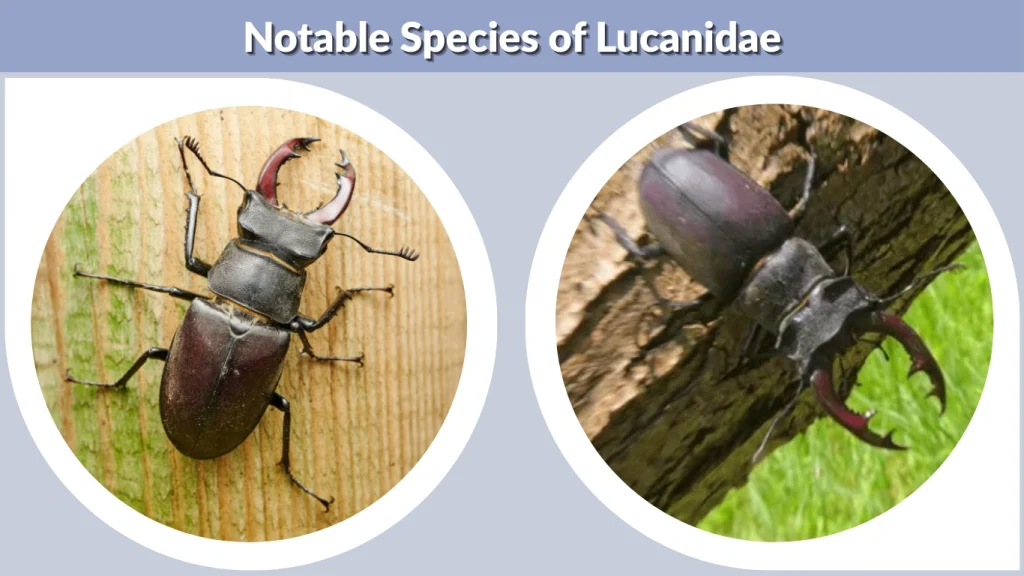
Lucanus cervus (European Stag Beetle)
Lucanus cervus is one of the most well-known stag beetle species and the largest terrestrial beetle in Europe. Males are easily recognized by their large, antler-like mandibles. This species is primarily found in oak woodlands and other deciduous forests across parts of Europe.
Due to habitat loss and declining deadwood availability, Lucanus cervus has experienced population declines in several regions. As a result, it is protected by conservation laws in some European countries.
Other Important Genera
Beyond Lucanus, the family Lucanidae includes several other notable genera such as Dorcus and Prosopocoilus. These genera are particularly diverse in Asia, where many species exhibit impressive mandible shapes and body sizes. Some species are studied extensively in entomology due to their unique morphology and behavior.
Importance of Stag Beetles in Ecosystems
Stag beetles play a vital role in maintaining healthy forest ecosystems. By consuming and breaking down deadwood, their larvae accelerate decomposition processes that would otherwise take much longer. This activity helps release nutrients back into the soil, supporting plant growth and overall forest productivity.
Because they are sensitive to environmental changes, stag beetles are often considered indicator species. A healthy stag beetle population usually reflects a well-balanced forest ecosystem with sufficient deadwood and minimal disturbance.
Conservation Status and Threats
Many stag beetle species face increasing threats due to habitat destruction, deforestation, and modern forestry practices. The removal of fallen trees and old stumps eliminates essential breeding sites for larvae. Urban expansion and agricultural development have also reduced suitable habitats.
Conservation efforts focus on preserving mature forests, retaining deadwood, and raising public awareness about the ecological value of stag beetles. In some regions, legal protection has been introduced to prevent collection and habitat damage.
Are Stag Beetles Dangerous to Humans?
Despite their large mandibles, stag beetles pose little danger to humans. They are not venomous and rarely bite unless handled roughly. Even when they do, the pinch is usually mild. Their fearsome appearance often leads to misconceptions, but stag beetles are generally harmless and should be left undisturbed in the wild.
Conclusion
Lucanidae stag beetles are remarkable insects that combine striking physical features with significant ecological importance. From their long developmental stages hidden in decaying wood to their brief adult lives focused on reproduction, they play a crucial role in forest ecosystems. Understanding and protecting stag beetles not only preserves a fascinating group of insects but also supports the health and biodiversity of woodland environments.
FAQs
How long do stag beetles live?
Stag beetles spend most of their lives as larvae, often developing for two to seven years inside decaying wood. In contrast, adult stag beetles usually live only a few months, long enough to reproduce.
Why do male stag beetles have large mandibles?
Male stag beetles use their large mandibles to compete with other males during the breeding season. These jaws help them lift or push rivals away rather than cause serious injury.
Are stag beetles dangerous to humans?
Stag beetles are not dangerous to humans. They are not venomous and rarely bite unless handled roughly, and even then, their bite is generally harmless.
Where are stag beetles commonly found?
Stag beetles are typically found in forests and woodlands with plenty of decaying wood. They are common in parts of Europe, Asia, and the Americas where suitable habitats exist.
What do stag beetle larvae eat?
Stag beetle larvae feed on rotting wood, breaking it down as they grow. This feeding behavior plays an important role in nutrient recycling within forest ecosystems.
