
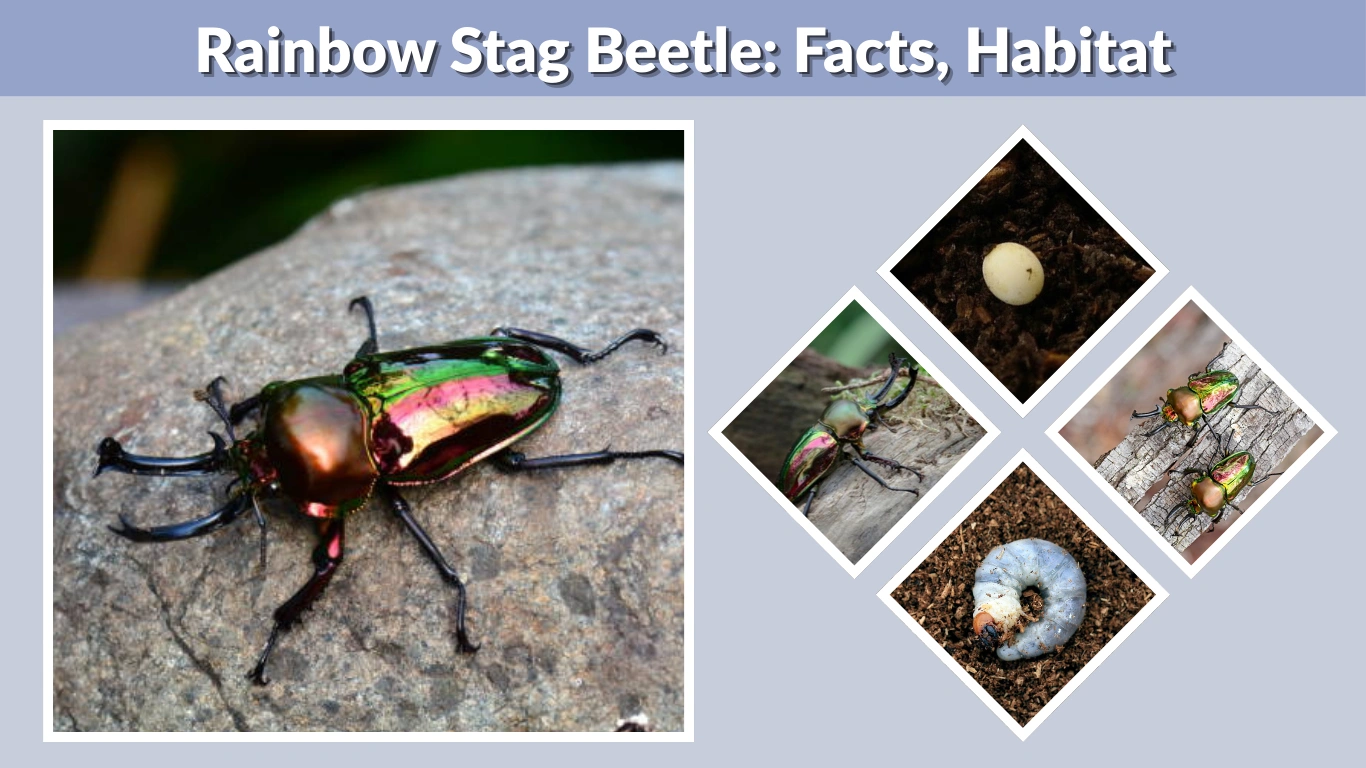
The rainbow stag beetle is one of the most visually striking insects found in nature. Known for its shimmering, iridescent body and impressive antler-like mandibles, this beetle captures the attention of insect enthusiasts, researchers, and nature lovers alike. Unlike many common beetles with dull or camouflaged colors, the rainbow stag beetle displays a metallic spectrum that appears to change under different lighting conditions. Beyond its beauty, this beetle plays an important ecological role in forest ecosystems. In this article, you’ll explore what the rainbow stag beetle is, how it looks, where it lives, and why it is such a fascinating species.
What Is a Rainbow Stag Beetle?
A rainbow stag beetle is a member of the stag beetle family, Lucanidae, a group of beetles best known for their large, curved mandibles that resemble deer antlers. The term “rainbow” refers to the beetle’s iridescent coloration rather than a single species name, as several stag beetles display this striking, multicolored sheen.
These beetles are primarily found in forested environments and are often considered rare due to their specific habitat requirements and limited visibility in the wild. Compared to more common stag beetles, rainbow stag beetles stand out because of their glossy, metallic appearance and unique surface structure, which reflects light in vivid hues such as green, blue, gold, and purple.
Scientific Classification
Rainbow stag beetles belong to the family Lucanidae, which includes over a thousand species worldwide. While the exact scientific name may vary depending on the species being referenced, all rainbow stag beetles share common traits typical of the Lucanidae family. They are closely related to other stag beetles found in Asia, Oceania, and parts of South America. These beetles evolved specialized mandibles and strong bodies that help them survive in dense forest environments.
Physical Characteristics of the Rainbow Stag Beetle
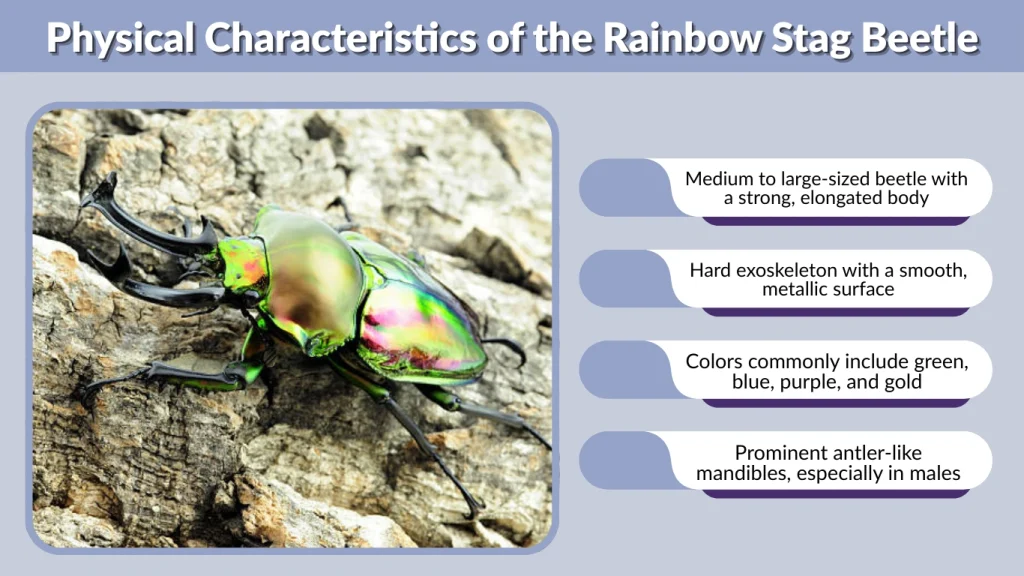
- Medium to large-sized beetle with a strong, elongated body
- Hard exoskeleton with a smooth, metallic surface
- Iridescent rainbow coloration that shifts under light
- Colors commonly include green, blue, purple, and gold
- Prominent antler-like mandibles, especially in males
- Males are generally larger than females
- Females have shorter, more functional mandibles
- Sturdy legs adapted for climbing tree bark and logs
Iridescent Coloration Explained
The rainbow-like colors of the rainbow stag beetle are not caused by pigments alone. Instead, they result from structural coloration, a phenomenon where microscopic layers on the beetle’s exoskeleton bend and reflect light. As light hits the surface at different angles, different wavelengths are reflected, producing a shifting rainbow effect.
This form of coloration can provide evolutionary advantages. Iridescence may help with camouflage among glossy leaves or wet bark, confuse predators, or signal strength and health to potential mates. Unlike pigments, structural colors do not fade easily, allowing the beetle to maintain its brilliance throughout its adult life.
Mandibles and Sexual Differences
One of the most recognizable features of the rainbow stag beetle is its mandibles. Male beetles typically have much larger, more curved mandibles than females. These antler-like structures are primarily used during mating competitions, where males wrestle each other to gain access to females.
Female rainbow stag beetles have smaller mandibles, which are more practical for feeding and digging rather than combat. Aside from mandible size, males are often slightly larger overall, though both sexes share the same iridescent coloration and body shape.
Natural Habitat and Geographic Distribution
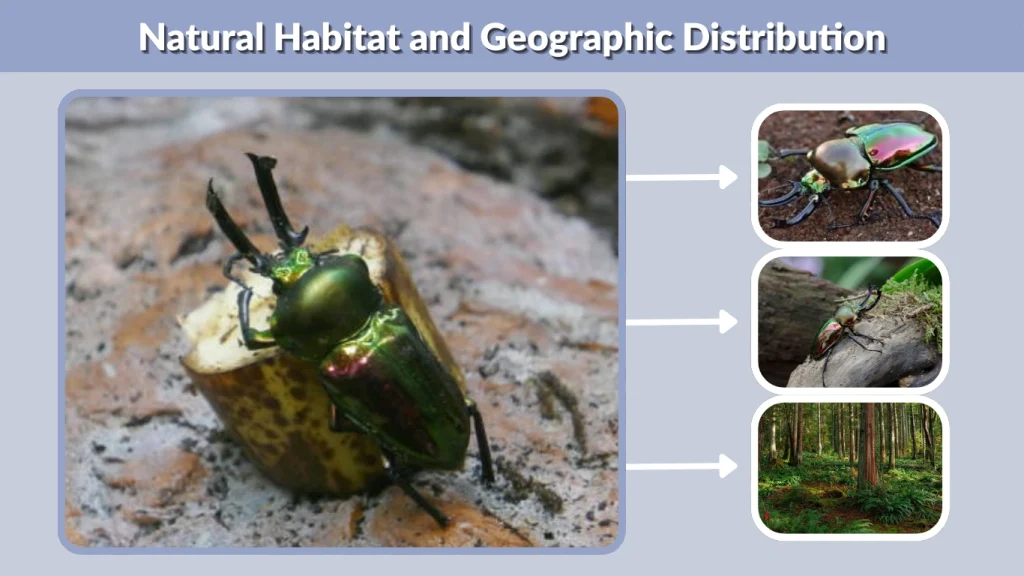
Rainbow stag beetles are usually found in tropical and subtropical forests, where humidity and dense vegetation create ideal living conditions. They are commonly associated with old-growth forests that contain plenty of decaying wood, which is essential for their development.
These beetles tend to live in regions with stable temperatures and high moisture levels. Fallen logs, tree stumps, and rotting roots provide both shelter and food sources, especially for larvae. Because they rely on such specific habitats, rainbow stag beetles are often absent from heavily disturbed or deforested areas.
Microhabitats Within Forests
Within forests, rainbow stag beetles prefer microhabitats that offer protection and consistent moisture. Decaying wood plays a crucial role, as it serves as both a nursery for larvae and a feeding site. The larvae spend much of their life hidden inside rotting logs, where they are protected from predators and environmental extremes.
Diet and Feeding Habits
Rainbow stag beetles have a diet that changes significantly throughout their life cycle. As larvae, they primarily feed on decaying wood, breaking down dead tree material and absorbing nutrients from decomposing plant matter. This diet is essential for their growth and can last for several years before they reach adulthood.
Adult rainbow stag beetles typically feed on tree sap, fermenting fruit, and other sugary substances found in forest environments. They are often attracted to damaged trees where sap flows freely. Their feeding behavior usually occurs at night, reducing the risk of predation and competition with other insects.
Role in Forest Ecosystems
By consuming decaying wood and organic material, rainbow stag beetles play an important role in nutrient recycling. Their feeding activity helps return essential minerals to the soil, supporting plant growth and maintaining forest health. In this way, they contribute directly to the stability and biodiversity of forest ecosystems.
Life Cycle and Lifespan
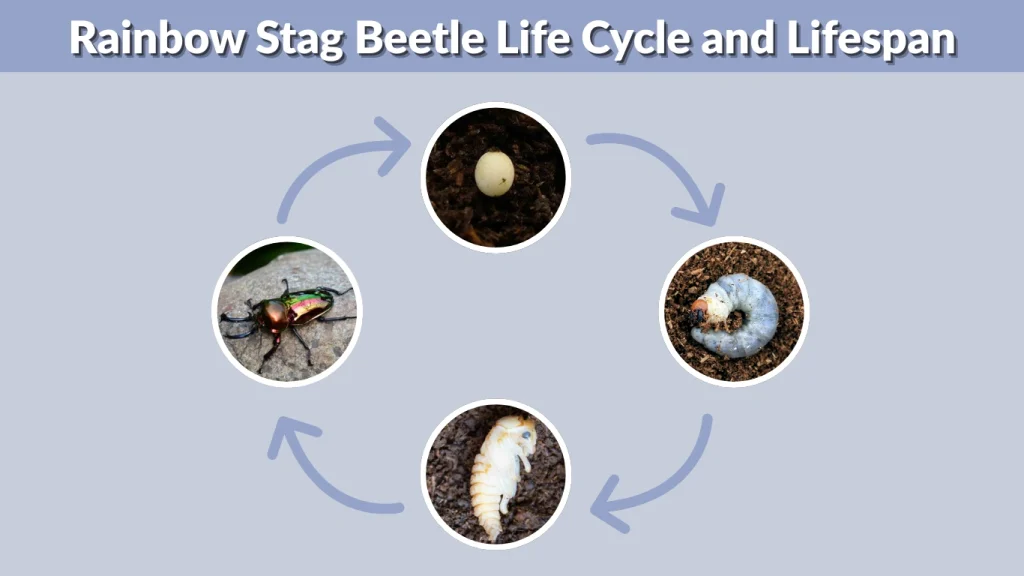
The life cycle of a rainbow stag beetle follows the typical four-stage development of beetles: egg, larva, pupa, and adult. Most of the beetle’s life is spent in the larval stage, hidden within rotting wood underground or inside fallen logs.
Depending on environmental conditions and species, the larval stage can last anywhere from one to several years. Once fully developed, the larva forms a protective chamber and enters the pupal stage, where it transforms into an adult beetle. Adult rainbow stag beetles generally live for several months, focusing on reproduction before completing their life cycle.
Larval Development Stage
The larval stage is the most critical period in the rainbow stag beetle’s life. During this time, larvae rely heavily on undisturbed, decaying wood to survive. Changes in forest structure, such as logging or land clearing, can disrupt larval development and significantly reduce beetle populations.
Behavior and Natural Traits
Rainbow stag beetles are mostly nocturnal, becoming active during the evening and night hours. They spend their days hidden beneath bark, inside logs, or underground to avoid predators and harsh environmental conditions. Despite their solid build, many rainbow stag beetles are capable fliers, using flight to locate food sources and mates.
When threatened, these beetles may raise their bodies, spread their mandibles, or attempt to flee. While their mandibles look intimidating, they are rarely aggressive toward humans and pose little danger unless handled roughly.
Mating and Competition
Mating behavior among rainbow stag beetles often involves competition between males. Using their enlarged mandibles, males grapple with rivals to push them away from potential mates. These contests rarely result in serious injury but demonstrate strength and dominance, increasing mating opportunities for the winning male.
Ecological Importance of the Rainbow Stag Beetle
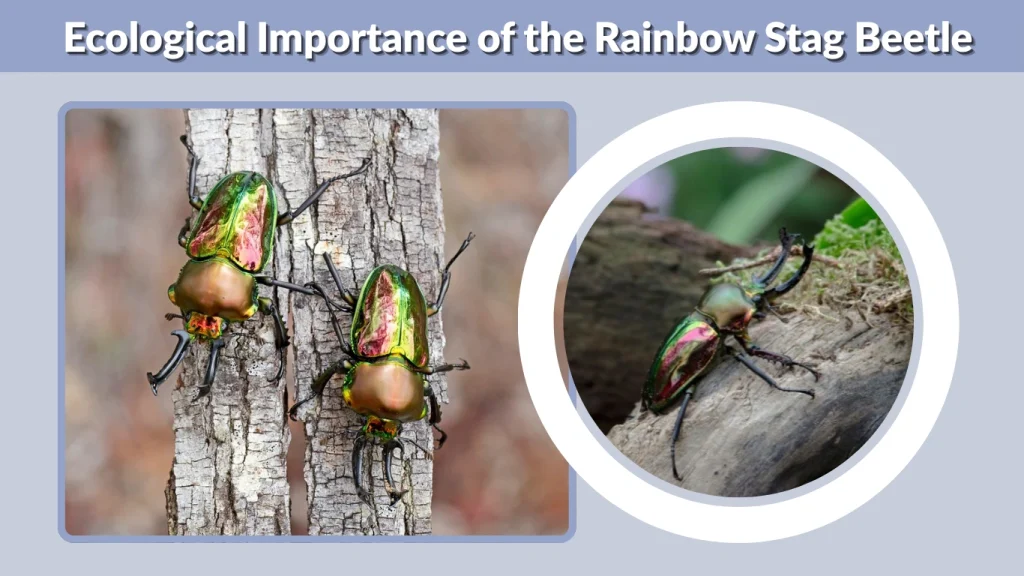
Rainbow stag beetles are valuable indicators of healthy forest ecosystems. Their presence suggests an environment rich in decaying wood and biological diversity. Because they are sensitive to habitat changes, declines in their populations often signal broader ecological problems such as deforestation or soil degradation.
Conservation Status and Threats
Many rainbow stag beetle species face increasing threats due to habitat loss, deforestation, and urban expansion. The removal of dead wood from forests, often considered cleanup, eliminates essential breeding and feeding sites. In some regions, illegal collecting for the exotic insect trade has also contributed to population declines.
Conservation Efforts and Protection
Protecting natural forests and allowing dead wood to remain in ecosystems are key conservation strategies. Raising awareness about the ecological value of rainbow stag beetles can help reduce unnecessary habitat destruction. Supporting forest conservation initiatives also plays an important role in preserving these insects for future generations.
Interesting Facts About the Rainbow Stag Beetle
Rainbow stag beetles are admired not only for their appearance but also for their strength relative to size. Some species can lift objects several times their own body weight. Their iridescent coloration has also inspired scientific research into light reflection and material design.
Conclusion
The rainbow stag beetle is far more than just a beautiful insect. Its iridescent colors, unique mandibles, and fascinating behavior make it a standout member of the beetle world. More importantly, it plays a vital role in maintaining healthy forest ecosystems through decomposition and nutrient recycling. As natural habitats continue to face pressure from human activity, understanding and protecting species like the rainbow stag beetle becomes increasingly important. By valuing biodiversity and supporting conservation efforts, we help ensure that these remarkable insects continue to thrive in the wild.
FAQs
Are rainbow stag beetles rare?
Rainbow stag beetles are considered relatively rare, mainly because they depend on specific forest habitats with plenty of decaying wood. Their populations are often localized, and they are not commonly seen due to their nocturnal behavior and hidden larval stages.
Are rainbow stag beetles dangerous to humans?
No, rainbow stag beetles are not dangerous to humans. Although males have large mandibles, they use them primarily for mating competition rather than defense. They are generally harmless unless handled roughly.
What makes the rainbow stag beetle so colorful?
The beetle’s rainbow-like appearance is caused by structural coloration. Microscopic layers on its exoskeleton reflect light at different angles, creating an iridescent effect rather than relying solely on pigments.
Where do rainbow stag beetles live?
Rainbow stag beetles are typically found in tropical and subtropical forests. They prefer environments with high humidity, stable temperatures, and abundant decaying wood, which is essential for larval development.
How long do rainbow stag beetles live?
Most of a rainbow stag beetle’s life is spent in the larval stage, which can last several years. The adult stage is much shorter, usually lasting only a few months, during which the beetle focuses on feeding and reproduction.
