
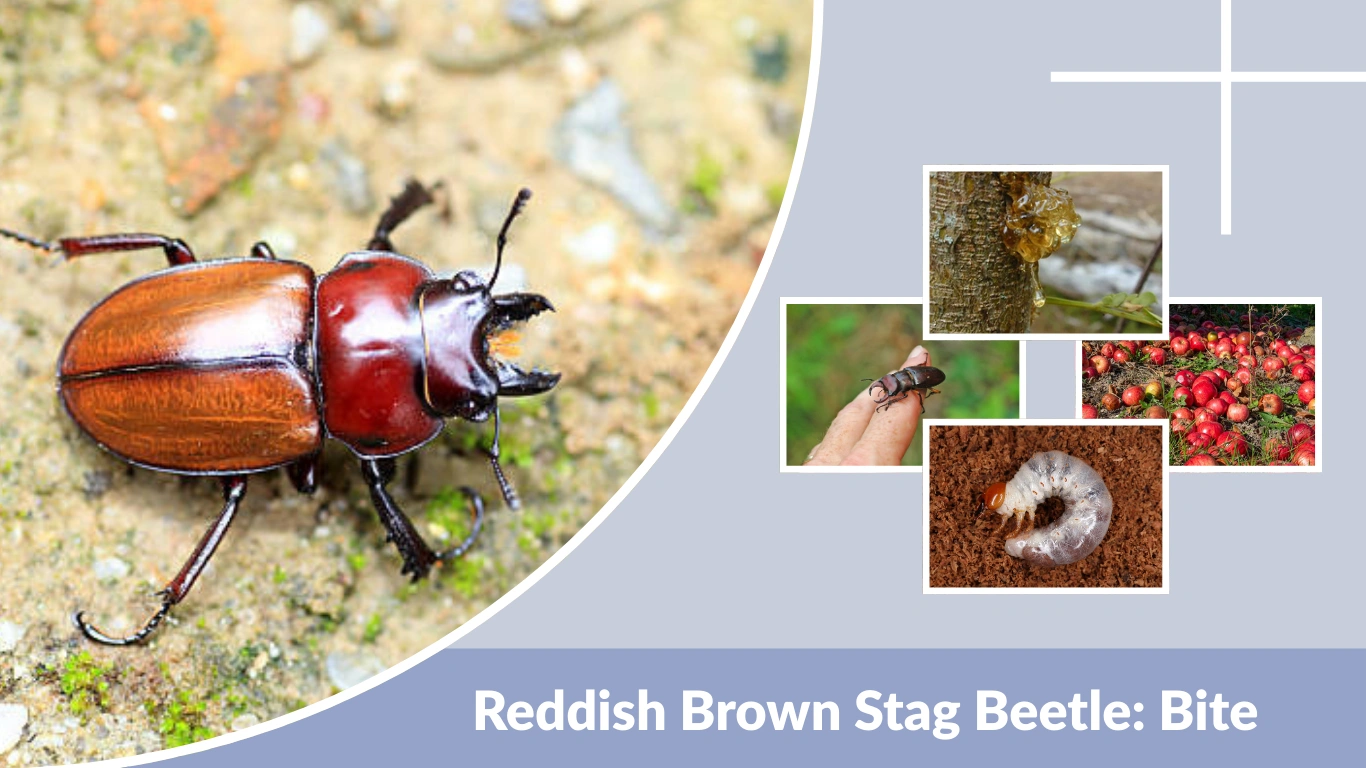
The reddish brown stag beetle is a fascinating insect known for its strong jaws, glossy body, and forest-dwelling lifestyle. Often spotted near decaying wood or attracted to tree sap, this beetle draws attention because of its unusual appearance and intimidating mandibles. Many people search for information about the reddish brown stag beetle bite, how to identify the female, and what this beetle eats in the wild. Despite its fearsome look, the reddish brown stag beetle plays an important role in nature and is generally harmless to humans when left undisturbed. Understanding its behavior, diet, and physical traits helps reduce fear and encourages respect for this unique species.
What Is a Reddish Brown Stag Beetle?
A reddish brown stag beetle is a member of the Lucanidae family, a group of beetles known for their enlarged mandibles that resemble deer antlers. Its body color ranges from deep reddish brown to dark chestnut, often with a slightly glossy or polished appearance. These beetles vary in size depending on species and gender, but most are medium to large compared to common household beetles.
Stag beetles are primarily nocturnal and are most active during warmer months. They are usually found in forested areas where fallen trees and rotting wood are abundant. Although they may look aggressive, reddish brown stag beetles are not predators and do not hunt other insects.
Physical Appearance and Identification

- Color: Ranges from reddish brown to dark chestnut, often with a glossy finish
- Body Type: Hard, armored exoskeleton with a compact, sturdy build
- Size: Typically medium to large compared to common beetles
- Head: Broad head with prominent mandibles (jaws)
- Legs: Six strong legs designed for gripping bark and wood
- Wings: Protective wing covers (elytra) hiding functional flight wings
Male vs Female Identification
- Males:
- Larger, curved mandibles resembling antlers
- Slightly slimmer body
- Mandibles used mainly for mating competition
- Larger, curved mandibles resembling antlers
- Females:
- Smaller but stronger mandibles
- Wider head and more solid body
- More capable of delivering a defensive bite
- Smaller but stronger mandibles
Reddish Brown Stag Beetle Female
Female Characteristics
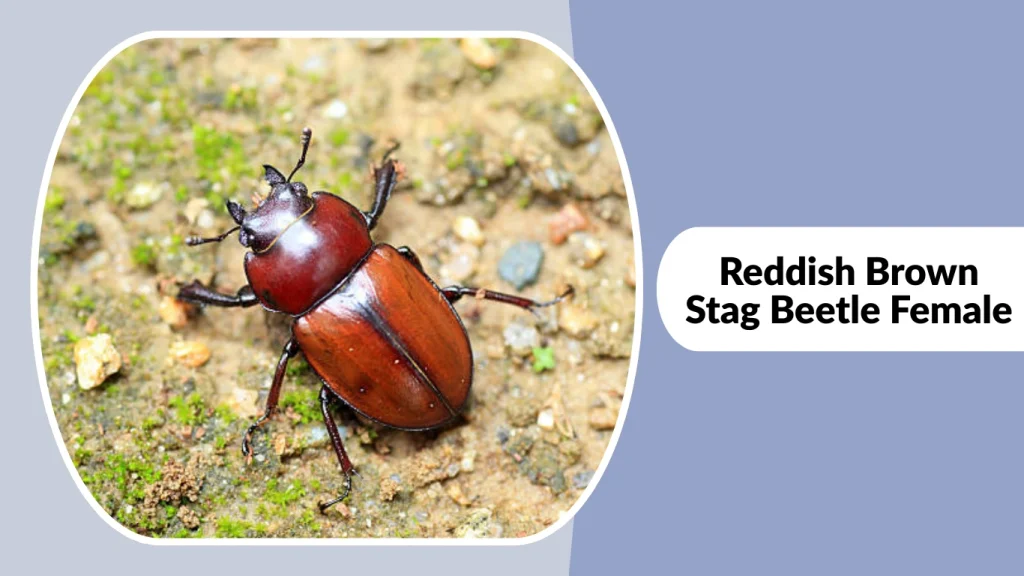
The female reddish brown stag beetle is usually smaller than the male but more robust in build. Her mandibles are shorter, sharper, and more functional, which means she can deliver a more painful bite if threatened. Females are responsible for laying eggs in decaying wood, where the larvae will have access to food once they hatch.
Another noticeable difference is behavior. Female stag beetles are more defensive than males, especially when handled or disturbed. This defensive nature is the main reason most reported stag beetle bites come from females rather than males.
How to Identify a Female Reddish Brown Stag Beetle
To identify a female reddish brown stag beetle, look for a shorter jaw length, a wider head, and a sturdier body. Many people mistakenly assume the beetle with the biggest jaws is the most dangerous, but in reality, females are more capable of biting through skin due to their stronger mandibles.
Habitat and Natural Environment
Reddish brown stag beetles thrive in woodland environments with plenty of rotting logs, tree stumps, and moist soil. These conditions are essential for their life cycle, particularly for larvae, which can spend several years feeding on decaying wood underground.
They are most active during late spring and summer evenings. Occasionally, they may wander into gardens or homes, especially if attracted by outdoor lights or nearby trees. Despite this, they do not infest homes and usually leave on their own.
Reddish Brown Stag Beetle Diet
What Do Reddish Brown Stag Beetles Eat?
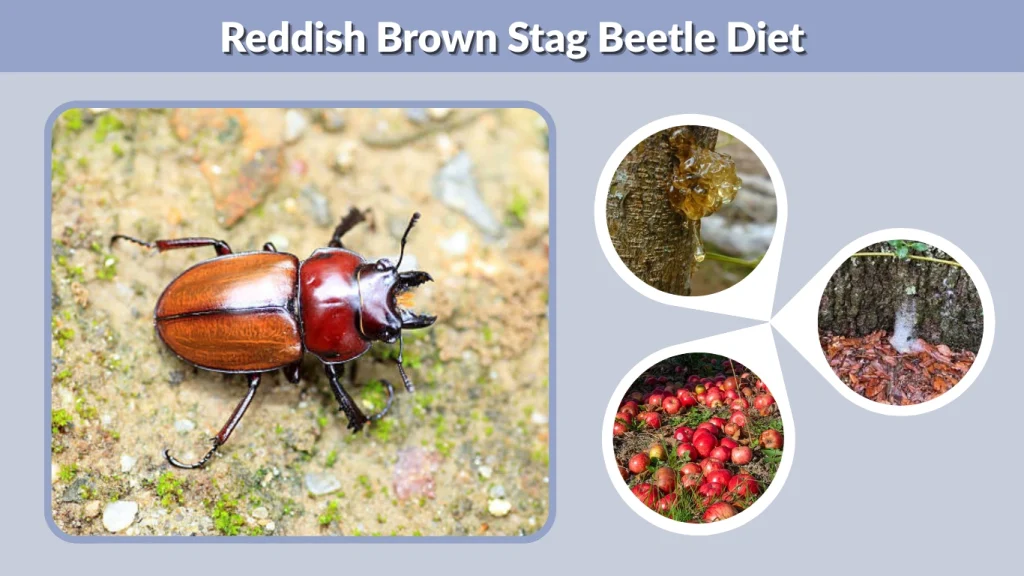
The diet of a reddish brown stag beetle mainly consists of tree sap, fermented fruit, and other sugary plant substances. Adult beetles often feed on sap flows from damaged trees or fallen fruit on the forest floor.
Larval Diet vs Adult Diet
Larvae have a very different diet from adults. They feed almost exclusively on decaying wood, breaking it down and returning nutrients to the soil. This makes stag beetles extremely valuable to forest ecosystems, as they help recycle organic matter and improve soil health.
Reddish Brown Stag Beetle Bite
Do Reddish Brown Stag Beetles Bite Humans?
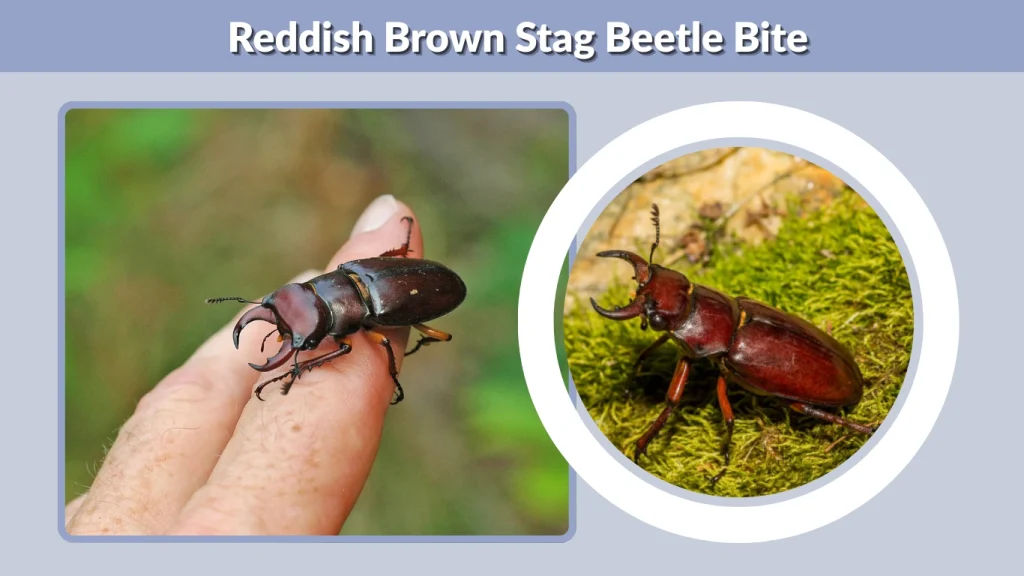
Reddish brown stag beetles are not naturally aggressive toward humans and will only bite if they feel threatened or are handled roughly. Most bites occur when someone tries to pick up the beetle by hand or accidentally traps it against the skin. In the wild, these beetles use their mandibles for feeding and, in the case of males, for competing with other males during mating season.
Because they are slow-moving and non-territorial, stag beetles usually attempt to escape rather than attack. Biting is a last-resort defensive response.
Is a Reddish Brown Stag Beetle Bite Dangerous?
A reddish brown stag beetle bite is generally not dangerous. The bite may cause brief pain, similar to a pinch, and can leave a small red mark on the skin. Female stag beetles are capable of delivering a stronger bite than males due to their shorter but more powerful mandibles.
While the bite does not contain venom, any break in the skin carries a minor risk of infection if not cleaned properly. Serious reactions are extremely rare and usually related to improper wound care rather than the bite itself.
What to Do If You Are Bitten
If a reddish brown stag beetle bites you, wash the area gently with soap and water. Applying a mild antiseptic and keeping the area clean is usually sufficient. Seek medical attention only if you notice signs of infection such as swelling, redness, or pus, which are uncommon.
Behavior and Life Cycle
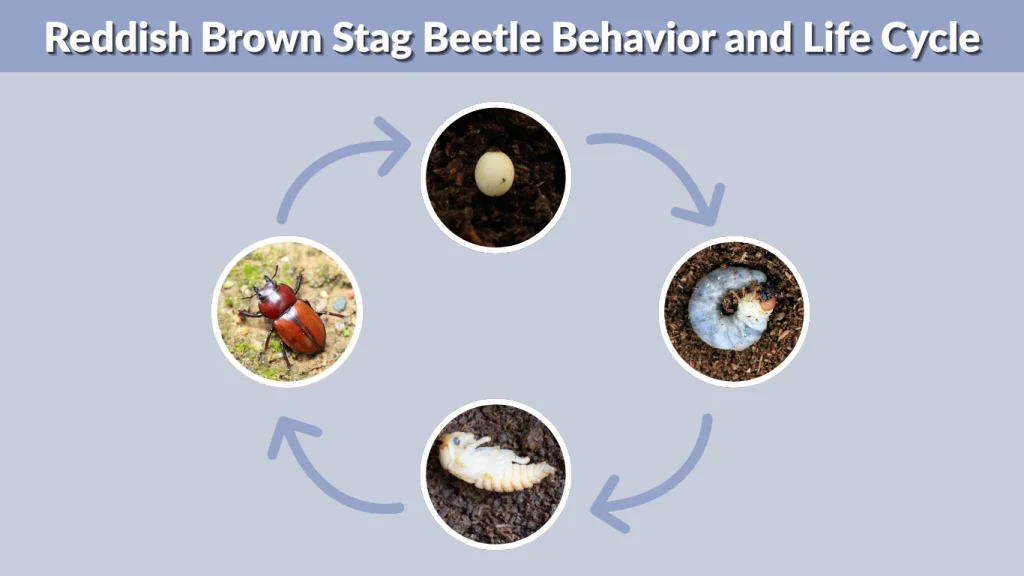
The life cycle of a reddish brown stag beetle begins when the female lays eggs inside decaying wood or underground near rotting tree roots. Once the larvae hatch, they spend several years feeding on decomposing wood. This larval stage is the longest part of the beetle’s life.
After completing development, the larva pupates and emerges as an adult beetle. Adult stag beetles live for only a few months, during which their primary goals are feeding and reproduction. Most adult activity occurs during dusk and nighttime hours, especially in warm weather.
Are Reddish Brown Stag Beetles Aggressive?
Despite their intimidating appearance, reddish brown stag beetles are calm and non-aggressive insects. Males may wrestle each other using their large mandibles, but this behavior is limited to mating competition and does not involve humans.
When confronted by people, stag beetles typically remain still or attempt to crawl away. Aggression usually occurs only when they are restrained or mishandled. Observing them without touching is the safest way to avoid defensive behavior.
Ecological Importance
Reddish brown stag beetles play a vital role in forest ecosystems. Their larvae help break down dead and decaying wood, speeding up the decomposition process and returning nutrients to the soil. This activity supports healthy plant growth and benefits other organisms in the ecosystem.
Because they rely heavily on dead wood, stag beetles are sensitive to habitat loss. Removing fallen logs and old trees can reduce their populations, making them important indicators of forest health.
Interesting Facts About Reddish Brown Stag Beetles
- Male stag beetles use their large mandibles mainly for display and competition, not biting.
- Female stag beetles are responsible for most reported bites due to their stronger jaws.
- Larvae can live underground for several years before becoming adults.
- Despite their size, adult stag beetles feed mostly on liquids such as sap and fruit juices.
FAQs
Can a reddish brown stag beetle hurt you?
A reddish brown stag beetle can bite if threatened, but it is unlikely to cause serious harm.
Are female stag beetles more dangerous than males?
Females can bite harder than males, but neither pose a significant danger to humans.
What attracts reddish brown stag beetles to homes?
Outdoor lights, nearby trees, and fallen fruit can attract them temporarily.
How long do reddish brown stag beetles live?
Larvae live for several years, while adults usually live only a few months.
Conclusion
The reddish brown stag beetle may look intimidating, but it is a harmless and beneficial insect that plays an important role in nature. From its sap-based diet to its role in wood decomposition, this beetle supports healthy forest ecosystems. While a reddish brown stag beetle bite can occur, it is rare and not dangerous when handled properly. By understanding the differences between males and females and respecting their habitat, humans can peacefully coexist with this remarkable species.
