
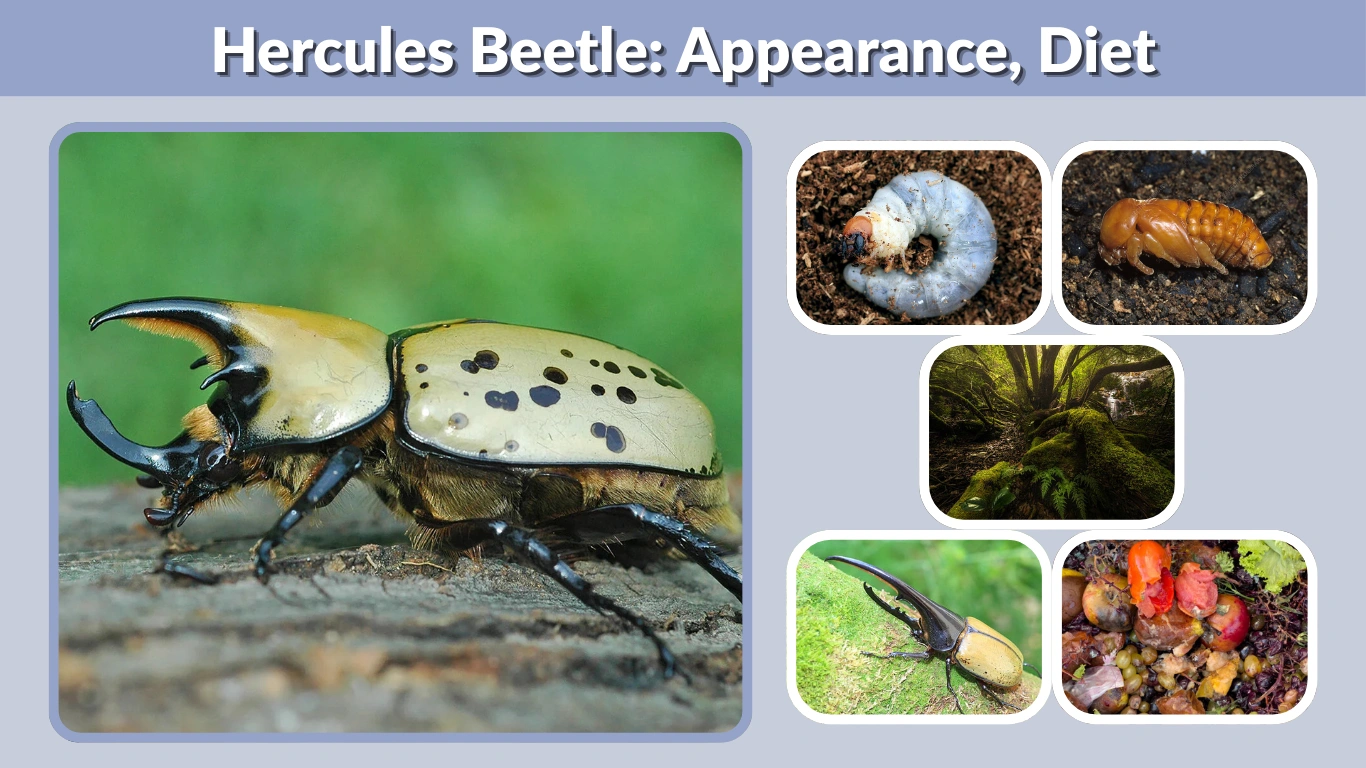
The Hercules beetle is one of the most remarkable insects on Earth, known for its massive size, incredible strength, and distinctive horn. Found mainly in the tropical rainforests of Central and South America, this beetle has fascinated scientists, nature enthusiasts, and insect collectors for centuries. Often described as the world’s largest beetle by length, the Hercules beetle stands out not only because of its appearance but also due to its extraordinary physical abilities. From its powerful body to its complex life cycle, the Hercules beetle is a true marvel of the insect world.
What Is the Hercules Beetle?
The Hercules beetle is a species of rhinoceros beetle belonging to the scarab beetle family. It is best known for the long horn found on males, which gives the beetle a fearsome and almost prehistoric look. Despite its intimidating appearance, the Hercules beetle is generally harmless and plays an important role in its natural ecosystem.
Scientific Name and Taxonomy
The scientific name of the Hercules beetle is Dynastes hercules. It belongs to the family Scarabaeidae, a group that includes many well-known beetles such as dung beetles and June beetles. Within this family, the Hercules beetle is part of the Dynastinae subfamily, commonly referred to as rhinoceros beetles because of their horned heads.
Physical Characteristics of the Hercules Beetle
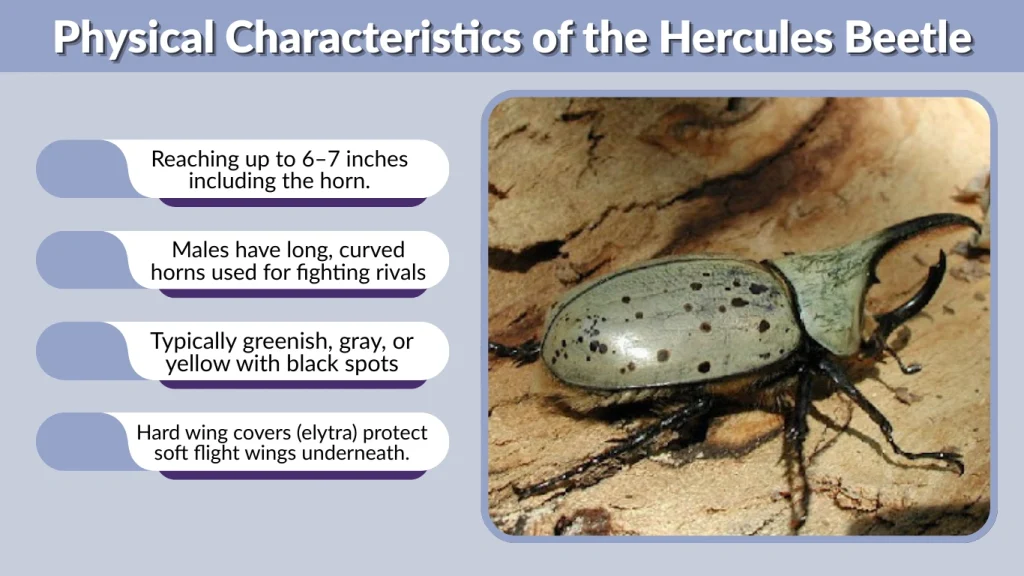
The physical appearance of the Hercules beetle is what makes it instantly recognizable. Its large body, armored exoskeleton, and prominent horn give it a powerful presence rarely seen among insects.
- Large body size: One of the longest beetles in the world, reaching up to 6–7 inches including the horn.
- Iconic horn: Males have long, curved horns used for fighting rivals; females do not have horns.
- Strong exoskeleton: Thick, armored outer shell that protects the beetle and supports its strength.
- Color variation: Typically greenish, gray, or yellow with black spots; color may darken in high humidity.
- Powerful legs: Equipped with sharp claws for gripping tree bark and competing with other beetles.
- Functional wings: Hard wing covers (elytra) protect soft flight wings underneath.
How Strong Is the Hercules Beetle?
The Hercules beetle is famous for its strength, often cited as one of the strongest animals in the world relative to its size. While exact measurements vary, studies suggest that a Hercules beetle can lift objects hundreds of times its own body weight. This strength is mainly due to its powerful muscles and rigid exoskeleton.
Strength Compared to Humans
When compared proportionally, the strength of a Hercules beetle far exceeds that of a human. If a human had the same strength-to-weight ratio, they would be capable of lifting several dozen tons. This extraordinary power helps the beetle survive in the wild, allowing it to move heavy debris, defend itself, and compete with other beetles.
Natural Habitat and Geographic Distribution
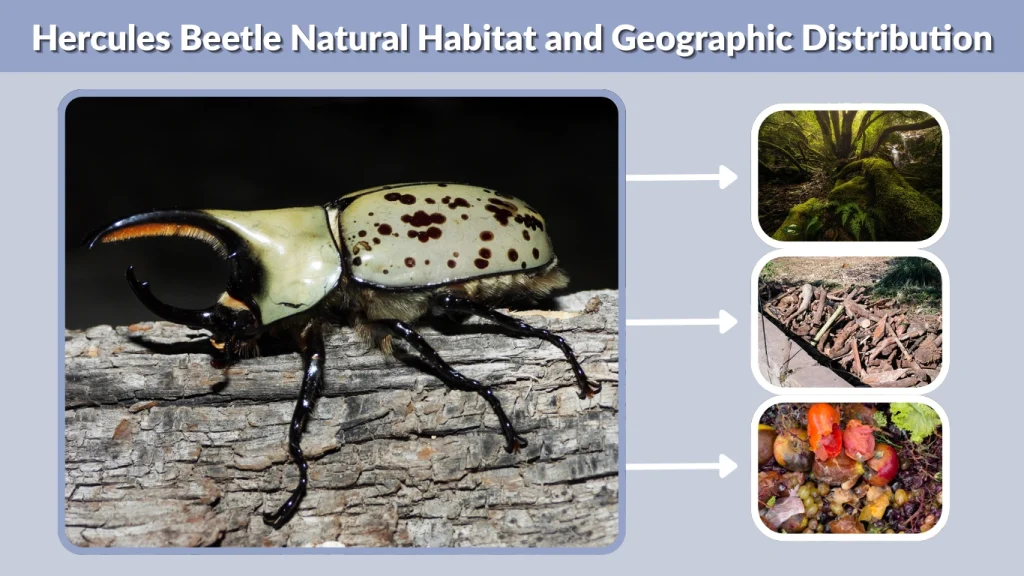
The Hercules beetle is native to the tropical regions of the Western Hemisphere. It thrives in warm, humid environments where dense vegetation and decaying plant matter are abundant. These conditions are essential for both adult beetles and their developing larvae.
Rainforest Environment
Hercules beetles are most commonly found in tropical rainforests, where warm temperatures and high humidity create ideal living conditions. These forests provide plenty of decaying wood, fallen fruit, and tree sap, which are essential resources throughout the beetle’s life cycle. Adults are often active at night and may be seen flying between trees or feeding on rotting fruit along the forest floor.
Countries Where They Are Commonly Found
The geographic range of the Hercules beetle stretches across Central America and northern South America. They are commonly found in countries such as Mexico, Costa Rica, Panama, Colombia, Venezuela, Ecuador, Peru, and Brazil. Different subspecies exist across this range, with slight variations in size and coloration depending on local environmental conditions.
Hercules Beetle Diet and Feeding Behavior
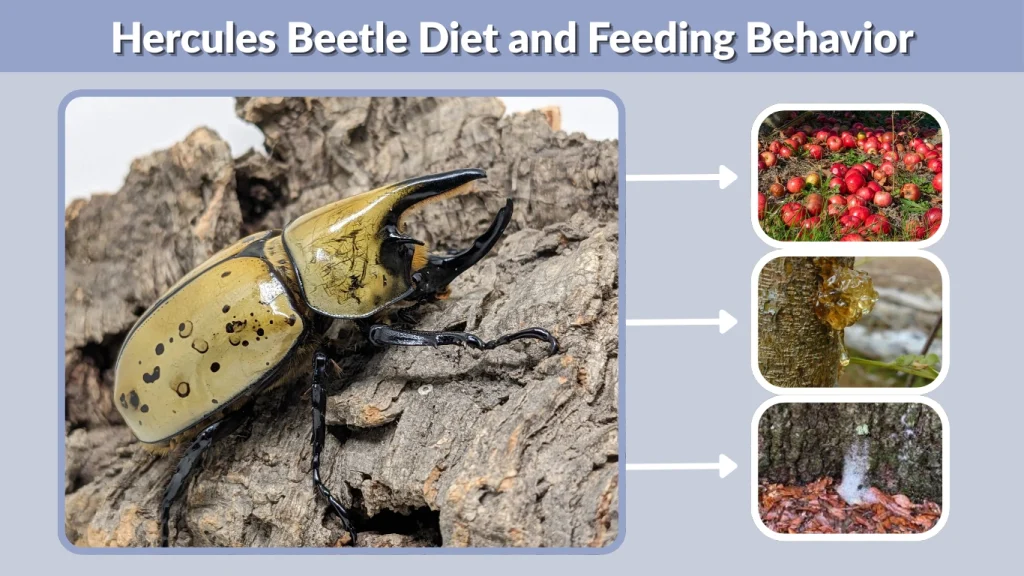
The diet of the Hercules beetle changes significantly as it grows. Both adult beetles and larvae rely on natural plant matter, making them important contributors to forest ecosystems.
Diet of Adult Hercules Beetles
Adult Hercules beetles primarily feed on rotting fruit, tree sap, and decaying plant material. They are especially attracted to fallen fruit on the forest floor, where sugars provide a quick source of energy. Adults may also feed at sap flows on tree trunks, using their strong mandibles to access nutrients.
Diet of Hercules Beetle Larvae
Hercules beetle larvae feed almost exclusively on decaying wood. This diet is rich in organic matter and supports their rapid growth. Because larvae consume large amounts of decomposing material, they help recycle nutrients back into the soil, benefiting plant growth and overall forest health.
Life Cycle of the Hercules Beetle
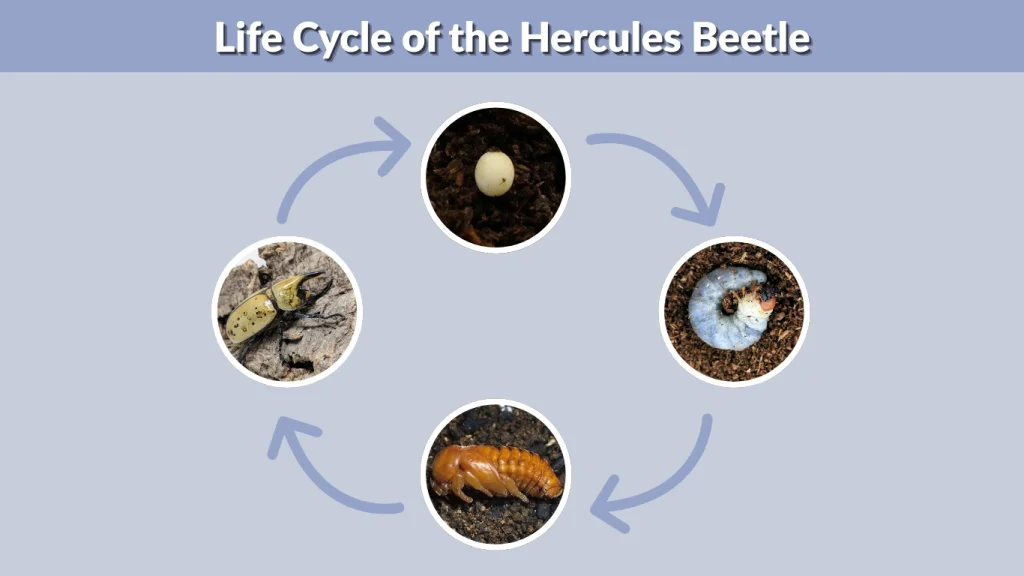
The Hercules beetle undergoes complete metamorphosis, meaning it passes through four distinct stages: egg, larva, pupa, and adult. This life cycle can take several years to complete.
Egg Stage
Female Hercules beetles lay their eggs in rotting wood or soil rich in organic material. The eggs hatch after several weeks, depending on temperature and humidity.
Larval Stage
The larval stage is the longest part of the beetle’s life. Larvae can take one to two years to fully develop, growing to an impressive size as they feed continuously. During this stage, they molt several times as their bodies expand.
Pupal Stage
Once fully grown, the larva forms a protective chamber and enters the pupal stage. Inside this chamber, the beetle undergoes dramatic physical changes, transforming into its adult form over several weeks.
Adult Stage and Lifespan
Adult Hercules beetles typically live for three to six months. During this time, their main goals are feeding and reproduction. Adult beetles are strong fliers and are most active at night.
Male vs Female Hercules Beetle
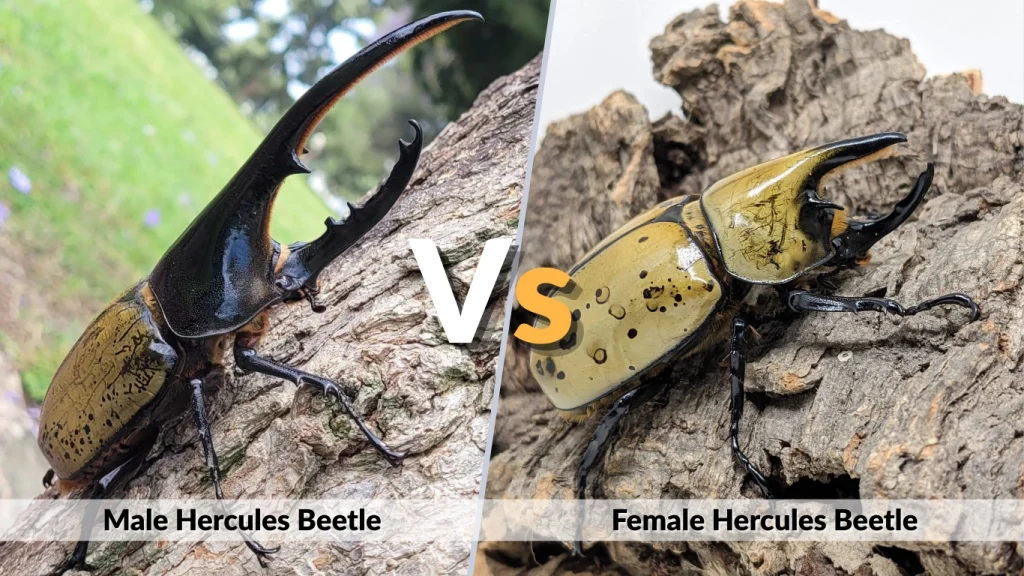
Male and female Hercules beetles differ noticeably in appearance and behavior. Males are larger and possess the iconic horn, while females have a smoother head and more compact body. The horn gives males an advantage during mating competitions, allowing them to dominate rivals without causing serious injury.
Behavior and Interaction With Humans
Despite their intimidating size, Hercules beetles are non-aggressive toward humans. They rarely bite and have no venom or stinger. When handled, they may hiss or struggle, but this behavior is purely defensive.
Is the Hercules Beetle Dangerous?
Hercules beetles are not dangerous to humans. While their claws are strong enough to grip tightly, they pose no real threat. Their strength is used mainly for survival and competition with other beetles, not for attacking people.
Conservation Status and Environmental Threats
Although the Hercules beetle is not currently classified as endangered, it faces growing threats due to deforestation and habitat destruction. Logging, agriculture, and urban expansion continue to reduce rainforest environments.
Importance of Rainforest Conservation
Protecting rainforest habitats is crucial not only for Hercules beetles but also for countless other species. As decomposers, these beetles play a vital role in nutrient recycling and ecosystem balance.
Fun and Interesting Facts About the Hercules Beetle
- It is one of the longest beetles in the world.
- Its color can change depending on humidity levels.
- It can lift objects many times heavier than its own body.
- Only males develop the iconic horn.
Conclusion
The Hercules beetle is a true giant of the insect world, combining size, strength, and fascinating behavior in a single species. From its powerful horn to its vital role in rainforest ecosystems, this beetle demonstrates how even the smallest creatures can have a significant impact on nature. Protecting its habitat ensures that future generations can continue to marvel at one of Earth’s most extraordinary insects.
FAQs
What is the scientific name of the Hercules beetle?
The scientific name of the Hercules beetle is Dynastes hercules. It belongs to the scarab beetle family and is one of the largest beetle species in the world.
How big can a Hercules beetle grow?
A fully grown male Hercules beetle can reach up to 6–7 inches in length, including its horn, making it one of the longest beetles on Earth.
How strong is the Hercules beetle?
The Hercules beetle is extremely strong for its size and can lift objects many times heavier than its own body weight.
Where do Hercules beetles live?
Hercules beetles are native to tropical rainforests in Central and South America, where warm temperatures and high humidity support their life cycle.
Is the Hercules beetle dangerous to humans?
No, the Hercules beetle is not dangerous. It is non-aggressive, has no venom or sting, and rarely bites humans.
