
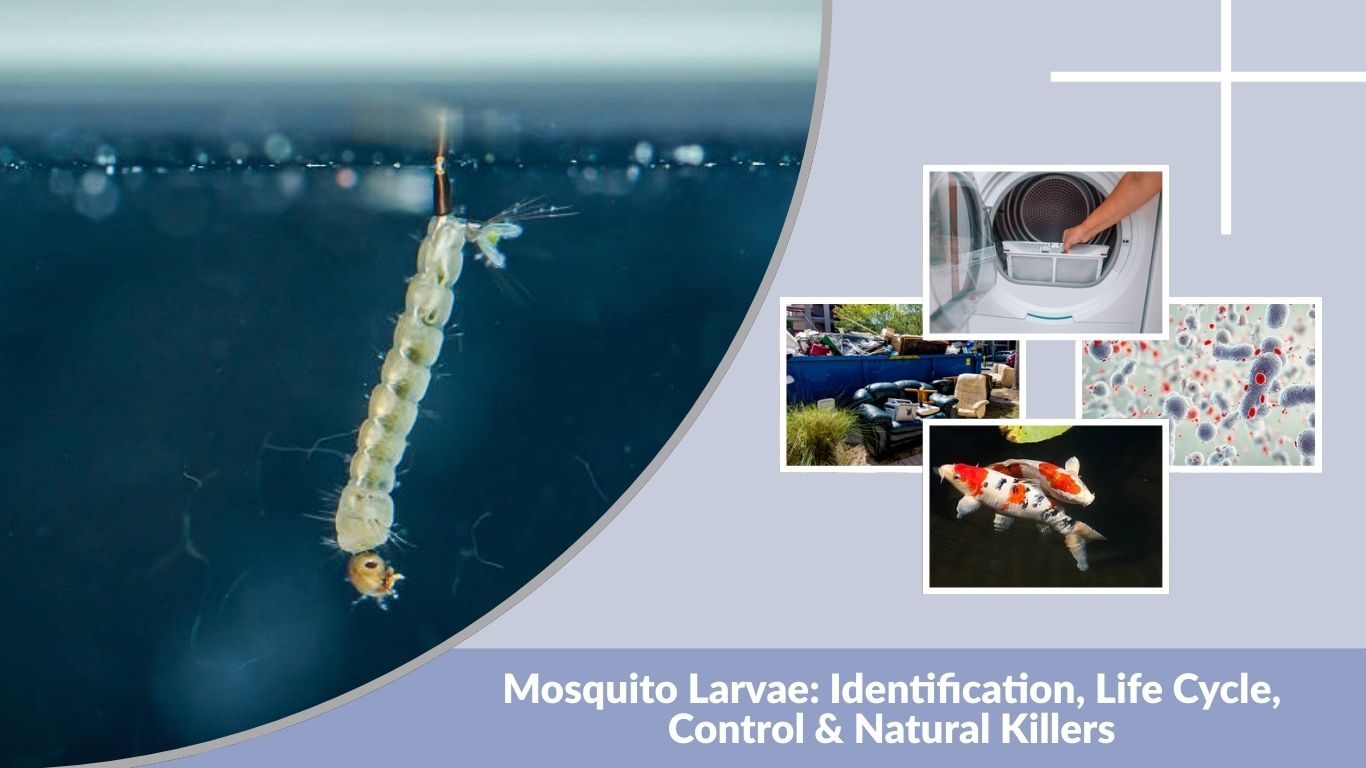
Mosquito larvae are the immature, water-dwelling stage of mosquitoes that develop before becoming flying adults. Often seen wriggling in standing water, they are a clear sign of potential mosquito infestation. Because mosquitoes can spread diseases, identifying and controlling larvae early is essential. In this guide, you’ll learn what mosquito larvae look like, where they live, how they grow, whether they’re dangerous, and how to tell them apart from tadpoles and other aquatic creatures.
What Are Mosquito Larvae?
Mosquito larvae are the second stage in a mosquito’s life cycle, appearing after eggs hatch in water. They belong to the family Culicidae and are commonly called “wrigglers” because of their jerky swimming movements.
There are several types of mosquito larvae depending on the species, including:
- Aedes mosquito larvae (including Asian tiger mosquito larvae)
- Anopheles mosquito larvae
- Culex mosquito larvae
- Mansonia mosquito larvae
- Elephant mosquito larvae
Each species has slight physical and behavioral differences, but all require water to survive. Without water, mosquito larvae cannot complete their development.
What Do Mosquito Larvae Look Like?
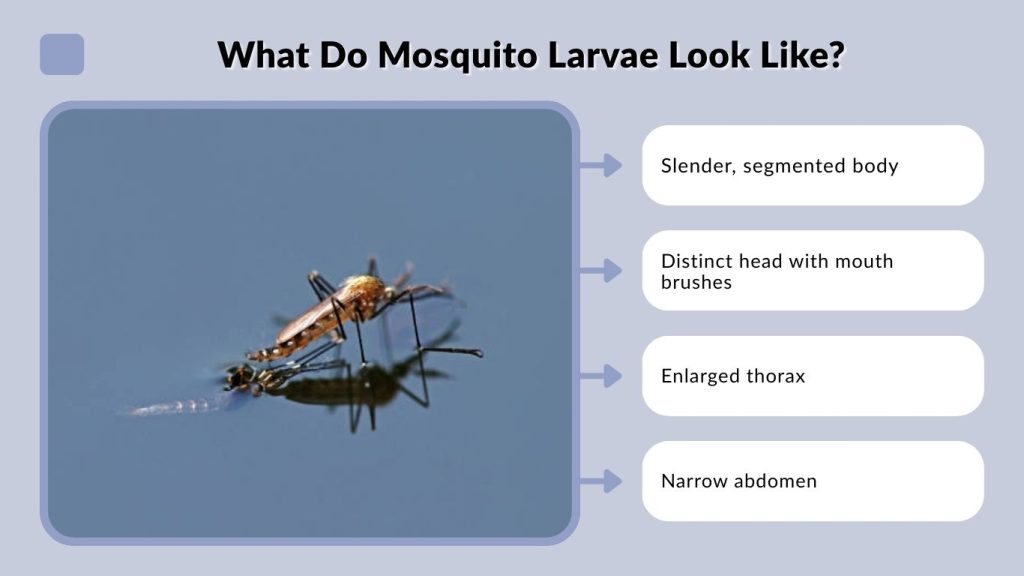
Many people ask, what does mosquito larvae look like? Mosquito larvae are small, worm-like aquatic creatures typically measuring 3–10 mm in length, depending on their growth stage.
Physical Characteristics
- Slender, segmented body
- Distinct head with mouth brushes
- Enlarged thorax
- Narrow abdomen
- Breathing tube (siphon) at the rear (in most species)
Their color varies. Most mosquito larvae appear brown or black, but some are red, often mistaken for bloodworms. Red mosquito larvae usually contain hemoglobin-like pigments that help them survive in low-oxygen water.
Under a microscope, you can clearly see their head capsule, feeding brushes, and siphon tube used for breathing. They frequently hang upside down at the water’s surface to breathe through this tube.
How Mosquito Larvae Move
Mosquito larvae swim with a distinctive wriggling motion, bending their bodies in an S-shape. This movement is why they’re nicknamed “wigglers.” When disturbed, they quickly dive deeper into the water before returning to the surface.
Mosquito Larvae vs Tadpoles
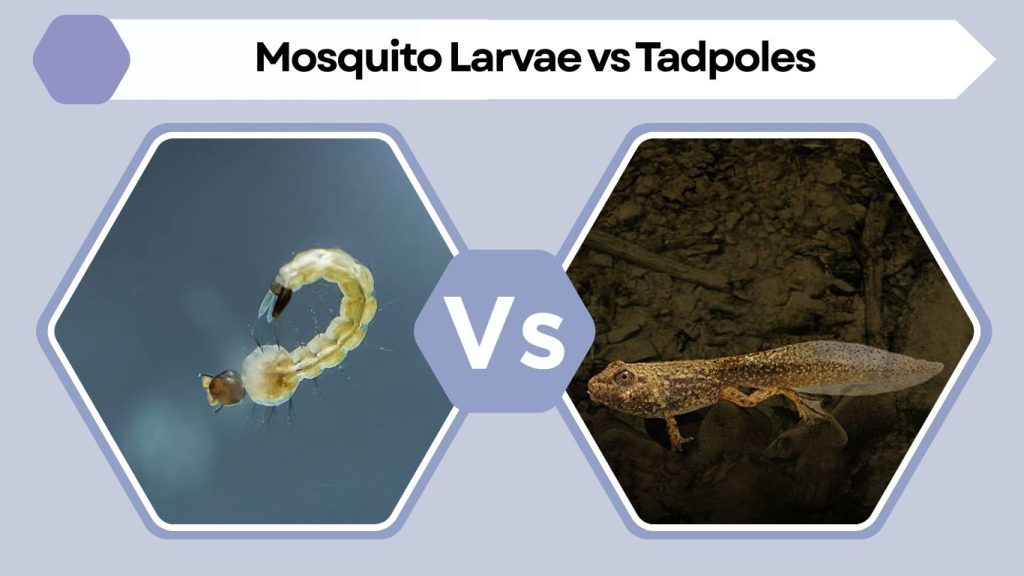
Many people confuse mosquito larvae with tadpoles. Here’s how to tell them apart:
Mosquito Larvae:
- Very small (few millimeters)
- Thin, worm-like body
- No visible legs
- Hang near the water surface
- Move in quick, jerky motions
Tadpoles:
- Larger and bulkier
- Rounded head and body
- Visible tail fin
- Swim smoothly
- Grow legs over time
If you see tiny wriggling creatures clustered near the surface of stagnant water, they are most likely mosquito larvae—not baby frogs.
Mosquito Larvae Habitat – Where Do They Live?
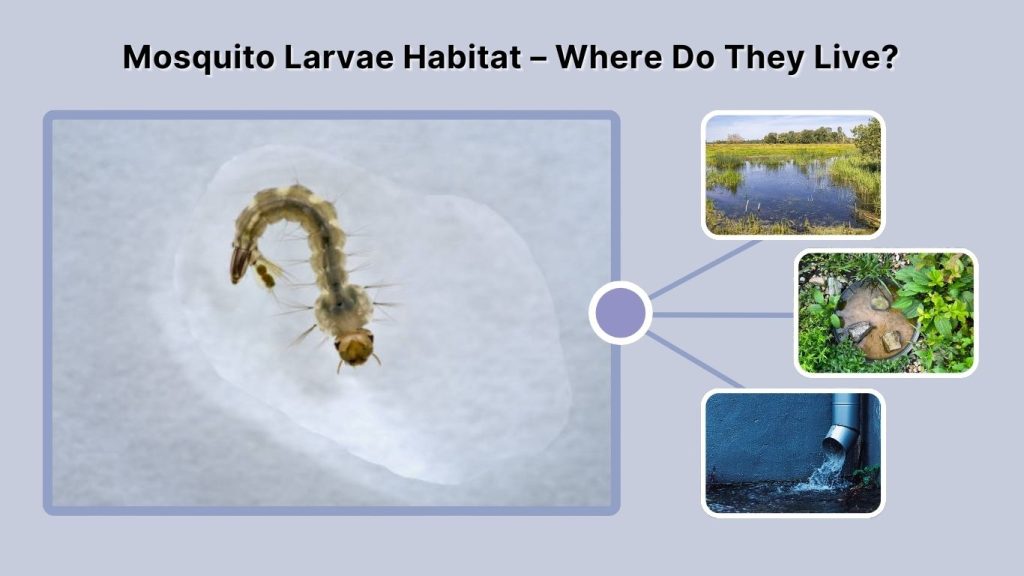
Mosquito larvae live exclusively in water. They require standing or slow-moving water to survive and develop.
Common places where mosquito larvae are found include:
- Ponds
- Bird baths
- Buckets
- Rain barrels
- Swimming pools
- Dog water bowls
- Plant trays
- Water tanks
- Toilet bowls
- Fish tanks (rare but possible in open tanks)
Even small amounts of water—such as a bottle cap filled with rainwater—can support mosquito larvae.
Can Mosquito Larvae Survive Without Water?
No. Mosquito larvae cannot live outside of water. They breathe air but must remain in water to survive. If removed from water, they quickly dry out and die.
Can Mosquito Larvae Live in Saltwater?
Most mosquito species prefer fresh water. However, some species can tolerate slightly brackish water. True saltwater environments are generally unsuitable for most mosquito larvae.
Life Cycle of Mosquito Larvae
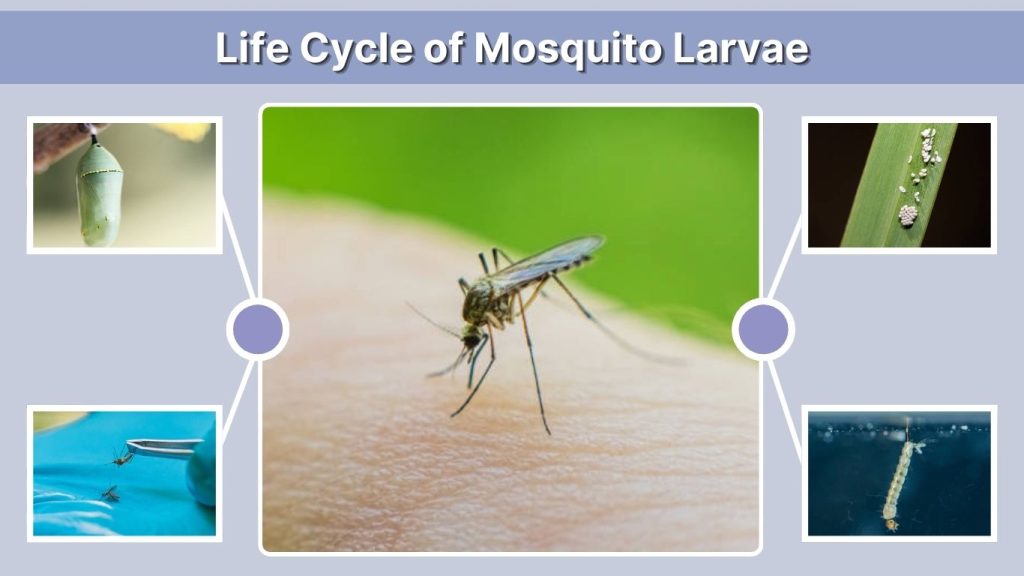
Understanding the mosquito life cycle helps in controlling them effectively.
Mosquitoes go through four stages of development:
- Egg
- Larva
- Pupa
- Adult mosquito
After eggs hatch, mosquito larvae emerge and begin feeding immediately.
Mosquito Larvae Stages (Instars)
Larvae pass through four growth phases called instars:
- 1st instar
- 2nd instar
- 3rd instar
- 4th instar
With each molt, they grow larger. The 4th instar is the final larval stage before becoming a pupa.
How Long Does It Take for Mosquito Larvae to Hatch?
Eggs typically hatch within 24–48 hours after being laid in water.
How Long Do Mosquito Larvae Stay in Water?
Mosquito larvae usually remain in water for 5–14 days, depending on temperature and species. Warmer temperatures speed up development.
After the larval stage, they transform into pupae, and then into adult mosquitoes within a few days.
In ideal warm conditions, the entire process from egg to flying mosquito can take as little as 7–10 days.
What Do Mosquito Larvae Eat?
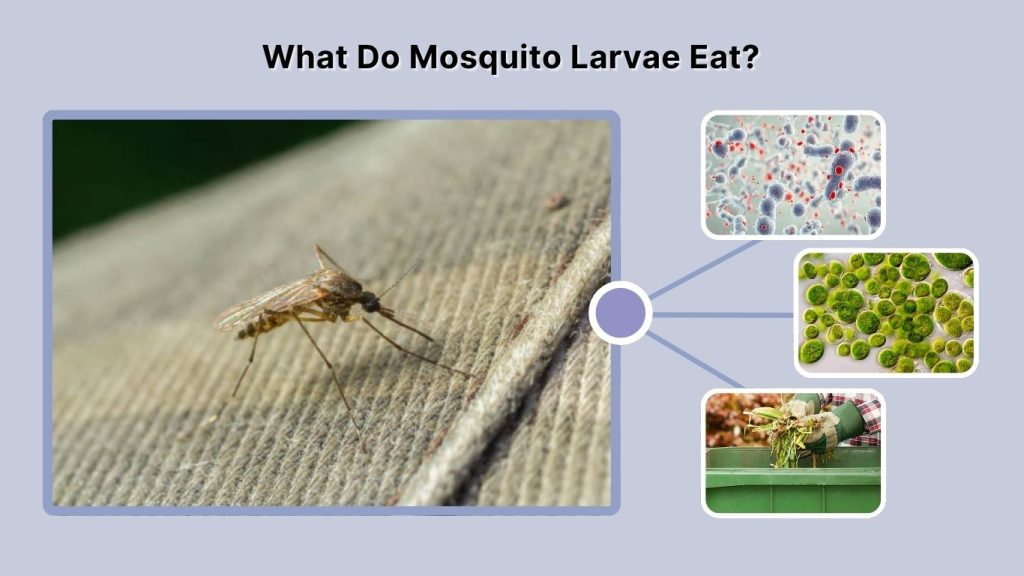
Mosquito larvae are filter feeders. They consume microscopic organic matter suspended in water.
Their diet includes:
- Bacteria
- Algae
- Protozoa
- Organic debris
- Zooplankton
- Yeast (in laboratory conditions)
Using brush-like mouthparts, they sweep food particles into their mouths while floating near the surface.
Mosquito larvae do not bite and are not parasites. They feed only on microscopic aquatic material during this stage.
Are Mosquito Larvae Dangerous?
A common concern is whether mosquito larvae are harmful to humans or pets.
Do Mosquito Larvae Bite?
No. Mosquito larvae do not bite. Only adult female mosquitoes bite humans and animals.
Can Mosquito Larvae Harm You?
Mosquito larvae themselves are not directly dangerous. They do not attack, sting, or infect humans. However, they eventually develop into adult mosquitoes, which may transmit diseases depending on the region.
What Happens If You Swallow Mosquito Larvae?
Accidentally drinking water containing mosquito larvae is generally not harmful. Stomach acid typically destroys them. They cannot survive inside the human body.
Are Mosquito Larvae Harmful to Dogs?
If a dog drinks water with mosquito larvae, it is unlikely to cause harm. However, standing water should still be removed to prevent mosquito breeding.
How to Kill Mosquito Larvae (Complete Guide)
If you see mosquito larvae wriggling in water, act quickly. Eliminating them at the larval stage prevents them from becoming biting adult mosquitoes.
Chemical Methods to Kill Mosquito Larvae
1. Chlorine (Pools)
Properly balanced pool chlorine usually kills mosquito larvae quickly. If your pool has larvae, it likely means chlorine levels are too low. Shock treatment often resolves the problem.
2. Bleach
Small amounts of household bleach can kill mosquito larvae in drains or toilets. However, bleach is not recommended for ponds, soil, or natural water sources because it can harm plants and animals.
3. Mosquito Dunks (BTI Bacteria)
One of the safest and most effective solutions is Bacillus thuringiensis israelensis (BTI). These bacteria specifically target mosquito larvae without harming fish, pets, birds, or humans. BTI is commonly sold as dunks, granules, or pellets.
4. Larvicide Granules or Tablets
Commercial mosquito larvae killer products are available for ponds, rain barrels, and standing water. Always choose pet-safe or plant-safe options when needed.
5. Oil Method
A thin layer of vegetable oil on stagnant water blocks the larvae’s breathing siphon, causing them to suffocate. This works in small, contained water areas but should not be used in fish ponds.
Natural & Organic Ways to Kill Mosquito Larvae
If you prefer chemical-free methods, try these:
- Remove standing water completely (most effective solution)
- Improve water circulation using pumps or fountains
- Introduce natural predators (fish, frogs)
- Use BTI (biological control) – considered organic and eco-friendly
- Salt (in non-plant areas) – high salinity can kill larvae
- Essential oils like neem oil (use cautiously)
Fastest Way to Kill Mosquito Larvae
The quickest methods are:
- Pool shock (for pools)
- BTI mosquito dunks
- Draining water completely
Draining water is always the safest and most permanent solution.
How to Get Rid of Mosquito Larvae in Specific Places
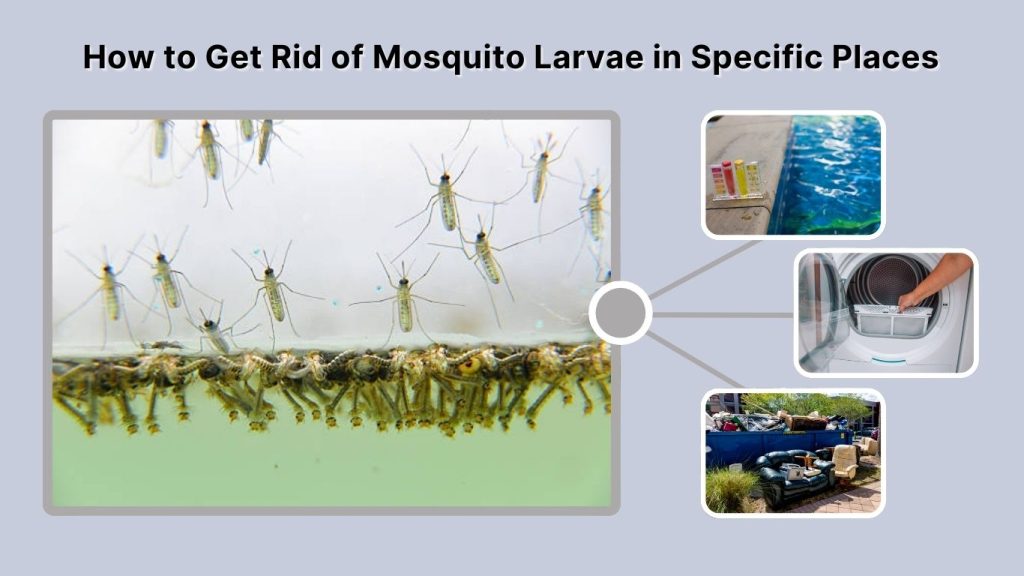
Different environments require different approaches.
Mosquito Larvae in Pools
- Check chlorine levels
- Shock the pool
- Clean filters
- Remove debris
A properly maintained pool should not support mosquito larvae.
Mosquito Larvae in Ponds
- Add mosquito-eating fish (Gambusia, guppies)
- Use BTI dunks
- Add a water pump for circulation
- Remove excess organic debris
Avoid bleach in ponds—it harms fish and beneficial organisms.
Mosquito Larvae in Rain Barrels
- Use BTI tablets
- Keep barrels covered
- Install fine mesh screens
Mosquito Larvae in Fish Tanks or Aquariums
- Ensure tank is covered
- Add mosquito-eating fish
- Remove larvae manually
- Improve filtration
Open outdoor aquariums are more at risk.
Mosquito Larvae in Toilets or Drains
- Flush regularly
- Use small amounts of bleach
- Keep lids closed
Unused toilets can become breeding spots.
Fish That Eat Mosquito Larvae (Biological Control)
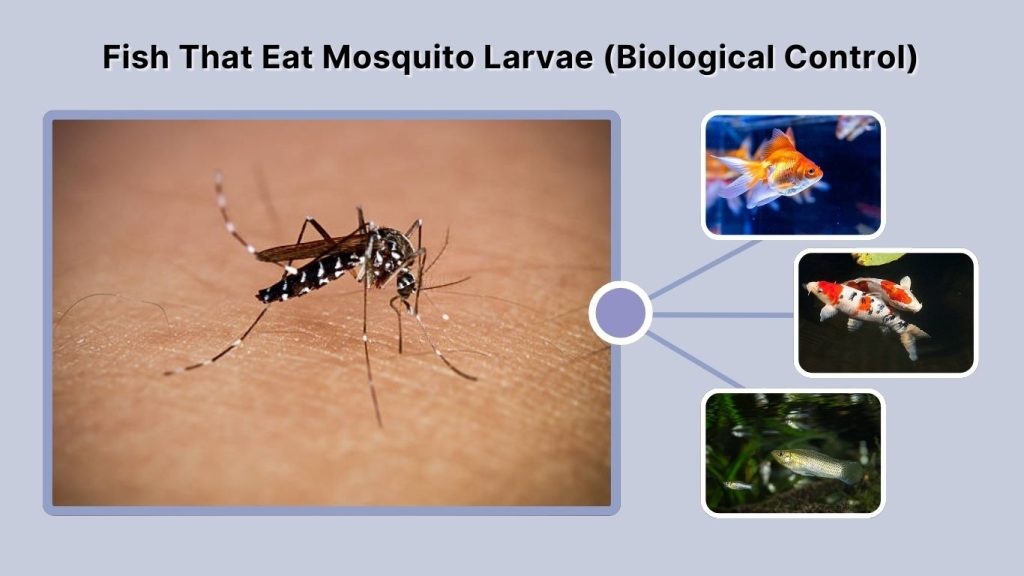
Using fish is one of the best natural mosquito larvae control methods.
Best Fish for Ponds
- Gambusia (Mosquitofish) – highly effective
- Guppies
- Goldfish
- Koi
- Minnows (Rosy red minnows)
- Mollies
These fish actively feed on mosquito larvae at the water surface.
Best Fish for Aquariums
- Betta fish
- Zebra danios
- Guppies
Many aquarium fish instinctively eat live mosquito larvae.
Do Goldfish Eat Mosquito Larvae?
Yes. Goldfish readily consume mosquito larvae and help control infestations in ponds.
Do Guppies Eat Mosquito Larvae?
Yes. Guppies are excellent mosquito larvae eaters and often used in biological control programs.
Do Koi Eat Mosquito Larvae?
Yes, though they may not be as efficient as smaller surface-feeding fish.
Do Tadpoles and Frogs Eat Mosquito Larvae?
Some tadpoles may consume larvae, but they primarily feed on plant matter. Adult frogs are more likely to eat adult mosquitoes than larvae.
Do Shrimp Eat Mosquito Larvae?
Some freshwater shrimp may eat very small larvae, but they are not reliable control agents.
Mosquito Larvae as Fish Food
Mosquito larvae are highly nutritious and commonly used as fish food.
Nutritional Value
- High protein content
- Rich in natural nutrients
- Excellent for growth and coloration
They are sold in two main forms:
- Live mosquito larvae
- Frozen mosquito larvae (bloodworms often confused)
Are Mosquito Larvae Good for Betta Fish?
Yes. Bettas enjoy mosquito larvae as a protein-rich treat. However, feed in moderation.
How Many Mosquito Larvae to Feed a Betta?
Only a small portion (5–10 larvae at a time) is sufficient. Overfeeding can cause bloating.
Are Mosquito Larvae Safe for Fish?
Yes, if sourced from clean water. Avoid collecting larvae from polluted or pesticide-treated areas.
Prevention – How to Stop Mosquito Larvae from Appearing
Prevention is more effective than killing larvae repeatedly.
Remove Standing Water
- Empty buckets
- Clean gutters
- Change pet water daily
- Drain plant saucers
- Cover water tanks
Improve Water Movement
Mosquitoes prefer still water. Adding movement discourages egg-laying.
Cover Water Storage
Use tight-fitting lids or mesh screens.
Regular Maintenance
- Clean ponds
- Maintain pool chlorine
- Use BTI preventively in rain barrels
Consistency prevents future outbreaks.
FAQs
How long do mosquito larvae stay in water?
Mosquito larvae usually remain in water for 5–14 days before transforming into pupae. Warm temperatures speed up development, allowing them to mature faster. In ideal summer conditions, they can become adult mosquitoes in as little as a week.
Can mosquito larvae survive out of water?
No, mosquito larvae cannot survive without water. Although they breathe air at the surface, they must remain in water to live. Once removed from water, they quickly dry out and die.
Do mosquito larvae bite?
No. Mosquito larvae do not bite humans or animals. Only adult female mosquitoes bite to obtain blood for egg production. Larvae feed on microscopic organisms in water.
Is it safe to swim with mosquito larvae?
Swimming in water containing mosquito larvae is not inherently dangerous. However, their presence indicates stagnant water where adult mosquitoes may emerge. It’s best to treat or clean such water sources.
What kills mosquito larvae quickly?
BTI mosquito dunks, properly chlorinated pool water, and draining standing water are the fastest and safest ways to eliminate mosquito larvae. Immediate removal of water prevents further breeding.
