
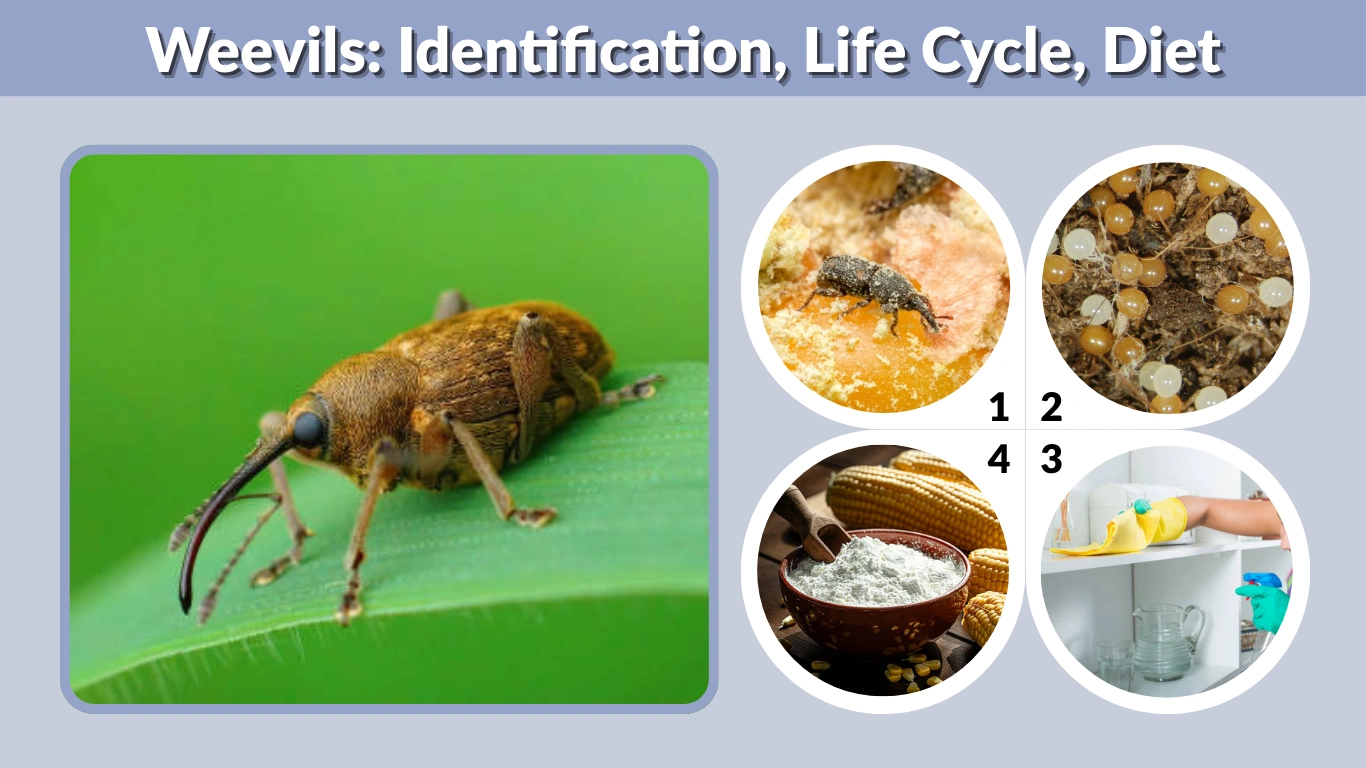
Weevils are small insects that often appear in stored grains and pantry foods such as rice, flour, and cereals. Although they are tiny, these pests can cause significant problems in homes and agricultural storage areas. Many people first notice weevils when they see small insects crawling inside food containers. Understanding what weevils look like, what they eat, and how they reproduce can help prevent infestations. This article explains how to identify weevils, their life cycle, and effective ways to control them.
What Are Weevils?
Weevils are a group of insects that belong to the Curculionidae family, which is one of the largest families of beetles in the world. In fact, scientists have identified tens of thousands of species of weevils, and many more are still being studied. These insects are commonly found in agricultural environments and food storage areas because many species feed on grains, seeds, and plants.
One of the most recognizable features of weevils is their long snout, also known as a rostrum. This snout helps them drill into grains and seeds where they can feed and lay eggs. Because of their feeding habits, many species of weevils are considered major pests in agriculture and food storage.
Weevils can live both outdoors and indoors. In nature, they often feed on crops such as corn, wheat, cotton, and fruits. Inside homes, they are usually found in pantries where stored foods provide a constant food source.
Scientific Classification
Weevils belong to the order Coleoptera, which includes all beetles. This order is the largest group of insects, containing hundreds of thousands of species. Within this order, weevils are classified in the family Curculionidae, which is known for its species with elongated snouts.
Different types of weevils specialize in feeding on different foods. For example, some species prefer grains while others attack fruits, vegetables, or trees. Their ability to adapt to many food sources is one reason why weevils are so widespread across the world.
Why Weevils Are Considered Pests
Many weevil species are considered pests because they can damage crops and contaminate stored food. When weevils infest grains, they often lay eggs inside the kernels. The developing larvae then feed on the inside of the grain, destroying it from within.
In agricultural settings, large infestations can lead to significant losses for farmers. Crops such as rice, wheat, and corn are especially vulnerable to certain weevil species. In homes, weevils can spoil pantry items, making them unsuitable for consumption.
Because they reproduce quickly and hide inside food products, infestations can sometimes go unnoticed until a large number of adult insects appear.
What Do Weevils Look Like?
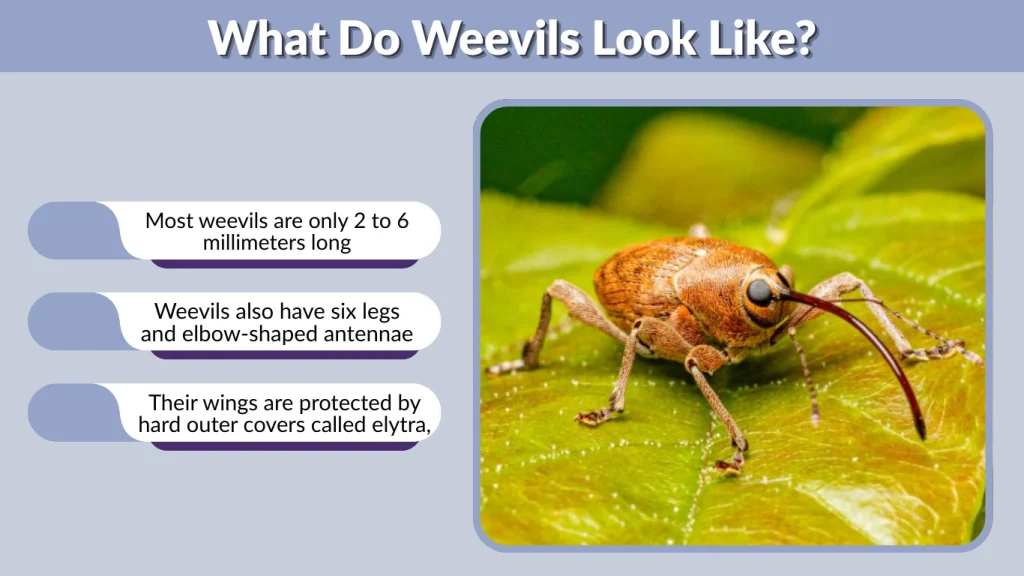
Weevils are small insects, but they have several distinctive features that make them relatively easy to identify. Most weevils are only 2 to 6 millimeters long, which means they can easily go unnoticed in stored food products.
Their bodies are typically oval or cylindrical, and they are usually dark brown, black, or reddish in color. The most noticeable feature is their long snout, which extends forward from their head. This snout is used for feeding and for placing eggs inside grains or seeds.
Weevils also have six legs and elbow-shaped antennae that extend from their snout. Like other beetles, their wings are protected by hard outer covers called elytra, which help shield the delicate flying wings underneath.
Because of their small size and dark color, weevils can sometimes be mistaken for other pantry pests. However, their unique snout usually makes them easy to recognize once you know what to look for.
Common Types of Weevils Found in Homes
Several species of weevils are commonly found in kitchens and pantries where grains and dry foods are stored.
Rice weevils are one of the most common pantry pests. They are small reddish-brown insects with four lighter spots on their backs. Rice weevils often infest rice, corn, and other stored grains.
Grain weevils are similar in appearance but slightly darker. They are often found in wheat, barley, and other cereal grains stored in large quantities.
Another common species is the flour weevil, which is frequently found in flour, pasta, and cereal products. These weevils can spread quickly if contaminated food is left in the pantry.
Because these insects are attracted to dry food products, they can easily spread from one container to another if food is not properly sealed.
Weevil vs Beetle: What’s the Difference?
Many people wonder whether weevils are different from beetles. The answer is that weevils are actually a type of beetle. They belong to the same insect order, Coleoptera, which includes all beetle species.
However, weevils have several unique features that distinguish them from most other beetles. The most obvious difference is their long snout, which many other beetles do not have. This snout contains specialized mouthparts that help weevils feed on plant material and grains.
Another difference is their feeding behavior. While many beetles eat a variety of materials, weevils are often highly specialized feeders. Many species focus on specific crops or food sources, such as rice, corn, or nuts.
Despite these differences, weevils share many characteristics with other beetles, including hard wing covers, six legs, and a similar body structure. Their classification as beetles simply reflects their place in the broader insect family tree.
Weevils Life Cycle
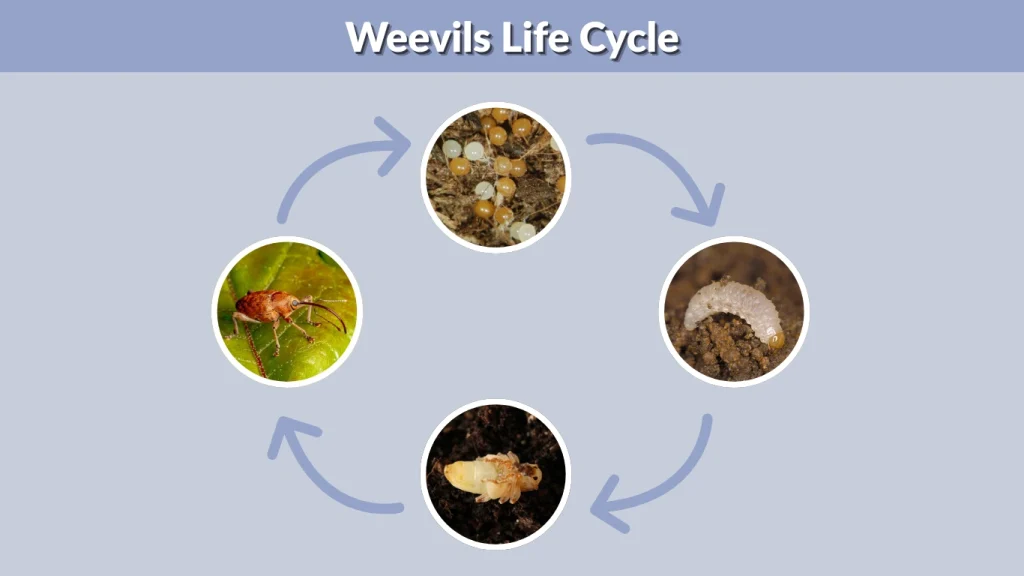
Like many insects, weevils go through a complete life cycle consisting of four stages: egg, larva, pupa, and adult. Understanding this life cycle is important because it explains how infestations can develop and spread.
Egg Stage
The life cycle begins when a female weevil lays eggs inside grains or seeds. Using her long snout, she drills a small hole into the grain and deposits an egg inside. She may then seal the opening, making the egg difficult to detect.
A single female weevil can lay dozens or even hundreds of eggs, which allows populations to grow rapidly under favorable conditions.
Larvae Stage
Once the eggs hatch, the larvae begin feeding inside the grain where they were laid. At this stage, the larvae remain hidden within the food source, making infestations difficult to notice.
Weevil larvae feed continuously as they grow, gradually consuming the inside of the grain and leaving only the outer shell intact.
Pupa Stage
After the larva has grown and consumed much of the grain, it enters the pupa stage. During this stage, the insect undergoes a transformation inside the grain. The pupa does not feed and remains inactive while its body changes into the adult form.
This stage usually lasts several days to a couple of weeks, depending on environmental conditions such as temperature and humidity. Inside the grain, the developing weevil gradually forms its wings, legs, and other adult features.
Adult Stage
When the transformation is complete, the adult weevil emerges from the grain. It usually chews a small hole through the outer shell to escape. At this point, the insect becomes active and begins searching for new food sources where it can feed and reproduce.
Adult weevils can live for several months, during which they continue feeding on grains and laying eggs. Because each female can lay many eggs, populations can increase quickly if food sources are abundant.
Weevil Larvae
The larval stage is one of the most destructive phases in the weevil life cycle because this is when the insect feeds heavily and causes the most damage.
What Weevil Larvae Look Like
Weevil larvae are usually small, white, and worm-like in appearance. Their bodies are soft and curved, and they typically do not have visible legs. Because they develop inside grains or seeds, they are rarely seen until the grain is broken open.
Unlike adult weevils, larvae do not move far from where they hatch. They stay inside the grain where they feed and grow.
Where Larvae Develop
Most pantry weevil larvae develop inside stored foods such as rice, wheat, corn, flour, and other grains. Because they grow inside these food sources, infestations can remain hidden for long periods.
In agricultural settings, larvae may also develop inside seeds or plant tissues, damaging crops before they are harvested.
Damage Caused by Larvae
Weevil larvae feed on the inside of grains, leaving them hollow or powdery. This feeding damage reduces the quality of the food and makes it unsuitable for consumption.
In severe infestations, large amounts of stored grain may become contaminated with insects, larval skins, and waste material. This is why early detection and proper storage are important to prevent widespread infestations.
What Do Weevils Eat?
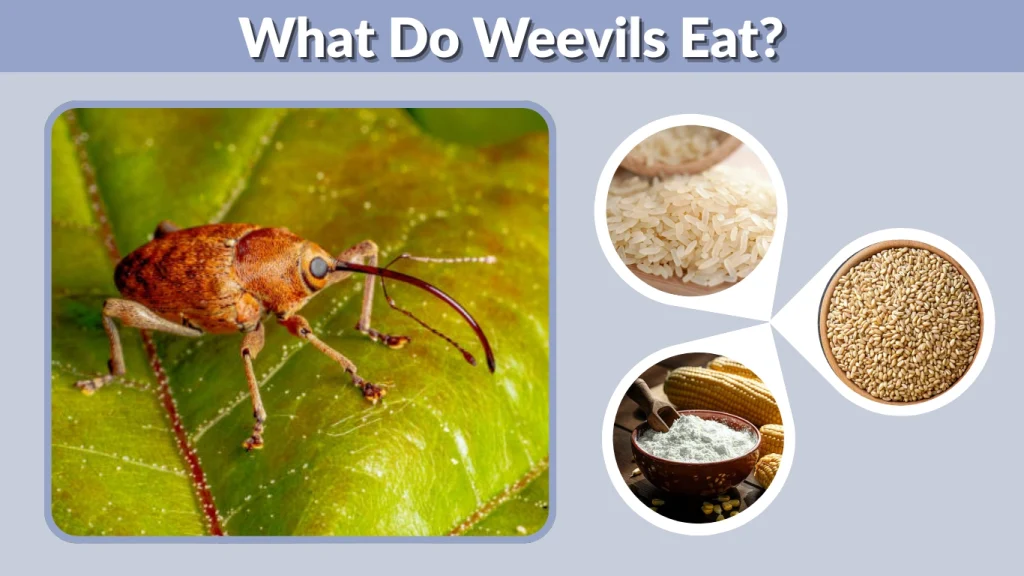
Weevils feed mainly on plant-based foods, particularly grains and seeds. Their specialized mouthparts allow them to chew through tough plant materials.
Stored Food Products
In homes, weevils are most often found in pantry items such as:
- Rice
- Wheat
- Flour
- Corn
- Pasta
- Cereals
- Oats
These foods provide ideal conditions for weevils because they are dry, nutrient-rich, and often stored for long periods.
Crops and Plants
Some species of weevils feed on crops and garden plants. For example, certain weevils attack cotton, fruits, vegetables, and nuts. In agriculture, these pests can cause serious economic damage by reducing crop yields.
Because different weevil species specialize in different foods, their impact can vary depending on the environment in which they live.
Do Weevils Bite Humans?
Many people worry when they discover insects in their pantry and wonder if they are dangerous. Fortunately, weevils are generally harmless to humans.
Are Weevils Dangerous?
Weevils do not carry diseases and are not known to harm humans or pets. Their main impact is limited to contaminating stored food products.
Do Weevils Bite or Sting?
Weevils do not bite or sting people. Their mouthparts are designed for chewing plant materials, not for biting skin.
Are Weevils Harmful in Food?
While accidentally consuming a few weevils or larvae is unlikely to cause harm, contaminated food is usually unpleasant and should be discarded. Throwing away infested products helps prevent the insects from spreading to other foods.
How to Get Rid of Weevils
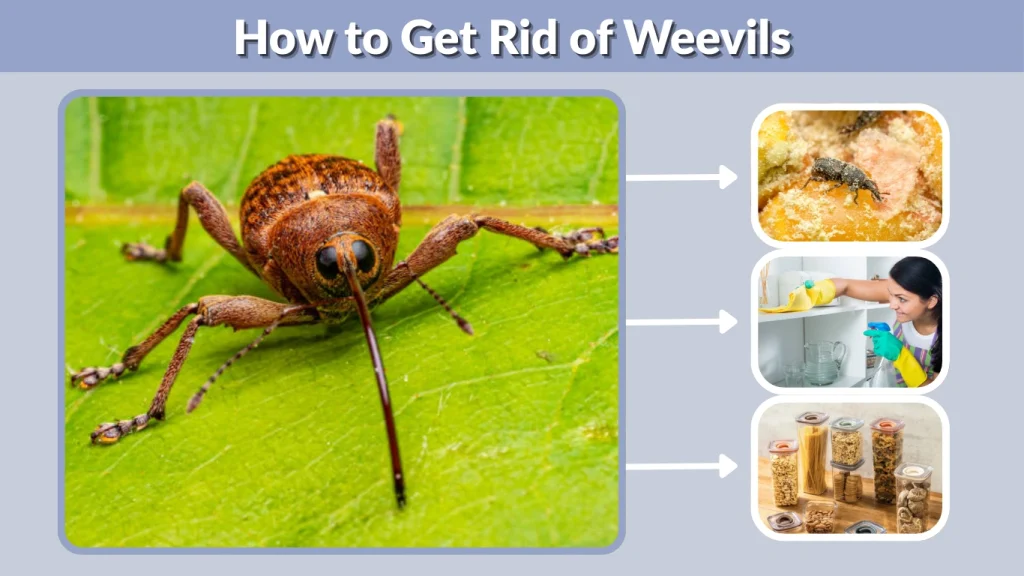
If you find weevils in your pantry, it is important to act quickly to prevent them from spreading.
Remove Infested Food
The first step is to inspect all grains, cereals, and dry foods. Any products that show signs of infestation should be discarded immediately in a sealed bag.
Clean the Pantry Thoroughly
After removing contaminated food, clean pantry shelves, corners, and containers with warm soapy water or vinegar. Vacuuming cracks and crevices can help remove hidden insects and eggs.
Store Food in Airtight Containers
Storing grains and dry foods in airtight containers can prevent weevils from entering and laying eggs. Glass, metal, or thick plastic containers are ideal for long-term storage.
Use Freezing or Heat Treatment
Freezing grains for three to four days can kill any hidden eggs or larvae. Similarly, heating grains in an oven at a low temperature can eliminate insects before storage.
How to Prevent Weevils in the Future
Preventing weevils is easier than dealing with a large infestation. A few simple habits can greatly reduce the risk.
Store Grains Properly
Always keep grains, flour, and cereals in sealed containers rather than leaving them in original packaging.
Keep Pantry Areas Clean
Regularly clean pantry shelves and remove crumbs or spilled food that might attract pests.
Buy Smaller Quantities of Grain
Buying smaller amounts of grains and using them quickly reduces the chance that insects will have time to develop.
Conclusion
Weevils are small beetles that commonly infest stored grains and pantry foods. Although they are not harmful to humans, they can contaminate food and damage crops if left unchecked. Understanding what weevils look like, how they reproduce, and what they eat can help people identify infestations early. By keeping food properly stored, cleaning pantry areas regularly, and discarding contaminated products, it is possible to control and prevent weevil problems effectively.
