
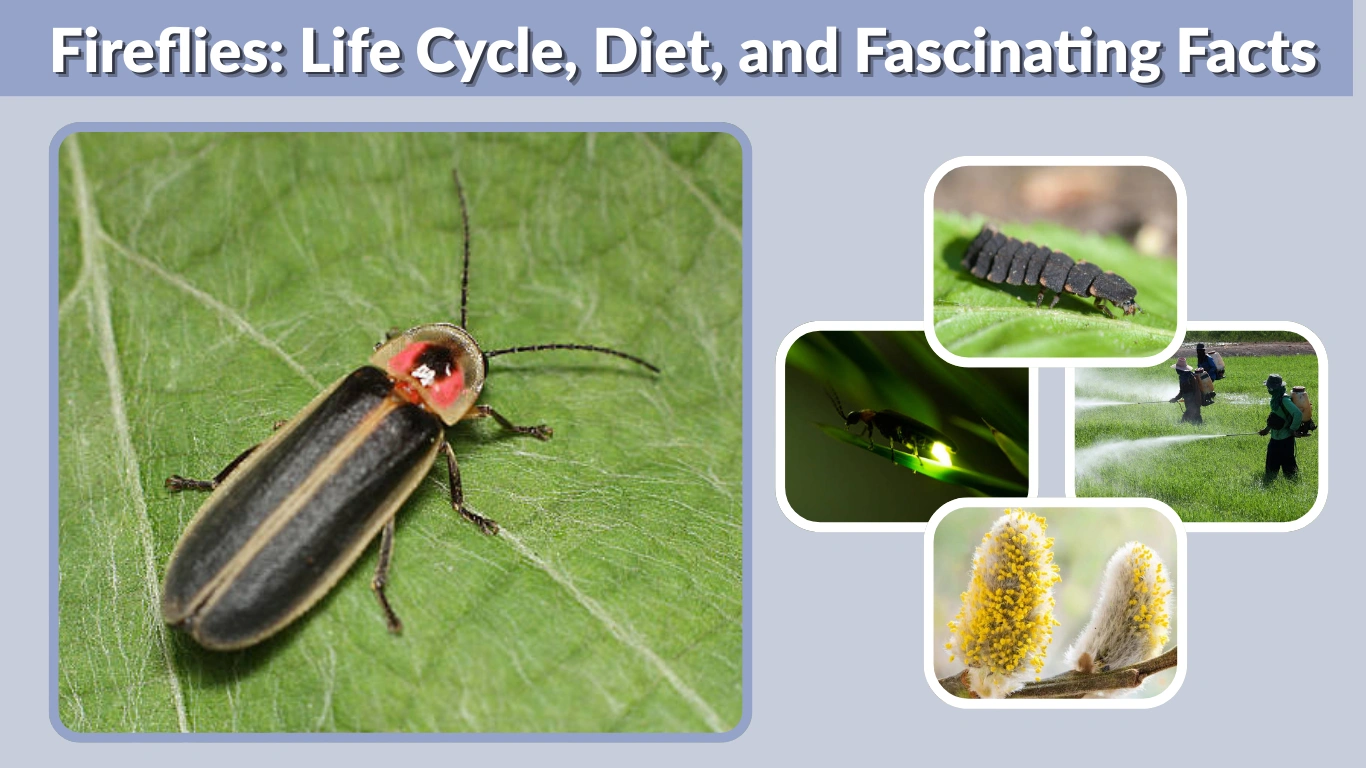
Fireflies are glowing insects often seen on warm summer evenings, lighting up fields and gardens with their gentle flashes. These fascinating creatures are famous for their natural ability to produce light, a phenomenon known as bioluminescence. Although many people call them lightning bugs, fireflies are actually a type of beetle. Their glowing signals play an important role in communication and reproduction. Understanding fireflies, including their life cycle and behavior, helps us appreciate these unique insects and the role they play in nature.
What Are Fireflies?
Fireflies are insects that belong to the Lampyridae family, which is part of the beetle order Coleoptera. Even though their name includes the word “fly,” they are not true flies. Instead, they are beetles closely related to other insects with hard wing covers.
There are over 2,000 species of fireflies found around the world, especially in warm and humid regions. They are commonly seen in forests, fields, gardens, and wetlands where conditions are suitable for their survival. Fireflies are best known for the glowing light produced from their abdomen, which is used mainly for communication and attracting mates.
Why They Are Called Lightning Bugs
In many regions, especially in North America, fireflies are commonly called lightning bugs. This nickname comes from the flashing lights they produce while flying through the air at night. Their glowing patterns often resemble tiny flashes of lightning moving through the darkness.
Different firefly species produce different flashing patterns. These patterns help males and females recognize members of their own species when searching for a mate.
Physical Characteristics of Fireflies
Fireflies have several distinctive physical features that make them unique among insects. Most species have soft, elongated bodies and typically measure between 5 and 25 millimeters in length.
Their bodies are usually dark brown, black, or yellowish, and they have two pairs of wings. The outer pair of wings acts as protective covers, while the inner wings are used for flying. Like other beetles, fireflies have hard wing covers that protect their delicate flying wings.
One of the most remarkable features of fireflies is the light-producing organ located in the lower part of their abdomen. This organ contains special chemicals that allow the insect to produce light without creating heat. Because of this efficiency, firefly light is sometimes called “cold light.”
Why Do Fireflies Glow?
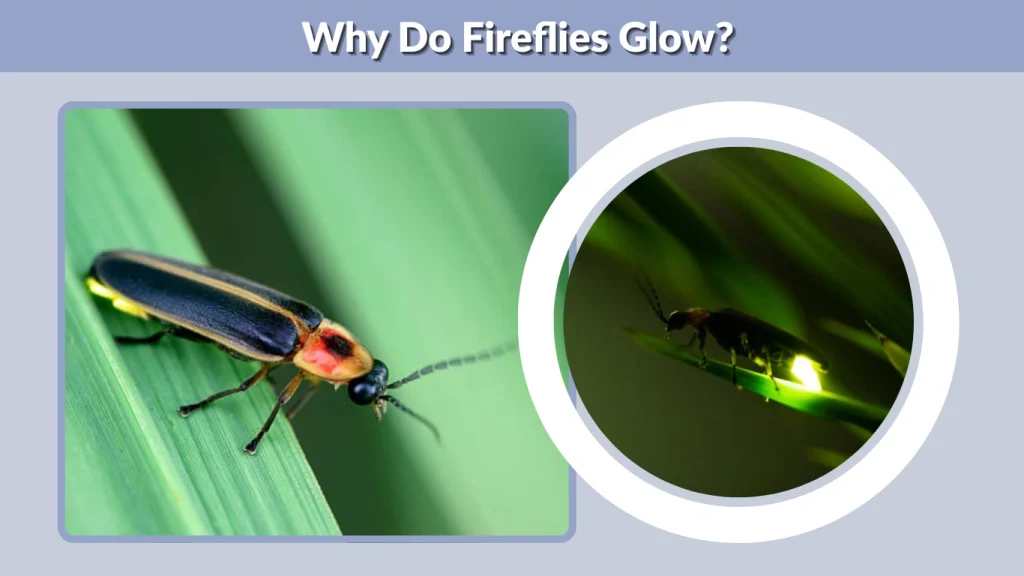
The glowing ability of fireflies is one of the most fascinating phenomena in nature. This natural light production is known as bioluminescence, and it occurs when certain chemicals inside the firefly’s body react together.
Bioluminescence Explained
Inside the firefly’s light organ are chemicals such as luciferin, enzymes called luciferase, and oxygen. When these substances combine in a chemical reaction, they produce light. This reaction happens quickly and efficiently, allowing fireflies to create bright flashes without generating significant heat.
Because almost all the energy produced in this reaction becomes light, fireflies are considered one of the most efficient natural light producers in the world.
Purpose of the Glow
Fireflies use their glowing lights for several important reasons. The most common purpose is communication during mating. Male fireflies fly through the air and produce specific flashing patterns to attract females. Female fireflies, usually resting on plants or grass, respond with their own flashes.
These signals allow males and females of the same species to find each other in the dark. Each species has its own unique flashing pattern, which helps prevent confusion with other firefly species.
In addition to attracting mates, fireflies may also use their glow as a defense mechanism. The flashing light can warn predators that the insect contains chemicals that taste unpleasant or may even be toxic.
Fireflies Life Cycle
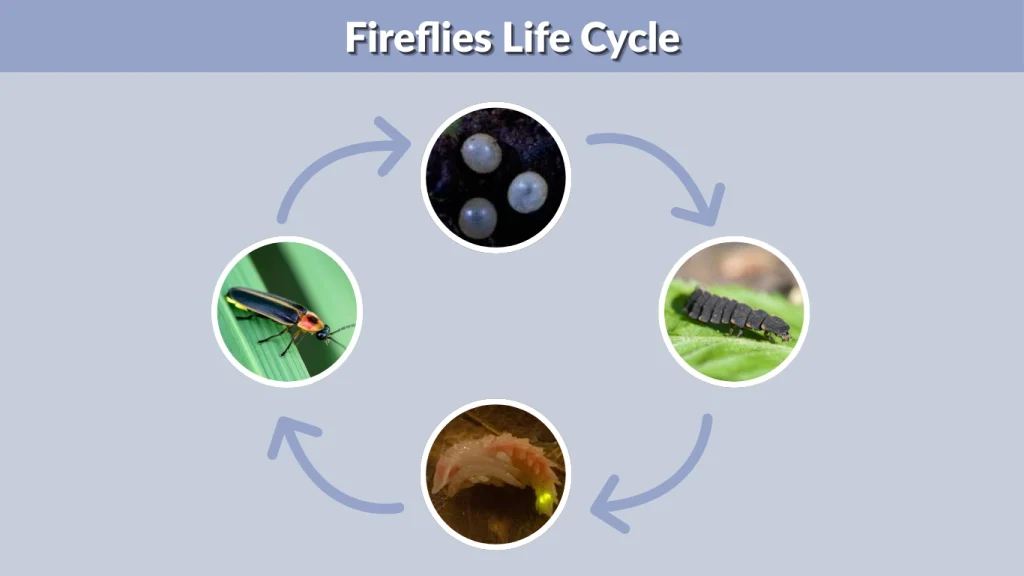
Like many insects, fireflies undergo complete metamorphosis, which means they pass through four stages of development: egg, larva, pupa, and adult. Each stage plays an important role in the life of the insect.
Egg Stage
The firefly life cycle begins when a female lays eggs in moist soil, leaf litter, or grassy areas. This usually occurs during late spring or early summer after mating.
Female fireflies may lay dozens to hundreds of eggs, depending on the species. In some species, the eggs themselves are capable of producing a faint glow. After a few weeks, the eggs hatch and the larvae emerge.
Larva Stage
The larval stage is one of the longest and most active periods in the firefly’s life. Firefly larvae live on or just below the ground surface where the environment remains moist and suitable for hunting.
These larvae have elongated, segmented bodies and are often dark in color. Because some larvae can also produce small amounts of light, they are sometimes called glowworms.
During this stage, the larvae spend most of their time feeding and growing. They are predators that hunt small invertebrates such as snails, slugs, worms, and other insects. Their feeding activity helps control populations of these organisms in natural ecosystems.
The larval stage may last several months to even a year or more, depending on environmental conditions and species.
Pupa Stage
After the larva has grown and developed enough, it enters the pupa stage. During this stage, the larva stops feeding and forms a protective casing in the soil or leaf litter. Inside this casing, the insect undergoes a remarkable transformation as its body structure changes into that of an adult firefly.
The pupa stage usually lasts one to three weeks, depending on the species and environmental conditions. During this time, wings, legs, and the adult light-producing organs develop fully.
Adult Stage
When the transformation is complete, the adult firefly emerges from the pupa. At first, the insect may appear pale and soft, but its body quickly hardens and its wings become ready for flight.
Adult fireflies are most active during warm evenings, especially in summer. Males typically fly while flashing their lights in specific patterns to attract females. Females usually remain on plants or grass and respond with their own light signals.
Interestingly, the adult stage of a firefly’s life is relatively short. Many adult fireflies live only a few weeks, focusing mainly on reproduction before their life cycle ends.
Firefly Larvae
The larval stage is one of the most important phases of the firefly life cycle because this is when the insect spends most of its time feeding and growing.
What Firefly Larvae Look Like
Firefly larvae have elongated, segmented bodies and are usually dark brown or black in color. Their bodies are somewhat flattened, and they have small legs that allow them to move across soil and vegetation.
Because some species of larvae produce a faint glow, they are often called glowworms. This glowing ability may help warn predators that they are not good to eat.
Habitat of Firefly Larvae
Firefly larvae typically live in moist environments such as soil, leaf litter, forests, wetlands, and grassy areas. These habitats provide both protection and a steady supply of prey.
Moist conditions are especially important because many of the creatures that larvae feed on, such as snails and slugs, prefer damp environments as well.
What Firefly Larvae Eat
Firefly larvae are predatory insects. They commonly feed on small invertebrates, including:
- Snails
- Slugs
- Worms
- Small insects
The larvae often inject digestive chemicals into their prey, which helps break down the tissues before they consume them.
What Do Fireflies Eat?
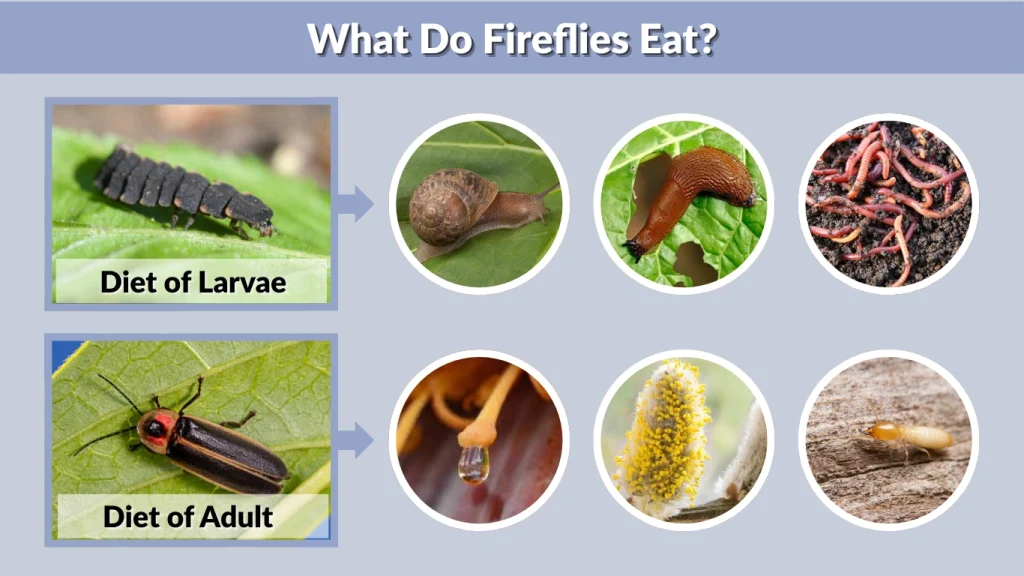
The diet of fireflies varies depending on their stage of life. Larvae and adults may have different feeding habits.
Diet of Larvae
Firefly larvae are active hunters and feed mainly on soft-bodied animals such as snails, slugs, and worms. Their feeding behavior helps keep these populations under control in natural ecosystems.
Diet of Adult Fireflies
The feeding habits of adult fireflies vary by species. Some adults feed on nectar, pollen, or small insects, while others may eat very little during their short adult lifespan. In many cases, adult fireflies focus mainly on reproduction rather than feeding.
Where Do Fireflies Live?
Fireflies can be found in many parts of the world, particularly in regions with warm temperatures and adequate moisture.
Natural Habitats
Fireflies prefer habitats such as forests, meadows, wetlands, and gardens. These areas provide the moisture and plant life that support both adult fireflies and their larvae.
They are often found near ponds, streams, or marshy areas, where conditions are ideal for their survival.
Seasonal Appearance
Fireflies are most commonly seen during summer evenings when temperatures are warm and humidity is relatively high. As darkness falls, their glowing lights become visible as they fly through fields and gardens.
Threats to Firefly Populations
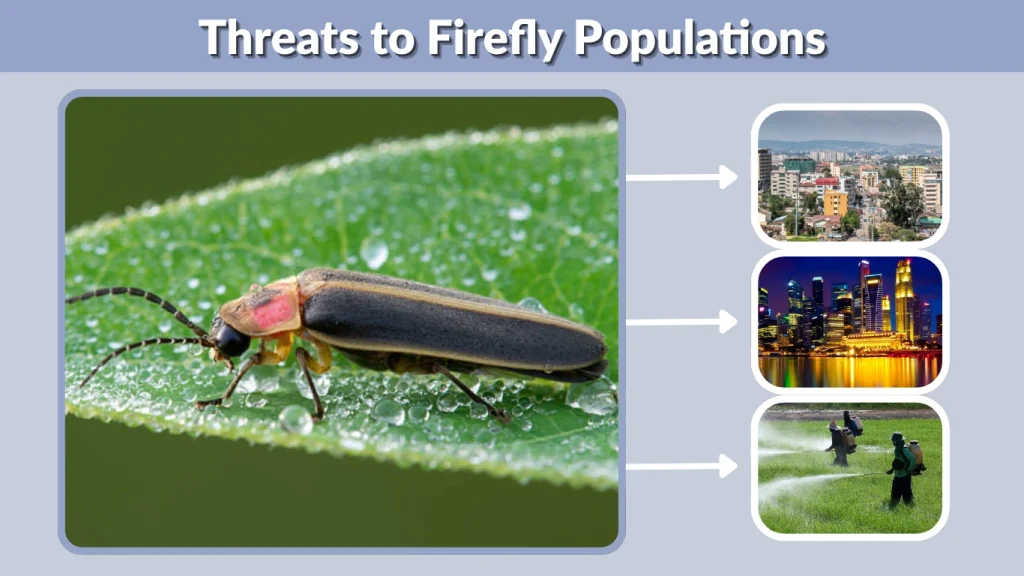
Although fireflies are beloved insects, their populations are declining in many regions due to environmental changes.
Habitat Loss
Urban development and the destruction of natural habitats reduce the areas where fireflies can live and reproduce.
Light Pollution
Artificial lighting from cities and buildings can interfere with fireflies’ flashing signals, making it harder for them to find mates.
Pesticide Use
Chemicals used in agriculture and gardens can harm both adult fireflies and their larvae, reducing their numbers.
Interesting Facts About Fireflies
Fireflies have several fascinating characteristics that make them unique among insects.
- There are over 2,000 known species of fireflies worldwide.
- Some fireflies synchronize their flashing patterns in large groups.
- Firefly light is extremely efficient and produces very little heat.
- In some species, even the eggs and larvae can glow faintly.
These glowing insects have inspired scientists and researchers studying natural light production.
Conclusion
Fireflies are remarkable insects known for their glowing lights and fascinating life cycle. From tiny eggs in the soil to glowing adults flying through summer nights, each stage of their development plays an important role in nature. Their ability to produce light for communication and defense makes them one of the most unique insects in the world. By protecting natural habitats and reducing pollution, people can help ensure that fireflies continue to brighten summer evenings for generations to come.
