
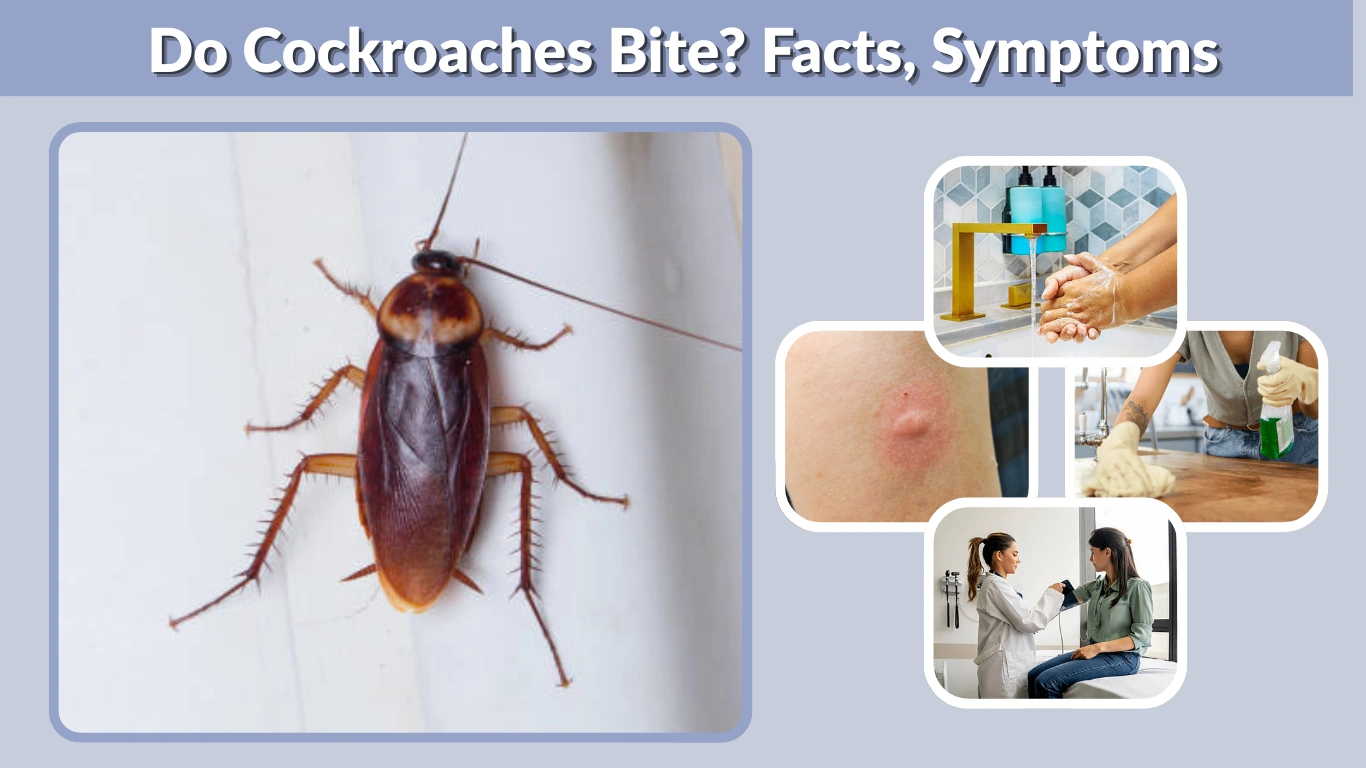
Cockroaches are among the most common household pests, and many people wonder whether these insects can bite humans. While cockroaches are mainly known for contaminating food and spreading bacteria, the idea of them biting people can be unsettling. In reality, cockroach bites are rare but possible under certain conditions. Understanding cockroach behavior, why bites may occur, and how to recognize them can help homeowners stay informed and take steps to prevent infestations.
Do Cockroaches Bite Humans?
Yes, cockroaches can bite humans, but it happens very rarely. Cockroaches are scavengers that prefer feeding on food scraps, organic waste, and decaying materials rather than biting people.
Most cockroaches avoid human contact and hide during the day. They typically come out at night to search for food in kitchens, garbage areas, and other hidden places.
However, in certain situations—especially when cockroach populations become very large—they may bite humans. These bites are usually minor and do not cause serious harm.
Cockroaches may bite areas of the body where food residue or dead skin is present, such as:
- Fingers
- Hands
- Face
- Eyelashes
- Toenails
These areas may attract cockroaches because they contain small particles of organic material.
Why Do Cockroaches Bite People?
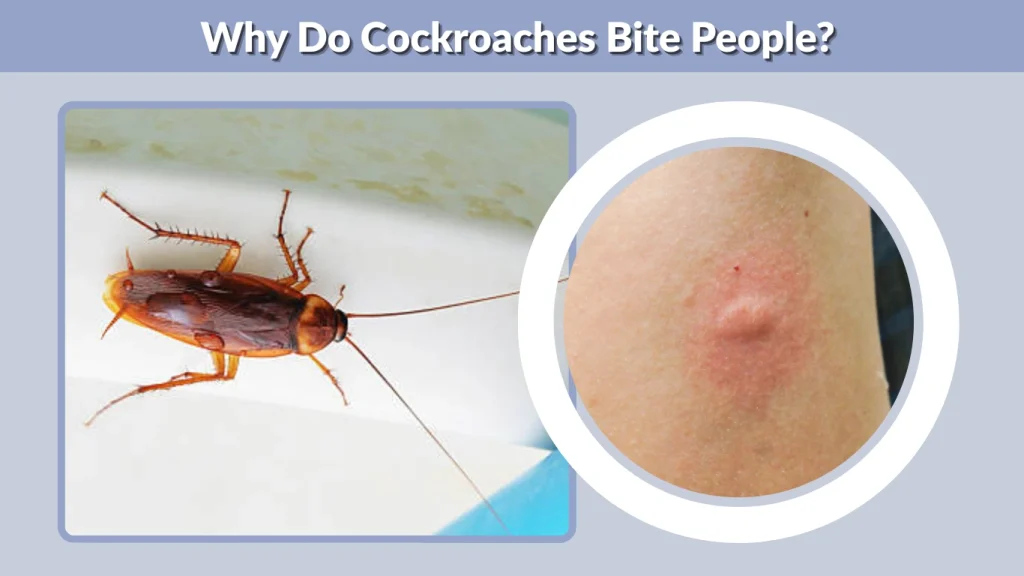
Although cockroach bites are uncommon, several conditions can increase the likelihood of bites.
Food Residue on Skin
Cockroaches are attracted to food particles and organic matter. If food residue is left on the skin, especially around the mouth or hands, cockroaches may attempt to feed on it.
For example, crumbs or sugary residue left after eating can attract cockroaches during the night.
Severe Cockroach Infestations
In homes with large cockroach populations, competition for food may increase. When food sources become limited, cockroaches may explore unusual food options, including organic materials found on the human body.
This situation is more likely to occur in places where sanitation is poor or infestations are not controlled.
Lack of Food Sources
Cockroaches are opportunistic feeders. If they cannot find enough food in their usual environments, they may nibble on substances such as:
- Dead skin cells
- Fingernails
- Eyelashes
- Hair
Although this behavior is rare, it can occur when cockroaches are desperate for food.
Do Cockroaches Bite at Night?
Cockroaches are nocturnal insects, which means they are most active at night. They usually hide during the day in dark areas such as cabinets, cracks, and behind appliances.
At night, cockroaches come out to search for food and water. Because people are sleeping during this time, any rare biting incidents are more likely to happen while a person is asleep.
However, it is important to remember that cockroach bites are still very uncommon. In most cases, cockroaches prefer to avoid humans and focus on easier food sources.
What Does a Cockroach Bite Look Like?
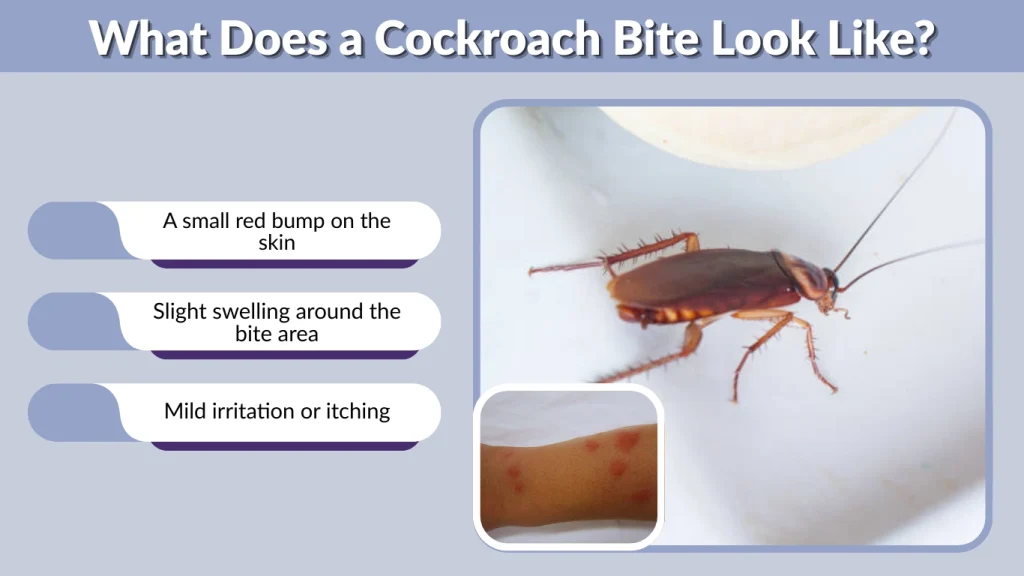
Cockroach bites are usually small and may look similar to other insect bites. Because they are rare, they are sometimes mistaken for bites from mosquitoes, bed bugs, or other insects.
Common Bite Appearance
A cockroach bite may appear as:
- A small red bump on the skin
- Slight swelling around the bite area
- Mild irritation or itching
The bite is generally not painful, but some people may notice itching or discomfort.
Possible Skin Irritation
In some cases, cockroach bites may cause mild skin reactions such as redness or irritation. This reaction usually occurs because of bacteria or allergens carried by cockroaches.
If the bite area is scratched repeatedly, it may become infected. Keeping the area clean can help prevent complications.
Difference Between Roach Bites and Other Insect Bites
Cockroach bites can sometimes be confused with other insect bites. For example:
Mosquito bites
- Usually appear as raised itchy bumps
- Often occur on exposed skin
Bed bug bites
- Often appear in clusters or lines
- Usually occur on arms, legs, or back
Cockroach bites are less predictable and usually occur as isolated small marks.
Are Cockroach Bites Dangerous?
Cockroach bites are generally not dangerous, but they can still cause minor problems. The biggest health concern related to cockroaches is not their bites but the bacteria and allergens they carry.
Cockroaches often crawl through unsanitary areas such as garbage bins, drains, and sewage systems. When they come into contact with human skin or food surfaces, they can spread germs.
Potential concerns include:
- Skin irritation from the bite
- Possible infection if the bite is scratched
- Exposure to bacteria carried by cockroaches
- Allergic reactions in sensitive individuals
Because of these risks, controlling cockroach infestations is important for maintaining a healthy home environment.
How to Treat a Cockroach Bite
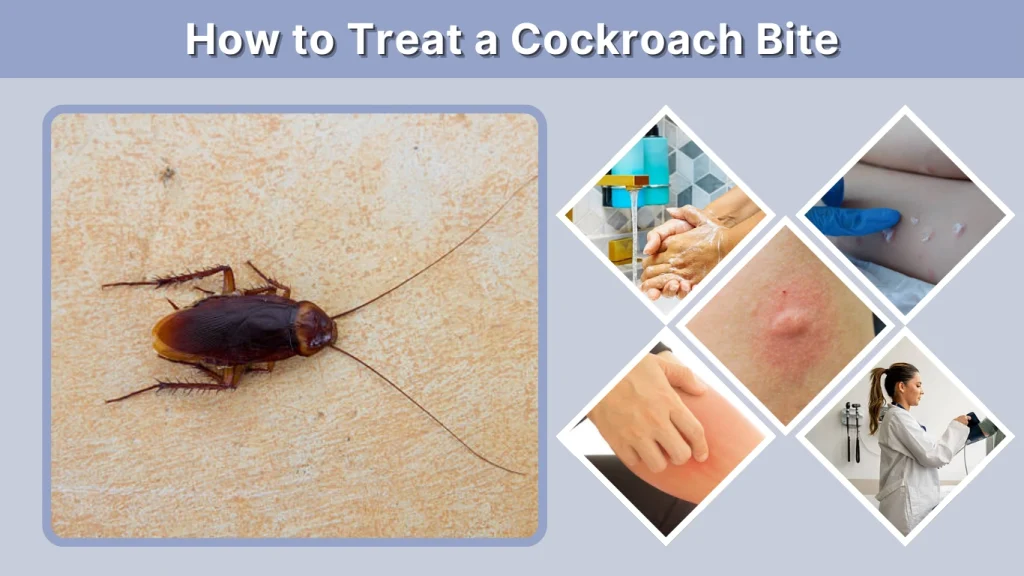
Although cockroach bites are usually mild, it is still important to treat them properly to avoid irritation or infection. Most bites can be managed at home with basic first aid.
Clean the Bite Area
The first step is to clean the affected area. Washing the bite with soap and warm water helps remove bacteria and reduces the risk of infection.
After cleaning the skin, gently dry the area with a clean towel. Keeping the bite clean is important for proper healing.
Apply Antiseptic Cream
Applying an antiseptic cream or ointment can help prevent bacterial infection. Products containing mild antibacterial ingredients can protect the bite area while it heals.
If antiseptic cream is not available, a simple over-the-counter antibiotic ointment may also be used.
Reduce Itching and Swelling
Some cockroach bites may cause itching or mild swelling. To relieve these symptoms, you can try:
- Applying a cold compress to the bite area
- Using an anti-itch cream such as hydrocortisone
- Taking an antihistamine if recommended by a doctor
Avoid scratching the bite because it may break the skin and increase the risk of infection.
When to Seek Medical Attention
In most cases, cockroach bites heal within a few days. However, medical attention may be needed if you notice symptoms such as:
- Severe swelling or redness
- Signs of infection (pus, warmth, or pain)
- Fever or unusual allergic reactions
If these symptoms occur, it is best to consult a healthcare professional.
How to Prevent Cockroach Bites
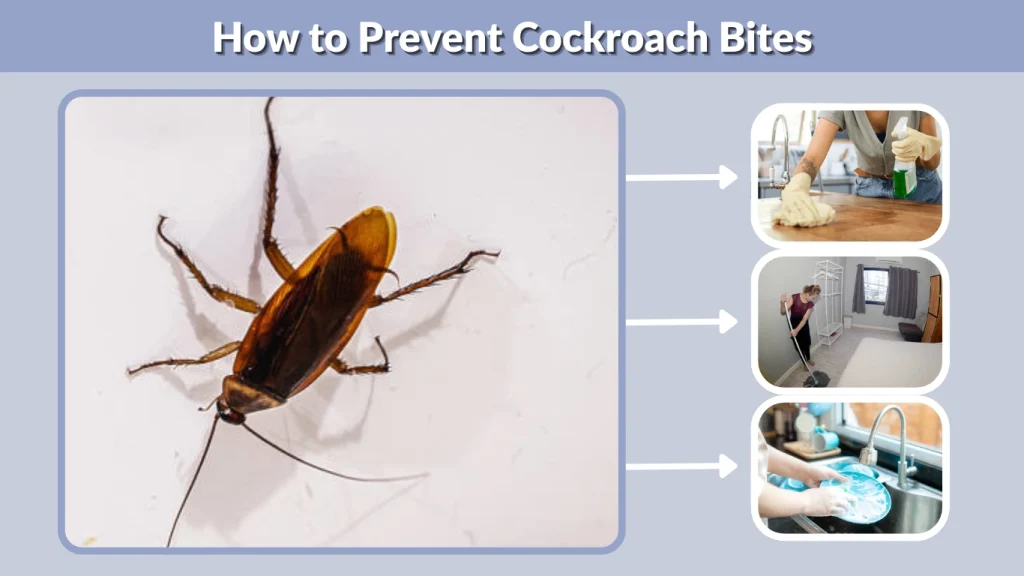
Preventing cockroach bites mainly involves controlling cockroach infestations inside the home. Since cockroach bites are rare, reducing their presence is the most effective way to avoid contact.
Keep Your Home Clean
Maintaining cleanliness is one of the most important ways to prevent cockroaches. These pests are attracted to food crumbs and waste.
Helpful cleaning habits include:
- Wiping kitchen surfaces after meals
- Sweeping and mopping floors regularly
- Washing dishes soon after eating
- Taking out trash frequently
Removing food sources makes your home less attractive to cockroaches.
Remove Food Sources
Cockroaches can survive on very small amounts of food. Proper food storage can reduce their access to these resources.
Some useful practices include:
- Storing food in airtight containers
- Keeping pantry shelves clean
- Avoiding leaving food uncovered
- Cleaning spills immediately
These habits reduce the chances of cockroaches entering your living space.
Seal Cracks and Entry Points
Cockroaches often enter homes through small openings in walls, floors, or pipes. Sealing these gaps can help prevent them from getting inside.
Check for openings around:
- Windows and doors
- Pipes and plumbing
- Baseboards and cabinets
- Wall cracks and crevices
Using caulk or sealant can block many of these entry points.
Use Pest Control Methods
If cockroaches are already present, using pest control methods can help reduce their population.
Common cockroach control solutions include:
- Cockroach gel baits
- Sticky traps
- Boric acid powder
- Professional pest control services
Combining several control methods is often the most effective way to eliminate cockroaches.
Signs of a Cockroach Infestation
If you are worried about cockroach bites, it may be helpful to check for signs of a cockroach infestation in your home.
Some common indicators include:
Seeing Cockroaches at Night
Cockroaches are nocturnal insects. If you notice them crawling in kitchens or bathrooms at night, it may indicate an infestation.
Cockroach Droppings
Cockroach droppings look like tiny black specks similar to coffee grounds. These droppings are often found in cupboards, drawers, or near food storage areas.
Egg Cases
Cockroaches lay eggs in small capsules known as oothecae. These brown oval-shaped cases may be found in hidden areas such as behind furniture or appliances.
Musty Odor
Large cockroach infestations may produce a noticeable musty smell. This odor is caused by chemicals released by cockroaches and their droppings.
FAQs
Can baby cockroaches bite?
Baby cockroaches, known as nymphs, technically can bite, but it is extremely rare. Like adult cockroaches, they usually prefer feeding on food scraps and organic material.
Do cockroaches crawl on people while sleeping?
Cockroaches may crawl across surfaces at night while searching for food. In rare cases, they might crawl onto a sleeping person if food residue is present nearby.
How rare are cockroach bites?
Cockroach bites are very uncommon. Most cockroaches avoid humans and focus on easier food sources.
What attracts cockroaches to beds?
Cockroaches may be attracted to beds if there are food crumbs, moisture, or nearby hiding places. Keeping bedrooms clean can reduce this risk.
Conclusion
Cockroaches can bite humans, but such incidents are rare. These insects typically prefer feeding on food scraps and organic waste rather than biting people. When bites do occur, they are usually mild and can be treated with simple first aid. The best way to prevent cockroach bites is to control cockroach populations through proper cleaning, food storage, and pest control methods. Maintaining a clean and well-sealed home environment can greatly reduce the chances of cockroach infestations and keep your living space healthier.
