
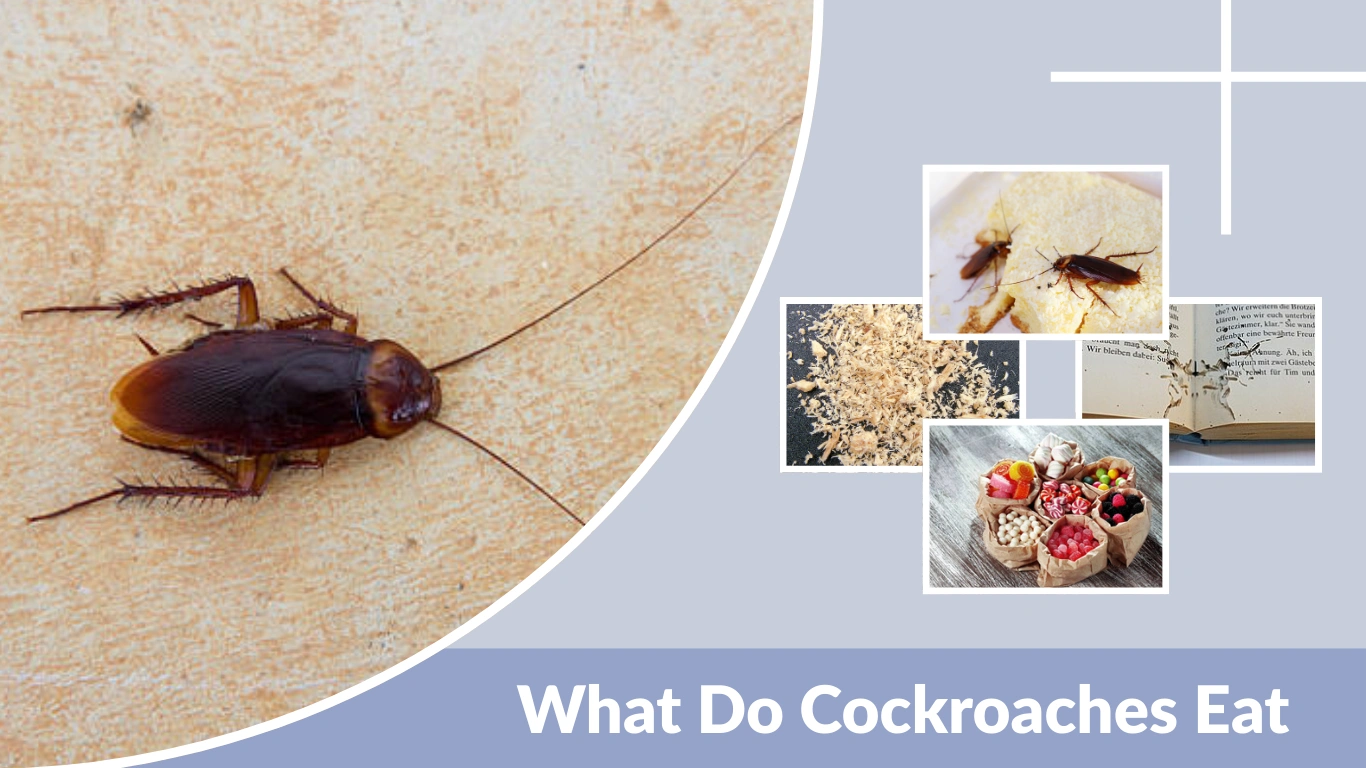
Cockroaches are among the most adaptable pests in the world, and their diet is one of the main reasons they survive almost anywhere. These insects are omnivorous scavengers that can eat a wide variety of materials, from leftover human food to organic debris. Understanding what cockroaches eat can help homeowners identify what attracts them and how to prevent infestations. In this guide, we will explore the common foods cockroaches eat in the wild, inside homes, and even some unusual items they consume.
What Do Cockroaches Eat in the Wild?
Cockroaches have existed for millions of years because they can survive on many different food sources. In natural environments such as forests, gardens, and fields, they mostly feed on organic materials they find on the ground.
Decaying Organic Matter
One of the primary food sources for wild cockroaches is decaying organic matter. They play a small role in breaking down natural waste in ecosystems.
Common examples include:
- Dead plants
- Fallen leaves
- Rotting wood
- Decomposing vegetation
Because cockroaches are scavengers, they are attracted to anything that is starting to break down. The nutrients from these materials help them survive in environments where fresh food may be limited.
Animal Matter
Cockroaches will also consume animal-based materials when available. They are not picky eaters, and they will feed on protein sources they find outdoors.
Examples of animal matter cockroaches eat include:
- Dead insects
- Small animal carcasses
- Bird droppings
- Organic waste from animals
This ability to eat almost anything allows cockroaches to survive in many different climates and ecosystems.
Natural Plant-Based Foods
In addition to decaying materials, cockroaches may eat fresh plant-based foods found in nature.
These foods may include:
- Fruits that fall from trees
- Seeds
- Soft plant materials
- Vegetation found in gardens
Although cockroaches prefer decaying materials, they will eat fresh food if it is easily available.
What Do Cockroaches Eat in Homes?
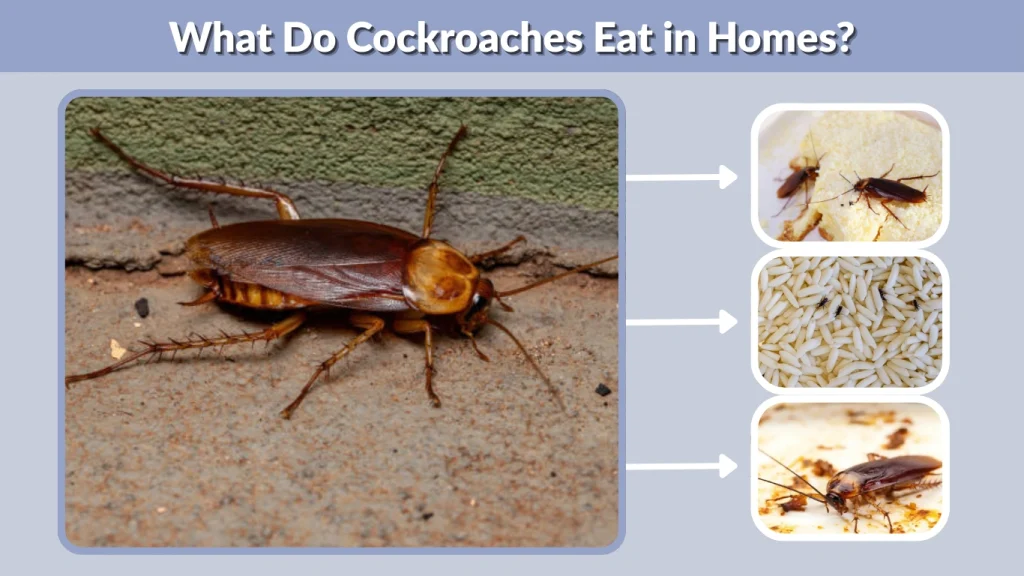
When cockroaches enter homes, they gain access to a large supply of food. Kitchens, garbage areas, and food storage spaces provide many attractive feeding opportunities.
Human Food Scraps
The most common food source for cockroaches in homes is leftover human food. Even tiny crumbs can provide enough nutrition for these pests.
Cockroaches commonly eat:
- Bread and baked goods
- Rice and grains
- Meat leftovers
- Sugary snacks
- Fruits and vegetables
Because cockroaches can survive on very small amounts of food, even minor spills or crumbs on the floor can attract them.
Grease and Oils
Cockroaches are particularly attracted to greasy surfaces. Kitchens often contain small amounts of cooking oil and grease that accumulate over time.
Examples include:
- Grease on stovetops
- Cooking oil residue
- Greasy food containers
- Oil stains on kitchen surfaces
These substances provide high energy, making them an ideal food source for cockroaches.
Pet Food
Pet food is another major attractant for cockroaches. Bowls left on the floor overnight can easily attract these pests.
Cockroaches may feed on:
- Dry dog food
- Cat food
- Bird food
- Fish flakes
Since pet food often contains proteins and grains, it provides balanced nutrition for cockroaches.
Unusual Things Cockroaches Can Eat
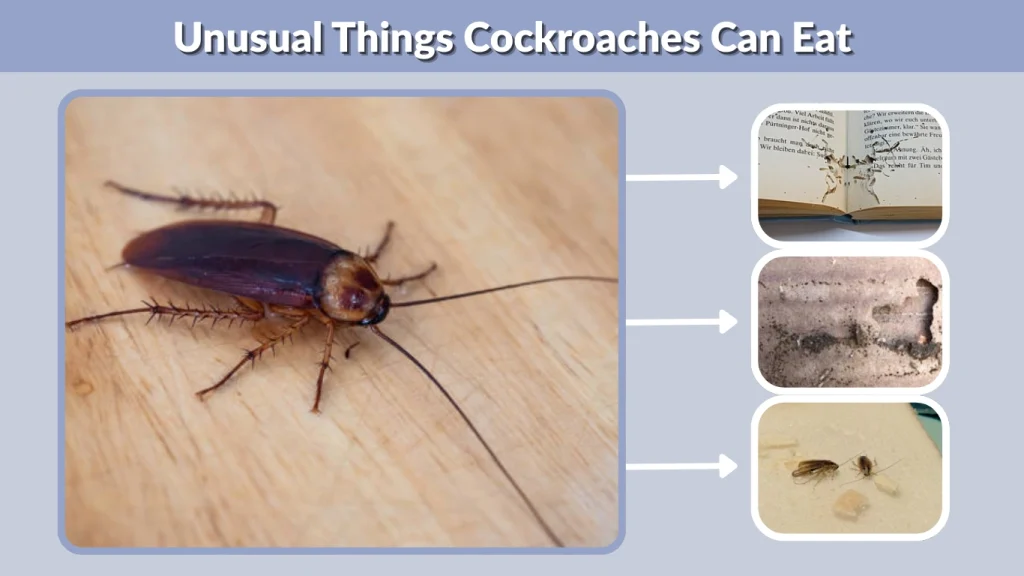
One of the reasons cockroaches are so difficult to eliminate is their ability to eat unusual materials that most insects cannot digest.
Paper and Cardboard
Cockroaches are capable of feeding on paper products because they contain organic fibers. They may chew on materials such as:
- Books
- Cardboard boxes
- Food packaging
- Paper bags
The glue and organic materials in paper products provide nutrients for cockroaches.
Glue and Adhesives
Many adhesives contain starch-based ingredients that cockroaches find appealing.
They may consume:
- Wallpaper glue
- Book binding adhesives
- Envelope glue
- Stamps
This is why cockroaches are sometimes found hiding in old books or wallpaper.
Soap and Toothpaste
Surprisingly, cockroaches may also feed on household hygiene products.
They are attracted to ingredients found in:
- Soap bars
- Toothpaste
- Shampoo residue
These products sometimes contain fats or organic compounds that cockroaches can digest.
Hair and Skin Cells
Cockroaches can also eat materials shed by humans and animals.
This includes:
- Hair
- Dead skin cells
- Nail clippings
These materials may accumulate in bathrooms, bedrooms, and carpets, providing another unexpected food source.
What Foods Attract Cockroaches the Most?
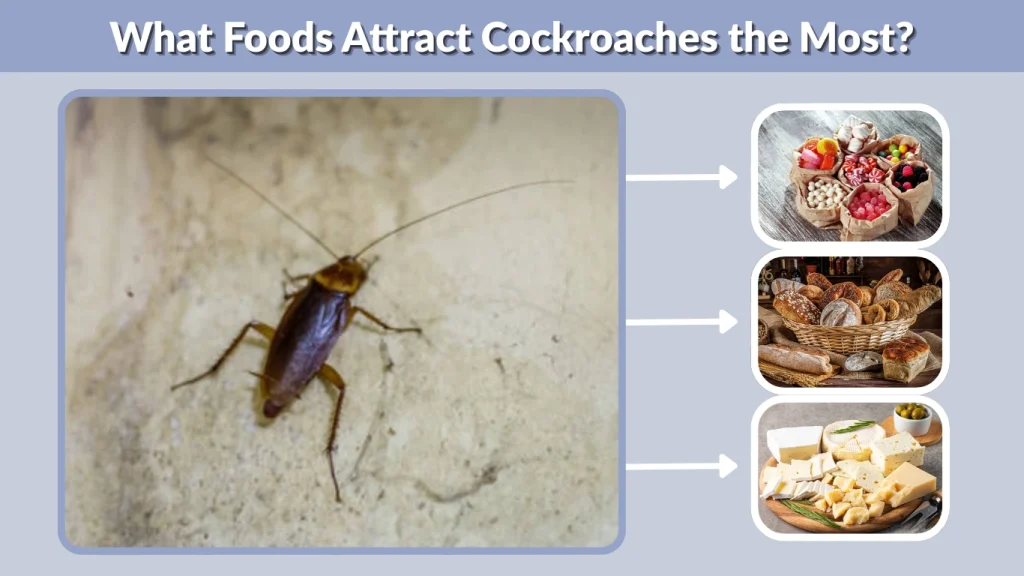
Cockroaches are strongly attracted to certain types of food, especially items that provide high energy or strong smells. These foods can quickly draw cockroaches into kitchens, pantries, and garbage areas if they are left exposed.
Sugary Foods
Sugary foods are one of the biggest attractants for cockroaches. Sugar provides quick energy, making sweets highly appealing to these pests.
Examples include:
- Candy
- Chocolate
- Syrup
- Sweet drinks
- Cake and pastries
Even sticky residue from sugary drinks can attract cockroaches if it is left on tables or floors.
Starchy Foods
Cockroaches also enjoy starchy foods because they contain carbohydrates that help them survive for long periods.
Common starchy foods include:
- Bread
- Pasta
- Rice
- Potatoes
- Cereal
Small crumbs from these foods are often enough to attract cockroaches into kitchens and dining areas.
Fermented Foods
Fermented foods produce strong smells that cockroaches can detect easily. These odors often attract cockroaches searching for food.
Examples include:
- Cheese
- Alcoholic beverages
- Overripe fruits
- Fermented leftovers
Garbage bins containing these foods can quickly become a feeding area for cockroaches.
Greasy Foods
Greasy foods provide high energy and are extremely attractive to cockroaches. Oil residue left on cooking surfaces is a common reason cockroaches gather in kitchens.
Common greasy foods include:
- Fried foods
- Cooking oil
- Meat fat
- Butter or margarine
Regularly cleaning kitchen surfaces can significantly reduce this attraction.
What Do Baby Cockroaches Eat?
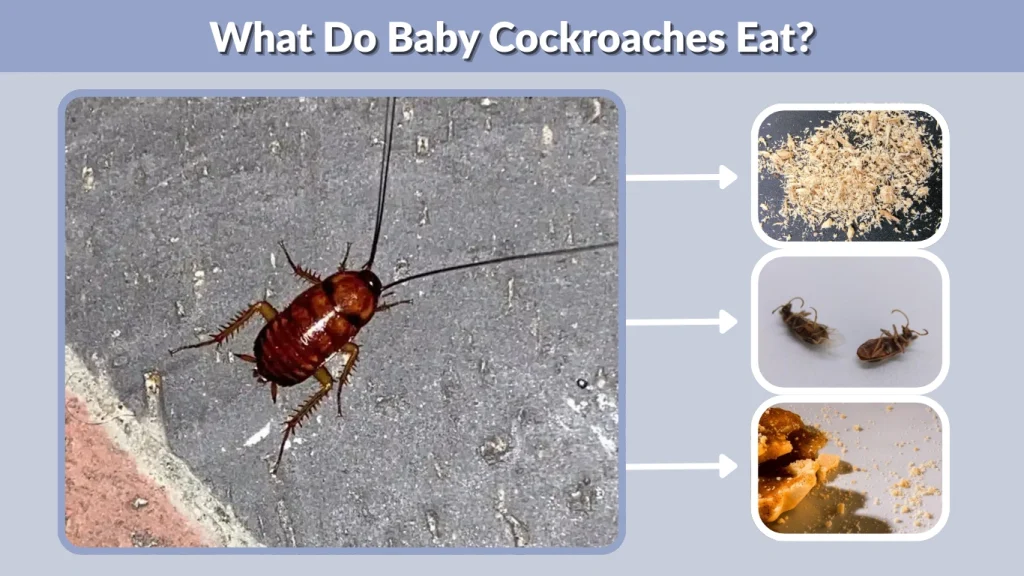
Baby cockroaches, known as nymphs, have feeding habits similar to adult cockroaches. Although they are smaller, they can eat many of the same materials.
Same Food as Adult Cockroaches
Nymphs will eat whatever food sources are available in their environment. This often includes crumbs, food waste, and organic materials.
Organic Debris
In many cases, baby cockroaches survive by eating organic debris found in cracks, corners, or hidden areas.
Examples include:
- Dust containing food particles
- Dead insects
- Tiny food crumbs
Food Droppings from Adults
Young cockroaches may also feed on the waste and droppings of adult cockroaches. This behavior helps them survive even when fresh food is scarce.
How Long Can Cockroaches Live Without Food?
Cockroaches are known for their incredible survival abilities. They can live for surprisingly long periods without food.
Survival Without Food
Most cockroach species can survive about one month without food. Their slow metabolism allows them to conserve energy during times when food is scarce.
Importance of Water
While cockroaches can survive a long time without food, they cannot live long without water. Most cockroaches die within about one week without water.
This is why they are often found near:
- Kitchen sinks
- Bathroom drains
- Leaking pipes
- Damp basements
Adaptation for Starvation
Cockroaches are highly adaptable insects. They can reduce their activity and survive on very small amounts of food when necessary.
Do Cockroaches Eat Humans?
Many people worry about cockroaches biting humans, but this is extremely rare.
Rare Cases Explained
In very unusual situations, cockroaches may nibble on dead skin, eyelashes, or fingernails while a person sleeps. However, these cases are uncommon and usually occur only in areas with heavy infestations.
Why It Almost Never Happens
Cockroaches prefer easier food sources such as crumbs, garbage, and organic waste. Humans are not a natural food source for them.
Signs Cockroaches Are Feeding in Your Home
Recognizing the signs of cockroach activity can help you detect an infestation early.
Food Contamination
Cockroaches often crawl over food and leave behind bacteria. Contaminated food packages or unusual smells can be warning signs.
Droppings
Cockroach droppings look like small black pepper-like particles. These are commonly found near food storage areas, cabinets, or behind appliances.
Damage to Food Packaging
Cockroaches may chew through paper, cardboard, or plastic packaging to reach food inside.
How to Remove Food Sources for Cockroaches
Eliminating food sources is one of the most effective ways to prevent cockroach infestations.
Kitchen Cleaning Tips
Regular cleaning helps remove crumbs and spills that attract cockroaches.
Important habits include:
- Wiping kitchen counters daily
- Sweeping floors regularly
- Cleaning grease from stovetops
Proper Food Storage
Store food in sealed containers to prevent cockroaches from accessing it.
Recommended methods include:
- Airtight containers
- Sealed plastic bags
- Proper pantry organization
Garbage Management
Trash bins should be emptied frequently and kept tightly sealed. Food waste left overnight can quickly attract cockroaches.
Pet Food Safety
Avoid leaving pet food bowls out overnight. Store pet food in sealed containers and clean feeding areas regularly.
Conclusion
Cockroaches are extremely adaptable pests that can survive on a wide range of foods. From leftover human meals to unusual materials like paper, glue, and soap, their flexible diet allows them to thrive in many environments. Understanding what cockroaches eat is essential for preventing infestations. By removing food sources, maintaining cleanliness, and storing food properly, homeowners can greatly reduce the chances of attracting cockroaches into their homes.
