
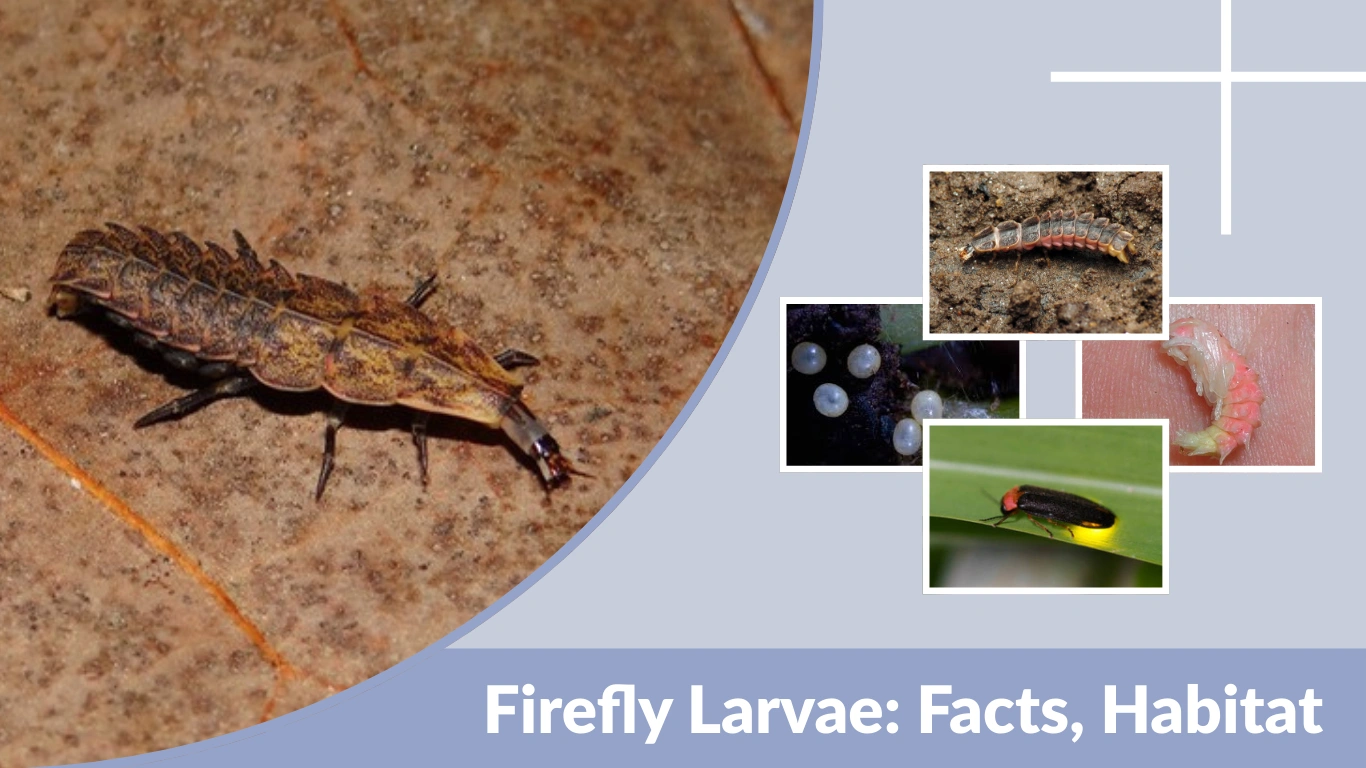
Firefly larvae are one of the most fascinating stages in the life cycle of fireflies. Often called glowworms, these young insects are known for their ability to produce light through a natural process called bioluminescence. Unlike adult fireflies that flash in the air, firefly larvae usually live on the ground and glow softly in the dark. These tiny predators play an important role in nature by feeding on small pests and helping maintain ecological balance.
What Are Firefly Larvae?
Firefly larvae are the immature stage of fireflies, which belong to the beetle family Lampyridae. Before becoming the glowing insects we see on warm summer nights, fireflies spend a large part of their lives as larvae. This stage occurs after the eggs hatch and before the insect transforms into a pupa and then an adult.
Many people refer to firefly larvae as glowworms because of their worm-like appearance and their ability to emit light. However, they are not true worms but beetle larvae with distinct body segments and specialized organs that produce light.
Appearance and Physical Features
Firefly larvae have a unique appearance that helps them survive in their natural habitats. Their bodies are typically elongated and flattened, which allows them to move easily through soil, leaf litter, and other ground surfaces.
Most firefly larvae have dark brown or black segmented bodies, sometimes with small plates or hardened sections along their backs. These plates provide protection from predators and environmental conditions. At the end of their abdomen, they possess light-producing organs that create a soft glow.
The glow produced by these larvae is usually steady rather than flashing. This glowing ability is one of their most distinctive characteristics and serves several purposes, including defense against predators. In terms of size, firefly larvae are generally small, often measuring a few millimeters to about two centimeters long, depending on the species.
The Life Cycle of Fireflies
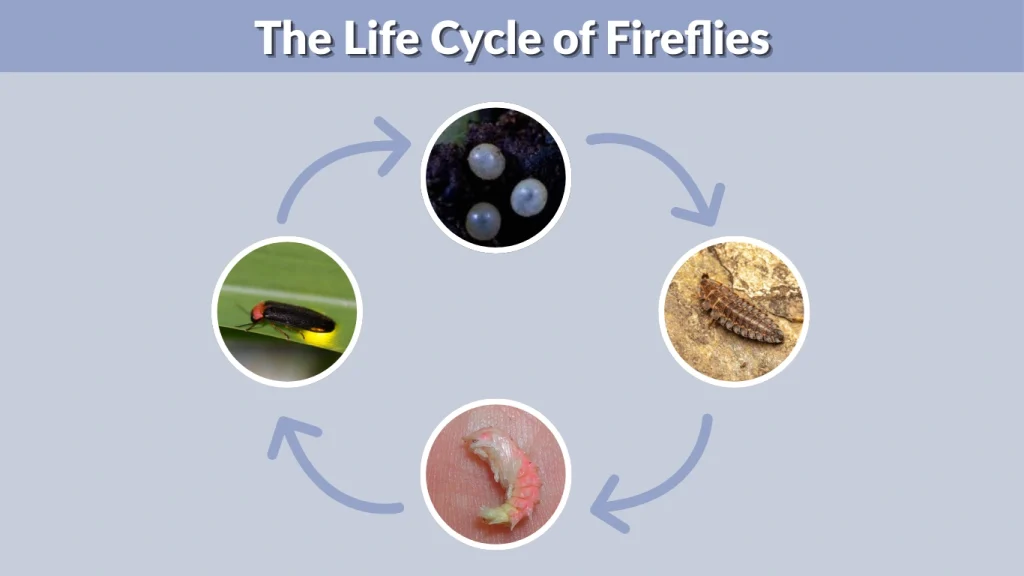
Like all beetles, fireflies undergo complete metamorphosis, which means they pass through four stages of development: egg, larva, pupa, and adult. Each stage has its own unique characteristics and functions in the insect’s life.
Egg Stage
The life of a firefly begins when a female lays her eggs in moist soil, leaf litter, or other protected environments. These locations help keep the eggs safe from predators and environmental stress.
The eggs are usually small and round, and they may even emit a faint glow in some species. After a few weeks, the eggs hatch and release tiny larvae that immediately begin searching for food.
Larval Stage
The larval stage is the longest and most active part of a firefly’s life cycle. During this period, the larvae spend most of their time hunting for food and growing. Depending on the species and environmental conditions, this stage can last one to two years.
Firefly larvae are mainly nocturnal, meaning they are active during the night. They move slowly across the ground, searching for prey while occasionally glowing. Their glowing light serves as a warning to predators that they may taste bad or contain defensive chemicals.
Throughout this stage, the larvae molt several times as they grow larger. Each molt allows them to shed their old outer covering and develop a new one that fits their increasing size.
Pupal Stage
After reaching full size, the larva enters the pupal stage, a period of transformation where the insect changes from its larval form into an adult firefly. During this stage, the insect remains mostly inactive while major internal and external changes occur.
The pupal stage typically lasts several weeks. During this time, the insect develops wings, legs suitable for flying, and the flashing light organs that adult fireflies use for communication.
Adult Fireflies
Once the transformation is complete, the adult firefly emerges from the pupa. Adult fireflies are well known for their flashing lights, which they use to attract mates and communicate with other fireflies.
Interestingly, adult fireflies usually live only for a short time, often a few weeks. Their main goal during this stage is reproduction. In contrast, the larval stage lasts much longer and is focused primarily on feeding and growth.
Why Do Firefly Larvae Glow?
One of the most remarkable features of firefly larvae is their ability to produce light. This natural light production is called bioluminescence, a process that occurs in certain living organisms.
The glow is created through a chemical reaction inside specialized cells in the insect’s body. These cells contain substances such as luciferin, luciferase, oxygen, and energy molecules. When these components react together, they produce light without generating much heat.
Purpose of the Glow
The glowing ability of firefly larvae is not just for show—it serves several important functions in their survival.
One of the main purposes of the glow is defense. Many firefly species contain chemicals that make them unpleasant or toxic to predators. The glowing light acts as a warning signal, telling potential predators that the larvae may not be a good meal.
The glow may also help larvae communicate or signal their presence to other fireflies, although this function is not as well understood as it is in adult fireflies.
What Do Firefly Larvae Eat?

Firefly larvae are carnivorous predators, meaning they feed on other small animals rather than plants. Their diet mainly consists of soft-bodied invertebrates that live in moist environments.
Common Prey
Some of the most common foods for firefly larvae include:
- Snails
- Slugs
- Earthworms
- Small insects and larvae
These prey animals are usually found in the same damp environments where firefly larvae live, making them easy targets for hunting.
Hunting Method
Firefly larvae use a clever hunting strategy to capture and consume their prey. When they find a suitable target, they use their sharp mouthparts to bite and inject digestive enzymes or paralytic chemicals into the prey’s body.
These chemicals help immobilize the prey and break down its tissues. The larva can then consume the partially digested material. This method allows them to feed efficiently even on prey that may be larger than themselves.
Where Do Firefly Larvae Live?
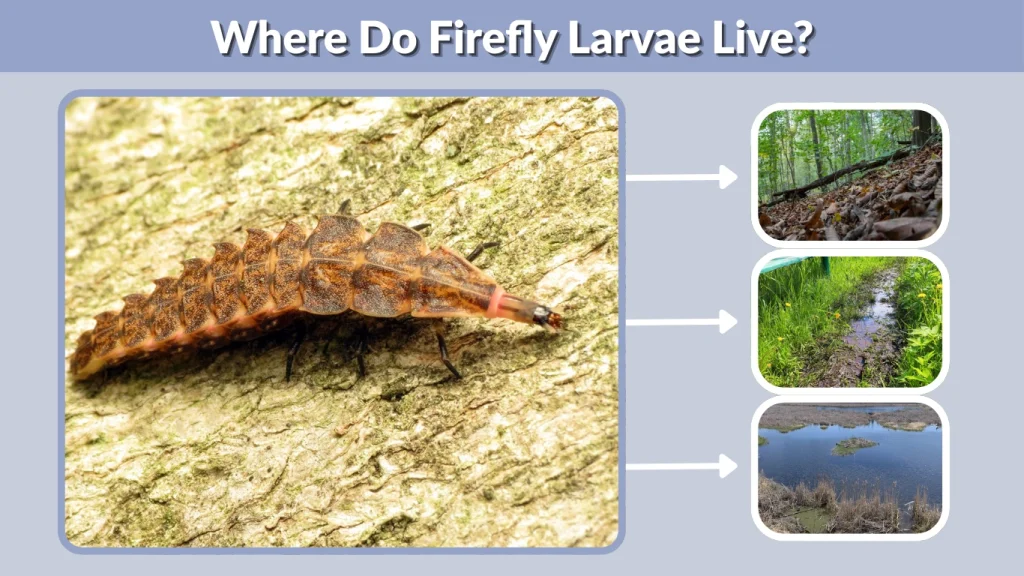
Firefly larvae are commonly found in moist and sheltered environments where food is abundant. Because they depend on soft-bodied prey such as snails and slugs, they prefer habitats that remain damp and rich in organic material. These environments provide both protection and a steady supply of food.
Firefly larvae usually stay close to the ground, hiding under leaves, stones, or within soil during the day. At night, they become more active and move slowly across the ground in search of prey.
Common Habitats
Firefly larvae can be found in a variety of natural environments, including:
- Forest floors covered with leaf litter
- Gardens and grassy fields with moist soil
- Wetlands and marshy areas
- Near ponds, streams, or riverbanks
These locations provide the humidity and shelter necessary for the larvae to survive and grow. The presence of leaf litter and vegetation also helps maintain moisture and protects them from predators.
Environmental Needs
Firefly larvae require certain environmental conditions to thrive. One of the most important factors is moisture. Dry environments can be harmful because the larvae and their prey both depend on damp conditions.
They also prefer dark areas with minimal artificial light. Excessive light can disrupt the natural behavior of fireflies and may interfere with their glowing signals. Additionally, environments rich in organic matter and vegetation provide hiding places and hunting grounds.
Behavior and Survival Strategies
Firefly larvae display several interesting behaviors that help them survive in the wild. Most species are nocturnal, meaning they are active primarily at night. During nighttime hours, they crawl along the ground searching for prey.
Another key survival strategy is their glowing ability. The light produced by the larvae acts as a warning signal to potential predators. Many firefly species contain defensive chemicals that make them taste unpleasant or even toxic. Predators that learn to associate the glow with an unpleasant experience are more likely to avoid them in the future.
Firefly larvae also move slowly and cautiously, often staying close to cover such as leaves or soil. This behavior helps them remain hidden while hunting.
Are Firefly Larvae Dangerous?
Despite their predatory nature, firefly larvae are not dangerous to humans. They do not attack people and pose no threat to pets or livestock. Their defensive chemicals are mainly intended to protect them from natural predators such as spiders, birds, or small mammals.
Some predators may experience a bad taste or mild irritation after attempting to eat a firefly larva, which is why many animals quickly learn to avoid them. For humans, however, these insects are harmless and generally beneficial because they help control pest populations.
Importance of Firefly Larvae in Nature
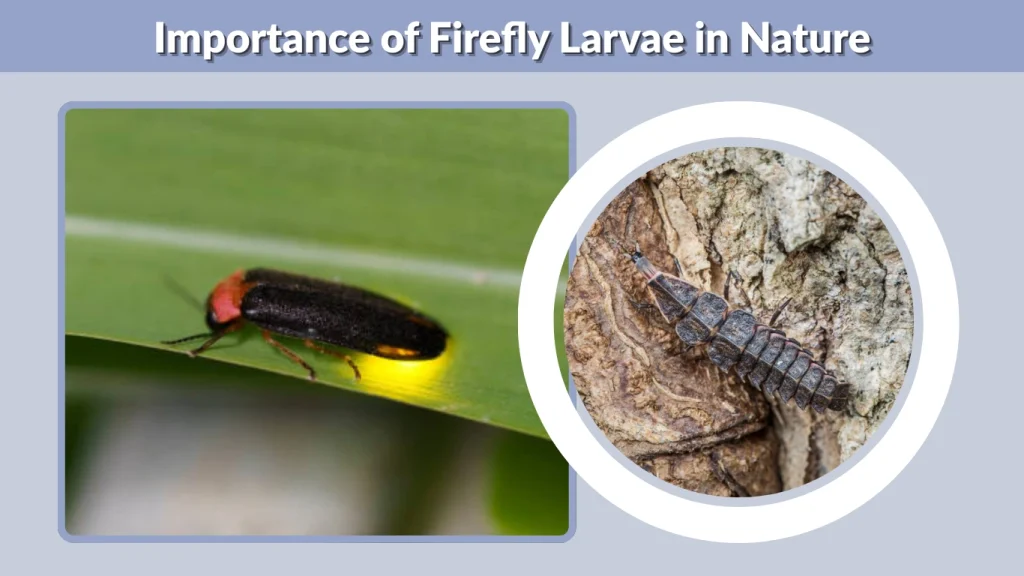
Firefly larvae play an important role in maintaining healthy ecosystems. One of their main contributions is natural pest control. By feeding on snails, slugs, and other small invertebrates, they help regulate populations of organisms that can damage plants and crops.
Their presence also indicates a healthy and balanced environment. Fireflies tend to thrive in areas with clean soil, sufficient moisture, and low levels of pollution. When firefly populations decline, it can signal environmental problems such as habitat loss or chemical contamination.
In addition, fireflies contribute to biodiversity and are an important part of food chains, interacting with many other species within their ecosystems.
Threats to Firefly Larvae
Although fireflies have existed for millions of years, their populations are declining in many parts of the world. Several environmental factors threaten firefly larvae and their habitats.
One major threat is habitat destruction. Urban development, deforestation, and agricultural expansion can destroy the moist environments where firefly larvae live.
Another significant problem is the widespread use of pesticides and chemical fertilizers. These chemicals can kill not only firefly larvae but also the small creatures they rely on for food.
Light pollution is another growing concern. Artificial lights from buildings, streetlights, and vehicles can interfere with the natural glowing signals used by fireflies for communication and survival.
Interesting Facts About Firefly Larvae
Firefly larvae have several fascinating characteristics that many people may not know about.
- Some species of firefly larvae glow continuously, while others glow only when disturbed.
- The larval stage can last one to two years, much longer than the adult stage.
- Not all insects called “glowworms” are actually firefly larvae; some belong to different insect families.
- Firefly larvae are capable hunters and can capture prey larger than themselves.
- Their glowing light is extremely efficient and produces almost no heat, making it one of the most energy-efficient light sources in nature.
Conclusion
Firefly larvae are an essential and fascinating part of the firefly life cycle. Known for their glowing bodies and predatory habits, these tiny insects spend much of their lives hidden in moist environments where they hunt small invertebrates. Their bioluminescent glow not only protects them from predators but also makes them one of nature’s most remarkable creatures.
Beyond their unique appearance, firefly larvae contribute greatly to ecosystems by controlling pests and indicating healthy environmental conditions. Protecting natural habitats, reducing pesticide use, and limiting light pollution can help ensure that future generations will continue to witness the magical glow of fireflies in nature.
