
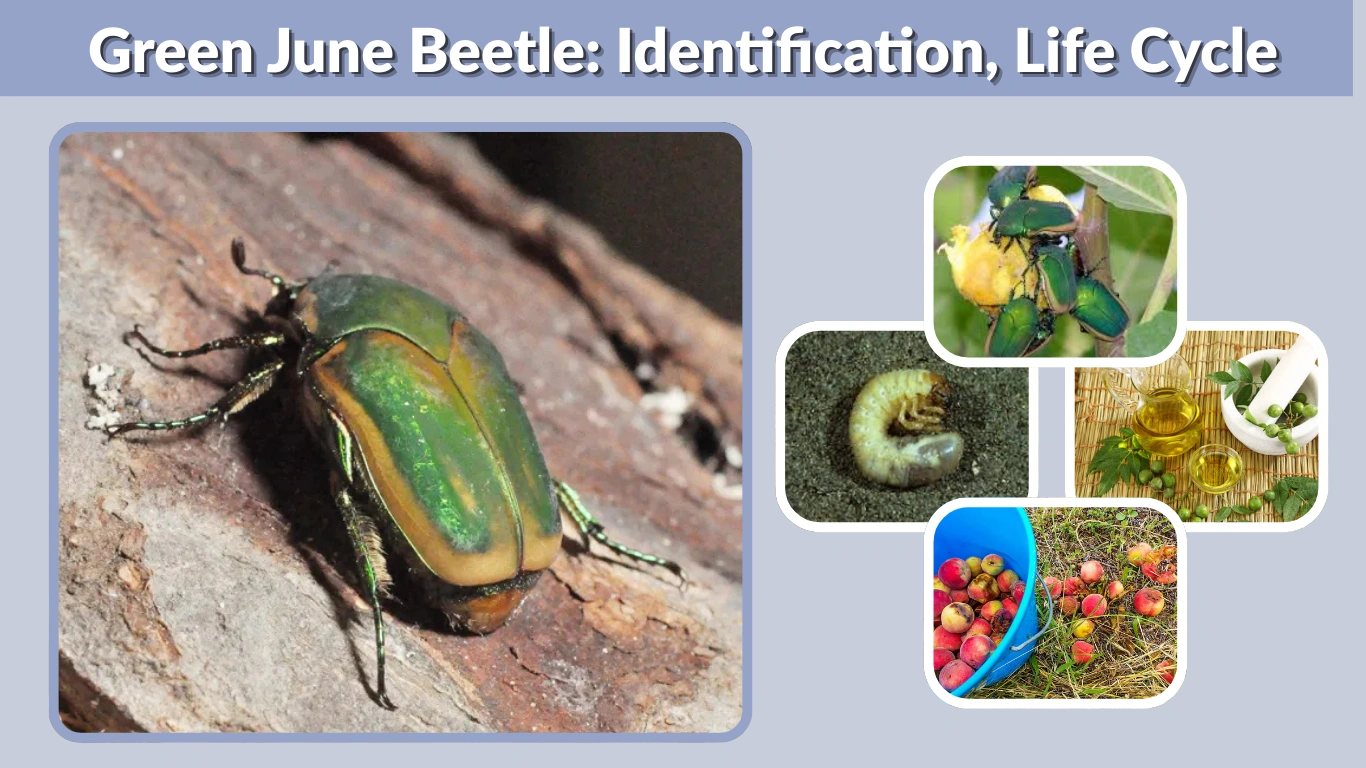
Green June beetles are large, shiny insects that often appear during the warm months of summer. Their loud buzzing flight and bright metallic color make them easy to notice as they fly low over lawns and gardens. Although these beetles are fascinating to observe, they can sometimes become a nuisance for homeowners and gardeners. Understanding how to identify green June beetles, where they live, and how their life cycle works can help you determine whether they pose a problem in your yard and how to manage them effectively.
What Is a Green June Beetle?
The green June beetle is a species of scarab beetle scientifically known as Cotinis nitida. It belongs to the Scarabaeidae family, a group that includes many types of beetles commonly found around lawns, gardens, and agricultural areas.
Green June beetles are native to North America, particularly in the eastern and southeastern United States. They are most active during the summer months, usually appearing from late June through August, which is how they earned their common name.
Unlike some other beetles that feed mostly on leaves, green June beetles are often attracted to ripening fruits, compost piles, and decaying organic matter. Because of this behavior, they are sometimes called fig beetles or fruit beetles in certain regions.
While adult beetles are mostly seen flying during the day, their larvae live underground and feed on organic material in the soil.
How to Identify a Green June Beetle
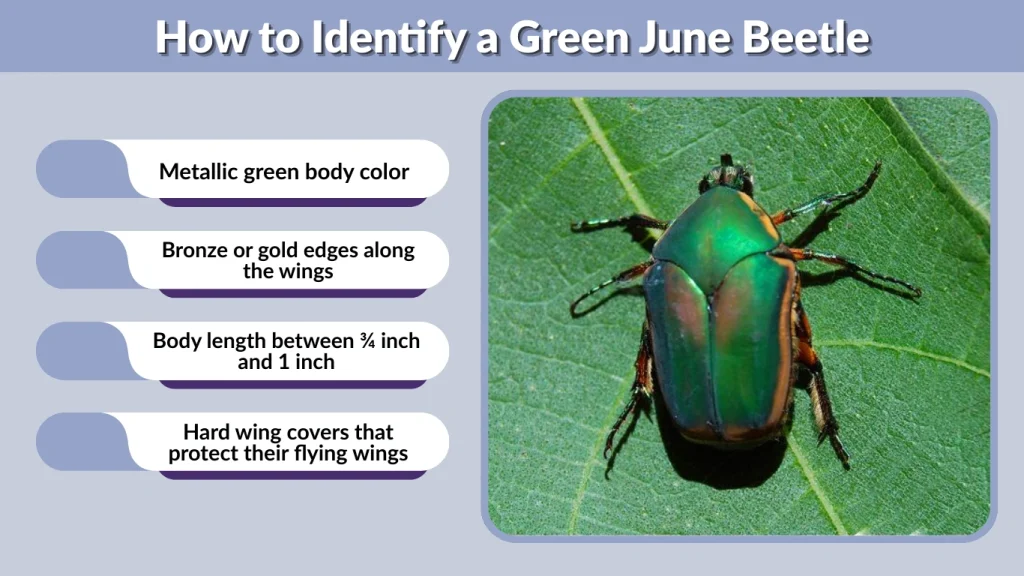
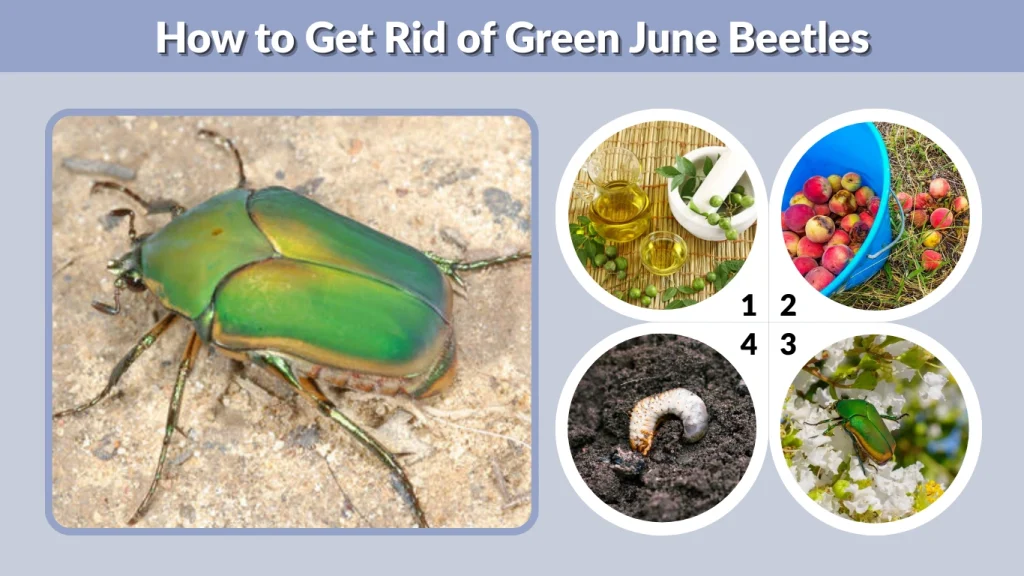
Identifying a green June beetle is usually easy because of its distinctive appearance and behavior. These beetles are larger and more colorful than many other common beetles.
Physical Characteristics
Green June beetles have several noticeable features that make them easy to recognize:
- Metallic green body color
- Bronze or gold edges along the wings
- Body length between ¾ inch and 1 inch
- Smooth, oval-shaped body
- Hard wing covers that protect their flying wings
Their bright coloration reflects light, giving them a shiny appearance that stands out in sunlight.
Behavior and Activity
Green June beetles are known for their unique behavior compared to other beetle species.
Some of their most common behavioral traits include:
- Active during the daytime, unlike many other June beetles that are nocturnal
- Loud buzzing flight that sounds similar to a large bee
- Flying low over lawns, often only a few inches above the ground
- Frequently landing on fruit, flowers, or compost
Because of their loud buzzing and fast movement, people sometimes mistake them for large bees or wasps.
Green June Beetle vs June Bug
Many people confuse green June beetles with June bugs, but there are several differences between the two insects.
Green June beetles usually have a metallic green color and are active during the daytime, while traditional June bugs are typically dull brown and are mostly active at night.
In addition, June bugs are commonly attracted to lights at night, while green June beetles are more likely to be seen flying around gardens, fruit trees, or lawns during sunny afternoons.
Green June Beetle Life Cycle
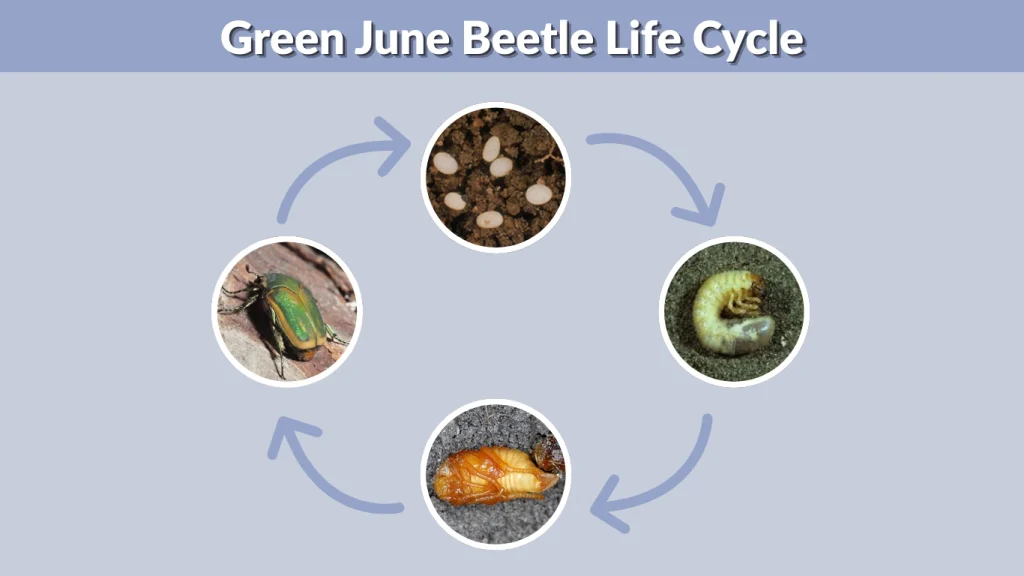
Like most beetles, the green June beetle goes through a four-stage life cycle that includes eggs, larvae, pupae, and adults. This entire process typically takes about one year.
Egg Stage
Female green June beetles lay their eggs in soil rich in organic matter. Areas with compost, manure, or decaying plant material are especially attractive to them.
The eggs are usually deposited a few inches beneath the soil surface. After approximately two weeks, the eggs hatch into larvae.
Larval Stage (Grubs)
The larvae of green June beetles are known as white grubs. These grubs are thick, soft-bodied, and curved into a “C” shape.
Typical characteristics of green June beetle grubs include:
- Creamy white body color
- Brown head capsule
- Three small pairs of legs near the head
- Large, segmented body
Unlike many other beetle grubs that feed mainly on grass roots, green June beetle larvae prefer decaying organic material in the soil.
They are often found in:
- Compost piles
- Manure-rich soil
- Mulch beds
- Areas with heavy organic debris
Another unusual trait of these grubs is the way they move. Instead of crawling on their legs, they often move on their backs, using bristles along their bodies to push themselves through the soil.
Pupal Stage
After feeding and growing for several months, the larvae create small earthen cells in the soil where they enter the pupal stage.
During this stage, the grub transforms into an adult beetle. The pupal phase typically lasts two to three weeks, depending on temperature and environmental conditions.
Once development is complete, the adult beetle emerges from the soil and begins its short but active adult life above ground.
Where Green June Beetles Are Commonly Found
Green June beetles are commonly found in areas that contain rich organic material and moist soil. These environments provide ideal conditions for both adult beetles and their larvae.
Some of the most common places where green June beetles are seen include:
- Lawns and gardens with healthy soil
- Compost piles that contain decaying plant matter
- Fruit orchards where ripe fruits are available
- Mulch beds and organic soil areas
Adult beetles are especially attracted to overripe fruits and fermenting organic matter. As a result, they are often seen around fruit trees such as peaches, figs, apples, and berries.
During summer afternoons, you may notice them flying low over grass, sometimes hovering just a few inches above the lawn. This behavior is often related to searching for food or suitable places to lay eggs.
Are Green June Beetles Harmful?
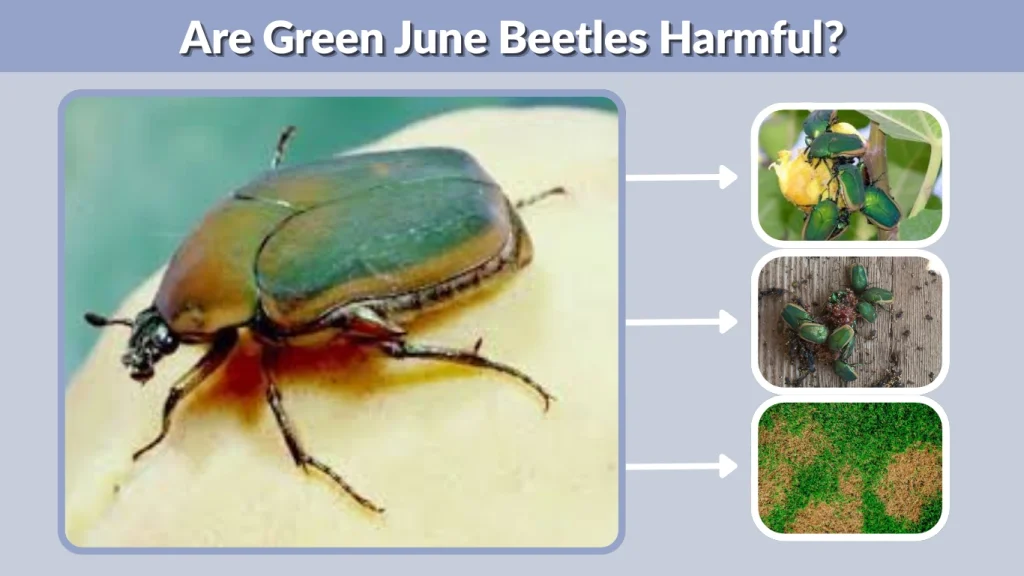
Green June beetles are generally not dangerous to humans, but they can sometimes cause problems in gardens and orchards.
Damage to Lawns
Unlike some other scarab beetles, green June beetle larvae mainly feed on decaying organic matter rather than healthy grass roots. Because of this, they usually cause less lawn damage than other grub species.
However, large populations of larvae can still disturb soil while moving through it. Their tunneling activity may create loose soil and small mounds on lawns, which can affect grass growth.
Damage to Fruits and Plants
Adult green June beetles are attracted to sweet, ripening fruits. They often feed on soft fruit surfaces, which can cause visible damage.
Common plants and fruits they may attack include:
- Peaches
- Figs
- Apples
- Grapes
- Berries
When large numbers of beetles gather on fruit trees, they may reduce fruit quality and attract other pests.
Are Green June Beetles Dangerous to Humans?
Green June beetles do not sting and rarely bite. They are generally harmless to people and pets.
Their loud buzzing flight and large size can be startling, but they are not aggressive insects. Most of the time, they simply fly away when disturbed.
Signs of a Green June Beetle Infestation
If green June beetles become common in your yard, there are several signs that may indicate their presence.
Common indicators include:
- Large metallic beetles flying low over lawns during the day
- Loud buzzing sounds from flying beetles
- Presence of large white grubs in soil or compost
- Damaged or partially eaten fruits on trees and plants
- Loose soil or small tunnels in lawn areas
If you suspect larvae in the soil, gently digging a small section of soil may reveal the white grubs beneath the surface.
How to Get Rid of Green June Beetles
Managing green June beetles often involves controlling both the adult beetles and their larvae.
Natural Control Methods
Many homeowners prefer environmentally friendly solutions for pest management.
Some effective natural methods include:
Beneficial nematodes
These microscopic organisms attack beetle larvae in the soil and help reduce grub populations.
Neem oil sprays
Neem oil can discourage adult beetles from feeding on plants and fruits.
Manual removal
In smaller gardens, beetles can be removed by hand and placed in soapy water to eliminate them.
Lawn and Garden Maintenance
Proper yard care can significantly reduce beetle populations.
Helpful maintenance practices include:
- Turning and managing compost regularly
- Removing rotting fruit from the ground
- Maintaining balanced soil conditions
- Avoiding excessive organic waste buildup
These steps reduce the conditions that attract beetles and support their larvae.
Chemical Control Options
In cases of severe infestation, soil insecticides may be used to control larvae. These treatments are typically applied when grubs are active in the soil.
However, chemical control should be used carefully and only when necessary to avoid harming beneficial insects and soil organisms.
How to Prevent Green June Beetles
Prevention is often the most effective strategy for keeping green June beetle populations under control.
Some practical prevention tips include:
- Managing compost piles properly to avoid attracting beetles
- Cleaning up fallen fruit from trees quickly
- Maintaining healthy lawns and garden soil
- Monitoring beetle activity during summer months
Regular garden inspections can help identify potential problems before beetle populations grow too large.
Interesting Facts About Green June Beetles
Green June beetles have several interesting characteristics that make them unique among common insects.
- Their loud buzzing flight often resembles the sound of a bumblebee.
- They are strong flyers and can travel long distances while searching for food.
- Their larvae are unusual because they often crawl on their backs instead of using their legs.
- Many animals such as birds, raccoons, and skunks feed on beetle larvae.
These insects also play a role in nature by helping break down organic material in the soil, which contributes to nutrient recycling.
FAQs
What attracts green June beetles?
Green June beetles are attracted to ripe fruits, compost piles, manure, and decaying organic matter.
How long do green June beetles live?
Adult beetles usually live several weeks, while the complete life cycle typically lasts about one year.
Do green June beetles damage lawns?
Their larvae mainly feed on organic material, so they usually cause less lawn damage than other grub species, although heavy infestations may disturb soil.
Are green June beetles beneficial?
In small numbers, they can be helpful because their larvae assist in breaking down organic matter in soil.
Conclusion
Green June beetles are large, metallic insects that are commonly seen during the summer months. While they may look intimidating because of their size and buzzing flight, they are generally harmless to people. Their larvae help decompose organic material in the soil, but large populations can sometimes cause minor lawn disturbance and fruit damage. By understanding their behavior, life cycle, and habitat, homeowners can take simple steps to manage green June beetles and maintain healthy lawns and gardens.
