
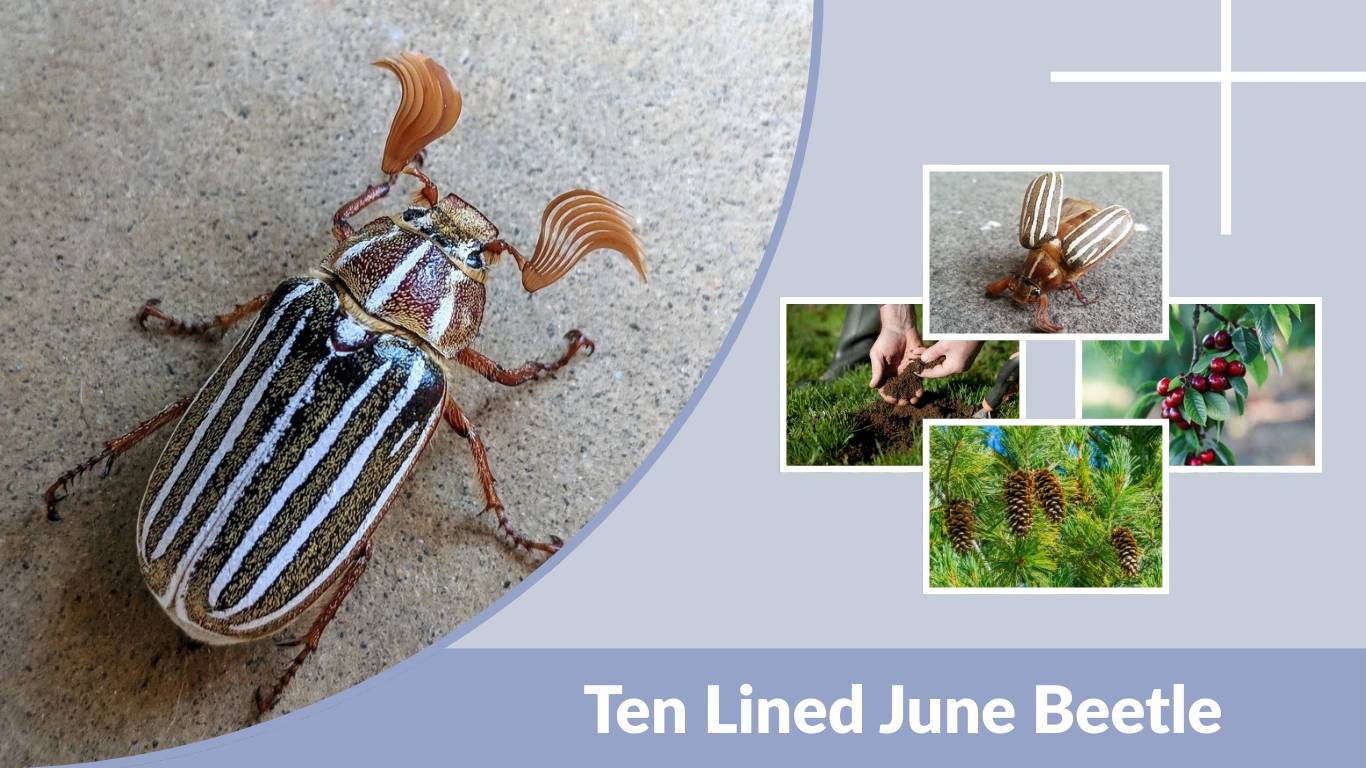
The ten lined June beetle (Polyphylla decemlineata) is a large and distinctive insect commonly found in parts of North America. Known for its bold striped wings and loud buzzing flight, this beetle often attracts attention during early summer evenings. While the adult beetles are mostly harmless, their underground larvae can sometimes damage plant roots. Understanding the beetle’s appearance, habitat, and life cycle can help gardeners and homeowners identify and manage this fascinating insect.
What Is a Ten Lined June Beetle?
The ten lined June beetle belongs to a group of beetles known as scarabs, which includes many species that play important roles in ecosystems.
Scientific Classification
The beetle’s scientific classification helps place it within the broader insect family:
- Kingdom: Animalia
- Phylum: Arthropoda
- Class: Insecta
- Order: Coleoptera
- Family: Scarabaeidae
- Genus: Polyphylla
- Species: Polyphylla decemlineata
Like other scarab beetles, this species has a hard outer shell and strong legs designed for digging in soil.
Origin of the Name
The name “ten lined June beetle” comes from two main features:
- Ten white stripes that run lengthwise along the beetle’s wing covers (elytra).
- Their appearance in June or early summer, when adult beetles emerge from the soil.
Because of their striped pattern, they are sometimes mistaken for other large beetles, but the distinctive lines and size make them relatively easy to identify.
Ten Lined June Beetle Identification
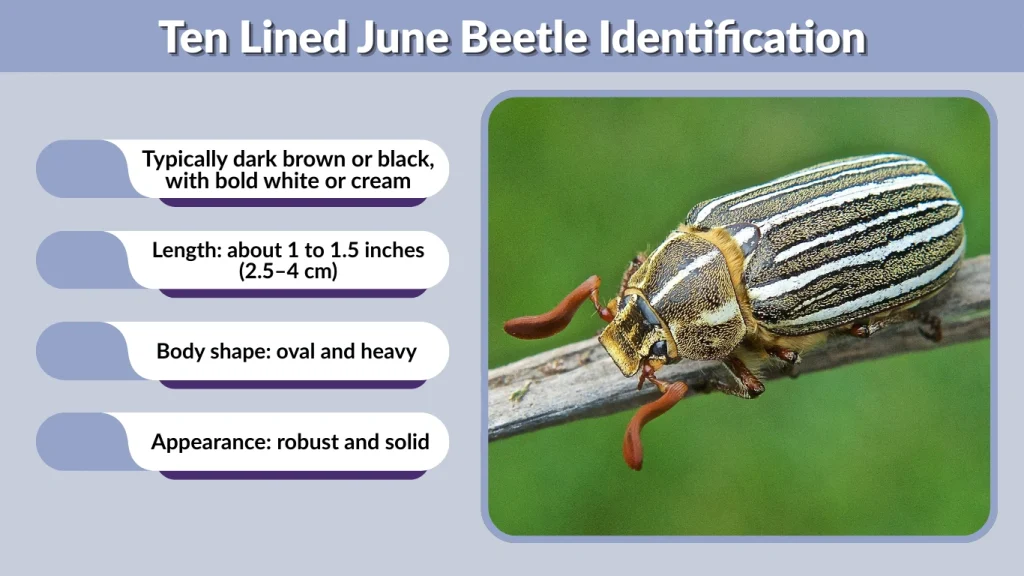
Correct identification is important because many beetles look similar. The ten lined June beetle has several characteristics that make it stand out.
Physical Appearance
The beetle’s body is typically dark brown or black, with bold white or cream-colored stripes across the wing covers. These stripes give the insect a unique and easily recognizable appearance.
Its body is thick and oval-shaped, and the hard outer wings protect the delicate flight wings underneath. The beetle’s legs are strong and slightly spiny, allowing it to dig through soil during its early life stages.
Size and Shape
One of the easiest ways to identify the ten lined June beetle is its large size.
- Length: about 1 to 1.5 inches (2.5–4 cm)
- Body shape: oval and heavy
- Appearance: robust and solid
Because of its size, it is often one of the largest beetles people encounter in gardens or outdoor areas.
Unique Features
Several unique features help distinguish this beetle from other insects:
- Fan-shaped antennae that can open like small fans
- Loud buzzing sound during flight
- Nocturnal behavior, with activity mostly at night
- Ability to produce a hissing sound when disturbed
These characteristics make the ten lined June beetle both fascinating and easy to recognize.
Ten Lined June Beetle Habitat
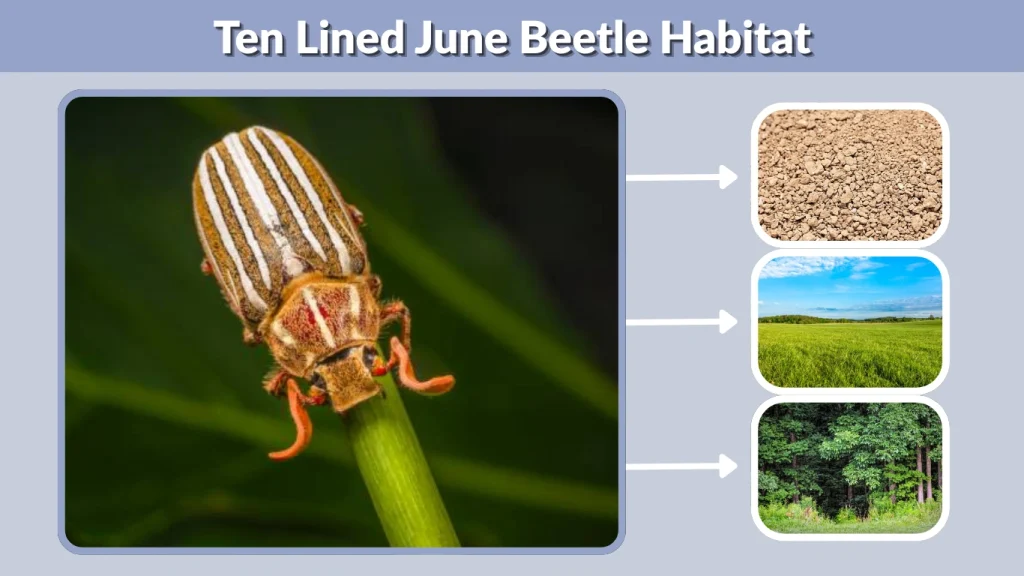
The ten lined June beetle prefers environments where the soil is suitable for its larvae to develop.
Geographic Distribution
This beetle is primarily found in western North America, including regions such as:
- The western United States
- Parts of Canada
- Areas with dry or sandy soils
It is especially common in California, Washington, Oregon, and neighboring regions.
Preferred Environment
Ten lined June beetles thrive in areas where the soil allows their larvae to grow underground. Common habitats include:
- Sandy or loose soil areas
- Grasslands and agricultural fields
- Forest edges
- Home gardens and lawns
Because the larvae live in soil for long periods, locations with healthy plant roots often attract these beetles.
Ten Lined June Beetle Life Cycle
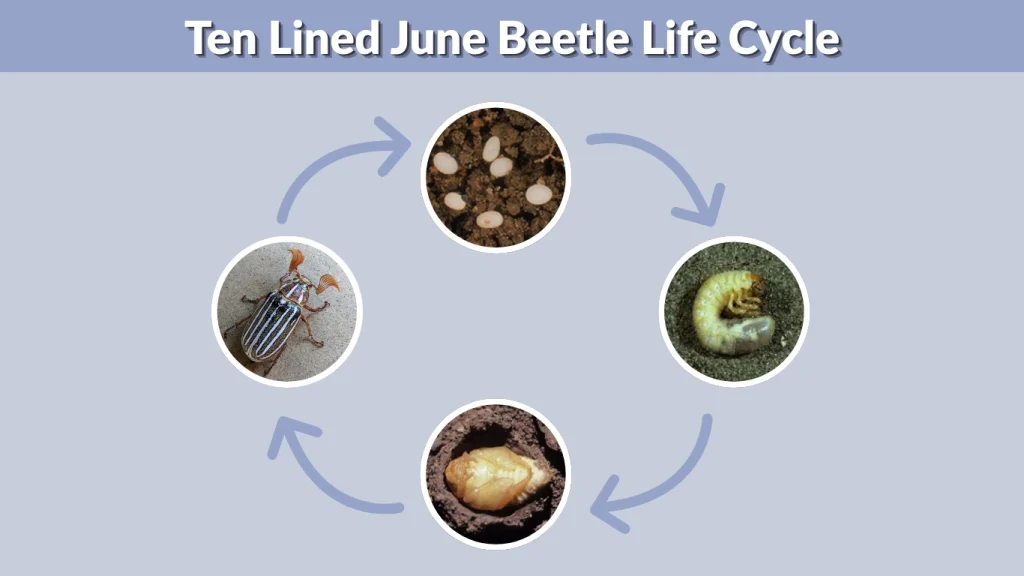
Like many beetles, the ten lined June beetle undergoes complete metamorphosis, meaning it passes through four distinct stages: egg, larva, pupa, and adult.
Egg Stage
The life cycle begins when female beetles lay eggs in the soil during early summer. These eggs are usually placed several inches below the surface to protect them from predators and environmental conditions.
After a short incubation period, the eggs hatch into larvae.
Larval Stage (Grubs)
The larval stage is the longest part of the beetle’s life cycle. The larvae, commonly called white grubs, live underground and feed mainly on plant roots.
These grubs have:
- Soft white bodies
- Curved shapes
- Brown heads
- Strong jaws for feeding
The larval stage can last two to three years, during which the grubs gradually grow larger while feeding beneath the soil.
Pupal Stage
After spending several years developing as grubs underground, the larvae eventually enter the pupal stage. During this stage, the insect stops feeding and begins transforming into an adult beetle.
The pupa forms within a protective chamber in the soil, where the larva undergoes major internal changes. Its body gradually reshapes as wings, legs, and the hard outer shell develop.
This stage typically lasts a few weeks, depending on environmental conditions such as soil temperature and moisture. When the transformation is complete, the adult beetle prepares to emerge from the soil.
Adult Stage
Adult ten lined June beetles usually emerge in late spring or early summer, often around June. This is the time when people most commonly notice them flying around outdoor lights or gardens.
Adult beetles are primarily nocturnal, meaning they are most active during the night. During the day, they usually hide in vegetation, soil, or debris to avoid predators.
Although they can fly, their flight is often slow and clumsy, producing a loud buzzing sound that can easily be heard. The adult stage is relatively short compared to the larval stage, usually lasting only a few weeks to a couple of months.
Diet of the Ten Lined June Beetle
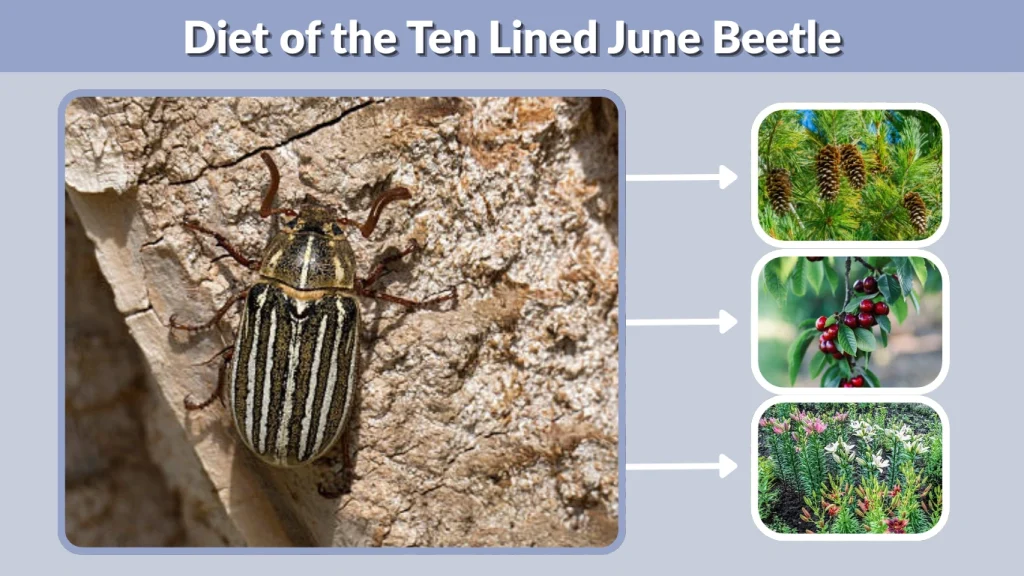
The feeding habits of the ten lined June beetle vary depending on the stage of its life cycle.
Adult Feeding Habits
Adult beetles typically feed on the leaves of trees and shrubs. Some common plants they may feed on include:
- Oak trees
- Pine trees
- Fruit trees
- Various shrubs and ornamental plants
However, the damage caused by adult beetles is usually minor and rarely serious.
Larval Feeding Habits
The larvae, or grubs, feed underground on plant roots. Their diet may include:
- Grass roots
- Crop roots
- Roots of garden plants
Because they feed beneath the soil surface, grub damage can sometimes go unnoticed until plants begin to wilt or grow poorly.
Are Ten Lined June Beetles Harmful?
Many people wonder whether these beetles are dangerous or harmful. The answer depends on the stage of their life cycle.
Impact on Gardens
Adult beetles usually cause very little damage to plants. They may chew on leaves, but the effect is rarely severe enough to harm healthy plants.
The main concern comes from the larval stage, when grubs feed on plant roots. If a large number of grubs are present in the soil, they can weaken grass or garden plants.
Impact on Agriculture
In some agricultural areas, large populations of larvae may damage crops by feeding on their root systems. This can affect plant growth and reduce crop productivity.
However, serious infestations are relatively uncommon, and natural predators often help control grub populations.
Are They Dangerous to Humans?
Ten lined June beetles are not dangerous to humans. They do not sting, bite aggressively, or spread diseases.
When handled, they may produce a hissing sound by rubbing their wings and body together. This sound is simply a defensive behavior intended to scare away predators.
Interesting Facts About Ten Lined June Beetles
The ten lined June beetle has several fascinating traits that make it unique among insects.
- They can produce a loud hissing sound when disturbed.
- Their larvae can live underground for several years before becoming adults.
- Adult beetles are strongly attracted to lights at night.
- Their fan-shaped antennae help detect scents in the environment.
- Despite their large size, they are generally harmless insects.
These characteristics make them one of the most interesting beetles found in North America.
How to Control Ten Lined June Beetles
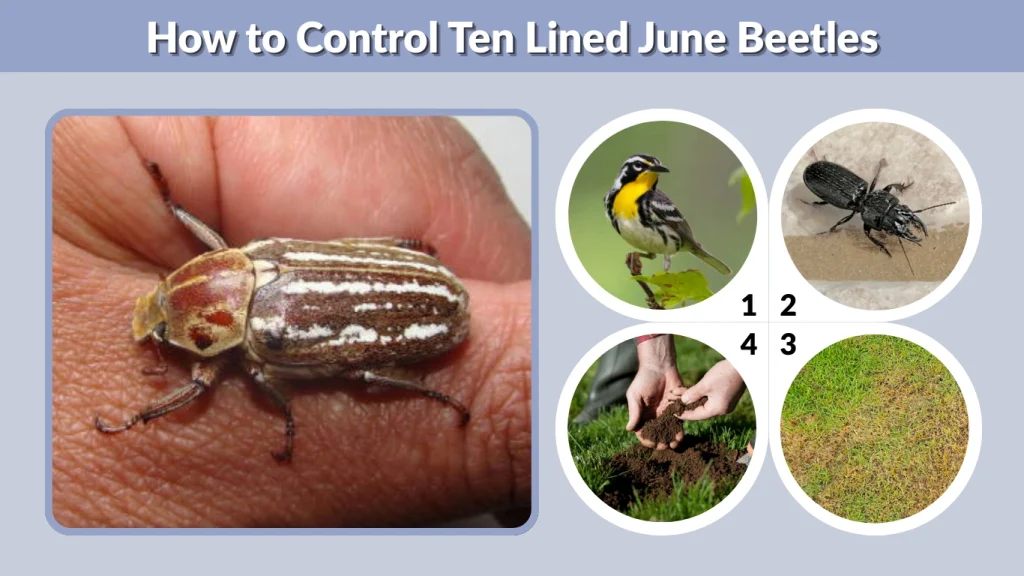
In most situations, these beetles do not require control. However, if grub populations become large, some management methods may help reduce their numbers.
Natural Control Methods
Nature provides several predators that help keep beetle populations under control. These include:
- Birds
- Small mammals
- Ground beetles
- Parasitic insects
Encouraging a healthy garden ecosystem can naturally limit grub populations.
Garden Prevention Tips
Homeowners can reduce the chances of infestation by following a few simple practices:
- Maintain healthy soil and lawns
- Avoid overwatering lawns
- Monitor soil for grubs when plants appear weak
- Encourage natural predators
Healthy plants are usually more resistant to root damage.
When Professional Pest Control Is Needed
In rare cases where large infestations occur, professional pest control services may be needed. Specialists can identify the species and recommend safe and effective treatment options.
However, because the ten lined June beetle is usually not a major pest, control measures are often unnecessary.
Conclusion
The ten lined June beetle (Polyphylla decemlineata) is a striking insect known for its distinctive striped wings and buzzing flight. While its appearance may seem intimidating, the adult beetle is generally harmless to humans and causes only minor plant damage.
Most of the beetle’s life is spent underground as a grub, feeding on plant roots and slowly developing into an adult. By understanding its identification, habitat, life cycle, and behavior, gardeners and homeowners can better recognize this insect and manage it when necessary.
