
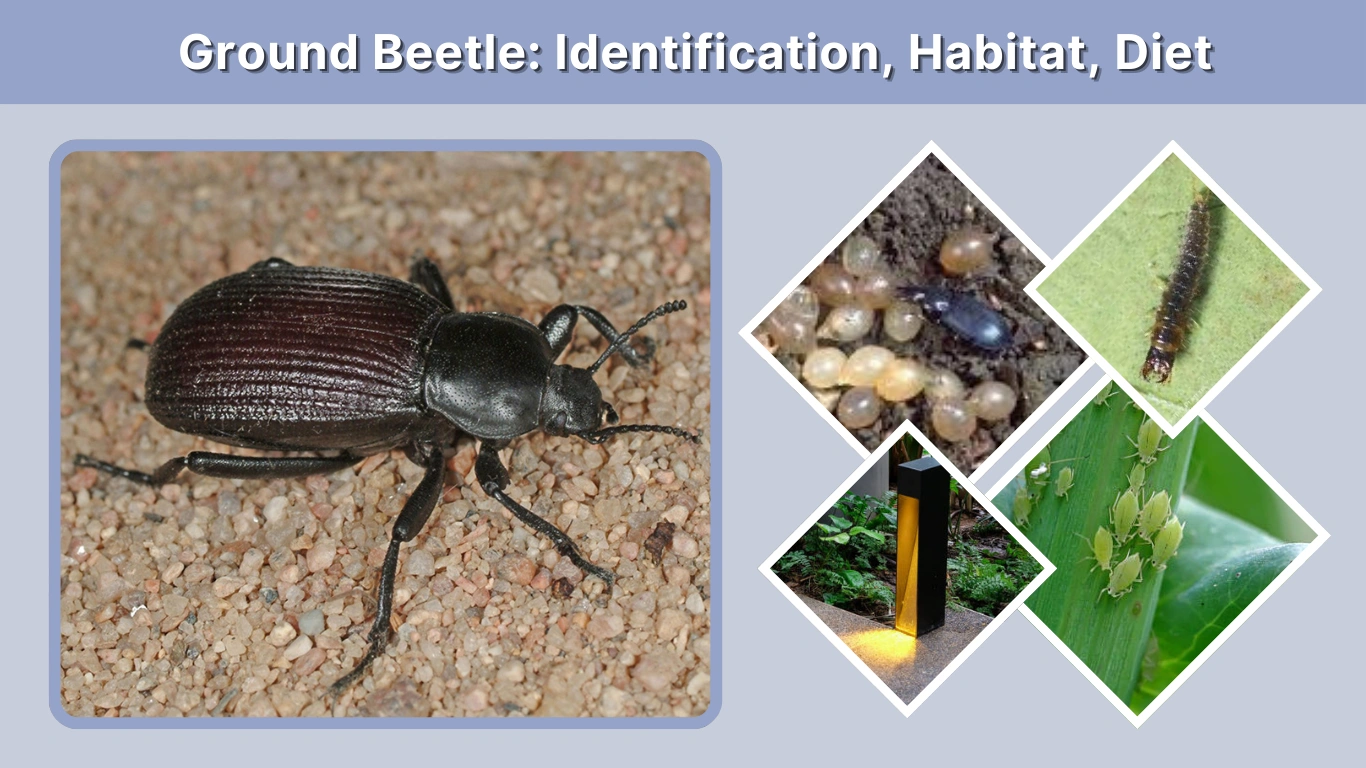
Ground beetles are a diverse group of insects commonly found in gardens, forests, and agricultural fields around the world. Belonging to the family Carabidae, these beetles are known for their fast movement, dark shiny bodies, and predatory behavior. Most ground beetles live on the soil surface, hiding under rocks, logs, or leaf litter during the day and becoming active at night. Although their appearance may seem intimidating, ground beetles are usually beneficial insects that help control many garden pests.
What Is a Ground Beetle?
A ground beetle is a type of insect that belongs to the order Coleoptera, which includes all beetles. The family Carabidae contains thousands of species that are primarily predatory, feeding on other insects and small invertebrates.
Scientific Classification
Ground beetles are classified scientifically as follows:
- Kingdom: Animalia
- Phylum: Arthropoda
- Class: Insecta
- Order: Coleoptera
- Family: Carabidae
Members of this family are commonly referred to as ground beetles because they spend most of their lives on or near the ground surface.
What Makes Ground Beetles Unique
Ground beetles are well adapted to life on the ground. Their bodies are designed for speed and hunting. Many species cannot fly well, so they rely on their strong legs and fast running ability to chase prey.
Some species also produce defensive chemicals to protect themselves from predators. When threatened, they may release a foul-smelling substance that discourages attackers.
Ground Beetle Identification
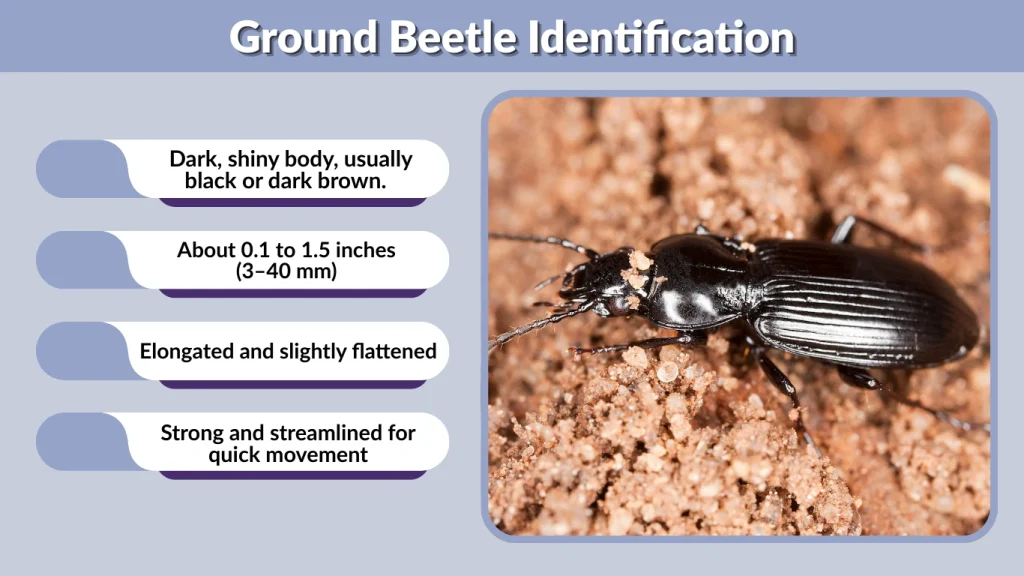
Identifying ground beetles is relatively easy because they have several distinctive features that separate them from other insects.
Physical Appearance
Most ground beetles have a dark, shiny body, usually black or dark brown. Their bodies are hard and smooth, with a protective outer shell called the elytra, which covers their wings.
Their heads are typically narrow with large mandibles (jaws) used for catching and crushing prey. These jaws help them feed on various insects and small creatures found in soil or vegetation.
Size and Shape
Ground beetles vary widely in size depending on the species. However, most species fall within the following range:
- Length: about 0.1 to 1.5 inches (3–40 mm)
- Body shape: elongated and slightly flattened
- Structure: strong and streamlined for quick movement
Their flattened bodies allow them to move easily under rocks, bark, and soil debris.
Distinctive Features
Several features help distinguish ground beetles from other beetles:
- Long legs designed for running
- Prominent jaws for hunting prey
- Grooved or ridged wing covers
- Fast movement across the ground
Because of their speed, ground beetles often appear to run quickly away when disturbed.
Types of Ground Beetles
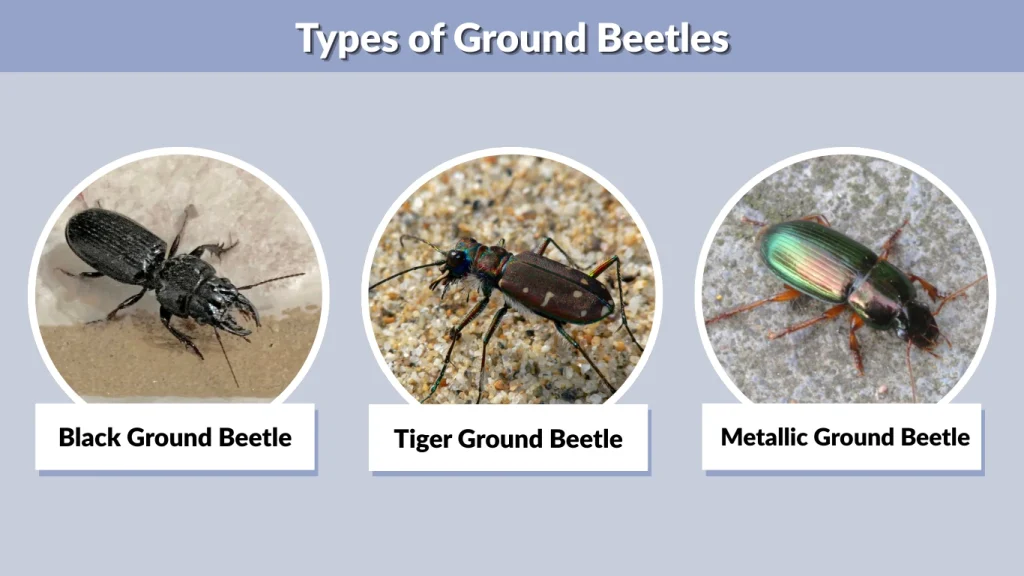
There are many species of ground beetles, each with its own unique characteristics. Some of the most commonly recognized types include the black ground beetle, tiger ground beetle, and metallic ground beetle.
Black Ground Beetle
The black ground beetle is one of the most common species found in gardens and agricultural areas. As the name suggests, it has a shiny black body and typically hunts at night.
These beetles are helpful predators that feed on insects such as caterpillars, slugs, and other small pests that damage plants.
Tiger Ground Beetle
Tiger ground beetles are known for their bright colors and fast hunting behavior. Unlike many other ground beetles, tiger beetles are often active during the daytime.
They are extremely fast runners and aggressive predators that capture insects on open ground surfaces.
Metallic Ground Beetle
Some ground beetles display beautiful metallic colors, including green, blue, or bronze shades. These beetles are also beneficial predators that help control pest populations in gardens and fields.
Their shiny appearance makes them one of the most visually striking members of the ground beetle family.
Ground Beetle Habitat
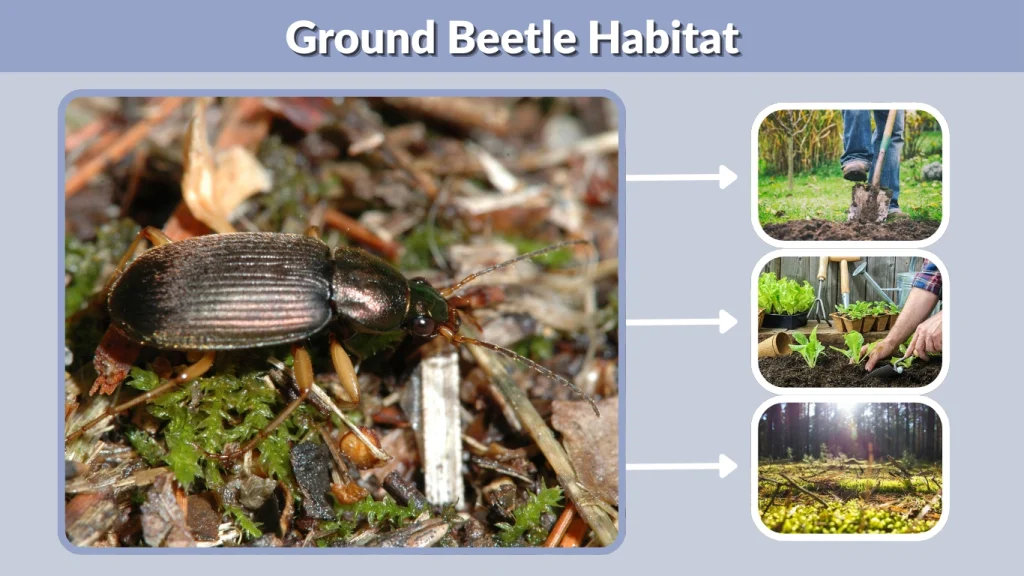
Ground beetles can live in many different environments as long as they have shelter and access to food.
Where Ground Beetles Live
These beetles are commonly found in:
- Gardens and lawns
- Agricultural fields
- Forest floors
- Grasslands
- Riverbanks and wetlands
Because they hunt for prey on the soil surface, they prefer areas where insects and other small creatures are abundant.
Preferred Environment
Ground beetles thrive in places that provide moist soil and hiding spots. During the day, they often hide under objects such as:
- Rocks
- Fallen logs
- Leaf litter
- Garden mulch
These locations protect them from sunlight, predators, and extreme temperatures.
Ground beetles are especially common in gardens and farms where pests are plentiful, making these environments ideal hunting grounds for them.
Ground Beetle Life Cycle
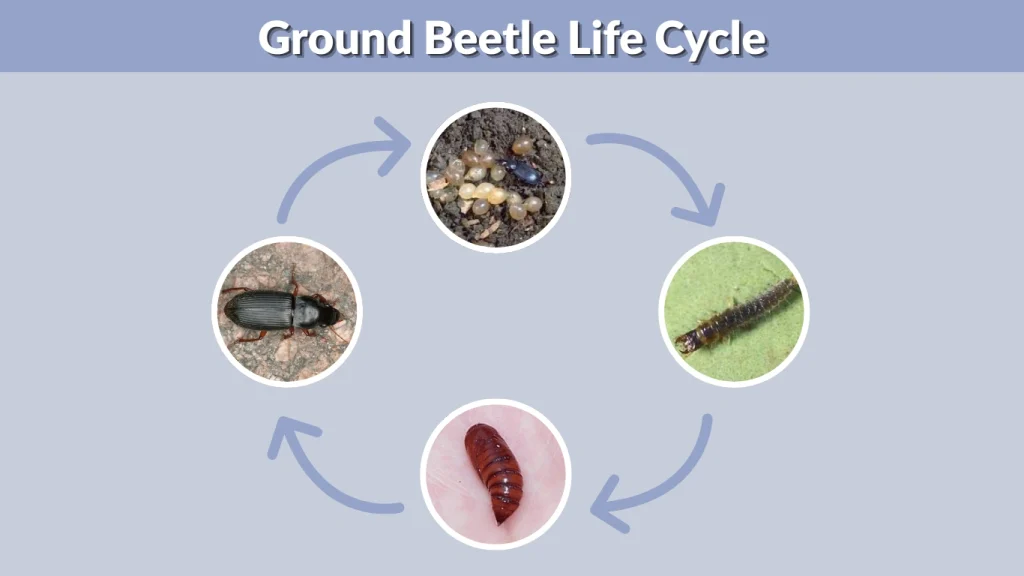
Like all beetles, ground beetles undergo complete metamorphosis, which includes four stages: egg, larva, pupa, and adult. Each stage plays an important role in the development of the insect.
Egg Stage
The life cycle begins when female ground beetles lay eggs in the soil or beneath leaf litter. These protected areas help keep the eggs safe from predators and harsh weather conditions.
The eggs are usually small, oval, and pale in color. Depending on the species and environmental conditions, the eggs may hatch within several days to a few weeks.
Larval Stage
After hatching, the beetle enters the larval stage. Ground beetle larvae are long and somewhat flattened, with well-developed jaws that allow them to hunt and feed on prey.
During this stage, the larvae live in the soil and are also active predators. They feed on small insects, larvae, and other soft-bodied creatures found underground.
The larval stage can last several weeks to months, depending on the species and availability of food.
Pupal Stage
Once the larva has grown fully, it forms a pupa in the soil. During this stage, the insect undergoes a major transformation as its body changes into the adult form.
The pupal stage is relatively short, often lasting one to two weeks. After this transformation is complete, the adult beetle emerges from the soil.
Adult Stage
Adult ground beetles are active hunters that search for prey mainly during the nighttime hours. They use their strong legs to run quickly and capture insects.
Most adult ground beetles live for several months to a year, depending on the species and environmental conditions. During this time, they continue feeding and eventually reproduce to begin the cycle again.
Diet of Ground Beetles
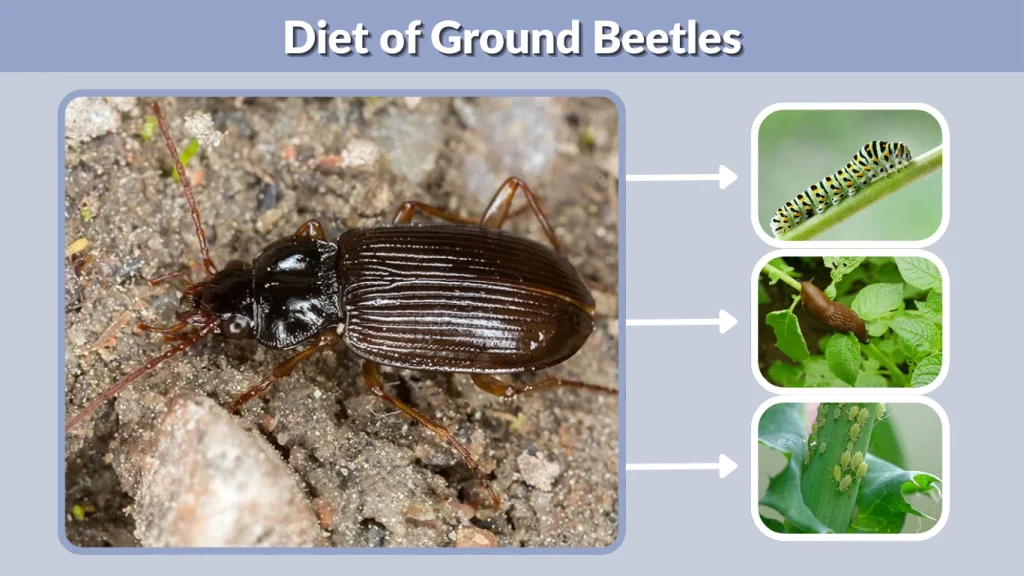
Ground beetles are primarily carnivorous insects, meaning they feed on other small animals and insects. Their predatory nature makes them extremely valuable in natural pest control.
Natural Prey
Ground beetles feed on a wide variety of pests, including:
- Caterpillars
- Slugs and snails
- Aphids
- Fly larvae
- Small worms
- Other insect eggs
Because they hunt many different pests, they help reduce insect populations that could otherwise damage crops and plants.
Role as Natural Pest Controllers
Farmers and gardeners often appreciate ground beetles because they act as natural pest control agents. By feeding on harmful insects, they help protect crops, vegetables, and ornamental plants.
In many cases, the presence of ground beetles can reduce the need for chemical pesticides, making them an important part of sustainable agriculture and organic gardening.
Are Ground Beetles Harmful?
Although their appearance may look intimidating, ground beetles are usually not harmful to humans or property.
Impact on Humans
Ground beetles rarely interact with people. They do not sting and usually avoid contact with humans. If handled roughly, some species may pinch with their jaws, but this is uncommon and generally harmless.
Most of the time, they simply run away when disturbed.
Impact on Homes
Occasionally, ground beetles may wander into houses, especially during warm weather or when attracted by lights. However, they do not infest homes or reproduce indoors.
These beetles usually enter accidentally and do not cause structural damage.
Impact on Gardens
In gardens and agricultural fields, ground beetles are mostly beneficial insects. They help reduce populations of pests that damage plants, making them helpful allies for gardeners and farmers.
Benefits of Ground Beetles
Ground beetles play an important role in maintaining healthy ecosystems.
Natural Pest Control
One of the greatest benefits of ground beetles is their ability to control pest populations naturally. By feeding on insects that harm plants, they reduce crop damage and improve plant health.
This makes them especially valuable in organic farming and environmentally friendly gardening practices.
Ecological Importance
Ground beetles are also important for maintaining ecological balance. They serve as both predators and prey within food chains, supporting biodiversity in natural habitats.
Their presence often indicates a healthy and balanced environment.
How to Prevent Ground Beetles in the House
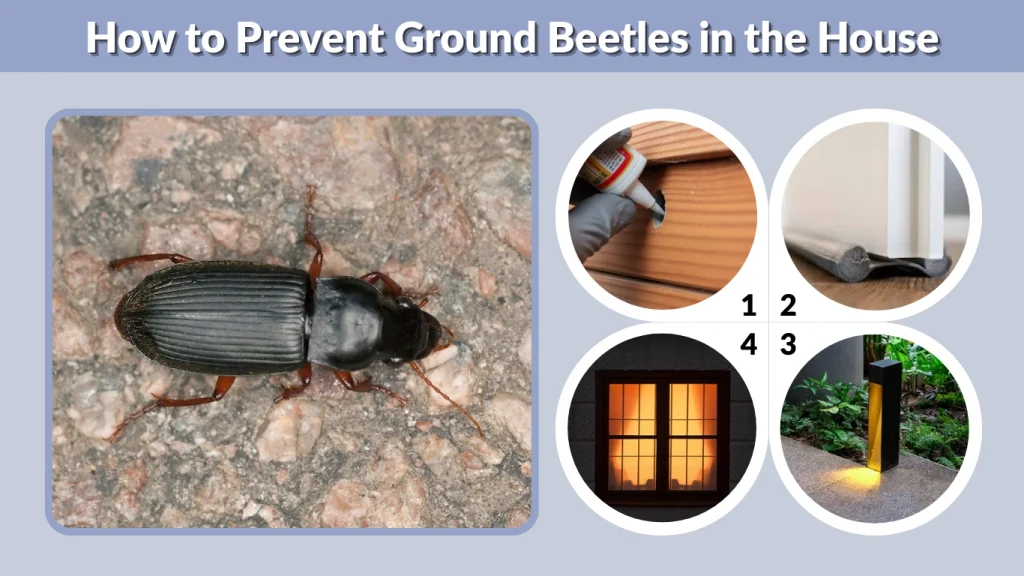
Even though ground beetles are helpful outdoors, some homeowners prefer to keep them from entering their houses.
Home Prevention Tips
To reduce the chances of ground beetles entering a home, consider these steps:
- Seal cracks and gaps around doors and windows
- Install door sweeps and weather stripping
- Reduce outdoor lighting near entry points
- Keep doors and windows closed at night
These simple measures can prevent most accidental entries.
Yard Maintenance
Keeping the yard tidy can also reduce the number of beetles near the house. Helpful practices include:
- Removing piles of leaves and debris
- Keeping mulch away from the foundation
- Trimming plants near walls and doors
By limiting hiding spots close to the house, you can reduce beetle activity around entry points.
How to Get Rid of Ground Beetles
If ground beetles become a nuisance indoors, a few simple solutions can help manage them.
Natural Control Methods
Natural methods are usually enough to control ground beetles without harming beneficial insects.
Some effective approaches include:
- Reducing moisture around the home
- Removing rocks, wood piles, and debris where beetles hide
- Maintaining a clean yard
These steps help discourage beetles from gathering near buildings.
Safe Pest Control Options
In rare cases where beetles appear frequently indoors, pest control professionals may recommend traps or other treatments. However, chemical treatments are usually unnecessary because ground beetles are not serious household pests.
Interesting Facts About Ground Beetles
Ground beetles have several fascinating characteristics that make them unique insects.
- There are over 40,000 species of ground beetles worldwide.
- Most species are nocturnal hunters.
- Some ground beetles can release defensive chemicals to scare predators.
- They are among the fastest running insects on the ground.
- Many species are considered important allies in agriculture.
Conclusion
Ground beetles are fascinating insects that play a valuable role in ecosystems. Known for their speed, predatory behavior, and dark shiny bodies, these beetles help control many pests that damage crops and gardens.
Although they may occasionally wander into homes, ground beetles are generally harmless and beneficial insects. By understanding their identification, habitat, diet, and life cycle, people can better appreciate their importance and the role they play in maintaining healthy environments.
