
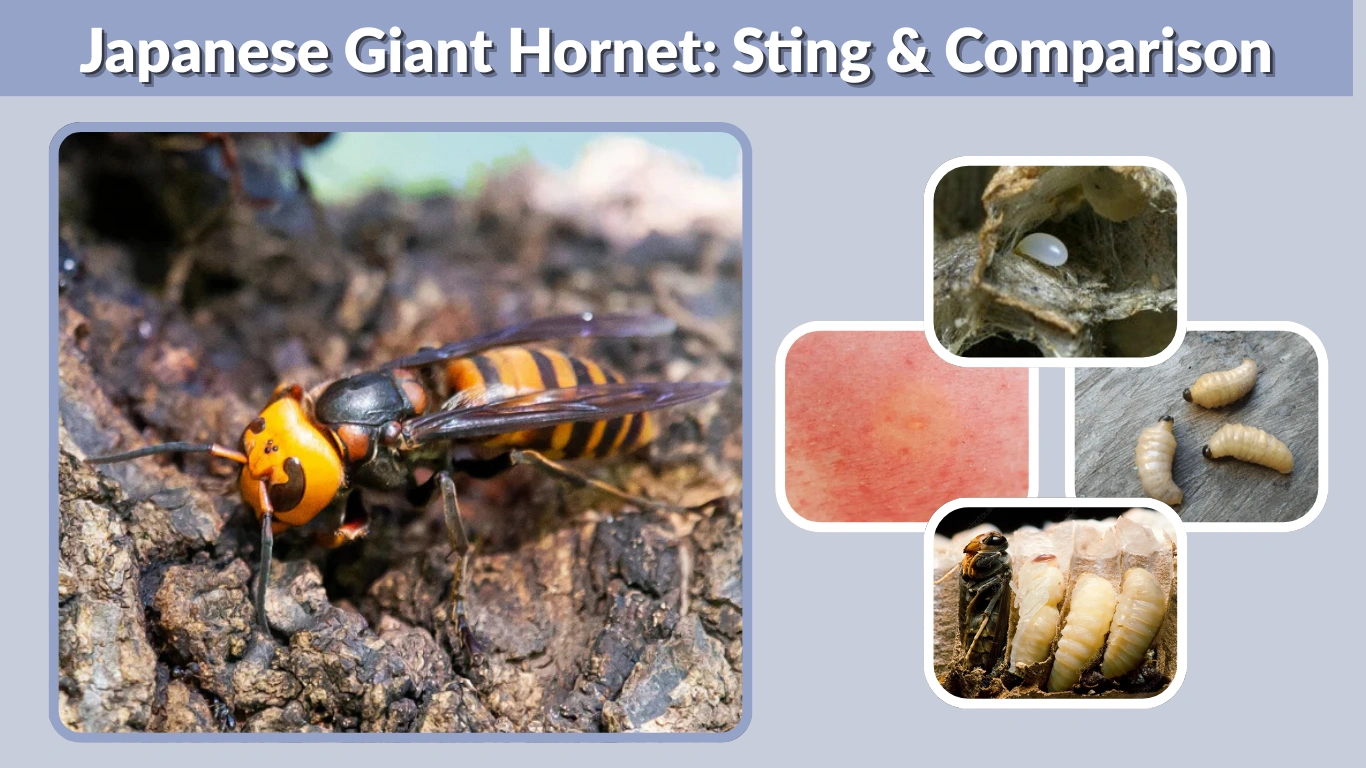
The Japanese giant hornet, also known as the Asian giant hornet, is the largest hornet species in the world and one of the most feared insects in Asia. Known for its powerful sting and aggressive defense of its nest, this hornet has gained global attention in recent years. Despite its intimidating reputation, the species also plays an important ecological role as a predator. In this guide, we will explore the Japanese giant hornet’s characteristics, its painful sting, how it compares to the European hornet, and several fascinating facts about this remarkable insect.
What Is the Japanese Giant Hornet?
The Japanese giant hornet is a large predatory insect belonging to the wasp family Vespidae. Scientifically known as Vespa mandarinia, it is the largest hornet species on Earth. This insect is native to East and Southeast Asia and is particularly common in Japan, where it earned the name “Japanese giant hornet.”
Although many people refer to it as the “murder hornet,” this nickname was popularized by media reports and is not a scientific term. The hornet is primarily dangerous when its nest is threatened, and most encounters with humans happen accidentally.
Scientific Classification
Understanding the classification of the Japanese giant hornet helps explain its relation to other wasps and hornets.
- Kingdom: Animalia
- Phylum: Arthropoda
- Class: Insecta
- Order: Hymenoptera
- Family: Vespidae
- Genus: Vespa
- Species: Vespa mandarinia
Hornets are actually a subgroup of wasps, meaning that the Japanese giant hornet shares characteristics with other social wasps, such as living in colonies and building nests.
Common Names
The Japanese giant hornet is known by several different names depending on the region:
- Japanese giant hornet
- Asian giant hornet
- Northern giant hornet
- Murder hornet (media nickname)
While these names refer to the same insect, “Asian giant hornet” is the most widely used scientific name internationally.
Why It Is Famous
There are several reasons why the Japanese giant hornet attracts so much attention:
First, it is the largest hornet species in the world. Second, its sting is extremely painful and contains potent venom. Finally, it is known for its ability to attack and destroy entire honeybee colonies, which has made it a major concern for beekeepers.
Physical Characteristics of the Japanese Giant Hornet
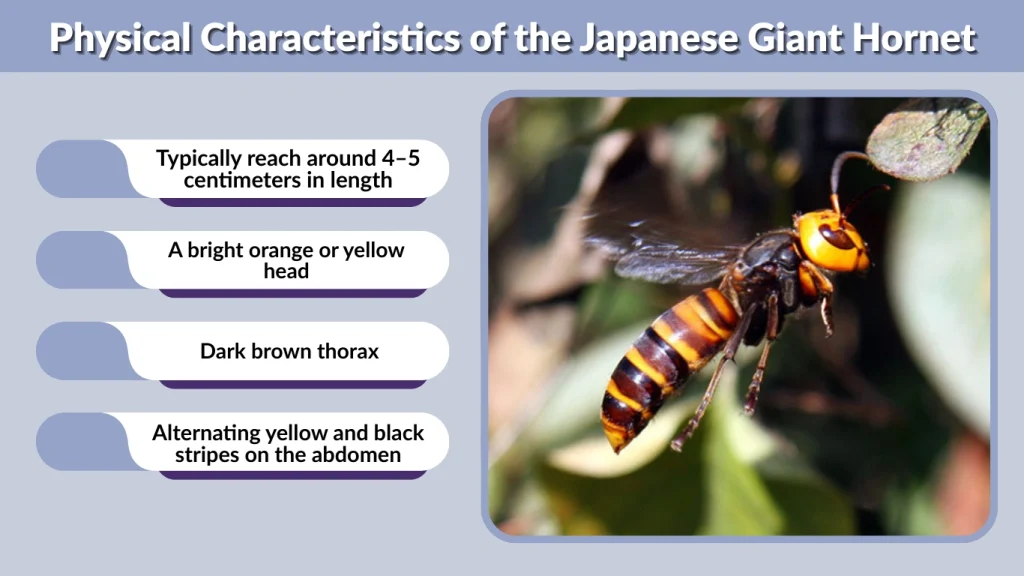
The Japanese giant hornet is easy to identify due to its large size and distinctive appearance. Its body is significantly larger than most other hornet species.
Size and Appearance
Adult workers typically reach around 4–5 centimeters in length, while queens can grow even larger. Their wingspan may reach about 7.5 centimeters, making them among the largest flying insects in their environment.
The hornet’s large body allows it to overpower many other insects during hunting.
Color Pattern
The Japanese giant hornet has a striking color pattern that makes it easy to recognize.
- A bright orange or yellow head
- Dark brown thorax
- Alternating yellow and black stripes on the abdomen
This bold coloration acts as a warning signal to predators and other animals that the hornet is capable of defending itself.
Distinctive Features
Several features make the Japanese giant hornet unique:
One of the most noticeable is its extremely large mandibles, which are used to capture and tear apart prey. These mandibles are strong enough to decapitate bees quickly during hive attacks.
Another feature is the hornet’s long stinger, which can reach about 6 millimeters in length. Unlike honeybees, hornets do not lose their stinger after attacking, meaning they can sting multiple times.
Habitat and Distribution
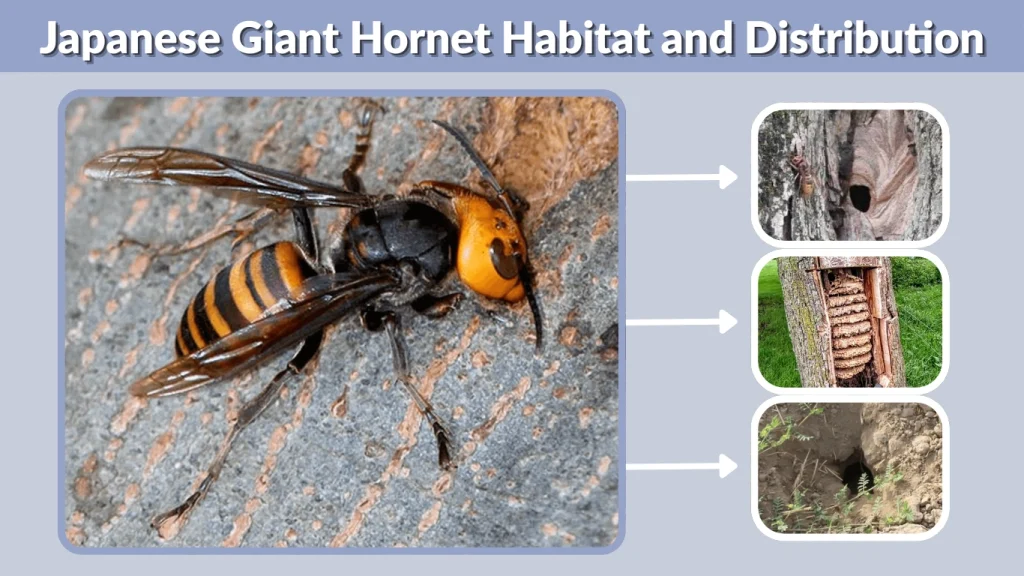
The Japanese giant hornet is native to Asia and can be found in several countries across the region.
Where Japanese Giant Hornets Live
This hornet species is most commonly found in:
- Japan
- China
- Korea
- Taiwan
- Nepal and parts of India
- Southeast Asia
Although reports of the species appearing in other countries have occurred, its primary habitat remains within Asia.
Preferred Habitat
Japanese giant hornets prefer forested and mountainous environments. They are particularly common in rural areas where forests provide suitable nesting locations and abundant insect prey.
These hornets are less commonly found in densely populated urban areas, although they may occasionally appear near human settlements if food sources are available.
Nesting Behavior
Unlike many other hornet species that build nests in trees, Japanese giant hornets typically build their nests underground.
They often use abandoned rodent burrows, tree roots, or soil cavities as nesting sites. Inside these underground nests, the colony constructs multiple comb layers where eggs and larvae develop.
A mature colony can contain several hundred worker hornets by late summer.
Japanese Giant Hornet Sting
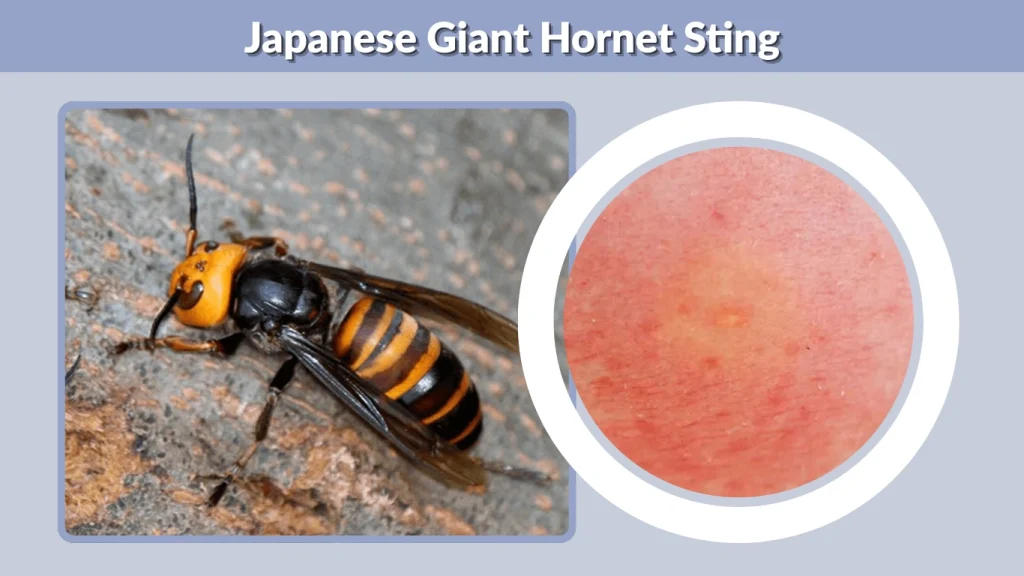
One of the main reasons the Japanese giant hornet is so well known is its extremely painful sting.
How Dangerous Is the Sting?
The sting of a Japanese giant hornet is often described as intensely painful. Some people compare the sensation to having a hot metal needle driven into the skin.
The hornet’s venom contains powerful chemicals that can damage tissue and cause severe inflammation.
Venom Composition
The venom of the Japanese giant hornet includes a mixture of toxins designed to defend the nest and immobilize prey.
Key components of the venom include:
- Neurotoxins that affect nerve cells
- Cytolytic peptides that damage tissues
- Enzymes that help spread venom through the body
Because of this combination, the sting can cause significant pain and swelling even from a single attack.
Symptoms of a Sting
Common symptoms following a sting include:
- Sharp and immediate pain
- Swelling around the sting site
- Redness and inflammation
- Burning sensation
In some cases, people may also experience nausea, dizziness, or allergic reactions.
Can a Japanese Hornet Sting Kill You?
Although a single sting is usually not fatal for healthy adults, multiple stings can be extremely dangerous.
In some Asian countries, dozens of deaths have been reported in years when hornet activity is particularly high. Most fatalities occur when people are attacked by several hornets at once or when victims suffer severe allergic reactions to the venom.
What To Do If Stung
If someone is stung by a Japanese giant hornet, quick action can help reduce complications.
First, move away from the area immediately to avoid additional stings. Clean the sting site with soap and water, then apply a cold compress to reduce swelling.
If severe symptoms such as difficulty breathing, extreme swelling, or dizziness occur, medical attention should be sought immediately.
Japanese Hornet vs European Hornet
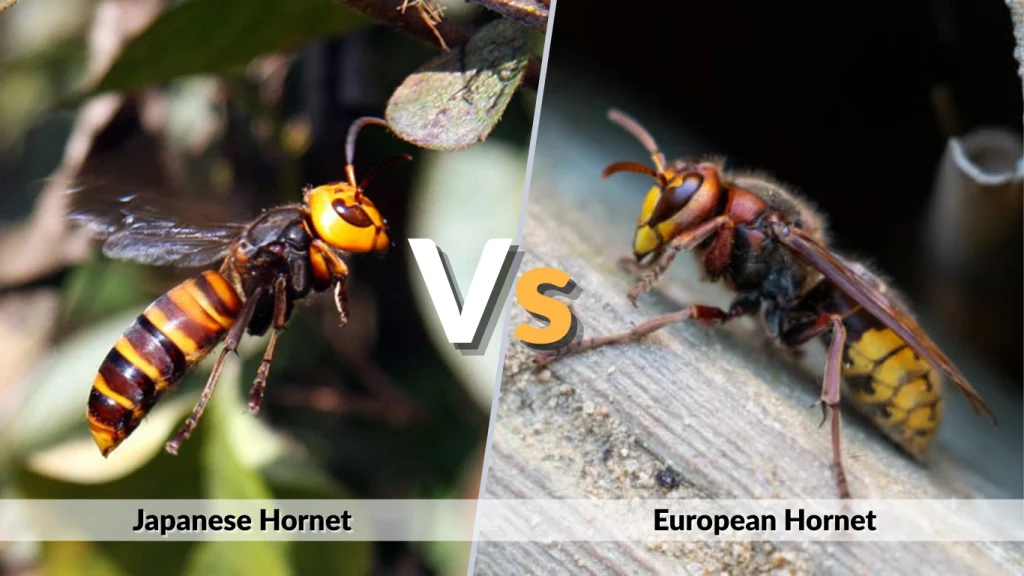
The Japanese giant hornet is significantly larger and more aggressive than the European hornet. While both species can sting multiple times, the Japanese giant hornet is generally considered more dangerous due to its stronger venom and its ability to attack in groups.
| Feature | Japanese Giant Hornet (Vespa mandarinia) | European Hornet (Vespa crabro) |
| Common Name | Japanese Giant Hornet / Asian Giant Hornet | European Hornet |
| Average Size | 40–50 mm (1.6–2 inches) | 25–35 mm (1–1.4 inches) |
| Wingspan | Up to 75 mm | Around 50 mm |
| Head Color | Bright orange or yellow | Reddish-brown |
| Body Pattern | Bold yellow and black bands | Yellow abdomen with brown markings |
| Native Region | East and Southeast Asia | Europe and parts of Western Asia |
| Nest Location | Mostly underground (burrows, soil cavities) | Hollow trees, wall cavities, attics |
| Aggression Level | Highly defensive and predatory | Generally less aggressive |
| Sting Pain | Extremely painful with potent venom | Painful but usually less severe |
| Threat to Bees | Can destroy entire bee colonies quickly | Occasionally preys on bees but less destructive |
| Danger to Humans | Multiple stings can be very dangerous | Stings are rarely life-threatening |
Diet and Hunting Behavior
The Japanese giant hornet is a powerful predator that feeds on a wide variety of insects. Its diet mainly consists of other insects that provide protein for the colony.
What Japanese Giant Hornets Eat
Adult hornets often consume sugary substances such as tree sap, fruit, and nectar. However, the larvae inside the nest require protein, so worker hornets hunt other insects to feed them.
Common prey includes:
- Honeybees
- Wasps
- Beetles
- Large insects such as mantises and dragonflies
Workers capture prey using their powerful mandibles and carry it back to the nest for the larvae.
Bee Hive Attacks
One of the most fascinating and frightening behaviors of the Japanese giant hornet is its ability to attack honeybee colonies.
A small group of hornets can locate a beehive and begin an organized assault. Using their strong mandibles, they quickly kill guard bees and then enter the hive. During these attacks, hornets may decapitate bees and carry the bodies back to their nest as food for their larvae.
In some cases, a handful of hornets can destroy an entire beehive within a few hours.
Life Cycle of the Japanese Giant Hornet
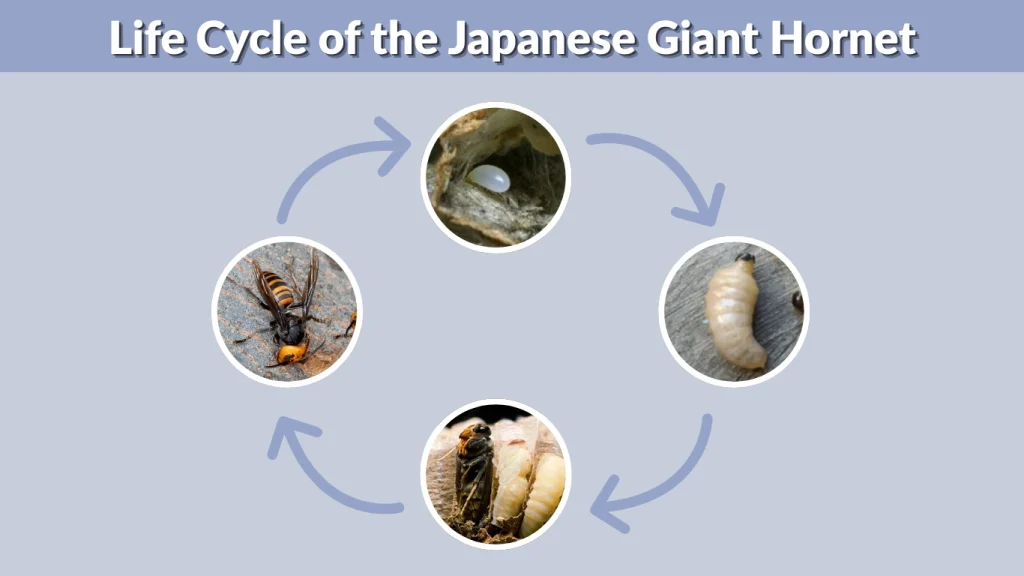
Like other social wasps and hornets, the Japanese giant hornet follows a seasonal life cycle centered around the queen.
Queen Emergence
In early spring, a fertilized queen emerges from winter hibernation. She begins searching for a suitable nesting site, often underground.
Once she finds a location, the queen starts building the first small nest and lays the first batch of eggs.
Worker Production
The eggs hatch into larvae, which the queen feeds and protects. These larvae eventually develop into worker hornets. Once the first workers emerge, they take over tasks such as hunting, nest construction, and caring for additional larvae.
Colony Expansion
During summer, the colony grows rapidly. The queen continues laying eggs while workers gather food and expand the nest. By late summer, the colony may contain several hundred workers.
Reproductive Stage
In autumn, the colony produces new queens and male hornets. After mating, the new queens search for safe places to hibernate during winter, while the rest of the colony gradually dies as temperatures drop.
Asian Giant Hornet Interesting Facts
The Japanese giant hornet is one of the most fascinating insects in the world. Here are some surprising facts about this species.
It Is the Largest Hornet in the World
The Asian giant hornet is widely recognized as the largest hornet species on Earth. Some queens can grow close to two inches long, making them significantly larger than most other wasps.
It Can Fly Long Distances
Japanese giant hornets are strong fliers. Workers may travel one to two kilometers from their nest while searching for food. This allows them to hunt across large territories.
They Can Sting Multiple Times
Unlike honeybees, hornets do not lose their stinger after attacking. This means a Japanese giant hornet can sting repeatedly if it feels threatened.
They Have Powerful Mandibles
The hornet’s mandibles are extremely strong and are used both for hunting prey and for chewing materials when expanding the nest.
Hornet Larvae Are Eaten in Some Regions
In certain parts of Japan, hornet larvae are considered a traditional delicacy. They are sometimes cooked with rice or prepared as snacks in rural areas.
They Communicate Using Pheromones
Japanese giant hornets use chemical signals called pheromones to communicate with other members of the colony. These signals can help workers locate food or coordinate attacks.
Are Japanese Giant Hornets Dangerous to Humans?
Although the Japanese giant hornet has a dangerous reputation, attacks on humans are relatively rare. Most stings occur when people accidentally disturb a nest or attempt to remove it.
Risk Level
The hornets are highly defensive of their nests and may attack in groups if they feel threatened. Because they can sting multiple times, these group attacks can be dangerous.
Annual Fatalities
In some Asian countries, there are occasional reports of deaths caused by multiple hornet stings. However, such incidents are uncommon compared with the number of people living in areas where these hornets exist.
How to Avoid Encounters
To reduce the risk of being stung:
- Avoid approaching hornet nests.
- Stay calm if a hornet flies near you.
- Do not swat at the insect, as sudden movements may provoke it.
- Wear protective clothing when hiking in forested areas.
Conclusion
The Japanese giant hornet is an extraordinary insect known for its large size, powerful sting, and impressive hunting abilities. While its reputation as a dangerous predator is well deserved, it also plays an important role in controlling insect populations in its natural habitat. By understanding its behavior, habitat, and ecological importance, people can better appreciate this remarkable species while taking the necessary precautions to avoid harmful encounters.
